Skip to content
Microbe Notes

Microbe Notes

  • Home
  • Biological Sciences
    • Biochemistry
    • Bioinformatics
    • Biology
    • Biotechnology
    • Botany
    • Cell Biology
    • Genetics
    • Molecular Biology
    • Zoology
  • Microbiology
    • Agricultural Microbiology
    • Bacteriology
    • Basic Microbiology
    • Environmental Microbiology
    • Food Microbiology
    • Immunology
    • Mycology
    • Parasitology
    • Virology
  • Laboratory Methods
    • Biochemical Test
    • Culture Media
    • Instrumentation
    • Microscopy
    • Staining
  • Health and Medical
    • Diseases
    • Epidemiology
    • Human Anatomy and Physiology
    • Medical Devices
    • Pharmacology
  • Resources
    • Difference Between
    • Microbiology Terms
    • Microorganisms Note
    • Protocols
    • Research Methodology
    • Syllabus

Immunology

Immunology is an emerging branch of medical science that deals with studies related to different aspects of the immune system like the cells, structure, function, response against antigens, and disorders.

  • The immune system consists of a collection of cells, chemicals, processes, and mechanisms that function to protect the body from foreign antigens, such as microbes (organisms such as bacteria, fungi, and parasites), viruses, cancer cells, and toxins.
  • Beyond, the structural and chemical barriers which protect us from infection, the immune system consists of two lines of defense; innate immunity and adaptive immunity.
  • The innate immunity represents the first line of defense against the antigen, and it is an antigen-independent defense mechanism used by the host immediately or within hours of encountering an antigen.
  • On the other hand, adaptive immunity is antigen-dependent and antigen-specific and, therefore, includes a lag time between exposure to the antigen and maximal response.
  • Studies conducted in immunology are related to the measurement of physiological functioning of the immune system in both healthy and disease conditions, malfunctioning of the system in the case of disorders, and physical, chemical, and physiological characteristics of the cells of the immune system.
  • Immunology is fast becoming an important branch of clinical medicine as it has a close relationship with organ transplantation, oncology, virology, bacteriology, and even dermatology.
  • Immunology is focused on certain organs of the body like the bone marrow and the lymphatic system and the white blood cells found in the blood.
  • These cells or organs producing these cells are responsible, directly or indirectly, for the defense mechanism of the body against a pathogenic agent or other antigens.
  • These cells keep on circulating throughout the body via blood or lymph so that they can detect antigens entering the body from different sources.
  • An important aspect of immunology is immunotherapy, where components of the immune system or antigens are used to treat a disease or disorder as a form of treatment.

Venereal Disease Research Laboratory (VDRL) Test

September 9, 2023July 9, 2022 by Sagar Aryal, PhD
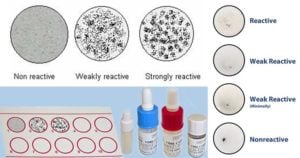
Result Interpretation of VDRL Test

Principle of VDRL Test The Venereal Disease Research Laboratory (VDRL) tests are slide microflocculation test that detect antibodies produced against antigens released by damaged host cells in patients suffering from … Read more

Rocket Immunoelectrophoresis- Objectives, Principle, Procedure, Results, Uses

September 5, 2022July 7, 2022 by Sagar Aryal, PhD
Result Interpretation of Rocket Immunoelectrophoresis

Rocket Immunoelectrophoresis is an adaptation of radial immunodiffusion developed by Laurell. It is also known as electroimmunoassay or electroimmunodiffusion. It is called as “rocket electrophoresis” due to the appearance of … Read more

Innate Immune System- An Introduction

September 15, 2022July 5, 2022 by Sagar Aryal, PhD
Innate Immune System- An Introduction

The innate immune system provides the first line of host defense against microbes, before adaptive immune responses have had sufficient time to develop. The mechanisms of innate immunity exist before … Read more

Immunoelectrophoresis: Principle, Procedure & Applications

December 30, 2024July 5, 2022 by Sagar Aryal, PhD
Immunoelectrophoresis- Principle, Procedure, Results and Applications

Principle of Immunoelectrophoresis When an electric current is applied to a slide layered with gel, the antigen mixture placed in wells is separated into individual antigen components according to their … Read more

Radial Immunodiffusion- Principle, Procedure, Results, Uses

September 5, 2022July 4, 2022 by Sagar Aryal, PhD
Result Interpretation of Radial Immunodiffusion

Immuno-diffusion is a technique for the detection or measurement of antibodies and antigens by their precipitation which involves diffusion through a substance such as agar or gel agarose. Simply, it … Read more

Ring Precipitation Test- Principle, Procedure, Results, Examples

September 5, 2022July 4, 2022 by Sagar Aryal, PhD
Results Interpretation of Ring Precipitation Test

Interactions of antibodies and antigens, in the form of various tests, have been developed to determine the presence or absence of antibodies or antigens in a sample.  A type of … Read more

Immunoglobulin E (IgE)- Definition, Structure and Functions

September 5, 2022July 2, 2022 by Sagar Aryal, PhD
Immunoglobulin E (IgE)- Structure and Functions

Immunoglobulin E (IgE) Definition Immunoglobulin E (IgE) is one of the 5 classes of immunoglobulins, which is defined by the presence of epsilon (ε) heavy chain. It is present in … Read more

Anatomical Barriers of Immune System- Skin and Mucus

September 5, 2022July 1, 2022 by Sagar Aryal, PhD
Anatomical Barriers of Immune System- Skin and Mucus

Before a microbe or parasite can invade the host and cause infection, it must first attach to and penetrate the surface epithelial layers of the body. Organisms gain entrance into … Read more

Mast Cells- Definition, Structure, Immunity, Types, Functions

September 25, 2022July 1, 2022 by Anupama Sapkota
Mast Cells

Mast cells are cells of the immune system of the hematopoietic lineage that remain widely distributed in vascularized tissues throughout the body. Mast cells, unlike other immune cells, do not … Read more

Immunoglobulin D (IgD)- Structure and Functions

September 5, 2022June 29, 2022 by Sagar Aryal, PhD
Immunoglobulin D (IgD)- Structure and Functions

Immunoglobulin D (IgD) is a unique immunoglobulin with a low concentration in serum and the exact function of which is not known. IgD represents about 0.25% of the total serum … Read more

Older posts
Newer posts
← Previous Page1 … Page3 Page4 Page5 … Page12 Next →

Topics / Categories

  • Agricultural Microbiology (30)
  • Bacteriology (134)
  • Basic Microbiology (63)
  • Biochemical Test (114)
  • Biochemistry (211)
  • Bioinformatics (26)
  • Biology (142)
  • Biotechnology (43)
  • Botany (112)
  • Cell Biology (108)
  • Culture Media (68)
  • Difference Between (89)
  • Diseases (53)
  • Environmental Microbiology (15)
  • Epidemiology (29)
  • Food Microbiology (52)
  • Genetics (82)
  • Human Anatomy and Physiology (75)
  • Immunology (118)
  • Instrumentation (72)
  • Medical Devices (5)
  • Microscopy (31)
  • Molecular Biology (118)
  • Mycology (43)
  • Parasitology (28)
  • Pharmacology (25)
  • Protocols (9)
  • Research Methodology (20)
  • Staining (30)
  • Syllabus (20)
  • Virology (62)
  • Zoology (39)
  • Phagocytosis: Phagocytes, Steps, Mechanisms, Examples
  • Nucleosomes: Components, Structure, Functions
  • Heterochromatin: Types, Features, Formation, Functions
  • One Health: Interdependence Between Human, Animal, and Environmental Health
  • iNKT Cells: Development, Maturation, Activation, Roles
  • Our Team
  • Advisory Board
  • About Us
  • Contact Us
  • Editorial Policy
  • Privacy Policy
  • Cookie Policy
  • Disclaimer (Terms and Conditions)
© 2026 Microbe Notes. Made with ♡ by Sagar Aryal.