Skip to content
Microbe Notes

Microbe Notes

  • Home
  • Biological Sciences
    • Biochemistry
    • Bioinformatics
    • Biology
    • Biotechnology
    • Botany
    • Cell Biology
    • Genetics
    • Molecular Biology
    • Zoology
  • Microbiology
    • Agricultural Microbiology
    • Bacteriology
    • Basic Microbiology
    • Environmental Microbiology
    • Food Microbiology
    • Immunology
    • Mycology
    • Parasitology
    • Virology
  • Laboratory Methods
    • Biochemical Test
    • Culture Media
    • Instrumentation
    • Microscopy
    • Staining
  • Health and Medical
    • Diseases
    • Epidemiology
    • Human Anatomy and Physiology
    • Medical Devices
    • Pharmacology
  • Resources
    • Difference Between
    • Microbiology Terms
    • Microorganisms Note
    • Protocols
    • Research Methodology
    • Syllabus

Pharmacology

Pharmacology is a discipline that deals with the effects of pharmaceuticals or drugs on living systems, their manufacture, and their chemical properties.

  • Pharmacology is mostly related to studies involving the interactions between the chemicals and living organisms that affect the biochemical functioning of living beings.
  • The chemicals with medicinal properties are then termed pharmaceuticals.
  • The concept of medicines has been around for a long time with ancient people using specific plants and species as a form of medicine.
  • Modern-day pharmacology is involved in the efficient method of drug manufacturing by the use of natural sources and modern technology.
  • Pharmacology might be confused with pharmacy, but it should be understood that pharmacology deals with the research, discovery, and manufacturing of chemicals with biological effects that affect the cellular and systemic function of the organism.
  • The field also deals with drug composition and properties, synthesis and drug design, molecular and cellular mechanisms, signal transductions, molecular diagnostic, and biochemistry.
  • Biochemistry, in particular, is particularly important in pharmacology as the knowledge of the biochemical composition of a living organism is essential in order to assign an appropriate drug for treatment.
  • Pharmacology focuses on the determination of the mechanism of actions of different groups of drugs which provides a better understanding of the molecular functioning of the body.
  • The drugs or pharmaceuticals produced from various industrial might be either acquired from natural sources or produced by chemical means.
  • The most important group of organisms that produce antimicrobials include the actinomycetes, followed by fungi.
  • This represents a close relationship between pharmacology studies and mycology and bacteriological studies.
  • Besides, different technical advances made throughout the years have made it possible for the production of new and improved drugs via biotechnological means.
  • Pharmacology is further related to other disciplines like clinical medicine for the diagnosis and treatment of diseases.
  • Other therapeutic agents might also help in decreasing the harmful effects of some diseases like diabetes, HIV, and cancer.

Drug Discovery and Development with Pipeline and Stages

May 6, 2026 by Namrata Lamichhane
Drug Discovery and Development

The process of drug discovery and development is complex, requiring many different skills over a time frame of years. It spans about 10-15 years. This process visualizes the input and … Read more

Pharmacovigilance and Adverse Drug Reactions

May 6, 2026April 20, 2026 by Namrata Lamichhane
Pharmacovigilance and Adverse Drug Reactions

Pharmacovigilance is the science and activities related to the detection, assessment, understanding, and prevention of adverse effects or any drug-related problems. Pharmacovigilance involves monitoring and evaluating the safety of marketed … Read more

Azoles: Structure, Classification, Mode of Action, Examples

April 18, 2026April 8, 2026 by Ishita Rai
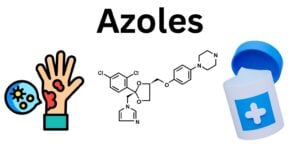
Azoles

Azoles are antifungal agents against fungi causing superficial mycoses (pityriasis versicolor, Black & White piedra) and cutaneous mycoses (Tinea capitis, onchomycosis), as well as systemic mycoses (histoplasmosis, cryptococcosis). Spectrum of … Read more

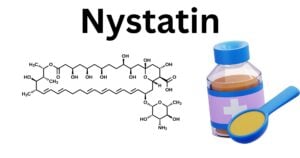
Nystatin: Structure, Properties, Mechanism of Action, Biosynthesis

April 18, 2026April 6, 2026 by Ishita Rai
Nystatin

Nystatin belongs to the polyene class of antifungals. It is the first active antifungal agent. Polyenes are broad-spectrum antifungals, biochemically characterized by a macrolide (a macrocyclic lactone ring with conjugated … Read more

Amphotericin B: Structure, Mechanism, Resistance

April 18, 2026April 4, 2026 by Ishita Rai
Amphotericin B

Amphotericin B belongs to the polyene class of antifungal agents. Polyenes are broad-spectrum antifungal, biochemically characterized by having macrolide (made of a lactone ring with conjugated double bonds that is … Read more

Streptomycin: Structure, Production, Harvest, Recovery

March 22, 2026 by Khushi Sharma
Streptomycin Production

The discovery of streptomycin in 1943 by Selman Waksman and Albert Schatz was a monumental moment in medical history. As the first successful drug against tuberculosis (TB), this aminoglycoside antibiotic … Read more

Good Manufacturing Practices (GMP) and Quality Assurance (QA)

March 16, 2026March 15, 2026 by Namrata Lamichhane
Good Manufacturing Practices (GMP) and Quality Assurance (QA)

Overview of GMP and Quality Assurance QA (Quality Assurance) is a wide range concept that covers all the matters that individually or collectively influence the quality of the products. GMP … Read more

Data Integrity, ALCOA++, and GxP in Pharmaceuticals

March 22, 2026March 13, 2026 by Khushi Sharma
Data integrity, ALCOA++, and GxP in the pharmaceutical industry

Data Integrity in the pharmaceutical industry is the absolute foundation for ensuring patient safety and drug quality. Principle Significance Attributable Ensures accountability. Individuals should be accountable for their actions. Legible … Read more

Basics of Pharmacology and Mechanisms of Drug Action

March 24, 2026March 12, 2026 by Namrata Lamichhane
Basics of Pharmacology and Mechanisms of Drug Action

Pharmacology is derived from the Greek words “Phamacon” which means drug and “logos” means knowledge. Pharmacology is a branch of science which deals with interaction of chemical molecules (drugs) within … Read more

Pharmaceutical Formulation and Excipients

March 16, 2026March 4, 2026 by Namrata Lamichhane
Pharmaceutical Formulation and Excipients

Pharmaceutical formulation is a process of formation of pharmaceutical products (dosage form) by the use of Active Pharmaceutical Ingredients (APIs) with all necessary inactive ingredients (excipients), considering the factors of … Read more

Older posts
Page1 Page2 Page3 Next →

Topics / Categories

  • Agricultural Microbiology (30)
  • Bacteriology (138)
  • Basic Microbiology (63)
  • Biochemical Test (114)
  • Biochemistry (211)
  • Bioinformatics (27)
  • Biology (142)
  • Biotechnology (46)
  • Botany (112)
  • Cell Biology (108)
  • Culture Media (68)
  • Difference Between (89)
  • Diseases (53)
  • Environmental Microbiology (15)
  • Epidemiology (29)
  • Food Microbiology (52)
  • Genetics (82)
  • Human Anatomy and Physiology (75)
  • Immunology (119)
  • Instrumentation (72)
  • Medical Devices (10)
  • Microscopy (31)
  • Molecular Biology (121)
  • Mycology (44)
  • Parasitology (28)
  • Pharmacology (27)
  • Protocols (9)
  • Research Methodology (20)
  • Staining (30)
  • Syllabus (20)
  • Virology (69)
  • Zoology (39)
  • Allele-Specific PCR: Principle, Steps, Types, Examples, Uses
  • Amplified Fragment Length Polymorphism PCR (AFLP-PCR)
  • Anchored PCR: Principle, Steps, Types, Examples, Uses
  • Antifungal Resistance: Pathogens, Mechanisms, Factors, Impact
  • Parts of a Microscope with Functions and Labeled Diagram
  • Our Team
  • Advisory Board
  • About Us
  • Contact Us
  • Editorial Policy
  • Privacy Policy
  • Cookie Policy
  • Disclaimer (Terms and Conditions)
© 2026 Microbe Notes. Made with ♡ by Sagar Aryal.