Skip to content
Microbe Notes

Microbe Notes

  • Home
  • Biological Sciences
    • Biochemistry
    • Bioinformatics
    • Biology
    • Biotechnology
    • Botany
    • Cell Biology
    • Genetics
    • Molecular Biology
    • Zoology
  • Microbiology
    • Agricultural Microbiology
    • Bacteriology
    • Basic Microbiology
    • Environmental Microbiology
    • Food Microbiology
    • Immunology
    • Mycology
    • Parasitology
    • Virology
  • Laboratory Methods
    • Biochemical Test
    • Culture Media
    • Instrumentation
    • Microscopy
    • Staining
  • Health and Medical
    • Diseases
    • Epidemiology
    • Human Anatomy and Physiology
    • Medical Devices
    • Pharmacology
  • Resources
    • Difference Between
    • Microbiology Terms
    • Microorganisms Note
    • Protocols
    • Research Methodology
    • Syllabus

Biotechnology

Biotechnology is a branch of biology that deals with the utilization of living beings or living processes for the production of different products that are important for living beings.

  • Biotechnology is a fairly emerging discipline that crosses technical processes like manufacturing with biological compounds.
  • The discipline utilizes both cellular and biomolecular processes to develop processes and products that improve our lives and the biological system of the planet.
  • Biotechnology often overlaps with other fields like immunology, genomics, recombinant technology, and pharmaceutical microbiology.
  • Even though biotechnology is viewed as a rather modern concept, it has been widely used throughout history in the form of increasing cultivation, breeding, and therapies.
  • In modern times, however, biotechnology makes use of more complex concepts like recombinant DNA technology, plant tissue culture, among others.
  • Biotechnology exists in a close relationship with bioinformatics for the exploration, extraction, and production of biological products.
  • The production of insulin and antibiotics is one of the most notable examples of biotechnology that supports living beings and protects them from various diseases.
  • One of the first uses of biotechnology is in the agricultural area where farmers employed techniques of selective breeding in order to increase the harvest.
  • Besides, the production of alcohol and bread by the process of fermentation is another important and commonly used biotechnological technique.
  • Four of the most common applications of biotechnology in modern times are made in areas like medicine, agriculture, industries, and the environment.
  • Different forms of biotechnological processes like wastewater management are considered imperative for the protection of water sources.
  • Plant and animal tissue culture has given new ways to form life which solves the problem of infertility in both plants and animals.
  • A branch of biotechnology called, biopharmaceuticals are involved in the utilization of living beings for the production of different therapeutic agents that help in the treatment of life-threatening diseases.

Genetic Engineering: Principles, Tools, Examples, Applications

May 6, 2026 by Saman Bhattarai
Genetic Engineering

Genetic engineering is also referred to as genetic modification or genetic manipulation. It involves the deliberate alteration or modification of an organism’s genetic material using modern technology and tools. The … Read more

Biotechnology: History, Principles, Types, Applications, Trends

May 6, 2026May 1, 2026 by Saman Bhattarai
Biotechnology

At an introductory level, biotechnology is simply the use of cells and biomolecules to improve human lives. It involves identifying a useful biological capability (such as an enzyme or metabolic … Read more

Transgenic Organisms: Principles, Steps, Methods, Types, Examples, Applications

May 6, 2026April 23, 2026 by Saman Bhattarai
Transgenic organisms

Transgenic organisms are those whose genetic material (DNA) has been deliberately altered in the laboratory by incorporating foreign DNA from another species to introduce a new beneficial trait in the … Read more

Competent Cells: Applications, Preparations, Troubleshooting

April 12, 2026 by Susmita Baniya
Competent Cells

Competent cells are cells (bacteria, yeast, etc.) that have been altered to take up exogenous foreign DNA from the environment. While some bacteria can undergo transformation naturally, common laboratory strains … Read more

Streptomycin: Structure, Production, Harvest, Recovery

March 22, 2026 by Khushi Sharma
Streptomycin Production

The discovery of streptomycin in 1943 by Selman Waksman and Albert Schatz was a monumental moment in medical history. As the first successful drug against tuberculosis (TB), this aminoglycoside antibiotic … Read more

Plasmid Vectors: Components, Markers, Examples, Applications

March 16, 2026March 12, 2026 by Saman Bhattarai
Plasmid Vectors

In recombinant DNA technology (RDT), the terminology vector refers to a carrier that allows the transfer of genetic material from one cell to another or from one organism to another. … Read more

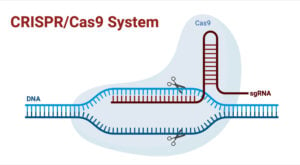
CRISPR-Cas Systems: Structure, Mechanism, Classification, Enzymes, Applications
March 12, 2026 by Saman Bhattarai
CRISPR-Cas systems

The CRISPR-Cas system consists of a special sequence in prokaryotes, known as clustered regularly interspaced short palindromic repeats (CRISPR) and Cas (CRISPR-associated) genes. CRISPR was first identified in Escherichia coli … Read more
Phenol-Chloroform Method of DNA Extraction

March 3, 2026March 2, 2026 by Sandeep Shakya
Phenol-Chloroform Method of DNA Extraction

The phenol-chloroform method of DNA extraction is the technique that separates nucleic acids from proteins and other cellular components by exploiting their different solubilities in water and organic solvents. After … Read more

DH5-Alpha (DH5α) Cells Transformation: Principle, Steps

April 12, 2026March 1, 2026 by Susmita Baniya
DH5-Alpha (DH5α) Cells Transformation

What is Bacterial Transformation? Bacterial transformation is a process by which a bacterial cell takes up exogenous foreign DNA from its environment, leading to a stable hereditary change. The phenomenon … Read more

Zero Liquid Discharge (ZLD) System: Working, Steps, Applications

March 22, 2026February 24, 2026 by Khushi Sharma
Zero Liquid Discharge System

How does Zero Liquid Discharge (ZLD) work? The working of a ZLD plant can be divided into 3 main processes: Pre-treatment Evaporation Crystallization Key Drivers for Zero Liquid Discharge (ZLD) … Read more

Older posts
Page1 Page2 … Page5 Next →

Topics / Categories

  • Agricultural Microbiology (30)
  • Bacteriology (138)
  • Basic Microbiology (63)
  • Biochemical Test (114)
  • Biochemistry (211)
  • Bioinformatics (27)
  • Biology (142)
  • Biotechnology (46)
  • Botany (112)
  • Cell Biology (108)
  • Culture Media (68)
  • Difference Between (89)
  • Diseases (53)
  • Environmental Microbiology (15)
  • Epidemiology (29)
  • Food Microbiology (52)
  • Genetics (82)
  • Human Anatomy and Physiology (75)
  • Immunology (119)
  • Instrumentation (72)
  • Medical Devices (10)
  • Microscopy (31)
  • Molecular Biology (121)
  • Mycology (44)
  • Parasitology (28)
  • Pharmacology (27)
  • Protocols (9)
  • Research Methodology (20)
  • Staining (30)
  • Syllabus (20)
  • Virology (69)
  • Zoology (39)
  • Allele-Specific PCR: Principle, Steps, Types, Examples, Uses
  • Amplified Fragment Length Polymorphism PCR (AFLP-PCR)
  • Anchored PCR: Principle, Steps, Types, Examples, Uses
  • Antifungal Resistance: Pathogens, Mechanisms, Factors, Impact
  • Parts of a Microscope with Functions and Labeled Diagram
  • Our Team
  • Advisory Board
  • About Us
  • Contact Us
  • Editorial Policy
  • Privacy Policy
  • Cookie Policy
  • Disclaimer (Terms and Conditions)
© 2026 Microbe Notes. Made with ♡ by Sagar Aryal.