
How viruses cause disease?

Viruses gain access to the host through skin and mucous membranes, and via the respiratory, gastrointestinal, and genital tracts. Their virulence or lack of it may be determined by very … Read more
Virology is a branch of natural science that deals with the biology of viruses and viral diseases, along with the biochemistry, occurrence, pathogenesis, life cycle, ecology, and evolution of viruses and virus-like particles.
Viruses gain access to the host through skin and mucous membranes, and via the respiratory, gastrointestinal, and genital tracts. Their virulence or lack of it may be determined by very … Read more
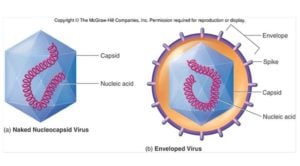
Structure of Virus LIPID ENVELOPE Usually formed from a lipid bilayer taken from their host, into which the virus inserts its own glycoproteins (enveloped virus). Not all viruses have envelopes … Read more
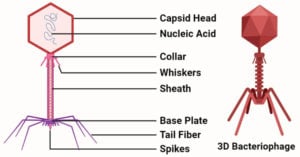
Bacteriophage Definition Bacteriophage or Phage is a virus that infects and replicates only within the body of bacteria. Bacteriophages were discovered independently by Frederick W. Twort in the U.K and … Read more
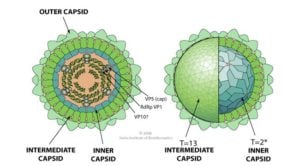
Structure of Coltivirus Coltivirusparticles are 60–80 nm in diameter having two concentric capsid shells with a core that is about 50 nm in diameter. They have a relatively smooth surface capsomeric structure and … Read more

Structure of Severe Acute Respiratory Syndrome Coronavirus (SARS-CoV) They are enveloped viruses with round and sometimes pleiomorphic virions of approximately 80 to 120 nm in diameter. It contains positive-strand RNA, with … Read more
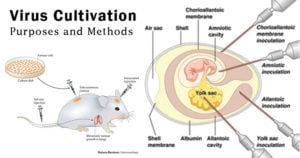
Viruses are obligate intracellular parasites so they depend on host for their survival. They cannot be grown in non-living culture media or on agar plates alone, they must require living … Read more
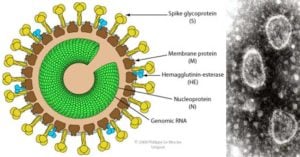
Classification of Torovirus Group IV: ssRNA positive strand virus Order: Nidovirales Family: Coronaviridae Subfamily: Toronavirinae Genus: Torovirus Structure of Torovirus Torovirusis a genus of viruses in the order Nidovirales, in the family Coronaviridae, in the subfamily Torovirinae. … Read more
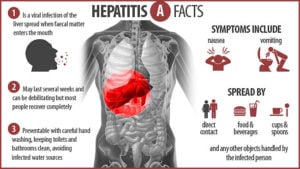
Structure of Hepatitis A Virus HAV (Hepatitis A Virus) is a distinct member of the picornavirus family, assigned to genus hepatovirus. HAV is a 27 nm to 32 nm spherical particle … Read more
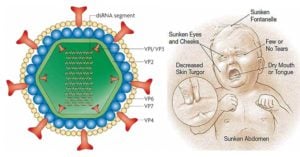
Structure of Rotavirus The name rotavirus is derived from the Latin word rota, meaning “wheel,” which refers to the virion’s appearance in negative-stained electron micrographs. Rotavirus falls under Reoviridae family … Read more
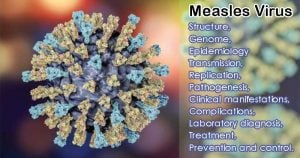
Measles Virus Image Source: BBC Structure Measles virus is the prototypic member of the Morbillivirus genus of the family Paramyxoviridae. Measles virus is spherical with a diameter ranging from 100 … Read more