Robert Koch and Koch’s Postulates
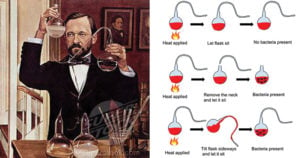
Heinrich Hermann Robert Koch (1843 – 1910) provided remarkable contributions to the field of microbiology. He was a German general practitioner and a famous microbiologist. He is credited to be … Read more
Varo and Columella in the first century BC postulated that diseases were caused by invisible beings (Animalia minuta) inhaled or ingested. Fracastorius of Verona (1546) proposed a Contagium vivum as … Read more
Louis Pasteur was a French chemist and microbiologist considered the most important founders of Microbiology. Microbiology developed as a scientific discipline from the era of Louis Pasteur (1822- 1895) himself. He first … Read more
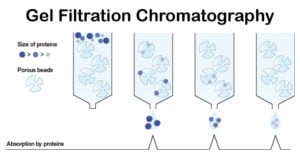
Biomolecules are purified using different techniques that separate them according to the differences in their specific properties such as size, hydrophobicity, biorecognition, charge, etc. Gel filtration is a technique in … Read more
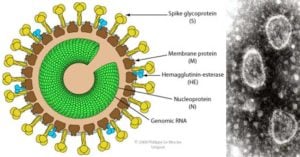
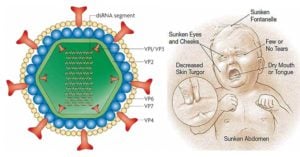
Classification of Torovirus Group IV: ssRNA positive strand virus Order: Nidovirales Family: Coronaviridae Subfamily: Toronavirinae Genus: Torovirus Structure of Torovirus Torovirusis a genus of viruses in the order Nidovirales, in the family Coronaviridae, in the subfamily Torovirinae. … Read more
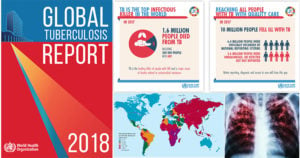
WHO has published a global TB report every year since 1997. The main aim of the report is to provide a comprehensive and up-to-date assessment of the TB epidemic, and … Read more
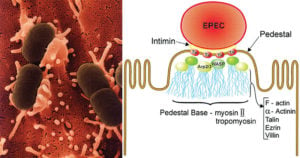
Two groups of E. coli are responsible for enteric disease: Enteropathogenic E. coli [EPEC] and some Shiga toxin–producing E. coli [STEC]. They both possess a cluster of virulence genes located … Read more
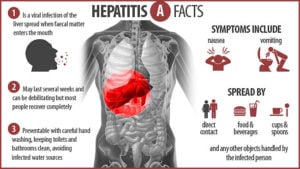
Structure of Hepatitis A Virus HAV (Hepatitis A Virus) is a distinct member of the picornavirus family, assigned to genus hepatovirus. HAV is a 27 nm to 32 nm spherical particle … Read more
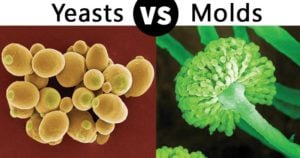
Differences between Yeasts and Molds Both yeast and molds are eukaryotes – organisms with cell nuclei and membrane-bound organelles in the kingdom Fungi. The major differences between Yeasts and Molds … Read more
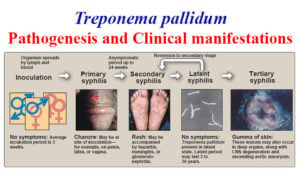
Pathogenesis of Treponema pallidum The two major routes of transmission of Treponema pallidum are sexual and transplacental. Sexual exposure to a person who has an active syphilitic chancre carries a … Read more