Virus Cultivation- Purposes and Methods
Viruses are obligate intracellular parasites so they depend on host for their survival. They cannot be grown in non-living culture media or on agar plates alone, they must require living … Read more
Spontaneous generation is an obsolete theory which states that living organisms can originate from inanimate objects. The theory believed that dust created fleas, maggots arose from rotting meat, and bread … Read more
Heinrich Hermann Robert Koch (1843 – 1910) provided remarkable contributions to the field of microbiology. He was a German general practitioner and a famous microbiologist. He is credited to be … Read more
Varo and Columella in the first century BC postulated that diseases were caused by invisible beings (Animalia minuta) inhaled or ingested. Fracastorius of Verona (1546) proposed a Contagium vivum as … Read more
Louis Pasteur was a French chemist and microbiologist considered the most important founders of Microbiology. Microbiology developed as a scientific discipline from the era of Louis Pasteur (1822- 1895) himself. He first … Read more
Biomolecules are purified using different techniques that separate them according to the differences in their specific properties such as size, hydrophobicity, biorecognition, charge, etc. Gel filtration is a technique in … Read more
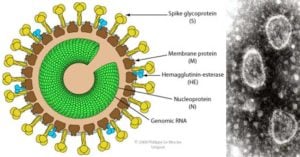
Classification of Torovirus Group IV: ssRNA positive strand virus Order: Nidovirales Family: Coronaviridae Subfamily: Toronavirinae Genus: Torovirus Structure of Torovirus Torovirusis a genus of viruses in the order Nidovirales, in the family Coronaviridae, in the subfamily Torovirinae. … Read more

WHO has published a global TB report every year since 1997. The main aim of the report is to provide a comprehensive and up-to-date assessment of the TB epidemic, and … Read more
Two groups of E. coli are responsible for enteric disease: Enteropathogenic E. coli [EPEC] and some Shiga toxin–producing E. coli [STEC]. They both possess a cluster of virulence genes located … Read more
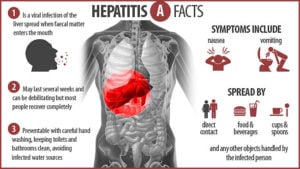
Structure of Hepatitis A Virus HAV (Hepatitis A Virus) is a distinct member of the picornavirus family, assigned to genus hepatovirus. HAV is a 27 nm to 32 nm spherical particle … Read more