
Antifungal Resistance (AFR) is one of the top ten global public threats, with fungal infections causing over ~3.8 million deaths annually (World Health Organization, 2022; Chaudhary & Thakur, 2025). It refers to the ability of fungi to resist antifungal drugs (Atalor et. al., 2025).
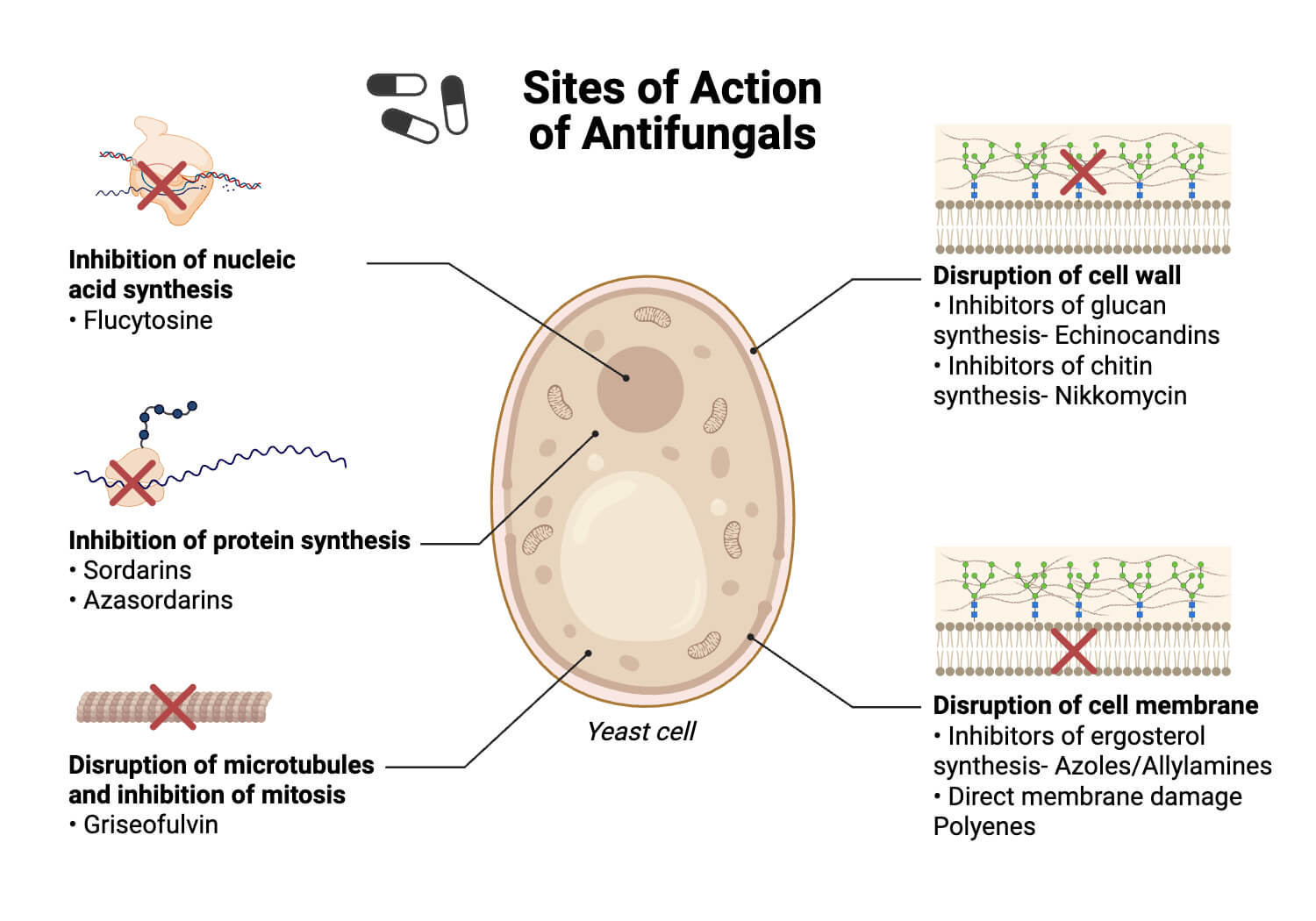
Antifungal treatments can be classified into three main classes of systemic drugs: polyenes, azoles, and echinocandins (Zhang et al., 2025). AFR can develop either during treatment through genetic mutation or via environmental exposure, such as in agriculture, where fungicides are used extensively (Chaudhary & Thakur, 2025).
Common Fungal Pathogens and Resistance Patterns
Candida auris: An Emerging Threat
Candida auris is a multidrug-resistant yeast classified as an urgent threat by the U.S. Centers for Disease Control and Prevention, with a nearly five-fold increase in clinical cases in the United States between 2019 and 2022 (Centers for Disease Control and Prevention, 2024). It is a pan-drug-resistant organism, including fluconazole and multiple antifungal classes (Chowdhary et al., 2023). Infections with this species have a mortality rate of up to 45% despite antifungal therapy (Zhang et al., 2025).
Aspergillus fumigatus and Azole Resistance
Azole-resistance Aspergillus fumigatus (ARAF) has seen a 10% increase in resistance in some regions of Europe and Asia, making it a growing clinical challenge (Van Rhijn & White, 2025). Resistance in this species can arise due to environmental exposure to agricultural triazole fungicides, which share the same target mechanisms as medical azoles (Nature Microbiology, 2025). This development is alarming, as patients may develop resistant infections without any prior antifungal therapy (Fisher et al., 2022).
Mechanisms of Antifungal Resistance
Drug Target Alterations
Azole resistance is one of the most common mechanisms and involves point mutations in the ERG11 gene (in Candida spp.) or cyp51A gene (in Aspergillus spp.) (Chaudhary & Thakur, 2025). Similarly, Echinocandin resistance arises from mutations in the FKS1 or FKS2 genes encoding the catalytic subunit of the glucan synthase, conferring cross-resistance to the entire class of drug(s) (Van Rhijn & White, 2025).
Efflux Pump Overexpression
Overexpression of ATP-binding cassette (ABC) transporters, such as CDR1 and CDR2, reduces intracellular drug accumulation. Likewise, members of the major facilitator superfamily (MFS), such as MDR1, employ the same mechanism, which is upregulated during azole therapy in chronically infected patients (Chaudhary & Thakur, 2025; Van Rhijn & White, 2025).
Biofilm Formation
When fungal cells are embedded in an extracellular matrix that impedes drug penetration, they form biofilms, which also shelter metabolically quiescent persister cells (Van Rhijn & White, 2025). C. auris has a robust biofilm-forming capacity. Biofilm-associated infections can exhibit up to a 1,000-fold higher minimum inhibitory concentration (MIC) than those of planktonic cells (Chaudhary & Thakur, 2025).
Factors Contributing to Antifungal Resistance
Overuse of Antifungal Medications
The widespread use of azoles, such as fluconazole, in immunocompromised patients can favor the emergence of resistant mutants (Van Rhijn & White, 2025). Similarly, exposure to suboptimal doses from poor bioavailability and drug interactions can select for resistant variants (Chaudhary & Thakur, 2025).
Agricultural Fungicide Applications
Fungicides such as triazoles (e.g., tebuconazole, propiconazole) target the same site as medical azoles (i.e., CYP51). This selects for cross-resistant fungal populations in the environment (Nature Microbiology, 2025). Studies have confirmed that clinical isolates of A. fumigatus carry azole-resistant mutations found also in agricultural soil samples (Fisher et al., 2022).
Environmental and Genetic Factors
With rising temperatures, thermotolerant pathogens such as C. auris are emerging (Fisher et al., 2022). Other factors, such as chromosomal instability and aneuploidy in fungal populations, can further facilitate rapid genetic adaptation (Chaudhary & Thakur, 2025).
Impact of Antifungal Resistance on Public Health
Challenges in Treating Invasive Fungal Infections
Invasive fungal infections are challenging due to limited therapeutic options, diagnostic delays, and escalating antifungal resistance (Van Rhijn & White, 2025). There are about 6.5 million invasive fungal infections and 2.5 million associated deaths globally each year (Dimopoulos & Akinosoglou, 2025).
Increased Mortality Rates and Healthcare Costs
The mortality rate from invasive fungal infections has reached up to 45% despite antifungal therapy in immunocompromised patients (Zhang et al., 2025). Similarly, azole-resistant aspergillosis has a 12-week mortality rate of up to 60% in high-risk populations (Van Rhijn & White, 2025). The global antifungal drug market was valued at $14.09 billion in 2024 and is projected to reach $18.08 billion by 2033, reflecting the growing burden of fungal diseases (Zhang et al., 2025).
Strategies to Combat Antifungal Resistance
Development of Novel Antifungal Agents
The FDA has approved several novel antifungal drugs, such as ibrexafungerp (in June 2021), oteseconazole (in April 2022), and rezafungin (in March 2023). Similarly, drugs such as olorofim and fosmanogepix are expected to be approved in the coming years (Kriegl et al., 2025).
Antifungal Stewardship Programs
Antifungal stewardship programs (ASPs) optimize antifungal use through adherence to proper prescribing guidelines, de-escalation, and therapeutic drug monitoring. Advancements in these programs enable timely therapy and personalized treatment plans (Van Rhijn & White, 2025).
Enhanced Surveillance and Diagnostic Techniques
Rapid molecular diagnostics, such as multiplex PCR, next-generation sequencing, and lab-on-chip platforms, enable culture-independent detection of resistance mutations directly from patient samples (Gudisa et al., 2025). Routine antifungal susceptibility testing (AST) and adequate laboratory capacity are essential to provide appropriate treatment strategies (McCormick & Ghannoum, 2024).
Recent Advances in Antifungal Research
Mandimycin: A New Experimental Antifungal
Mandimycin is a newly discovered antifungal with a glycosylated polyene macrolide structure. Unlike amphotericin B, it does not bind sterols but instead targets phospholipids in the fungal cell membrane (Deng et al., 2025). This mechanism demonstrates its potential against amphotericin B-resistant strains, including C. auris, in both in vitro and mouse models (Deng et al., 2025).
Olorofim: Progress in Clinical Trials
Olorofim is a first-in-class orotomide antifungal that targets dihydroorotate dehydrogenase (DHODH) in the fungal pyrimidine biosynthesis pathway (Kriegl et al., 2025). A phase 2b trial, published in The Lancet Infectious Diseases, involved 204 patients across 22 centers in 11 countries with azole-resistant Aspergillus and other difficult-to-treat molds that are difficult to treat (Maertens et al., 2025).
Olorofirm was generally tolerated, with no treatment-related deaths and no emergence of resistance observed during therapy (Maertens et al., 2025). Its oral formulation and suitability for extended therapy of up to 6-7 months distinguish it from existing antifungal options (Rex, 2025).
The Future of Antifungal Resistance Management
The “One Health” approach integrates human medicine, agriculture, and environmental science. It provides the most credible pathway for sustainably managing antifungal resistance sustainability (Van Rhijn & White, 2025). Antifungal vaccines and immunotherapies targeting C. auris and Aspergillus antigens are in preclinical and early clinical development as complementary long-term strategies (Zhang et al., 2025). Investment in antifungal research and development is essential to address the market failure that has suppressed antifungal innovation (Kriegl et al., 2025).
Conclusion
Antifungal resistance has not received the same attention as bacterial antimicrobial resistance, despite causing millions of deaths annually (McCormick & Ghannoum, 2024). There are urgent public health concerns that demand immediate action to address the emergence of C. auris and azole-resistant A. fumigatus (WHO, 2022). Recent breakthroughs have yielded a few discoveries, providing grounds for cautious optimism. However, innovation and surveillance must go hand-in-hand to preserve antifungal efficacy for future generations (Kriegl et al., 2025; Maertens et al., 2025; Deng et al., 2025; Van Rhijn & White, 2025).
References
- Akinosoglou, K., Papageorgiou, D., Gogos, C., & Dimopoulos, G. (2025). An update on newer antifungals. Expert Review of Anti-Infective Therapy, 23(2–4), 149–158. https://doi.org/10.1080/14787210.2025.2461566
- Atalor, S. I., Mezgebo, K., Meresa, Z., Faith, I., Ebiala, F. I. Chime, M. S., & Fidelix, M. E. (2025). Review on Antifungal Resistance: Definition, Mechanisms, Diagnosis, Challenges and Solutions. Journal of Medicine and Health Research, 10(2), 224-242.
- CDC. (2025, June 2). Antimicrobial resistance threats in the United States, 2021-2022. Antimicrobial Resistance. https://www.cdc.gov/antimicrobial-resistance/data-research/threats/update-2022.html
- Chaudhary, R., & Thakur, Z. (2025a). From detection to action: New diagnostic insights into antifungal resistance. Expert Review of Molecular Diagnostics, 25(6), 203–208. https://doi.org/10.1080/14737159.2025.2477027
- Chaudhary, R., & Thakur, Z. (2025b). The hidden threat: Unveiling the rise of antifungal drug resistance. Microbial Pathogenesis, 209, 108068. https://doi.org/10.1016/j.micpath.2025.108068
- Deng, Q., Li, Y., He, W., Chen, T., Liu, N., Ma, L., Qiu, Z., Shang, Z., & Wang, Z. (2025). A polyene macrolide targeting phospholipids in the fungal cell membrane. Nature, 640(8059), 743–751. https://doi.org/10.1038/s41586-025-08678-9
- Fisher, M. C., Alastruey-Izquierdo, A., Berman, J., Bicanic, T., Bignell, E. M., Bowyer, P., Bromley, M., Brüggemann, R., Garber, G., Cornely, O. A., Gurr, Sarah. J., Harrison, T. S., Kuijper, E., Rhodes, J., Sheppard, D. C., Warris, A., White, P. L., Xu, J., Zwaan, B., & Verweij, P. E. (2022). Tackling the emerging threat of antifungal resistance to human health. Nature Reviews Microbiology, 20(9), 557–571. https://doi.org/10.1038/s41579-022-00720-1
- Khan, H., Khan, Z., Amin, S., Mabkhot, Y. N., Mubarak, M. S., Hadda, T. B., & Maione, F. (2017). Plant bioactive molecules bearing glycosides as lead compounds for the treatment of fungal infection: A review. Biomedicine & Pharmacotherapy = Biomedecine & Pharmacotherapie, 93, 498–509. https://doi.org/10.1016/j.biopha.2017.06.077
- Kriegl, L., Egger, M., Boyer, J., Hoenigl, M., & Krause, R. (2025). New treatment options for critically important WHO fungal priority pathogens. Clinical Microbiology and Infection, 31(6), 922–930. https://doi.org/10.1016/j.cmi.2024.03.006
- Maertens, J. A., Thompson, G. R., III, Spec, A., Donovan, F. M., Hammond, S. P., Bruns, A. H. W., Rahav, G., Shoham, S., Johnson, R., Rijnders, B., Schaenman, J., Hoenigl, M., Morrissey, C. O., Mehta, S. R., Heath, C. H., Koehler, P., Paterson, D. L., Slavin, M. A., Fortún, J., … Chen, S. C.-A. (2025). Olorofim for the treatment of invasive fungal diseases in patients with few or no therapeutic options: A single-arm, open-label, phase 2b study. The Lancet Infectious Diseases, 25(11), 1177–1188. https://doi.org/10.1016/s1473-3099(25)00224-5
- McCormick, T., & Ghannoum, M. (2024). Time to think antifungal resistance. Pathogens and Immunity, 8(2), 158–176. https://doi.org/10.20411/pai.v8i2.656
- van Rhijn, N., & Rhodes, J. (2025). Evolution of antifungal resistance in the environment. Nature Microbiology, 10(8), 1804–1815. https://doi.org/10.1038/s41564-025-02055-y
- Vitiello, A., Ferrara, F., Boccellino, M., Ponzo, A., Cimmino, C., Comberiati, E., Zovi, A., Clemente, S., & Sabbatucci, M. (2023). Antifungal drug resistance: an emergent health threat. Biomedicines, 11(4), 1063. https://doi.org/10.3390/biomedicines11041063
