Skip to content
Microbe Notes

Microbe Notes

  • Home
  • Biological Sciences
    • Biochemistry
    • Bioinformatics
    • Biology
    • Biotechnology
    • Botany
    • Cell Biology
    • Genetics
    • Molecular Biology
    • Zoology
  • Microbiology
    • Agricultural Microbiology
    • Bacteriology
    • Basic Microbiology
    • Environmental Microbiology
    • Food Microbiology
    • Immunology
    • Mycology
    • Parasitology
    • Virology
  • Laboratory Methods
    • Biochemical Test
    • Culture Media
    • Instrumentation
    • Microscopy
    • Staining
  • Health and Medical
    • Diseases
    • Epidemiology
    • Human Anatomy and Physiology
    • Medical Devices
    • Pharmacology
  • Resources
    • Difference Between
    • Microbiology Terms
    • Microorganisms Note
    • Protocols
    • Research Methodology
    • Syllabus

Bacteriology

Bacteriology is a branch or discipline of science that studies different characteristics of bacteria and their association with other organisms or disciplines.

  • Over the years, the discipline of bacteriology has evolved from the microbiological tests performed only by physicians, the application of the germ theory of disease and economic concerns relating to the spoilage of foods and wine to the use of bacteria to simpler forms of laboratory tests and the production of new nutritious food and antibiotics.
  • The study of bacteria began with the discovery of the microscope and was mostly limited to experts and scientists of that time.
  • The initial advances in pathogenic bacteriology began with the identification and characterization of bacteria associated with specific diseases.
  • Nowadays, however, bacteriology is used in various other fields like food, pharmaceuticals, agriculture, and the environment.
  • Significant advances made in bacteriology over the last century have resulted in the development of many useful vaccines like pneumococcal polysaccharide vaccine, diphtheria toxoid as well as antibiotics.
  • At present, most bacterial diseases in humans and their infectious agents have been identified, although significant variants continue to evolve and sometimes emerge.
  • Studies made in bacteriology have also allowed the use of gene recombination technology in bacteria to produce improved bacterial strains that can then be used in various areas.
  • The importance of bacteriology continues to grow throughout the years as many diseases and disorders associated with almost all living beings are caused by bacteria.
  • Studies of non-pathogenic bacteria that exist in a symbiotic relationship with plants and animals are even beneficial to said organisms.
  • The identification and classification of bacteria into different groups have allowed for a convenient way of studying these bacteria and the formation of a separate branch, systemic bacteriology, that deals with taxonomy.
  • Besides, bacteriological studies, subsequently, have also been divided into different areas like soil bacteriology, public-health bacteriology, industrial bacteriology, etc.
  • Bacteriological studies have been the focal point for disease diagnosis and treatment, and their importance continues to grow with the emergence of new bacteria and associated diseases.

Gram-Positive Bacteria: Characteristics, Examples & Diseases

April 9, 2025March 9, 2025 by Dr. Faith Mokobi
Gram-positive bacteria

Gram-positive bacteria characteristics These bacteria have very distinct features that characterize it and differentiates it from other types of bacteria. These include: Gram-positive bacteria shape Despite most bacteria being differentiated … Read more

Pseudomonas aeruginosa: Morphology, Characteristics, Infections & Virulence

September 26, 2026March 8, 2025 by Anupama Sapkota
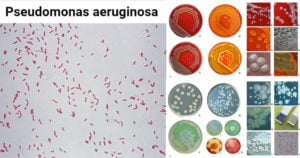
Pseudomonas aeruginosa

Pseudomonas aeruginosa is an aerobic microorganism that is a motile, Gram-negative rod-shaped bacteria distributed throughout different habitats in the world. Classification of Pseudomonas aeruginosa The following is the taxonomical classification … Read more

Gram-Negative Bacteria: Structure, Examples & Antibiotic Resistance

April 9, 2025March 7, 2025 by Dr. Faith Mokobi
Gram-negative bacteria

These are bacteria that define the opposite of the gram-positive bacteria in relation to the differential staining technique.  During gram staining, the gram-negative bacteria will lose the crystal violet dye … Read more

Eubacteria: Characteristics, Structure, Types, Examples

June 17, 2025February 3, 2025 by Babita Sharma
Eubacteria

Eubacteria is a large group of bacteria having rigid cell walls, flagella, DNA (single circular chromosome), and a single cell lacking a nucleus. Characteristics of Eubacteria Structure of Eubacteria Types … Read more

Staphylococcus aureus: Morphology, Characteristics, Infections & Virulence

September 26, 2026October 23, 2024 by Sagar Aryal, PhD
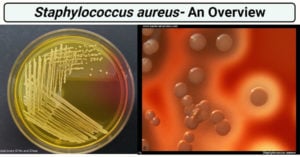
Staphylococcus aureus

Habitat of Staphylococcus aureus Morphology of Staphylococcus aureus Cultural characteristics of Staphylococcus aureus Biochemical characteristics of Staphylococcus aureus Virulence factors of Staphylococcus aureus A. Cell wall components B. Enzymes C. Toxins Clinical … Read more

Coxiella burnetii: Characteristics, Q Fever, Pathogenesis & Diagnosis

September 26, 2026October 13, 2024 by Sagar Aryal, PhD
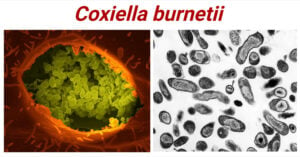
Coxiella burnetii

Coxiella burnetii is a Gram-negative acidophilic bacterium that occurs intracellularly within the phagolysosome of the eukaryotic host. Classification of Coxiella burnetii Domain Bacteria Phylum Proteobacteria Class Gammaproteobacteria Order Legionellales Family Coxiellaceae … Read more

Mesophiles: Definition, Habitat, Examples, Advantages

March 8, 2024 by Prativa Shrestha
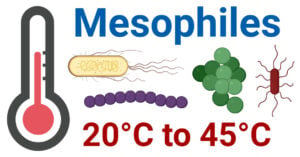
Mesophiles

Microorganisms are classified into different groups based on the temperature ranges. Temperature is one of the essential factors in the growth rate, multiplication, survival, and death of living organisms, among … Read more

Burkholderia pseudomallei: Morphology, Characteristics, Melioidosis & Diagnosis

September 26, 2026October 9, 2023 by Prashant Dahal
Burkholderia pseudomallei

Burkholderia pseudomallei is a Gram-negative, motile, non-spore-forming, aerobic Betaproteobacteria of the Pseudomonadota phylum in the Burkholderiaceae family.  It is an environmental saprophytic bacteria naturally found in soil and water. However, … Read more

Cocci vs. Bacilli: 5 Major Differences with Examples

October 7, 2023 by Prashant Dahal
Cocci vs. Bacilli

Bacteria may be a domain of minuscule, microscopic, unicellular beings, but they are amazingly diverse among themselves. There are multiple classification schemes used to classify bacteria; among them classification based … Read more

Vibrio vulnificus: Morphology, Characteristics, Virulence, Diagnosis

September 26, 2026September 20, 2023 by Prashant Dahal
Vibrio vulnificus

Vibrio vulnificus is a Gram-negative, facultative anaerobic, curved rod-shaped, motile, Gammaproteobacteria of the Vibrio genus in the Vibrionaceae family. It is one human pathogenic species of the Vibrio genus together … Read more

Older posts
Newer posts
← Previous Page1 … Page3 Page4 Page5 … Page15 Next →

Topics / Categories

  • Agricultural Microbiology (30)
  • Bacteriology (141)
  • Basic Microbiology (64)
  • Biochemical Test (114)
  • Biochemistry (225)
  • Bioinformatics (28)
  • Biology (149)
  • Biotechnology (61)
  • Botany (113)
  • Cell Biology (108)
  • Culture Media (68)
  • Difference Between (89)
  • Diseases (59)
  • Environmental Microbiology (15)
  • Epidemiology (29)
  • Food Microbiology (52)
  • Genetics (87)
  • Human Anatomy and Physiology (84)
  • Immunology (124)
  • Instrumentation (73)
  • Medical Devices (15)
  • Microscopy (35)
  • Molecular Biology (136)
  • Mycology (44)
  • Parasitology (28)
  • Pharmacology (28)
  • Protocols (8)
  • Research Methodology (20)
  • Staining (30)
  • Syllabus (20)
  • Virology (69)
  • Zoology (40)
  • Our Team
  • Advisory Board
  • About Us
  • Contact Us
  • Editorial Policy
  • Privacy Policy
  • Cookie Policy
  • Disclaimer (Terms and Conditions)
© 2026 Microbe Notes. Made with ♡ by Sagar Aryal.