
Skip to content
Microbe Notes

Microbe Notes

  • Home
  • Life Sciences
    • Biochemistry
    • Bioinformatics
    • Biology
    • Biotechnology
    • Botany
    • Cell Biology
    • Genetics
    • Molecular Biology
    • Zoology
  • Microbiology
    • Agricultural Microbiology
    • Bacteriology
    • Basic Microbiology
    • Environmental Microbiology
    • Food Microbiology
    • Mycology
    • Parasitology
    • Virology
  • Laboratory and Diagnostics
    • Biochemical Test
    • Culture Media
    • Diagnostic Tests
    • Instrumentation
    • Microscopy
    • Staining
  • Medical Sciences
    • Cancer Biology
    • Epidemiology
    • Human Anatomy
    • Human Physiology
    • Immunology
    • Infections and Diseases
    • Medical Devices
    • Pharmacology
  • Resources
    • Difference Between
    • Microbiology Terms
    • Microorganisms Note
    • Research Methodology
    • Syllabus

Cancer Biology

Cancer biology is a branch of biology that studies the complex expression of genes, proteins, and biological processes that initiate cancer development and growth.

  • Understanding the many different biological systems underlying cancer’s development is essential for understanding cancer and identifying new targets for treatment.
  • Most of the researches in cancer biology are concerned with genomic conservation; in particular, how the genetic composition of cell ensure that no errors occur during processes like copying the genome or repairing it after damage.
  • The genetic conservation also ensures that a complete copy of the genome is inherited by each daughter cell.
  • Cancer results when one or all of these processes go wrong, which leads to inconsistency in cancer cells that can successfully be exploited for treatment.
  • Another critical aspect of cancer biology is studies related to protein function and interactions on a systems-wide scale to identify how signaling pathways are restructured in cancer cells, and how this affects cell behavior, cell shape, and cell metabolism.
  • Cancer cells are transformed cells after acquiring a series of changes that permit them to form tumors, which behave differently depending on the genetic changes that result in this transformation.
  • The hallmarks of cancer cells include signs like self-sufficiency in growth signals, evasion of programmed cell death, insensitivity to growth-inhibitory signals, limitless replicative potential, sustained angiogenesis, and tissue invasion.
  • Cancer biology is a vast branch that studies the process of carcinogenesis, mutations, carcinogens, and cellular changes.
  • The role of cancer biology in the perioperative period is of increasing interest as it provides evidence regarding fundamental principles of cancer biology, especially tumor microenvironment, and discusses new therapeutic opportunities.
  • Different researches in cancer biology help in the identification of cancer symptoms and the formation of malignant tumors of different cells found in living beings.
  • These researches also enable the differentiation between normal cells and cancer cells which assists in the early diagnosis of cancer.

Carcinogens: Classification, Sources, Risks, Cancer, Detection
October 20, 2026July 22, 2026 by Rashal Shakya
Carcinogens

Every day we get exposed to a myriad of different chemicals, organisms, or other agents, be it in food, water, air, cosmetics, paints, and other environments. A few of these … Read more
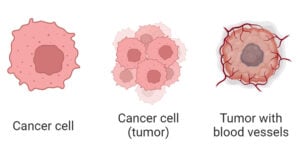
Cancer Cells: Definition, Morphology, Types, Development

October 20, 2026March 10, 2024 by Sanju Tamang
Cancer Cells

Cancer cells are cells that undergo uncontrolled growth and division, resulting in the development of an abnormal tissue mass referred to as a tumor. Unlike normal cells, which follow a … Read more

Topics / Categories

  • Agricultural Microbiology (30)
  • Bacteriology (141)
  • Basic Microbiology (64)
  • Biochemical Test (114)
  • Biochemistry (226)
  • Bioinformatics (28)
  • Biology (147)
  • Biotechnology (63)
  • Botany (113)
  • Cancer Biology (2)
  • Cell Biology (107)
  • Culture Media (68)
  • Diagnostic Tests (6)
  • Difference Between (89)
  • Environmental Microbiology (15)
  • Epidemiology (29)
  • Food Microbiology (52)
  • Genetics (88)
  • Human Anatomy (48)
  • Human Physiology (36)
  • Immunology (124)
  • Infections and Diseases (58)
  • Instrumentation (73)
  • Medical Devices (17)
  • Microscopy (35)
  • Molecular Biology (137)
  • Mycology (44)
  • Parasitology (28)
  • Pharmacology (28)
  • Research Methodology (20)
  • Staining (30)
  • Syllabus (20)
  • Virology (69)
  • Zoology (40)
  • Our Team
  • Advisory Board
  • About Us
  • Contact Us
  • Editorial Policy
  • Privacy Policy
  • Cookie Policy
  • Disclaimer (Terms and Conditions)
© 2026 Microbe Notes. Made with ♡ by Sagar Aryal.