Skip to content
Microbe Notes

Microbe Notes

  • Home
  • Biological Sciences
    • Biochemistry
    • Bioinformatics
    • Biology
    • Biotechnology
    • Botany
    • Cell Biology
    • Genetics
    • Molecular Biology
    • Zoology
  • Microbiology
    • Agricultural Microbiology
    • Bacteriology
    • Basic Microbiology
    • Environmental Microbiology
    • Food Microbiology
    • Immunology
    • Mycology
    • Parasitology
    • Virology
  • Laboratory Methods
    • Biochemical Test
    • Culture Media
    • Instrumentation
    • Microscopy
    • Staining
  • Health and Medical
    • Diseases
    • Epidemiology
    • Human Anatomy and Physiology
    • Medical Devices
    • Pharmacology
  • Resources
    • Difference Between
    • Microbiology Terms
    • Microorganisms Note
    • Protocols
    • Research Methodology
    • Syllabus

Biotechnology

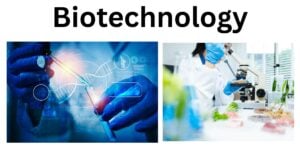
Biotechnology is a branch of biology that deals with the utilization of living beings or living processes for the production of different products that are important for living beings.

  • Biotechnology is a fairly emerging discipline that crosses technical processes like manufacturing with biological compounds.
  • The discipline utilizes both cellular and biomolecular processes to develop processes and products that improve our lives and the biological system of the planet.
  • Biotechnology often overlaps with other fields like immunology, genomics, recombinant technology, and pharmaceutical microbiology.
  • Even though biotechnology is viewed as a rather modern concept, it has been widely used throughout history in the form of increasing cultivation, breeding, and therapies.
  • In modern times, however, biotechnology makes use of more complex concepts like recombinant DNA technology, plant tissue culture, among others.
  • Biotechnology exists in a close relationship with bioinformatics for the exploration, extraction, and production of biological products.
  • The production of insulin and antibiotics is one of the most notable examples of biotechnology that supports living beings and protects them from various diseases.
  • One of the first uses of biotechnology is in the agricultural area where farmers employed techniques of selective breeding in order to increase the harvest.
  • Besides, the production of alcohol and bread by the process of fermentation is another important and commonly used biotechnological technique.
  • Four of the most common applications of biotechnology in modern times are made in areas like medicine, agriculture, industries, and the environment.
  • Different forms of biotechnological processes like wastewater management are considered imperative for the protection of water sources.
  • Plant and animal tissue culture has given new ways to form life which solves the problem of infertility in both plants and animals.
  • A branch of biotechnology called, biopharmaceuticals are involved in the utilization of living beings for the production of different therapeutic agents that help in the treatment of life-threatening diseases.

Gene Cloning and Recombinant DNA Technology

March 16, 2026February 22, 2026 by Saman Bhattarai
Gene Cloning and Recombinant DNA Technology

The fundamental concepts of gene expression were based on genetic analysis of bacteria and viruses (prokaryotes only). The development of gene cloning, or molecular cloning, allowed scientists and molecular biologists … Read more

Viroids: Definition, Classification, Transmission, Detection

March 24, 2026January 23, 2026 by Nirmita Sharma
Viroids

Viroids are the smallest known causative agents of infectious disease, minute (246-401 nt), well-structured, circular, single-stranded RNAs devoid of detectable messenger RNA activity. Whereas viruses have been termed ‘obligate parasites … Read more

pBR322 Vector: Structure, Sites, Applications

August 8, 2025 by Nidhi Abhay Kulkarni
pBR322 Vector

pBR322 is a commonly used cloning vector in E. coli and has tremendous applications in cloning. pBR322 full form p = plasmid BR = Bolivar, and Rodriguez  322 = numerical … Read more

Microbial Biotechnology in Environmental Applications

June 17, 2025May 27, 2025 by Manisha Ghimire
Microbial Biotechnology in Environmental Applications

Microbial biotechnology is widely used to clean up contaminated environments, degrade pollutants, and produce green and sustainable energy using microorganisms. The various environmental applications of microbial biotechnology are discussed below: … Read more

Continuous Culture: Principles, Methods, and Application

December 30, 2024October 30, 2024 by Sanjogta Thapa Magar
Continuous Culture

Continuous culture is a continuous process where nutrients are continually added to the bioreactor and the culture broth (containing cells and metabolites) is removed at the same time. The volume … Read more

Bioleaching: Microorganisms, Types, Factors, Applications

September 20, 2024 by Agrani Paudel
Bioleaching

Bioleaching, also called biomining or microbial bioleaching is a biotechnological process that employs microorganisms to extract metal from their ores and the solid metallic waste. The traditionally used method not … Read more

Vermicomposting: Methods, Process, Mechanisms, Uses

September 8, 2024September 6, 2024 by Ankita Dahal
Vermicomposting

Vermicomposting is an environmental biotechnology of conversion of organic household wastes to high nutrient value organic manure using earthworms. Methods of Vermicomposting There are several methods of carrying out the … Read more

Probiotics: Properties, Sources, Mechanisms, Types, Uses

May 23, 2024 by Prativa Shrestha
Probiotics

Probiotics are live microorganisms (bacteria and yeasts) present in foods, such as yogurt and sauerkraut, and supplements, which are innocuous (not harmful) to our human health and host. History of … Read more

Scope of Biotechnology with Branches and Careers

May 21, 2024 by Sanju Tamang
Scope of Biotechnology with Branches and Careers

Biotechnology is the field of science that uses the principles of biological science and technology to generate products that improve human health and the environment. This involves manipulating biological organisms … Read more

Prebiotics: Sources, Mechanisms, Types, Functions

April 29, 2024 by Prativa Shrestha
Prebiotics

Glenn Gibson and Marcel Roberfroid proposed the concept of prebiotics for the first time in 1955. Prebiotics, non-digestible short-chain carbohydrates such as fibers, are a food source for gut bacteria … Read more

Older posts
Newer posts
← Previous Page1 Page2 Page3 … Page5 Next →

Topics / Categories

  • Agricultural Microbiology (30)
  • Bacteriology (138)
  • Basic Microbiology (64)
  • Biochemical Test (114)
  • Biochemistry (212)
  • Bioinformatics (27)
  • Biology (147)
  • Biotechnology (46)
  • Botany (112)
  • Cell Biology (108)
  • Culture Media (68)
  • Difference Between (89)
  • Diseases (53)
  • Environmental Microbiology (15)
  • Epidemiology (29)
  • Food Microbiology (52)
  • Genetics (82)
  • Human Anatomy and Physiology (79)
  • Immunology (119)
  • Instrumentation (73)
  • Medical Devices (10)
  • Microscopy (31)
  • Molecular Biology (121)
  • Mycology (44)
  • Parasitology (28)
  • Pharmacology (28)
  • Protocols (9)
  • Research Methodology (20)
  • Staining (30)
  • Syllabus (20)
  • Virology (69)
  • Zoology (40)
  • Human Nervous System: Organs, Structure, Functions, Diseases
  • Human Urinary System: Organs, Structure, Functions, Diseases
  • Human Musculoskeletal System: Structure, Organs, Functions, Diseases
  • Classification of Bacteria on the basis of Nutrition
  • Antimicrobial Agents and Antimicrobial Resistance Detailed Guide
  • Our Team
  • Advisory Board
  • About Us
  • Contact Us
  • Editorial Policy
  • Privacy Policy
  • Cookie Policy
  • Disclaimer (Terms and Conditions)
© 2026 Microbe Notes. Made with ♡ by Sagar Aryal.