Skip to content
Microbe Notes

Microbe Notes

  • Home
  • Biological Sciences
    • Biochemistry
    • Bioinformatics
    • Biology
    • Biotechnology
    • Botany
    • Cell Biology
    • Genetics
    • Molecular Biology
    • Zoology
  • Microbiology
    • Agricultural Microbiology
    • Bacteriology
    • Basic Microbiology
    • Environmental Microbiology
    • Food Microbiology
    • Immunology
    • Mycology
    • Parasitology
    • Virology
  • Laboratory Methods
    • Biochemical Test
    • Culture Media
    • Instrumentation
    • Microscopy
    • Staining
  • Health and Medical
    • Diseases
    • Epidemiology
    • Human Anatomy and Physiology
    • Medical Devices
    • Pharmacology
  • Resources
    • Difference Between
    • Microbiology Terms
    • Microorganisms Note
    • Protocols
    • Research Methodology
    • Syllabus

Botany

Botany, derived from the Greek word “botanē,” meaning “grass,” “pasture,” “fodder,” or “herbs,” is the branch of biology dedicated to the study of plants. It is among the oldest natural sciences and has evolved into a complex discipline with profound implications for various aspects of human life.

The term “botany” encompasses a broad spectrum of plant-related studies, from their basic morphology to their intricate ecological interactions. Initially, botany included a wide array of plant-like organisms, but over time, distinctions were made, leading to a more focused study of actual plants.

The significance of botany lies in its multifaceted contributions:

  • Understanding plant diversity, characteristics, and applications in fields such as science, medicine, and cosmetics.
  • Pioneering the development of biofuels like biomass and methane gas as sustainable alternatives to fossil fuels.
  • Enhancing economic productivity by advancing crop studies and optimal growing techniques for increased yields.
  • Playing a pivotal role in environmental conservation through the identification and monitoring of plant species, vital for ecosystem health.

Botany’s roots stretch back thousands of years, with ancient civilizations like the Greeks, Egyptians, and Chinese laying the groundwork for our modern understanding of plants. Today, botany integrates knowledge from genetics, ecology, physiology, biochemistry, and other disciplines to provide comprehensive insights into plant life.

The field of botany encompasses numerous branches, each focusing on different aspects of plant life and their interactions with the environment. These branches include:

  • Plant Anatomy: This branch delves into the internal structure of plants, studying tissues, cells, and organs, and their respective functions.
  • Plant Morphology: Morphology deals with the external form and structure of plants, including characteristics such as size, shape, and the arrangement of organs.
  • Plant Physiology: Physiology examines the various functions and processes within plants, such as photosynthesis, respiration, nutrition, and growth.
  • Plant Ecology: Ecology studies the relationships between plants and their environment, including factors like distribution, adaptation, and interactions with other organisms.
  • Plant Taxonomy: Taxonomy involves the classification, naming, and identification of plants based on shared characteristics and evolutionary relationships.
  • Plant Genetics: Genetics explores the heredity and variation of plants, including mechanisms of inheritance, breeding techniques, and genetic modification.
  • Plant Evolution: Evolutionary biology investigates the origin and diversification of plants over geological time scales, examining evolutionary relationships and adaptations to changing environments.
  • Plant Biotechnology: Biotechnology applies principles of biology and technology to manipulate plants for various purposes, such as crop improvement, pharmaceuticals, and biofuel production.
  • Plant Pathology: Pathology studies diseases in plants, including their causes, symptoms, prevention, and control methods.
  • Ethnobotany: Ethnobotany examines the relationships between plants and human cultures, including traditional uses of plants for food, medicine, rituals, and other purposes.

Each of these branches contributes uniquely to our understanding of plants and their significance in ecosystems, agriculture, medicine, industry, and culture. By studying these aspects comprehensively, botanists can address challenges related to food security, environmental conservation, and human well-being.

Plant Redifferentiation: Cellular Events, Examples, Applications

March 23, 2026March 17, 2026 by Nirmita Sharma
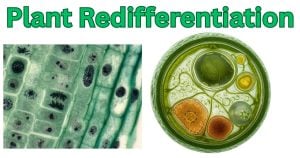
Plant Redifferentiation

Plant redifferentiation refers to the biological process where dedifferentiated or partially differentiated plant cells reacquire their ability to be structurally, anatomically, and physiologically specialised by losing their ability to divide … Read more

Plant Differentiation: Types of Cells, Examples, Significance

March 23, 2026March 16, 2026 by Nirmita Sharma
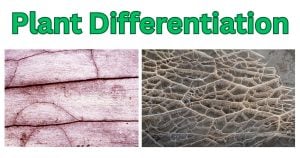
Plant Differentiation

Plant Differentiation is the biological process by which unspecialized, actively dividing meristematic cells develop into structurally and functionally specialized permanent cells. Through the process of differentiation, cells undergo specific changes … Read more

Phytohormones (Plant Hormones): Types, Functions, Examples

February 11, 2026 by Nirmita Sharma
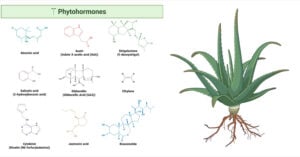
Phytohormones (Plant Hormones)

Phytohormones or plant hormones are the organic substances formed in minute amounts by plants that have a key function in growth and developmental responses to environmental stimuli in plants. They … Read more

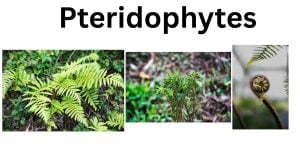
Pteridophytes: Features, Classes, Reproduction, Applications

March 24, 2026January 22, 2026 by Nirmita Sharma
Pteridophytes

The term “Pteridophyta” originates from the Greek words “Pteron,” meaning “feather,” and “phyton,” meaning “plant,” i.e., plants with feather-like fronds. The pteridophytes formed a dominant part of the Earth’s vegetation … Read more

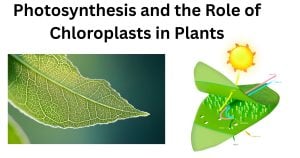
Role of Chloroplasts in Plants and Photosynthesis

March 24, 2026January 21, 2026 by Nirmita Sharma
Photosynthesis and the Role of Chloroplasts in Plants

Photosynthesis is a process in which green plants, algae, and certain bacteria harness light energy into chemical energy, primarily in the form of glucose. In higher plants, the process primarily … Read more

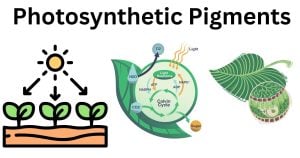
Photosynthetic Pigments: Types and Functions

March 24, 2026January 19, 2026 by Nirmita Sharma
Photosynthetic Pigments

Photosynthetic pigments are specific organic compounds that are necessary in the process of capturing light energy during photosynthesis. Located in the thylakoid membranes of chloroplasts, the pigments have two functions: … Read more

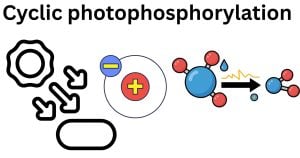
Cyclic photophosphorylation: Definition, Steps, Significance

March 24, 2026January 17, 2026 by Nirmita Sharma
Cyclic photophosphorylation

Cyclic photophosphorylation is a process of photosynthetic electron transport where electrons excited by Photosystem I (PSI) do not enter the NADP+ and are reduced to NADPH but are repumped instead … Read more

Non-cyclic Photophosphorylation: Steps, Factors, Applications

March 24, 2026January 16, 2026 by Nirmita Sharma
 Non-cyclic photophosphorylation

Non-cyclic photophosphorylation is a light-dependent process that synthesizes ATP and NADPH in photosynthesis through a unidirectional flow of electrons. In this process, electrons are released from water molecules and transferred … Read more

Nutrient Budget in Plants: Guide to Nutrient Management

January 15, 2026 by Nirmita Sharma
Nutrient Budget in Plants

A nutrient budget in plants is a systematic accounting process that tracks the movements of essential nutrients within the agricultural system. It involves measuring the inputs (nutrients added into the … Read more

Photorespiration: Definition, Pathway, RuBisCO Role, Significance

March 24, 2026January 13, 2026 by Nirmita Sharma
Photorespiration

Photorespiration is a light-dependent metabolic pathway in plants where the oxygenation of ribulose-1, 5 5-bisphosphate (RuBP) to phosphoglycolate, a two-carbon metabolite, is catalysed by the enzyme RuBisCO, and this compound … Read more

Older posts
Page1 Page2 … Page12 Next →

Topics / Categories

  • Agricultural Microbiology (30)
  • Bacteriology (134)
  • Basic Microbiology (63)
  • Biochemical Test (114)
  • Biochemistry (206)
  • Bioinformatics (26)
  • Biology (142)
  • Biotechnology (41)
  • Botany (112)
  • Cell Biology (108)
  • Culture Media (68)
  • Difference Between (89)
  • Diseases (53)
  • Environmental Microbiology (14)
  • Epidemiology (28)
  • Food Microbiology (52)
  • Genetics (81)
  • Human Anatomy and Physiology (75)
  • Immunology (117)
  • Instrumentation (69)
  • Medical Devices (5)
  • Microscopy (31)
  • Molecular Biology (109)
  • Mycology (36)
  • Parasitology (28)
  • Pharmacology (22)
  • Protocols (9)
  • Research Methodology (20)
  • Staining (30)
  • Syllabus (20)
  • Virology (62)
  • Zoology (39)
Microbe Notes Android Application
  • HPLC: Principle, Instrumentation, Types, Uses, Diagram
  • Female Reproductive System: Organs, Structure & Functions
  • Digestion and Absorption of Dietary Fats with Steps
  • Disorders of Carbohydrate Metabolism with Examples
  • Lipoprotein Metabolism: Structure, Classification, Steps
  • Our Team
  • Advisory Board
  • About Us
  • Contact Us
  • Editorial Policy
  • Privacy Policy
  • Cookie Policy
  • Disclaimer (Terms and Conditions)
© 2026 Microbe Notes. Made with ♡ by Sagar Aryal.