
Microorganisms are ubiquitous and vital in ecosystems, industry, and human health. While many organisms are beneficial, some can be harmful, causing infections and diseases in humans, animals, and plants. These pathogenic microorganisms can spread rapidly, raising issues in medicine, healthcare, and public hygiene.
What are Antimicrobial Agents?
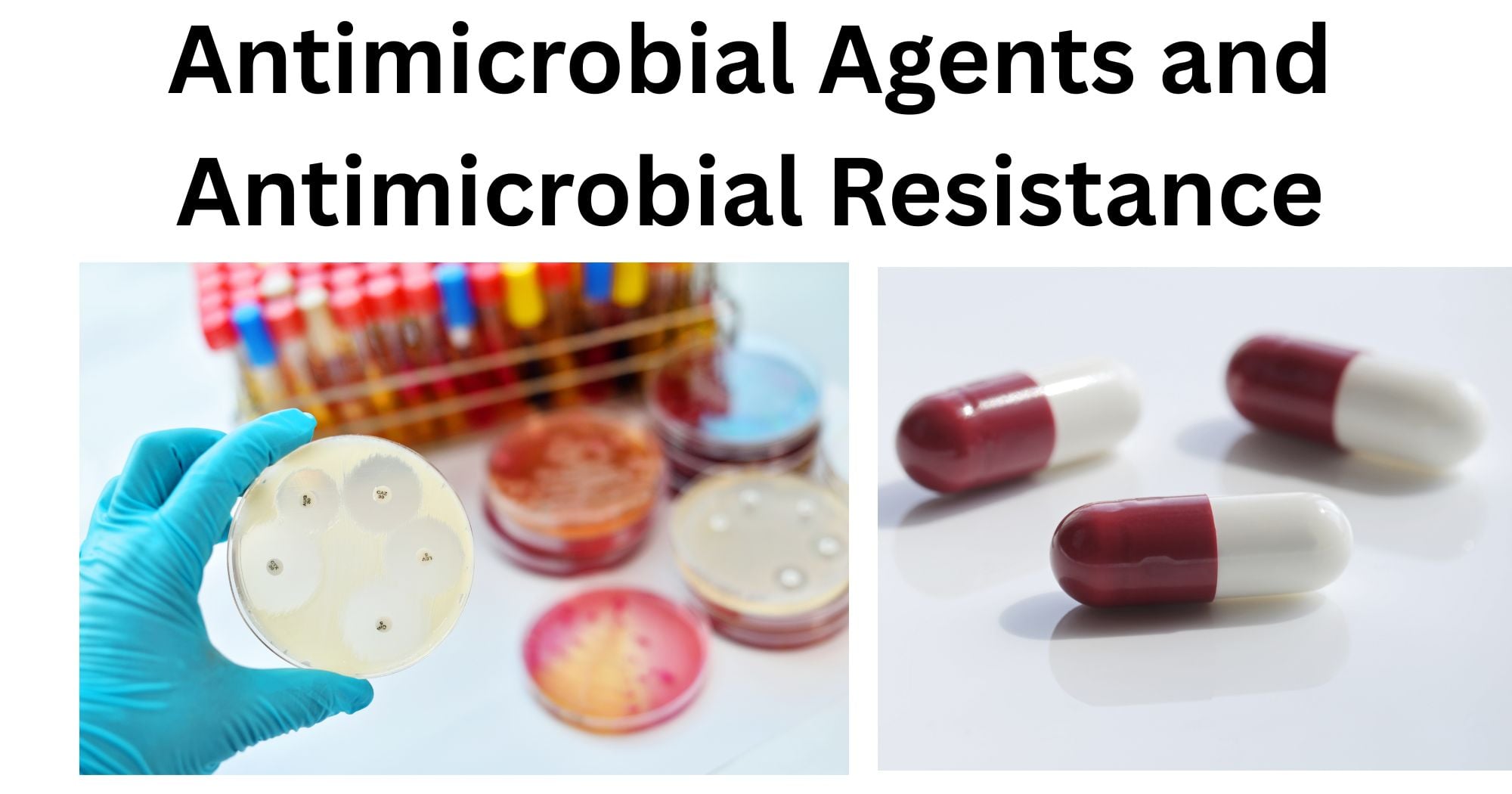
Antimicrobial agents can kill or inhibit the growth of microorganisms, including bacteria, viruses, fungi, parasites, and protozoans. These agents disrupt microbial growth and metabolism, preventing their pathogenicity. Depending on the organisms they act upon, they can be Antibacterial, Antiviral, Antifungal, Antiparasitic, or Antiprotozoan.
Any antimicrobial agents that are selective in their action in killing or inhibiting bacteria in our body are called Antibiotics. Moreover, the term “antibiosis” was first introduced by Paul Vuillemin in 1889 to describe a biological interaction between two or more organisms in which at least one organism is harmed.
Disinfectants and Antiseptics are chemical agents with antimicrobial properties differing in the surface they act upon. Disinfectants are chemical agents that destroy or reduce microbial populations on non-living surfaces. Example: Ethanol, Bleach, and Hydrogen peroxide.
Similarly, antiseptics are chemical agents that slow or stop the growth of microorganisms on living body surfaces, such as iodine solutions and chlorhexidine. Moreover, the ability of certain metals, such as Silver, Copper, Mercury, Gold, Zinc, and lead, exhibits antimicrobial effects even at low concentrations. It is referred to as an Oligodynamic property.
Sterilization eliminates all microbial life forms in or on an object, including bacteria, viruses, spores, and fungi. It reduces microbial populations to safe levels. Sterilization is often involved in food handling and public health activities such as washing hands and cleaning utensils.
History of Antimicrobial Agents
Infectious diseases have posed a significant threat to public health throughout history, often leading to widespread epidemics and high mortality rates before modern medicine, such as Penicillin, discovered by Alexander Fleming in 1928, which was the first antimicrobial compound to be found. Civilizations in different parts of the world relied on traditional knowledge of naturopathy, herbal medicines, and the antimicrobial properties of metals to combat infections.
The History of Antimicrobial agents can be categorized as follows:
Ancient Use of Antimicrobial Compounds
- Ayurveda (5000 years ago)
Ayurveda, an ancient Indian system of medicine, recognized microorganisms as “kirmi”. This system used herbal, mineral, and plant-derived compounds for antimicrobial properties. A wide range of ayurvedic medicines is in herbal medicine, minerals, and plant-derived compounds. Some antibacterial minerals include Makshiaka (copper pyrite), Kashish (potash alum), Gorochan (bile contained from a cow), and Shilajit (black bitumen). Some antibacterial herbs include Neem (Azadiracta indica), Guggul (Commiphora mukul), Garlic (Allium sativa), Amalaki fruit (Emblica officinalis), Tulsi (Ocimum sanctum), and Honey.
The antibiotic properties of ayurvedic drugs are known to treat various conditions, such as stomachaches, toothaches, fever, inflammation, and diseases of the cardiovascular system.
- Traditional Chinese Medicines
Traditional Chinese Medicine has also been known for the evolution of thousands of practices demonstrating antimicrobial effects. Huang Lian (Coptis chinensis) and Ginseng (Panax ginseng) are traditional herbs known for their antimicrobial properties in treating conditions such as diarrhea, vomiting, diabetes, and the common cold. Ginseng, the most admired drug in China, Korea, and Japan, can be documented to possess antiviral properties against influenza.
- Ancient Egyptian
Ancient Egyptians used moldy bread to treat infected wounds, an early form of fungal-based antibiotic therapy. Moreover, honey and resins were applied to the wound to prevent infections. Egyptians were the first to mention the antimicrobial effects of Copper in 2600 BC. They used copper vessels to sanitize drinking water and treat chest wounds.
- Ancient Nubian Societies (250 A.D. – 550 A.D.)
Evidence from ancient Nubian societies(modern-day Sudan) suggests the consumption of fermented beer with a thick consistency containing high concentrations of tetracycline, probably produced by Streptomyces. This discovery, made through chemical analysis of their bones, indicates long-term exposure to tetracycline, which is possibly used for treating infections like gum disease and wounds in adults and children.
First Synthetic Antibiotic Discovery
- 1908: Salvarsan (or Arsphenamine) is considered the first synthetic antimicrobial drug prepared. It was developed by Paul Ehrlich and his colleague Alfred Betheim, for which they received the Nobel Prize for Physiology or Medicine in 1908. It was designed to treat syphilis caused by the bacterium Treponema pallidum. Salvarsan is often called the first “magic bullet” because it was targeted to treat the infection without harming the host.
- 1928: The journey of modern antibiotics began in 1928 with Alexander Fleming’s discovery of Penicillin. The discovery was unintentional. After returning from holiday, Dr. Fleming observed that the mold grown on a Petri dish could inhibit bacterial growth (Staphylococcus) using an antimicrobial substance named Penicillin. Penicillin was widely recognized as an antibiotic, but it wasn’t until over a decade later that it was mass-produced and introduced as a treatment for bacterial infections.
- 1939: Sulfonamide is the first primary synthetic antimicrobial drug to have made a breakthrough. Gerhard Domagk, who developed Prontosil, the first antimicrobial drug belonging to the sulfonamides, was awarded the Nobel Prize for Physiology or Medicine. Prontosil was a drug with broad effectiveness against gram-positive cocci infections such as staphylococcal and streptococcal infections in humans.
- 1943: Streptomycin: Discovered by Selman Waksal, Streptomycin became the first effective antibiotic for treating tuberculosis. He received the Nobel Prize in Physiology or Medicine in 1943. Moreover, while studying a group of complex, filamentous soil bacteria posing affinities with fungi, Actinomycetes. Later, in the “golden era” of antibiotics, actinomycetes were a rich source of antibiotics.
- 1945: Penicillin Mass Production
- By 1945, Penicillin was introduced on a large scale as a treatment for bacterial infections. The pioneering work of Howard Florey and Sir Alexander Fleming, with contributions from Ernst Boris Chain, made it possible to purify and scale up penicillin production. This marks the beginning of the “Golden Era” of antibiotics, when the widespread availability of Penicillin dramatically changed the course of medicine, saving millions of lives.
- 1940-1962: Golden Era of Antibiotics
The period between 1940 and 1962 is often referred to as the “golden era of antibiotics, as this was when the majority of antibiotic classes still used today were discovered. During this time, the discovery of antibiotics, to a greater extent, played a critical role in reducing mortality and morbidity caused by various infections. These antibiotics included Streptomycin, Tetracyclines, Macrolides, Chloramphenicol, Cephalosporin, Vancomycin, Rifampin, and Polymyxin.
Classification of Antimicrobial Drugs
Antimicrobial drugs can be classified in the following ways:
- Based on origin
- Based on the chemical structure
- Based on the target microorganism
- Based on the spectrum of activity
- Based on the Mode of Action of the chemical structure
Based on the origin of Antimicrobial agents
Based on the origin of Antimicrobial agents, Antimicrobials can be Natural, Semisynthetic, or Synthetic.
- Natural Antimicrobial:
Antimicrobials produced as secondary metabolites of plants, animals, and microorganisms are natural antimicrobials.
| Antimicrobial | Producing Organism |
| Bacteria-derived Natural Antimicrobial | |
| Streptomycin | Streptomyces griseus |
| Gentamicin | Micromonospora |
| Tetracyclin | Streptomyces aureofaciens |
| Rifampin | Amycolatopsis rifamycinica |
| Bacitracin | Bacillus subtilis, Bacillus licheniformis |
| Erythromycin | Saccharopolyspora erythraea |
| Fungal-derived Natural Antimicrobial | |
| Penicillin | Penicillium |
| Gentamicin | Micromonospora |
| Cephalosporin | Acremonium chrysogenum |
| Fumagillin | Aspergillus fumigatus |
| Griseofulvin | Penicillium griseofulvum |
| Marine Organisms (Sponges, Actinomyces, Cyanobacteria, and Algae) | |
| Manzamine | Haliclona sp. |
| Discodermolide | Discodermia dissoluta |
| Salinosporamide | Salinispora tropica |
| Anthracimycin | Marine Streptomyces sp. |
| Phlorotannin, Laminarin | Marine Brown algae |
| Plant-derived Antimicrobial | |
| Curcumin | Curcuma longa |
| Berberine | Berberis sp. |
| Allicin | Allium sativum |
| Eugenol | Syzygium aromaticum (Clove) |
| Animals | |
| Piscidins | Fish |
| Magainins | African clawed frog |
| Cathelicidins | Snake venom, Human, Pig |
Semisynthetic Antimicrobials
Semisynthetic antimicrobial drugs are antimicrobial drugs that originate naturally but are chemically modified to enhance their efficacy, broaden their spectrum, or improve pharmacokinetic properties. Some of the Semisynthetic antimicrobial drugs include the following.
- Semisynthetic Penicillin includes Ampicillin, Amoxicillin, Methicillin, Nafcillin, Piperacillin, Oxacillin, and Ticarcillin. They are modified from natural Penicillin for an improved spectrum of activity and resistance to Beta-lactamase.
- Semisynthetic Cephalosporins include Ceftriaxone, Cefepime, Ceftazidime, Cefotaxime, and Cefuroxime. These are modified cephalosporins with enhanced activity against Gram-negative bacteria.
- Semisynthetic Tetracyclines include doxycycline, Minocycline, and Tigecycline. They are modified for better absorption and longer half-life.
Synthetic Antimicrobials
Synthetic antimicrobial drugs are entirely designed and synthesized through chemical processes without a natural microbial origin. They often target unique bacterial pathways, which makes them effective against pathogens.
Total synthesis is the complete chemical synthesis of complex antimicrobial compounds from simple, non-biological starting materials through controlled chemical reactions.
- Examples include:
Sulphonamides, Cotrimoxazole, Quinolones, Daptomycin, Isoniazid, Fosfomycin, Nitroimidazoles, and Oxazolidinones.
Based on Chemical Structure
The chemical structure of antimicrobial drugs plays a crucial role in determining their therapeutic activity, including their spectrum of activity and Mechanism of action. Hence, chemical structure plays a key role in classification. They can be categorized as follows:
- Beta-Lactams
- Aminoglycoside
- Macrolides
- Quinolones and Fluoroquinolones
- Sulphonamides
- Tetracyclines
- Nitroimidazoles
- Oxazolidinone
- Lipopeptides
- Polymyxin
- Ansamycin
- Fosfomycin
- Glycopeptides
- Streptogramins
| Bind to the 50S ribosome, inhibiting protein synthesis | Structure | Mechanism of action | Effective against | Examples |
| Beta-lactams | Presence of Beta-lactam ring | Inhibit Cell wall synthesis by binding to Penicillin-binding proteins | Mainly Gram-positive bacteria, Some Gram-negative bacteria | Penicillins, Cephalosporins, Carbapenems,Monobactams |
| Aminoglycosides | Amino-modified sugar molecules | Bind to 30S ribosome, causing misreading of mRNA (Bactericidal) | Aerobic Gram-negative bacteria | Gentamicin, Streptomycin, Amikacin, Tobramycin. |
| Macrolides | Large macrocyclic lactone ring | Bind to 50S ribosome, inhibiting protein translocation | Atypical Gram-positive bacteria | Erythromycin, Azithromycin, Clarithromycin |
| Quinolone/ Fluoroquinolone | Quinolone core with Fluoride (Fluoroquinolone) | Inhibit DNA Gyrase (Topoisomerase II) and Topoisomerase IV | Mainly Gram-negative bacteria (Haemophilus, Pseudomonas) | Ciprofloxacin, Levofloxacin, Moxifloxacin. |
| Sulphonamides | Sulphonamide core | Inhibit dihydropteroate synthesis, blocking folic acid synthesis | Both Gram-positive and Gram-negative bacteria. | Sulfamethoxazole |
| Tetracycline | Four cyclic rings | Binds to 30S ribosome, preventing tRNA binding (bacteriostatic) | Broad spectrum (Gram-positive, Gram-negative, intracellular pathogens) | Doxycycline, Minocycline, Tetracycline |
| Nitroimidazole | Nitro group attached to imidazole group | Form reactive radicals, damaging DNA | Anaerobic bacteria, protozoa | Metronidazole, Tinidazole |
| Oxazolidinones | Heterocyclic ring with oxazolidinone core | Bind to 50S ribosome, preventing the formation of the initiation complex | Gram-positive bacteria (including MRSA and VRE) | Linezolid, Tedizolid |
| Lipopeptide | Cyclic peptide with lipid tail | Disrupt bacterial membrane potential (bactericidal) | Gram-positive bacteria, including MRSA. | Daptomycin |
| Polymyxin | Cationic cyclic polypeptides | Binds to Lipopolysaccharide, disrupting out membrane (Bacteriocidal) | Gram-negative bacteria (including MDR strains) | Polymyxin B, Colistin (Polymyxin E) |
| Ansamycins | Aromatic ansa rings | Bind to RNA polymerase, inhibiting transcription | Mycobacteria, Gram-positive bacteria | Rifampin, Rifabutin. |
| Fosfomycin | Epoxide ring with phosphate | Inhibitis MurA enzyme, blocking peptidoglycan synthesis | Gram-positive, Gram-negative (UTI pathogens) | Fosfomycin |
| Glycopeptides | Glycosylated cyclic peptides | Bind to D-Ala-D-Ala in peptidoglycan, blocking cell wall synthesis | Gram-positive bacteria, MRSA, Clostridium difficile | Vancomycin, Teicoplanin |
| Streptogramins | Two-components cyclic peptides | Bind to 50S ribosome, inhibiting protein synthesis | Gram-positive, MDR Gram-positive bacteria | Quinupristine-Dalfopristin. |
Based on Target Microorganisms
Antimicrobials can be categorized as follows based on the types of microorganisms that they target:
- Antibacterials: They mainly target Bacteria. Examples are beta-lactam antibiotics, Aminoglycosides, Macrolides, Fluoroquinolones, and Tetracyclines.
- Antifungals: They mainly target Yeasts and Molds. Examples: Azoles, Polyenes, Echinocandins.
- Antivirals: They target viruses. Examples are nucleoside analogs (Acyclovir), Protease inhibitors (Ritonavir), Reverse transcriptase inhibitors (Zidovudine), and Neuraminidase inhibitors (Oseltamivir).
- Antiprotozoals: They mainly target protozoans. Examples: Nitroimidazole, Pentamidine, Chloroquine.
- Antihelminthic: They target parasites, such as helminths (Nematodes, Cestodes, and Trematodes). Examples: Benzimidazoles, Ivermectin, Praziquantel.
Based on the spectrum of activity
Classifying Antimicrobials based on the spectrum of activity refers to the range of microorganisms they are effective against. They are :
- Narrow-Spectrum Antimicrobials: Effective against specific groups of microorganisms.
Advantages: They cause less disruption of normal microbiota and lower risk of resistance development.
Disadvantages: Limited usefulness if the causative pathogen is unknown
Examples: Vancomycin targets Gram-positive bacteria (Staphylococcus aureus) and Clostridium difficile. Penicillin G: Effective against Streptococcus. Isoniazid (Effective against Mycobacterium tuberculosis. Acyclovir (Herpesvirus), Griseofulvin (Dermatophytes).
- Broad-spectrum antimicrobials: Effective against a wide range of microorganisms.
Advantages: Useful to treat infections by unknown pathogens.
Disadvantages: Can disrupt normal microbiota, leading to secondary infections. Examples:
-Tetracycline(Effective to both Gram-positive and Gram-negative bacteria, including intracellular pathogens (Chlamydia and Rickettsia)
-Azoles(Fluconazole, Ketoconazole, Posaconazole): effective against a wide range of fungi, including Candida and Cryptococcus.
Based on the Mechanism of action
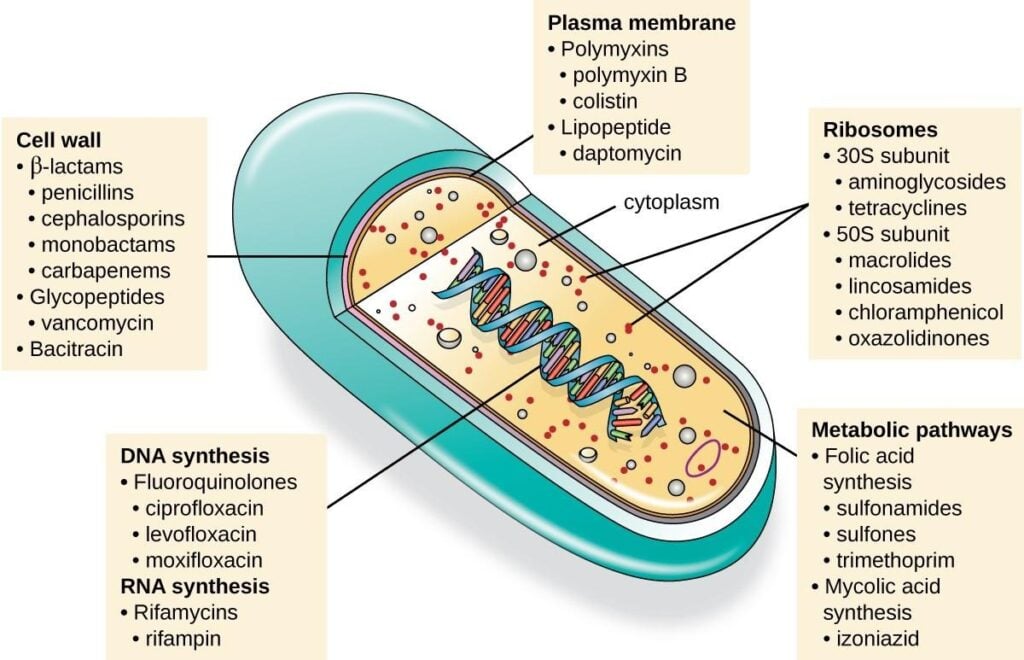
Antimicrobials exert their effects by targeting essential cellular processes in mechanisms. Central mechanisms of action include the following:
Inhibition of Cell Wall Synthesis:
- Beta-lactam antibiotics (Penicillins, Cephalosporins, Carbapenems, Monobactams)
- Glycopeptides (Vancomycin, Teicoplanin)
- Bacitracin
- Fosfomycin
- Cycloserine
- Flavomycin
- Tunicamycin
- Echinocandin
Inhibition of Protein synthesis
30S Ribosome Inhibitors
- Aminoglycosides (Gentamicin, Streptomycin)
- Tetracyclines (Doxycycline, Minocycline)
- Lariocidin
50S Ribosome Inhibitors
- Macrolides (Erythromycin, Azithromycin)
- Chloramphenicol
- Lincosamides (Clindamycin)
- Oxazolidinones (Linezolid)
- Mupirocin
Disruption of Cell Membrane
- Polymyxin (Colistin, Polymyxin B)
- Daptomycin
- Amphotericin B
- Nystatin
- Ionophore
- Terbinafine
- Azole Antifungal
- Imidazole
- Polyene
Inhibition of Nucleic Acid Synthesis
- Inhibitors of DNA replication (Nitroimidazole, Quinolones and Fluoroquinolones)
- Inhibitors of Transcription (Rifamycin)
Inhibition of Metabolic Pathways
- Sulfonamide (Sulfamethoxazole)
- Trimethoprim
Antiviral Mechanism
- Reverse Transcriptase Inhibitors (Zidovudine, Lamivudine)
- Protease Inhibitors (Ritonavir, Lopinavir)
- Neuraminidase Inhibitors (Oseltamivir, Zanamivir)
- DNA Polymerase Inhibitors (Acyclovir, Ganciclovir)
- Entry Inhibitors (Maraviroc)
- Fusion Inhibitors (Enfuvirtide)
- RNA-dependent RNA Polymerase Inhibitors (Remdesvir, Sofosbuvir)
Mechanism of Action of Antimicrobial Agents
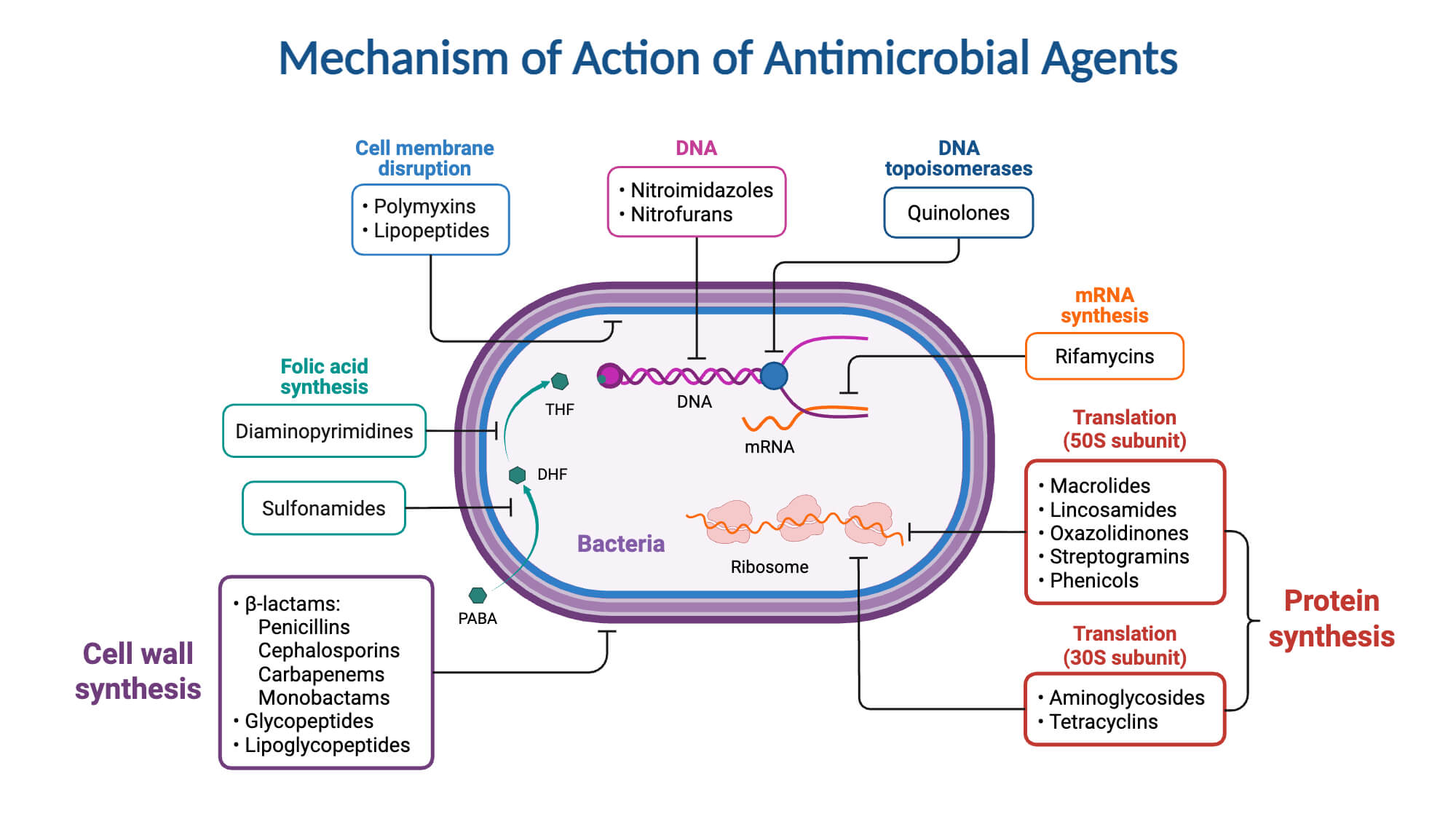
Antimicrobial agents involve various mechanisms to inhibit the growth of microorganisms and prevent their division and replication. When agents inhibit the growth and reproduction of a pathogen without killing it, they are said to be bacteriostatic. Moreover, when the agents kill the pathogens directly, resulting in destruction, they are called bacteriocidal.
Understanding the major mechanisms of action of antimicrobial agents is critical for treating infections. The Mechanism includes the following:
Inhibition of Cell Wall Synthesis
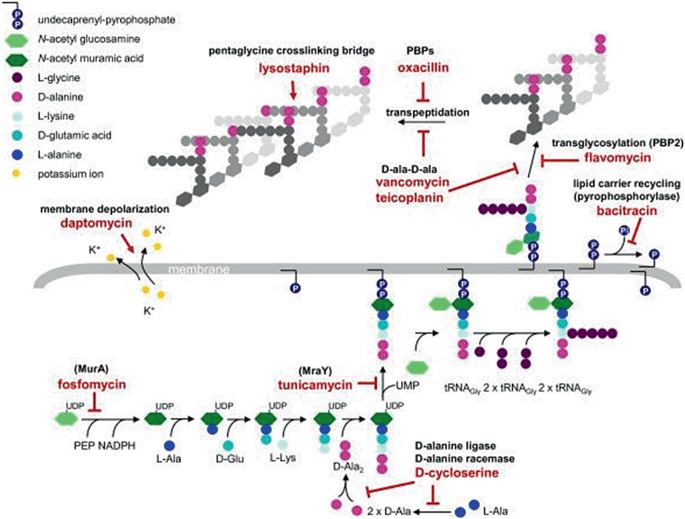
Bacterial cell walls contain a unique structure called peptidoglycan. Antimicrobial agents interfere with peptidoglycan synthesis in the following ways: they prevent bacteria from multiplying and lead to their death. These antibiotics are more effective against Gram-positive bacteria as they possess a thicker peptidoglycan layer.
- Beta-lactam Antibiotics bind to Penicillin-Binding Proteins and prevent them from cross-linking the peptide chains. This results in weak cell walls that cannot withstand osmotic pressure, which leads to cell lysis. This antibiotic is effective against many Gram-positive and Gram-negative bacterial infections.
- Glycopeptide Antibiotics bind to the terminal D-alanine-D-alanine residues of the peptidoglycan precursors and prevent their incorporation into the cell wall. Glycopeptides (Vancomycin, Teicoplanin) are effective against Gram-positive bacteria like MRSA.
- Fosfomycin inhibits an early step of the synthesis of peptidoglycan. It inhibits an enzyme, UDP-N-acetylglucosamine enolpyruvyl transferase (MurA). Fosfomycin is effective against Gram-negative bacteria and is used to treat Urinary tract infections and Cystitis in women.
- Bacitracin inhibits cell wall synthesis by binding to bactoprenol, a lipid carrier molecule that transports peptidoglycan precursors across the bacterial membrane. Bacitracin is effective as a topical antibiotic for preventing minor skin infections like cuts, scrapes, and burns, and stopping bacterial growth.
- Cycloserine inhibits two enzymes: D-alanine racemase, which converts L-alanine to D-alanine, and D-alanine-D-alanine ligase, which is necessary for cell wall synthesis. Cycloserine is a broad-spectrum antibiotic that also shows effectiveness against mycobacteria.
- Flavomycin: Flavomycin is a phosphoglycolipid antibiotic that inhibits peptidoglycan synthesis by blocking MurG, an enzyme that transfers N-acetylglucosamine to lipid intermediates. This prevents bacterial cell wall formation. This antibiotic is a food additive for beef cattle, dairy cattle, poultry, and swine.
- Tunicamycin: Tunicamycin is a nucleoside antibiotic that inhibits N-linked glycosylation by blocking the enzyme MraY. MraY catalyzes the transfer of UDP-N-acetylglucosamine to undecaprenyl phosphate, disrupting cell wall biosynthesis and glycoprotein formation. It is highly effective against several organisms and malignant tumor cells as well.
- Echinocandin (Caspofungin, Micafungin, Anidulafungin): Echinocandin is an antifungal drug that inhibits β -(1,3)-D-glucan synthase, which is responsible for β-(1,3)-D-glucan, a key component of the fungal cell wall. Hence, due to the loss of cell wall structure, the cell becomes osmotically unstable, and lysis occurs. The agent is effective against Candida and invasive Aspergillus.
Inhibition of Protein synthesis
Protein synthesis inhibitors are a class of antibiotics targeting bacterial ribosomes to inhibit protein synthesis. They interfere with the translation process by targeting specific components of the bacterial ribosome (30S or 50S subunit). These drugs prevent the formation of the initiation complex, elongation of the polypeptide chain, and translocation of tRNA and mRNA during translation.
The following are the antimicrobials and their mechanism inhibiting protein synthesis:
30S Ribosome Subunit Inhibitors
Aminoglycosides: These antibiotics bind irreversibly to the 30S subunit of the bacterial ribosome. As they bind, they cause misreading of mRNA, resulting in the production of incomplete/ nonfunctional proteins and, ultimately, bacterial cell death. These antibiotics effectively treat infections caused by Gram-negative bacteria, such as Pseudomonas aeruginosa, Escherichia coli, and Klebsiella pneumoniae.
Tetracycline: Tetracycline is a bacteriostatic antibiotic that interferes with the binding of aminoacyl-tRNA to the ribosomal A site, thus blocking the addition of amino acids to the growing polypeptide chain. This antibiotic has shown effectiveness in Gram-positive and Gram-negative bacteria, as well as Mycoplasma, chlamydia, Rickettsia, and Spirochetes.
Lariocidin: Lariocidin is a broad-spectrum antibiotic that interferes with translocation and induces miscoding in protein synthesis. It binds to the 30S subunit, specifically interacting with the 16S rRNA and aminoacyl-tRNA. Lariocidin has demonstrated effectiveness against Gram-positive and Gram-negative bacteria, including multidrug-resistant pathogens such as Acinetobacter baumannii.
50S Ribosome Inhibitors
Macrolides: Macrolide antibiotics bind to the 50S ribosomal subunit, blocking the growth peptide chain’s exit tunnel. Therefore, they prevent peptide elongation and stop protein synthesis. They are most effective against Gram-positive bacteria but also possess effectiveness against Gram-negative bacteria.
Chloramphenicol: Chloramphenicol is a broad-spectrum antibiotic that binds to the peptidyl transferase center of the 50S ribosome and prevents peptide bond formation. Hence, protein synthesis is inhibited in this process. It is clinically useful to treat bacterial meningitis.
Lincosamide: The class of antibiotics also prevents protein chain elongation by binding to the 50S ribosomal subunit, specifically near the peptidyl transferase center. It is effective against Gram-positive cocci and an excellent drug for anaerobic infections (Bacteroides).
Oxazolidinone: Oxazolidinone is an antibiotic that binds to the 50S ribosomal subunit, specifically at the A-site pocket of the peptidyl transferase center. It prevents the formation of the initiation complex and stops mRNA translation.
Mupirocin: Mupirocin is a topical antibiotic that inhibits bacterial protein synthesis by targeting isoleucyl-tRNA synthetase. This enzyme catalyzed the attachment of isoleucine to the corresponding tRNA during protein synthesis. The antibiotic is effective against Gram-positive bacteria like Staphylococcus and Streptococcus.
Disruption of Cell Membrane Integrity
Antibiotics that affect the cytoplasmic membrane work by disrupting structural integrity, leading to leakage of essential cellular contents, resulting in cell death. These antibiotics include the following:
- Polymyxin: Polymyxin is effective against Gram-negative bacteria as it binds to Lipopolysaccharides and phospholipids of the outer membrane. This causes the displacement of Mg2+ and Ca2+, resulting in increased permeability, leakage of nutrients, and cell death.
- Lipopeptide (Daptomycin): Daptomycin is a cyclic lipopeptide antibiotic mainly targeting Gram-positive bacteria. This antimicrobial agent inserts into the membrane and causes depolarization, potassium ion efflux, and cell death.
- Ionophores: Ionophores are carboxylic polyether antibiotics that disrupt electrochemical gradients by leaking ions across cell membranes, leading to dehydration and inhibiting bacterial metabolism. They are used as feed additives to alter the rumen microbiome (animal livestock), targeting gram-positive bacteria. These antibiotics include Valinomycin, Gramicidin, Monencin, and Salinomycin.
Antifungal membrane-disrupting agents
Polyenes (Amphotericin, Nystatin): Antimicrobials belonging to the polyene class of antifungal agents specifically target fungal cell membranes by binding hydrophobically with ergosterol, a key sterol of the fungal membrane. Upon binding, they form pores in the membrane from where essential nutrients leak, disrupting ionic balance and cell death. Amphotericin B is a broad-spectrum antifungal, and Nystatin is a topical agent used primarily for Candida infections.
Azole Antifungal: Azole is also an antifungal agent that works by inhibiting the production of ergosterol by inhibiting an enzyme, lanosterol 14α-demethylase. This inhibition prevents ergosterol synthesis and leads to increased permeability and cell lysis. This antibiotic includes the following:
Imidazole (topical infections): Clotrimazole, Miconazole, Ketoconazole. It is widely used for skin infections (dermatophytosis), mucosal infections (Oral thrush and vaginal candidiasis)
Triazole (systemic infections): Fluconazole, Itraconazole, Voriconazole, Posaconazole, Isavuconazole
Terbinafine: Terbinafine is an allylamine antifungal that inhibits ergosterol synthesis by inhibiting the enzyme squalene epoxidase, which is required to convert squalene to lanosterol. Hence, this results in squalene accumulation, disrupted cell function, and cell death. It results in fungicidal activity in Dermatophytes and Candida.
Inhibition of Nucleic Acid Synthesis
An Antimicrobial agent can interfere with bacterial DNA replication, transcription, or nucleotide metabolism to prevent bacterial growth and survival.
Inhibitors of DNA Replication
Quinolones and Fluoroquinolones: This antimicrobial targets DNA Gyrase (Topoisomerase II) in Gram-negative bacteria and Topoisomerase IV in Gram-positive bacteria. This binding results in the prevention of supercoiling of DNA. Hence, it results in DNA fragmentation and eventual cell death due to impaired DNA replication. Fluoroquinolones have improved potency and spectrum due to a modified quinolone with a fluorine atom at the C-6 position.
Nitroimidazole: This antimicrobial is primarily used to treat infections caused by anaerobic bacteria (Bacteroides, Clostridium) and protozoa (Giardia, Entamoeba, Trichomonas). In anaerobic conditions, the agents are reduced by the enzyme nitroreductase in the pathogen. Hence, this reduction produces reactive intermediates that bind to DNA, cause strands to break, and inhibit nucleic acid synthesis.
Inhibitors of Transcription
Rifamycin: Rifamycin is an antibiotic that binds to the Beta subunit of RNA polymerase and blocks it from initiating transcription, thus preventing the synthesis of RNA. The antimicrobial is effective against mycobacteria and gram-positive bacteria.
Inhibitors of Nucleotide Biosynthesis
An Antibiotic can also inhibit the synthesis of nucleotides that are building blocks of DNA and RNA, and they are:
Sulfonamide: The agent is structurally similar to para-aminobenzoic acid, a precursor of folic acid. It inhibits an enzyme, Dihydropteroate Synthase, essential in converting Pteridine and p-aminobenzoic acid to Dihydropteroic acid. As this agent prevents the formation of dihydropteroate acid, it halts the folate synthesis pathway, leading to bactericidal activity.
Trimethoprim: Trimethoprim inhibits the enzyme dihydrofolate reductase, which is another enzyme involved in folic acid synthesis. It blocks the conversion of dihydrofolic acid to tetrahydrofolic acid, reducing DNA, RNA, and protein synthesis in bacteria. It is commonly used in treating Urinary Tract Infections.
Antiviral Mechanism
Antiviral agents work by inhibiting various stages of the virus’s life cycle, from entry into the host cell to replication and assembly.
- Nucleoside Analogues (Acyclovir, Lamivudine, Zidovudine): Nucleoside Analogues are structurally similar compounds to natural nucleotides used for synthesizing viral DNA or RNA. They are phosphorylated by viral kinases and activated as they enter the host. They are incorporated into the growing viral DNA or RNA chain as they lack the necessary components for elongation. These gents inhibit viral replication. Example: Acyclovir inhibits the DNA polymerase of Herpesvirus for viral DNA synthesis
- Protease Inhibitors (Lopinavir, Ritonavir, Simeprevir): Protease inhibitors target viral proteases, enzymes that cleave viral polyproteins into functional units. By inhibiting the protease, viral particles remain immature and non-infectious. Example: Ritonavir blocks the activity of HIV-1 protease, which is responsible for cutting viral polyproteins into functional proteins. Hence, it prevents the formation of infectious viral particles.
- Reverse Transcriptase Inhibitors (Tenofivir, Efavirenz, Emtricitabine): Reverse Transcriptase is the characteristic of retroviruses that converts RNA into DNA. These agents resemble natural nucleotides like the nucleoside analogs or bind directly to the enzyme to render it inactive.
- Fusion Inhibitors (Enfuvirtide): Fusion Inhibitors are agents that block viruses’ entry into host cells. The drug targets the fusion process by binding to the viral envelope protein (such as HIV’s gp41) and preventing the virus from fusing with the host cell membranes.
- Integrase Inhibitors (Raltegravir, dolutegravir): Integrase Inhibitors block the action of the viral Integrase enzyme, which is responsible for integrating viral DNA into the host cell’s genome. Preventing the integration of viral DNA (like in HIV) blocks further replication and viral propagation.
- Neuraminidase Inhibitors (Oseltamivir, Zanamiviro): Neuraminidase Inhibitors are used to treat Influenza infections. The enzyme cleaves sialic acid residues on the surface of infected cells. This cleavage is necessary to release new viral particles from the host cell, and inhibiting this enzyme prevents the release of viral progeny.
- Entry Inhibitors: These antimicrobial agents block the virus’ ability to enter the host cell. Maraviroc, for instance, inhibits HIV entry by binding to the CCR5 co-receptor on the host cell surface, preventing the virus from binding to this receptor.
- RNA-Dependent RNA Polymerase Inhibitors (Sofosbuvir, Remdesvir): RNA-dependent RNA polymerase is an enzyme crucial for the replication of RNA viruses. Drugs prevent the virus from copying its RNA genome and assembling new viral particles. For example, Sofosbuvir is used to treat Hepatitis C, which inhibits viral RNA polymerase. Similarly, Remdesvir inhibits the replication of RNA viruses such as SARS-CoV-2.
Characteristics of an Ideal Antimicrobial Agent
- The antimicrobial agent must target the target microorganism without harming the host.
- The antimicrobial agent should be effective against a wide range of pathogens (broad spectrum) when the pathogen is unknown.
- In certain infections, a narrow-spectrum drug is ideal when the target pathogen is known, and it causes minimal disruption to the host microbiota.
- It should preferably kill microorganisms rather than inhibit their growth, especially for immunocompromised patients.
- It should be able to reach the site of infection in effective concentrations, including the brain, bone or intracellular components.
- It should possess chemical stability in body fluids like blood, gastric juice, or urine.
- It should be easy to administer, with good absorption and bioavailability.
- It should possess a rapid onset of action to quickly control infection before complications arise.
- It should be able to work well when combined with other drugs if needed for increasing efficacy.
- The Antimicrobial agent should be easily available and affordable for widespread use.
- It should not trigger any allergic reactions in the host.
- It should be effective at low concentrations to reduce potential toxicity and cost.
- It should not harm fetal development or contribute to cancer.
- Its production, usage, and disposal should not harm the environment or promote antimicrobial resistance in natural ecosystems.
- It should be easy and economical to synthesize or extract on a large scale.
Antimicrobial Resistance (AMR)
Antimicrobial Resistance is a phenomenon in which microorganisms evolve and become resistant to drugs that once killed or inhibited them. The emergence of Antimicrobial Resistance is a growing global health crisis posing significant public health challenges, as it was previously treatable.
The development of Antimicrobial Resistance is a complex process. It involves genetic mutation and the acquisition of resistant genes. This happens through natural selection, where resistant microorganisms survive drug treatment and multiply, spreading the resistance.
WHO Categorization of Antimicrobial Drug-Resistant Bacteria (2024)
Critical Priority Pathogens (Highest Concern)
- Acinetobacter baumanni (Carbapenem-resistant)
- Enterobacterales (Resistant to third-generation cephalosporin)
- Enterobacterales (Carbapenem-resistant)
- Mycobacterium tuberculosis (Rifampicin-resistant)
High Priority Pathogens
- Salmonella Typhi (Fluoroquinolone-resistant)
- Shigella spp. (Fluoroquinolone-resistant)
- Enterococcus faecium (Vancomycin-resistant)
- Pseudomonas aeruginosa (Carbapenem-resistant)
- Non-typhoidal Salmonella (Fluoroquinolone-resistant)
- Neisseria gonorrhoeae (Resistant to third-generation cephalosporin and Fluoroquinolone)
- Staphyloccus aureus (Methicillin-resistant)
Medium Priority Pathogens
- Group A Streptococci (Macrolide-resistant)
- Streptococcus pneumoniae (Macrolide-resistant)
- Haemophilus influenzae (Ampicillin-resistant)
- Group B Streptococci (Penicillin-resistant)
Antimicrobial Resistance can be categorized into natural and acquired forms.
Natural Resistance is a phenomenon driven by genetic changes and environmental selective pressure. It is an innate resistance in which the resistance genes are present but only activated upon antibiotic exposure.
Acquired Resistance occurs when a microorganism previously susceptible to a specific antimicrobial agent develops Resistance through genetic mutations or the acquisition of a resistance gene via horizontal gene transfer (Conjugation, Transformation, and Transduction).
Mechanisms of Antimicrobial Resistance
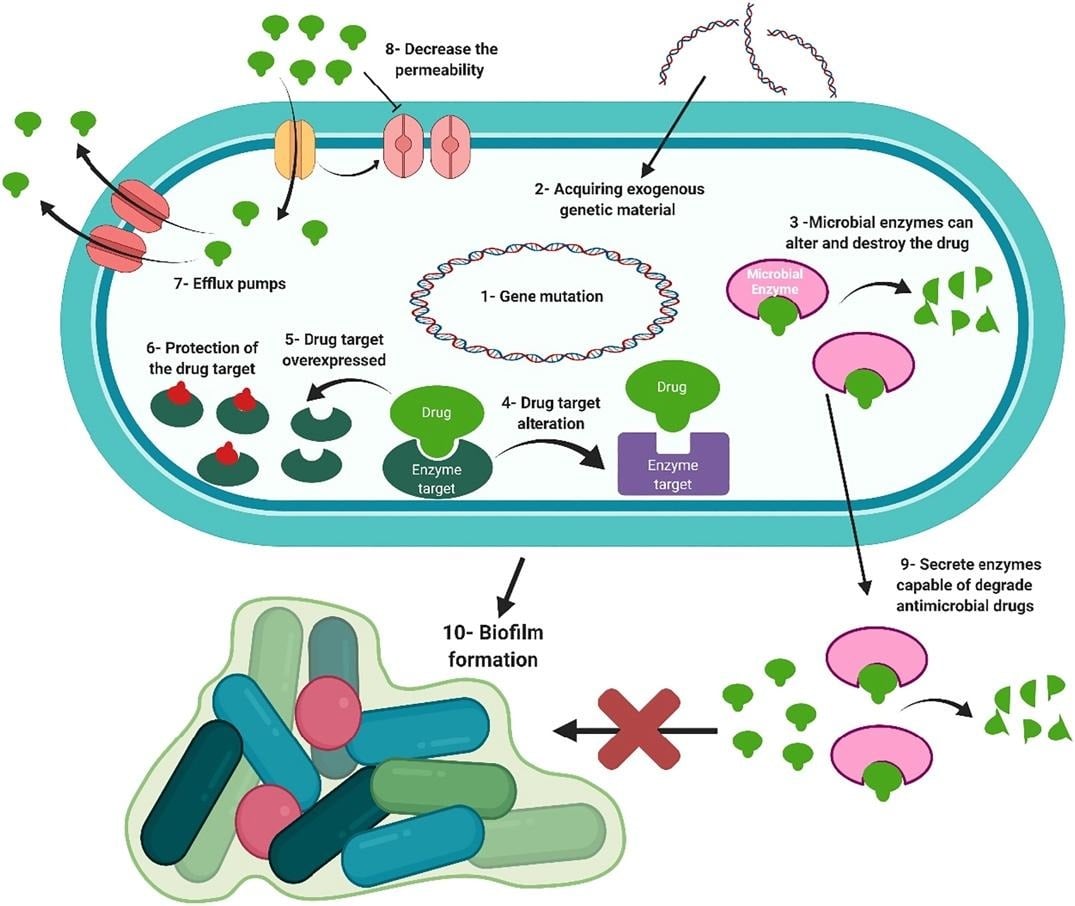
Genetic mutation: Any spontaneous change in an organism’s genetic material is called a genetic mutation. When exposed to environmental concentrations of antibiotics (Agriculture, Industry, Healthcare, Wastewater), microorganisms may experience selective pressure, gradually increasing the prevalence of antimicrobial Resistance. This leads to mutation and the microorganisms’ ability to survive antimicrobial agent exposure. A mutation can affect the bacterial cell’s ability to interact with the antibiotic or alter its target site, rendering it ineffective.
Horizontal Gene Transfer
In addition to spontaneous mutations, bacteria can acquire resistance genes encoded on plasmids through horizontal gene transfer. Horizontal Gene Transfer is a process in which bacteria exchange genetic material, including resistance genes, with other bacteria, even across different species.
The three main mechanisms of Horizontal Gene Transfer are:
- Conjugation: Bacteria can exchange genetic material via direct contact, typically through a pilus structure. Resistance genes are often carried on plasmids (small, circular DNA molecules) that can be transferred between bacteria.
- Transformation: Bacteria can take up free DNA from their environment, including resistance genes from dead or lysed bacteria. This process allows bacteria to acquire new traits, including antibiotic resistance.
- Transduction: Transduction involves the transfer of bacterial DNA through bacteriophages (viruses that infect bacteria). When a bacteriophage infects a bacterium, it may accidentally incorporate bacterial DNA, including resistance genes, into its genome. The phage can then transfer this genetic material to other bacteria.
Enzyme Degradation or Modification
Some bacteria can produce enzymes that inactivate antibiotics by breaking them down or modifying them chemically. Specific resistance genes often encode these enzymes. Some key examples of enzymes are Beta-Lactamases (inactivate Beta-lactam antibiotics), Aminoglycoside-modifying enzymes, and rRNA methylases (modifying rRNA by adding a methyl group and preventing the activity of Macrolides, Lincosamides, and Streptogramins). Escherichia coli, Klebsiella pneumoniae, Pseudomonas aeruginosa, and Staphylococcus aureus are notable examples of producing beta-lactamases that inactivate beta-lactam antibiotics.
Limiting Drug Entry
Porins are transmembrane proteins that allow the passage of molecules, including antibiotics. Mutations cause a decrease in their number or size to limit the entry of antibiotics and reduce their effectiveness. In Pseudomonas aeruginosa, mutations in porin proteins can decrease the permeability of cell membranes to beta-lactam antibiotics, leading to Resistance.
Drug Efflux
Efflux pumps are proteins in bacterial cells that actively expel antimicrobial agents and other toxic substances from the cell, reducing intracellular drug concentration and rendering them ineffective. These pumps may be expressed under environmental stimuli or in the presence of specific substrates. Some pumps are multidrug Resistance (MDR) pumps, capable of transporting a wide variety of compounds.
Five major families of bacterial efflux pumps based on structure and energy source are:
- ATP-Binding Cassette Transporters use ATP hydrolysis as an energy source and transport amino acids, ions, sugars, and antibiotics. A notable ABC pump is found in Vibrio cholerae (VcaM), capable of transporting fluoroquinolones and tetracycline.
- Multidrug and Toxic Compound Extrusion (MATE) Family uses sodium ion gradients (Na+) for energy. It is known to expel cationic dyes and most fluoroquinolone drugs. The first characterized MATE pumps, NorM, belong to Vibrio parahaemolyticus, Neisseria gonorrhoeae, and Neisseria meningitidis.
- Small Multidrug Resistance Family uses proton-motive force (H+). They transport lipophilic cations and allow only a narrow substrate range. They are found on plasmids and transposons. Examples include SMR pumps of Staphylococcus epidermidis that expel ampicillin, erythromycin, and tetracycline)
- Major Facilitator Superfamily (MFS) is the prominent family of transporters. It transports anions, drugs, metabolites, and sugars via solute/cation (H+ or Na+) symport or solute(H+) antiport. MFS pumps distinct MFS pumps for erythromycin (SmvA) and chloramphenicol (CmlA and CraA). At the same time, Escherichia coli utilizes separate MFS pumps for different antibiotics, such as macrolides (MefB), Fluoroquinolone (QepA), and Trimethoprim (Fsr).
- Resistance-Nodulation-Division (RND) Family function in the efflux of detergents, antibiotics, dyes, heavy metals, solvents, and other substrates. It transports substrate out of the cell by a substrate/H+ antiport mechanism. Example: AcrAB-TolC pump in Escherichia coli is the most widely studied RND pump providing Resistance to Penicillin, chloramphenicol, macrolide, fluoroquinolones, and tetracycline.
Modification of Drug Targets
Bacteria can alter the molecular target of antibiotics so that the drug no longer recognizes or binds to it. A mutation can result in changes to the target sites of antibiotics. In the case of Penicillin, a mutation in the bacterial penicillin-binding proteins (PBPs) can prevent the antibiotic from binding effectively. Methylation of 23S rRNA blocks the binding of macrolides, rendering them inactive to work.
Alteration of Metabolic Pathways
Some bacterial mutations may activate alternative metabolic pathways that bypass the action of antibiotics. This allows bacteria to continue surviving the presence of drugs. For example, a mutation in the folP gene in Mycobacterium tuberculosis leads to Resistance to drugs like Trimethoprim, as it allows the bacteria to use different substrates, such as para-aminosalicylic acid.
Source: https://doi.org/10.1016/j.lfs.2021.119647
Biofilm Formation
Biofilms are bacterial communities embedded in an extracellular matrix made of polysaccharides, proteins, and nucleic acids, which makes them highly resistant to antibiotics. They form in stages: attachment to a surface, colonization with matrix production, maturation into a complex structure, and eventual dispersal. This matrix acts as a barrier, limiting antibiotic penetration, while slower growth rates and persistent cells within biofilms further contribute to antibiotic tolerance. These biofilms can also promote horizontal gene transfer. Example: Escherichia coli forms biofilm on the surfaces of urinary catheters, leading to chronic urinary tract infections. The biofilm protects bacteria from the host immune system and antibiotic treatments, making these infections difficult to eradicate.
Causes of Antimicrobial Resistance
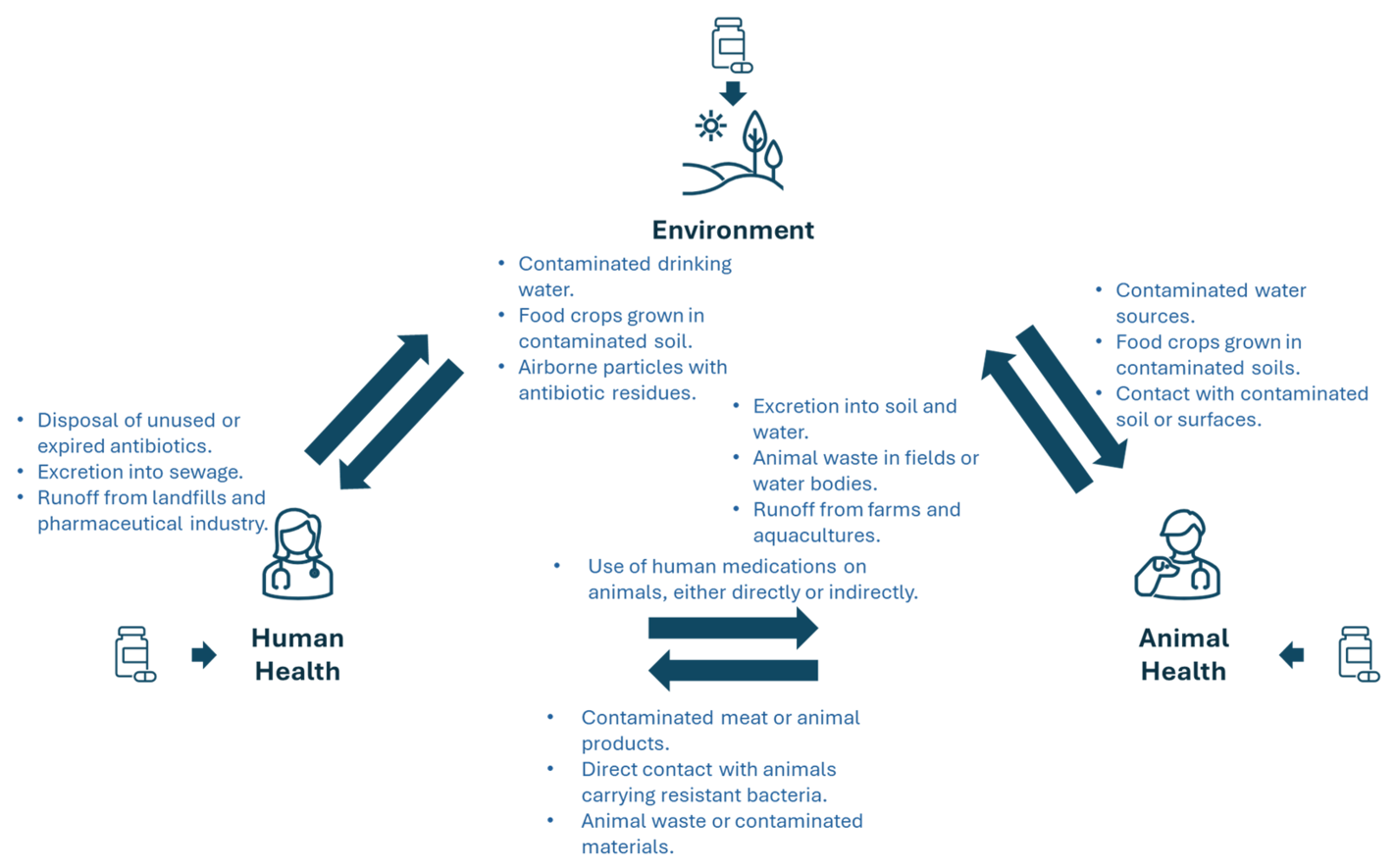
The complex interplay of human behavior, veterinary practices, environmental contamination, and microbial evolution drives the rise of Antimicrobial Resistance (AMR). The One Health approach recognized the interdependence of human, animal, and ecological health in addressing AMR.
Source: Oliveira, M., Antunes, W., Mota, S., Madureira-Carvalho, Á., Dinis-Oliveira, R. J., & Dias da Silva, D. (2024). An Overview of the Recent Advances in Antimicrobial Resistance. Microorganisms, 12(9), 1920. https://doi.org/10.3390/microorganisms12091920
Human-Related Causes
Inappropriate Antimicrobial Use in Human Medicine
- Overuse and Misuse: Self-medication, dispensing without prescriptions, over-prescription, and patient pressure are major drivers of Antimicrobial Resistance. These practices promote the survival of resistant strains while eliminating susceptible ones. For instance, excessive use of antiviral drugs like Oseltamivir for Influenza led to the development of a resistant strain, H1N1pdm09; Methicillin-resistant Staphylococcus aureus and multidrug-resistant Mycobacterium tuberculosis are prominent results of misuse.
- Use of Broad-Spectrum Antibiotics without Need: Administering strong antibiotics for minor or treatable infections fosters co-selection of resistant genes. For example, treating Methicillin-susceptible Staphylococcus aureus (MSSA) with unnecessary Beta-lactamase inhibitors like Amoxicillin/Clavulanic acid combinations encourages Resistance.
Incomplete Treatment Course
Patients discontinuing antibiotics once they feel better allow bacteria to survive and evolve Resistance. Example: In South and Southeast Asia, the misuse of Amoxicillin for viral infections is widespread
Subtherapeutic Dosage: Improper dosing fails to eradicate the infection and promotes the development of resistant genes.
Lack of Sanitation and Poor Infection Control
Hospital Settings: Poor hygiene, inadequate sterilization, and improper handling of medical equipment spread resistant bacteria. Example: tertiary hospitals in Nepal report high rates of MDR and XDR Acinetobacter spp., linked to hospital-acquired infections.
Public and Community Spaces: Crowded places (e.g., buses, classrooms, and pools increase microbial contact and gene transfer.
Use of Biocides and Personal Care Products
Overusing products like Triclosan in soaps, shampoos, and toothpaste encourages Resistance due to constant low-dose exposure.
When misused, biocides such as bleach and alcohol create selective pressure, allowing biocide and antibiotic-resistant strains to evolve due to similar modes of action.
Environmental Shredding of Antimicrobials
Antibiotic residues are excreted in urine and feces, entering water and soil, facilitating resistance gene propagation via horizontal gene transfer.
Animal-Related Causes
- Antimicrobials are extensively used in animals for both prophylactic and therapeutic purposes. Misusing them contributes to developing Antibiotic-Resistant bacteria and Antibiotic-Resistant Genes, which can be transmitted to humans through direct contact with animals, animal products, or environmental contamination. For instance, antimicrobials such as penicillins, lincosamides, quinolones, and a combination of sulfonamides are commonly administered and create a potential risk of cross-species resistance transfer.
- Inappropriate disposal of unused or expired antibiotics used in animal farming can lead to environmental contamination, which promotes the development of resistance mechanisms in environmental microbes.
- Antibiotics administered to animals as feed additives (enhancing growth and overall animal productivity) can leave residues in animal products such as meat, milk, and eggs. Even after cooking, these products can persist and be ingested by humans, potentially developing Resistance in human microbiota.
- The use of antibiotics in animals leads to the accumulation of antimicrobial-resistant microbes in animal waste; manure is often used as fertilizer. This waste contaminates soil, water, and air, posing a risk of spreading Antimicrobial Resistance through the food chain.
- Improperly cooked food, contact with manure, or handling with raw meat can transmit antimicrobial-resistant pathogens. For instance, certain strains of Salmonella, Escherichia coli, and Campylobacter have been identified as resistant to multiple drugs in animal-derived foods, which can result in serious human infections.
Environmental-Related causes
- Environmental contamination by wastewater, manure, and industrial effluents plays a significant role in the spread of Antimicrobial Resistance. Effluents from pharmaceutical industries can carry high concentrations of antibiotics, creating high-selection pressure environments that favor the survival of resistant strains. Moreover, resistance traits can be passed on to pathogenic microbes through horizontal gene transfer.
- The practice of Thanatopraxy is the art of preserving human cadavers using chemicals and presenting them as living organisms for viewing at funerals. This practice relies on antimicrobials that leach into soil and groundwater. Upon decomposition, these microbes and drug residues are released into the environment. Moreover, cemeteries can pollute water sources with antimicrobial-resistant bacteria and genes, especially in shallow groundwater or poor burial practices.
- The use of agrochemicals such as pesticides, fertilizers, rodenticides, weed executioners, and insecticides in agriculture has been found to contribute directly or indirectly to the development of AMR. Some microorganisms can degrade pesticides with strategies similar to how microorganisms can develop Resistance to antibiotics like porin channels, efflux pumps, and enzymes. Such genes are located in the plasmid, and when these plasmids are horizontally transferred to pathogens, they can lead to antimicrobial Resistance, which has clinical consequences.
- Environments polluted with disinfectants, fertilizers, and heavy metals can contribute to the rise of antimicrobial Resistance. Soils contaminated with metals support metal-resistant bacteria, which can also carry antibiotic-resistant genes. This is a phenomenon of co-selection, where metal resistance goes hand in hand with antimicrobial Resistance. For instance, Staphylococcus aureus exposed to the biocide benzalkonium chloride became eight times more antibiotic-resistant than its wild-type version. Insecticide-degrading Bacillus species have shown Resistance to several antibiotics, suggesting a strong link.
Recent Advances in Antimicrobial Agent Research
The following points explore recent advances in natural and synthetic antimicrobial agents and global strategies to combat AMR.
Advances in Natural Antimicrobial Agents
- Plant-Derived Antimicrobials:
Plant products have been used for medicinal purposes, dating back thousands of years. The major classes of Antimicrobial compounds from plants include the following.
-Phenolics and Polyphenols
-Alkaloids
-Organosulfur Compounds
-Flavonoids
–Terpenoids
-Coumarins
-Tannins
-Essential Oils
-Lectins and Polypeptide
Notable Plants with Antimicrobial Properties
| Plant | Active Compound | Target Pathogens |
| Allium sativum | Allicin | MRSA, E. coli, Candida spp. |
| Berberis vulgaris | Berberine | Staphylococcus, Mycobacterium |
| Camelia sinensis | Epigallocatechin gallate | Streptococcus, H. pylori |
| Thymus vulgaris | Thymol | Salmonella, Aspergillus |
| Azadiracta indica | Azadirachtin | Malaria parasite, Pseudomonas |
- Antimicrobial Peptides: Antimicrobial peptides are small, naturally occurring peptides that exhibit antimicrobial properties by disrupting membranes of pathogens or interfering with their cellular processes. They typically have a length of 12-50 amino acids. They can adopt a variety of shapes, including α -helices, β-sheets, or a combination of both. Most AMPs are positively charged at physiological pH, which is crucial for interacting with negatively charged surfaces of the cell membrane. Moreover, they possess hydrophobic regions that allow them to insert into the lipid bilayer of bacterial membranes. This combination of charges disrupts microbial cell membranes, leading to antimicrobial effects. Examples: Defensin (produced by neutrophils), Cathelicidin (LL-37 exhibits antimicrobial activity like wound healing and inflammation), and Magainins, an antimicrobial peptide isolated from the skin of Xenopus laevis. A newly discovered lasso peptide antibiotic is effective against many organisms, including Methicillin-resistant Staphylococcus aureus and carbapenem-resistant Acinetobacter baumanni.
- Bacterocins: Bacterocins are antimicrobial peptides produced by bacteria. They are ribosomally synthesized antimicrobial peptides or proteins capable of inhibiting or killing closely related or competing bacterial species. They tend to have a narrow spectrum of activity, making them ideal for targeted applications. Examples:
Nisin is a well-known class I bacteriocin (Lantibiotic) produced by Lactococcus lactis. It is effective against many Gram-positive bacteria.
Pediocin PA-1 is a Class II bacteriocin produced by Pediococcus, particularly active against Listeria monocytogenes. Plantaricin, Colicin, and Enterocin are other examples of Bacteriocins. These bacteriocins primarily disrupt the bacterial cell membrane by forming pores, resulting in permeabilization and cell death. Most bacteriocins are food preservatives with potential alternatives to antibiotics against resistant pathogens.
- Phage therapy: An emerging alternative to combat antimicrobial resistance is by utilizing bacteriophages. Bacteriophages are viruses that specifically target and destroy bacteria. Unlike broad-spectrum antibiotics, phages are highly selective, attacking only specific bacterial strains while leaving unharmed human cells and beneficial microbiota. A notable example includes phage OMKO1, a promising target for treating multidrug-resistant Pseudomonas aeruginosa infections, which targets a receptor used by bacterial efflux systems and restores antibiotic sensitivity. It is often used in combination with ceftazidime-avibactam. Another notable example includes the treatment of infection caused by Mycobacterium abscesses with specific phages like Muddy, ZoeJ, and engineered variants.
- Novel Antimicrobials from Unexplored Environments: Nature is a rich source of novel antimicrobials, and its continual discovery is a promising solution against antimicrobial Resistance. These antimicrobials could surprise us with a new Mechanism of action, chemical structures, and a new perspective to rethink everything. Unexplored environments: Extreme environments host microorganisms that produce new antimicrobials with unfamiliar structures and modes of action.
Teixobactin is an antimicrobial compound isolated from Eleftheria terrae, a Gram-negative bacterium found in a grassy field in Maine, USA. It is a novel, renowned, and potent antibiotic discovered in 2015 that is effective against various Gram-positive bacteria, including resistant strains such as Methicillin-resistant Staphylococcus aureus. It blocks the buildup of lipids I and II in the bacterial cell wall, essential for cell wall synthesis. Moreover, its attachment prevents bacteria from performing efflux of unwanted molecules from the cell.
Two species of Penicillium fungi were isolated from Berkeley Pit, a highly acidic and toxic abandoned copper mine in Montana. Through symbiosis, the fungi produced a novel compound, Berkeleylactone A. It was effective against four antibiotic-resistant strains of MRSA: Bacillus anthracis, Streptococcus pyogenes, Candida albicans, and Candida glabrata. This study also highlights the potential of extremophiles as a source of new antimicrobials.
Furthermore, the marine environment also serves as an extraordinary source of novel antimicrobial compounds, and numerous marine organisms produce bioactive metabolites that show promising activity against drug-resistant pathogens. Key examples of marine-derived Antimicrobials include:
Salispora species, which produce Salinosporamide A, a potent proteasome inhibitor effective against MRSA and Malaria
Streptomyces species isolated from marine sediments yield Thiocoraline, a cyclic peptide active against Gram-positive bacteria.
Marine sponges, such as Haliclona species, are known to produce Manzamine A, an alkaloid with demonstrated efficacy against Plasmodium falciparum, Mycobacterium tuberculosis, and Leishmania species. These marine-derived compounds represent valuable leads in developing antimicrobial therapies to address the growing threat of antimicrobial Resistance.
CRISPR-Enhanced Antimicrobial Production
CRISPR stands for Clustered Regularly Interspaced Short Palindromic Repeats. It can be understood as a bacterial immune system and a powerful gene-editing tool. This system comprises two components: the Cas9 protein, which cuts DNA and guides RNA that can recognize particular sequences. It locates the target sequence and cuts the sequence. In this process, the sequence can be modified by inserting another sequence or deleting the sequence. In the production of antimicrobials, CRISPR can alter or optimize biosynthetic pathways by creating new variants of known antimicrobials, increasing their yield, or reducing by-products. The systems have also effectively targeted and eliminated antibiotic resistance genes to restore susceptibility to antibiotics in bacteria.
AI-Driven and Computational Methods of Drug Discovery: Computational approaches are transformative in discovering new antimicrobials, enabling faster, more efficient, and targeted research. These technologies analyze microbial genomes, chemical libraries, and drug-target interactions to identify patterns and predict antimicrobial potential. Machine learning algorithms can screen millions of compounds virtually, simulating how they might interact with microbial proteins or cellular pathways. This helps in narrowing down potential drug candidates before physical testing.
Additionally, AI (DeepAMR) can design novel molecules with optimized antimicrobial properties, predict their Mechanism of action, and identify potential resistance pathways. Computation tools such as Autodock and GROMACS assist in mining microbial genomes for hidden biosynthetic gene clusters that could produce new antibiotics. These approaches significantly reduce the time and cost required for antimicrobial discovery, making them essential tools in the global effort to combat antimicrobial resistance.
Example: Halicin is the first antibiotic discovered through artificial intelligence; it was effective against various drug-resistant bacteria like Clostridium difficile, Acinetobacter baumannii, and Mycobacterium tuberculosis.
Aptamer-based Strategies: Aptamers are short, single-stranded DNA or RNA molecules that can fold into specific three-dimensional shapes, allowing them to bind selectively to target molecules such as bacterial toxins, surface proteins, or even whole pathogens. These Aptamers can be conjugated with antibiotics or nanocarriers to deliver drugs specifically to resistant bacteria, reducing off-target effects and lowering the required dosage. Hence, Aptamer-based biosensors provide rapid and specific detection of resistant bacteria or resistance genes, aiding in early diagnosis and appropriate antibiotic use.
Nanotechnology-Based Strategies: Nanoparticles (NPs) are ultra-small materials that can be engineered to carry antibiotics, disrupt microbial membranes, or deliver gene-editing tools like CRISPR directly to their target bacteria that can be resistant. These metallic nanoparticles include Silver Nanoparticles, Zinc Oxide Nanoparticles, and Copper oxide Nanoparticles that physically disrupt cell walls, leading to cell death.
Guidelines for the Proper use of antimicrobial agents
- Accurate Diagnosis Before Treatment
-Ensure a precise diagnosis of infection before initiating antimicrobial therapy to avoid unnecessary use.
- Differentiate between Empiric and Definitive Therapy
-Begin with Empiric therapy when immediate treatment is necessary, but transition to definitive therapy based on culture and sensitivity results obtained.
-Empiric treatment should be started based on clinical suspicion and local resistance data. Once culture and sensitivity results are available, antibiotics can be adjusted. Therapy should be adjusted based on patient-specific factors such as age, renal and hepatic function, immune status, and potential drug interactions.
- Choose Narrow-Spectrum Agents when Appropriate
-Use the most targeted antimicrobial against the identified pathogen to minimize disruption of normal flora and reduce resistance development.
- Limit Duration of Therapy
-Administer antimicrobials for the shortest effective duration to reduce the risk of Resistance and adverse effects.
-Prolonged use should be avoided. Depending on severity, most infections have recommended durations of 5-14 days.
- Consider Pharmacokinetics and Pharmacodynamics
-Pharmacokinetics is the study of how the body affects a drug over time, encompassing its Absorption, Distribution, Metabolism, and Excretion.
-Pharmacodynamics studies how a drug affects the body (or target organism). It describes the relationship between drug concentration at its site of action and the resulting therapeutic or toxic effects.
- Avoid Unnecessary Antimicrobial Use
-Do not prescribe antimicrobials for viral infections or non-infectious conditions; avoid treating colonization without signs of active disease.
-Safe antibiotics during Pregnancy include Amoxicillin, Erythromycin, and Cephalin.
- Implement Antimicrobial Stewardship Practices
-Participate in programs that promote optimal antimicrobial use, including guideline adherence, de-escalation strategies, and education initiatives.
- Monitor for Adverse Effects
-Be vigilant for potential side effects and toxicities associated with antimicrobial agents, adjusting therapy as needed.
- Educate Patients and Healthcare Providers
-Provide information on the importance of appropriate antimicrobial use to prevent misuse and Resistance.
Side Effects of Antimicrobial Drugs
| Antimicrobial Class | Common Adverse Effects | Serious Adverse Effects |
| Beta-lactam antibiotics | Rash, Gastrointestinal upset | Anaphyaxis, Clostridium difficile infection |
| Macrolides | Nausea, Diarrhea | Irregular Heart Rhythm, Hepatotoxicity |
| Fluoroquinolones | Gastrointestinal upset, Headache | Tendon rupture, Peripheral Neuropathy, Irregular Heart Rhythms |
| Sulfonamides | Rash, Gastrointestinal upset | Stevens-Johnson syndrome, Toxic Epidermal Necrolysis |
| Tetracyclines | Photosensitivity, gastrointestinal upset | Hepatotoxicity, Esophageal ulceration |
| Clindamycin | Diarrhea | Clostridium difficile infection |
| Metronidazole | Metallic taste, Nausea | Neuropathy, Seizures |
| Vancomycin | Redman Syndrome, Nephrotoxicity | Ototoxicity |
| Linezolid | Headache, Nausea | Myelosuppression, Serotonin syndrome |
| Nitrofurantoin | Nausea, Headache | Pulmonary fibrosis, Hepatotoxicity |
Antimicrobial Drug Combinations
Antimicrobial drug combinations involve using two or more antimicrobial agents to treat infections. This approach can be more effective than a single drug, especially for preventing Resistance and treating polymicrobial infections. Medications in combination enhance synergistic effects, where the combined effect is greater than the sum of their individual effects.
The types of drug interactions include the following:
Synergism: When the combined effect is greater than that predicted by their potencies, the combination is said to be synergistic. Example: A beta-lactam antibiotic with an Aminoglycoside is treated effectively as it disrupts the bacterial cell wall, creating an environment allowing the aminoglycoside to enter the cell more effectively and interfere with protein synthesis.
Antagonism: When the combined drug has an effect that is less than the sum of its individual effects, it means antagonism. When used in combination, tetracycline, a bacteriostatic drug, can interfere with the effectiveness of Penicillin, a bactericidal antibiotic. This interaction is antagonistic because tetracycline inhibits bacterial growth.
Nalidixic Acid and Nitrofurantoin are other combinations in which nalidixic acid, a quinolone, inhibits DNA gyrase, and nitrofurantoin damages bacterial DNA.
Additive: An additive effect is when the combined effect of two or more drugs is simply the sum of their individual effects.
Cotrimoxazole, combination of Sulfamethoxazole and Trimethoprim, inhibits two critical steps in folic acid synthesis. Sulfamethoxazole blocks the production of dihydrofolate, while Trimethoprim inhibits the conversion of dihydrofolate to tetrahydrofolate.
Indifference: An indifferent drug combination is one in which the combined antimicrobial activity is no better or worse than that of the more active individual agent. For instance, combining two antibiotics might not show any additional benefit compared to using either individually. Example: Linezolid and ε -vinifera are a combination against MRSA. This combination shows an indifference reaction, where the combined effect is no better than either agent alone. Even though this may not synergize, this drug combination raises the barrier to Resistance.
Disadvantages of Drug in Combination
- Increased risk of side effects and toxicity.
- One drug may affect the metabolism, absorption, and excretion of another, leading to reduced effectiveness or enhanced toxicity.
- If a patient experiences an adverse reaction, it can be challenging to identify which drug is responsible.
- Combination therapies often require careful timing and coordination, increasing the risk of patient non-compliance or mistakes.
- If not adequately managed, pathogens may develop Resistance, and multiple drugs may accelerate this.
- Using multiple drugs can significantly increase treatment costs, especially if branded medications are involved.
Antimicrobial Stewardship Program
An Antimicrobial Stewardship Program (ASP) is a coordinated set of strategies designed to improve the use of antimicrobial medications, such as antibiotics, antivirals, antifungals, and antiparasitics. The goal is to optimize the use of antimicrobials to improve patient outcomes, reduce antimicrobial Resistance, and decrease the spread of infections.
The concept of Antimicrobial Stewardship was first introduced by John E. McGowan and Dale N. Gerding in 1996. It was meant to ensure appropriate use of antimicrobials while preventing antimicrobial Resistance.
References
- Goodman & Gilman’s The Pharmacological Basis of Therapeutics, Laurence L. Brunton, John S. Lazo, Keith L. Parker, 11th edition.
- LibreTexts. (n.d.). Clinical considerations. In BSC 3271: Microbiology for Health Sciences Sp21 (Kagle). Mansfield University of Pennsylvania. Retrieved April 22, 2025, from https://bio.libretexts.org/Courses/Mansfield_University_of_Pennsylvania/BSC_3271%3A_Microbiology_for_Health_Sciences_Sp21_(Kagle)/09%3A_Antimicrobial_Drugs/9.02%3A_Clinical_Considerations
- What is Biotechnology? (n.d.). Salvarsan. Retrieved April 22, 2025, from https://www.whatisbiotechnology.org/index.php/exhibitions/antimicrobial/index/salvarsan
- Hooton, T. M. (2006). Clinical practice. Uncomplicated urinary tract infection. The New England Journal of Medicine, 354(11), 1141–1149. https://doi.org/10.1056/NEJMcp054913
- World Health Organization. (2014). Antimicrobial Resistance: Global report on surveillance 2014. Retrieved from https://www.ncbi.nlm.nih.gov/books/NBK216522/
- Sköld, O. (2000). Sulfonamide resistance: Mechanisms and trends. Drug Resistance Updates, 3(3), 155–160. https://doi.org/10.1054/drup.2000.0146
- Mayo Clinic. (n.d.). Cycloserine (Oral Route) – Description and Brand Names. Retrieved April 22, 2025, from https://www.mayoclinic.org/drugs-supplements/cycloserine-oral-route/description/drg-20063226
- Liu, H. Y., Prentice, E. L., & Webber, M. A. (2024). Mechanisms of antimicrobial Resistance in biofilms. npj Antimicrobials and Resistance, 2, Article 27. https://doi.org/10.1038/s44259-024-00046-3
- World Health Organization. (2024, May 17). WHO updates the list of drug-resistant bacteria most threatening to human health. Retrieved from https://www.
- who.int/news/item/17-05-2024-who-updates-list-of-drug-resistant-bacteria-most-threatening-to-human-health
- Petty, L. A., Henig, O., Patel, T. S., Pogue, J. M., & Kaye, K. S. (2018). Overview of meropenem-vaborbactam and newer antimicrobial agents for the treatment of carbapenem-resistant Enterobacteriaceae. Infection and Drug Resistance, 11, 1461–1472. https://doi.org/10.2147/IDR.S172825
- Mohsen, S., Dickinson, J. A., & Somayaji, R. (2020). Update on the adverse effects of antimicrobial therapies in community practice. Canadian Family Physician, 66(9), 651–659. https://www.ncbi.nlm.nih.gov/pmc/articles/PMC7491661/
- Lumen Learning. (n.d.). Mechanisms of antibacterial drugs. Retrieved April 22, 2025, from https://courses.lumenlearning.com/suny-mcc-microbiology/chapter/mechanisms-of-antibacterial-drugs/
- Huvepharma. (n.d.). Flavomycin® (bambermycins). Retrieved April 22, 2025, from https://
- www.huvepharma.us/product/flavomycin/
- Wright, G. D. (2014). Something old, something new: Revisiting natural products in antibiotic drug discovery. Chemistry & Biology, 21(4), 437–444. https://doi.org/10.1016/j.chembiol.2014.04.009
- Czaplewski, L., Bax, R., Clokie, M., Dawson, M., Fairhead, H., Fischetti, V. A., … & Rex, J. H. (2016). Alternatives to antibiotics—a pipeline portfolio review. The Lancet Infectious Diseases, 16(2), 239–251. https://www.ncbi.nlm.nih.gov/pmc/articles/PMC5345515/
- Årdal, C., Baraldi, E., Ciabuschi, F., Outterson, K., Rex, J. H., & Piddock, L. J. V. (2021). To the G20: Incentivising antibacteria
- l research and development. The Lancet Infectious Diseases, 21(10), 1407–1410. https://www.ncbi.nlm.nih.gov/pmc/articles/PMC8346889/
- Brown, E. D., & Wright, G. D. (2016). Antibacterial drug discovery in the resistance era. Nature, 529(7586), 336–343. https://www.ncbi.nlm.nih.gov/pmc/articles/PMC3920692/
- Neu, H. C., & Gootz, T. D. (1996). Antimicrobial chemotherapy. In S. Baron (Ed.), Medical microbiology (4th ed., Chapter 11). University of Texas Medical Branch at Galveston. https://www.ncbi.nlm.nih.gov/books/NBK7986/
- https://www.who.int/news/item/17-05-2024-who-updates-list-of-drug-resistant-bacteria-most-threatening-to-human-health
- https://www.slideshare.net/slideshow/antimicrobials-general-considerations-246978800/246978800
- Centers for Disease Control and Prevention. Antibiotic use: Side effects. Updated 2023. Accessed June 2024. https://www.cdc.gov/antibiotic-use/side-effects.html
- https://www.intechopen.com/chapters/65644
