The Earth’s biosphere is filled with colors everywhere. Colors are indeed omnipresent, and they are also highly diverse. However, one may wonder what use a colorful body serves for any living organism.
Oxford Dictionary defines “Color” as a property of matter that allows it to absorb light of a specific wavelength and reflect other wavelengths. So, a green leaf appears “green” because it reflects light belonging to a wavelength with a green appearance.
Color in any living body results from structural and chemical properties, as well as environmental influences. All these colors are of significant importance and function, playing a crucial role in the survival and adaptation of living organisms. Every living organism varies differently by their overall body colors and the distribution of colors across the body, which are called color patterns. The Color pattern exhibited by a living organism serves a crucial role in survival, adaptation, and communication. Colors in any living thing can arise through two primary mechanisms. These mechanisms include the following:
Pigment-Based Coloration
Pigments are chemicals that absorb specific wavelengths of light and reflect others, resulting in the colors we perceive. Various pigments occur in living organisms, each responsible for a different color. These pigments can be synthesized by cells using specific enzymes. For instance, melanin is synthesized in melanocytes from the amino acid tyrosine, and chlorophyll is synthesized within the chloroplasts from the amino acid glutamate. They are found in tissues such as skin, eyes, hair, feathers, and plant parts. The expression of pigments is influenced by environmental factors such as light, temperature, and diet.
Example: The coloration of animals such as chameleons can change in response to their environment.
Note: Biochrome and Pigment are two related terms, but Biochrome is a broader category of color-producing substances found in living organisms. Pigments are molecules that selectively absorb certain wavelengths of light and reflect others, imparting color. Pigments can be synthetically produced for use in the art and textile industries.
Types of Pigments
Porphyrin
Porphyrins are water-soluble, nitrogenous biochromes with four pyrrole rings (5-membered nitrogen-containing rings) linked by methine bridges (-CH=). They are involved in oxygen transportation, photosynthesis, and electron transfer processes.
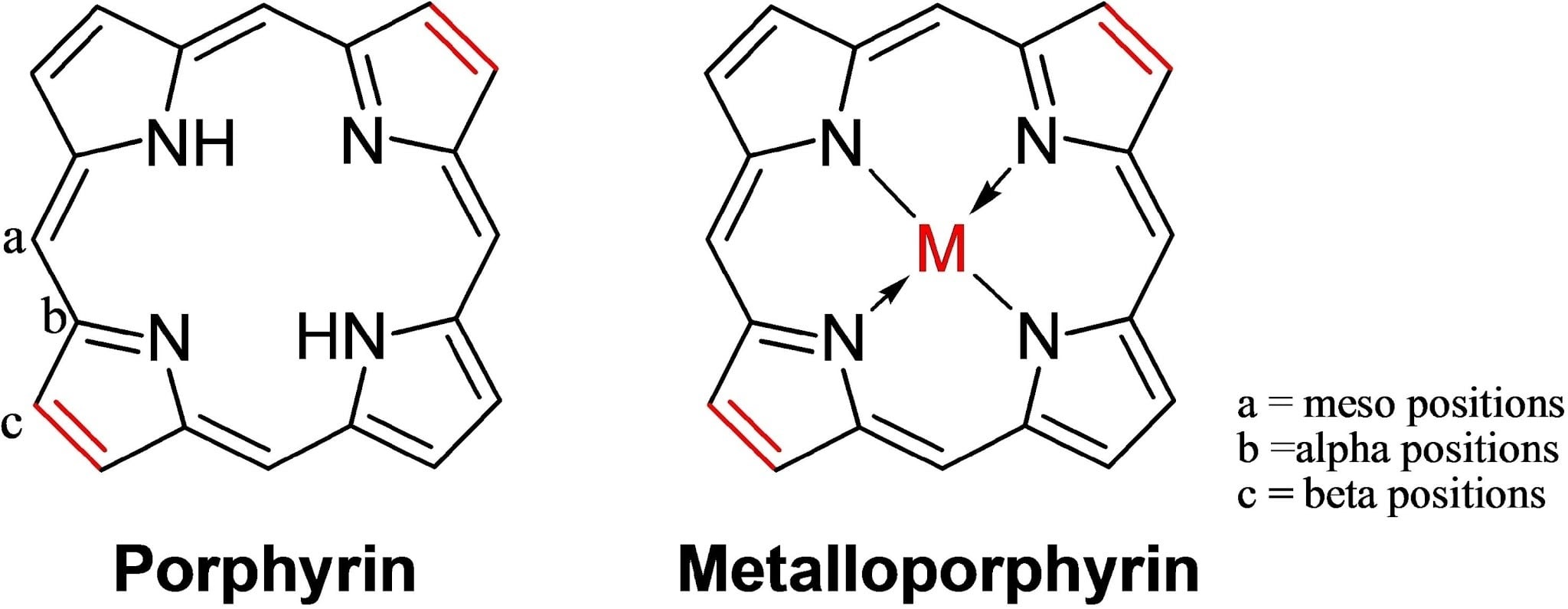
(Source: https://chemistry-europe.onlinelibrary.wiley.com/doi/10.1002/slct.202304817)
- Hemoglobin and Myoglobin: Porphyrin contains an iron atom at the center of the ring. It allows the transportation of oxygen from the lungs to tissues and carbon dioxide from tissues to the lungs. The pigments absorb light in the blue-green region of the visible spectrum and emit light appearing red to our eyes. Oxygenated hemoglobin appears bright red, and deoxygenated hemoglobin appears dark red (maroon).
- Chlorophyll: Porphyrin containing magnesium at its center. It serves a crucial role in photosynthesis. Chlorophyll absorbs light most efficiently in the blue and red regions of the visible spectrum and transmits green light. Chlorophyll is of various types.
- Chlorophyll a is the primary photosynthetic pigment in higher plants, algae, and some cyanobacteria.
- Chlorophyll b is the accessory pigment that expands the range of light wavelengths to be absorbed. It transfers the absorbed energy to chlorophyll a.
- Chlorophyll c is found in brown algae, diatoms, and dinoflagellates.
- Chlorophyll d is found in red algae and certain cyanobacteria.
- Chlorophyll e is a rare pigment in golden algae.
- Bacteriochlorophyll is a type of chlorophyll found in Photosynthetic bacteria.
- Bilins: Bilins (bilichromes), a pigment with tetrapyrrole and open chain structure, play a role in heme degradation. They are involved in physiological processes related to the liver and excretion. Bilirubin and Biliverdin are two bilin pigments. Biliverdin is a greenish pigment that is an intermediate product during the breakdown of heme. The enzyme Biliverdin reductase converts it to a yellowish pigment, Bilirubin. These pigments are present in animal tissues, bile, and excretory materials and are also found in invertebrates, lower vertebrates, red algae, and green algae.
- Ooporphyrin: Ooporphyrin is a pale brown pigment responsible for red flecks on the eggshells of some plovers and domestic hens. The unique colorations in the feathers of certain birds contribute to red, brown, green, and pink hues. These hues result from porphyrins produced by the liver, which are fluorescent under UV light.
| Porphyrin Type | Color in Feather |
| Uroporphyrin | Reddish-brown |
| Coproporphyrin | Salmon-Pink |
| Protoporphyrin | Brown |
| Turacoverdin | Green (present in Family Musaphagidae) |
Carotenoids
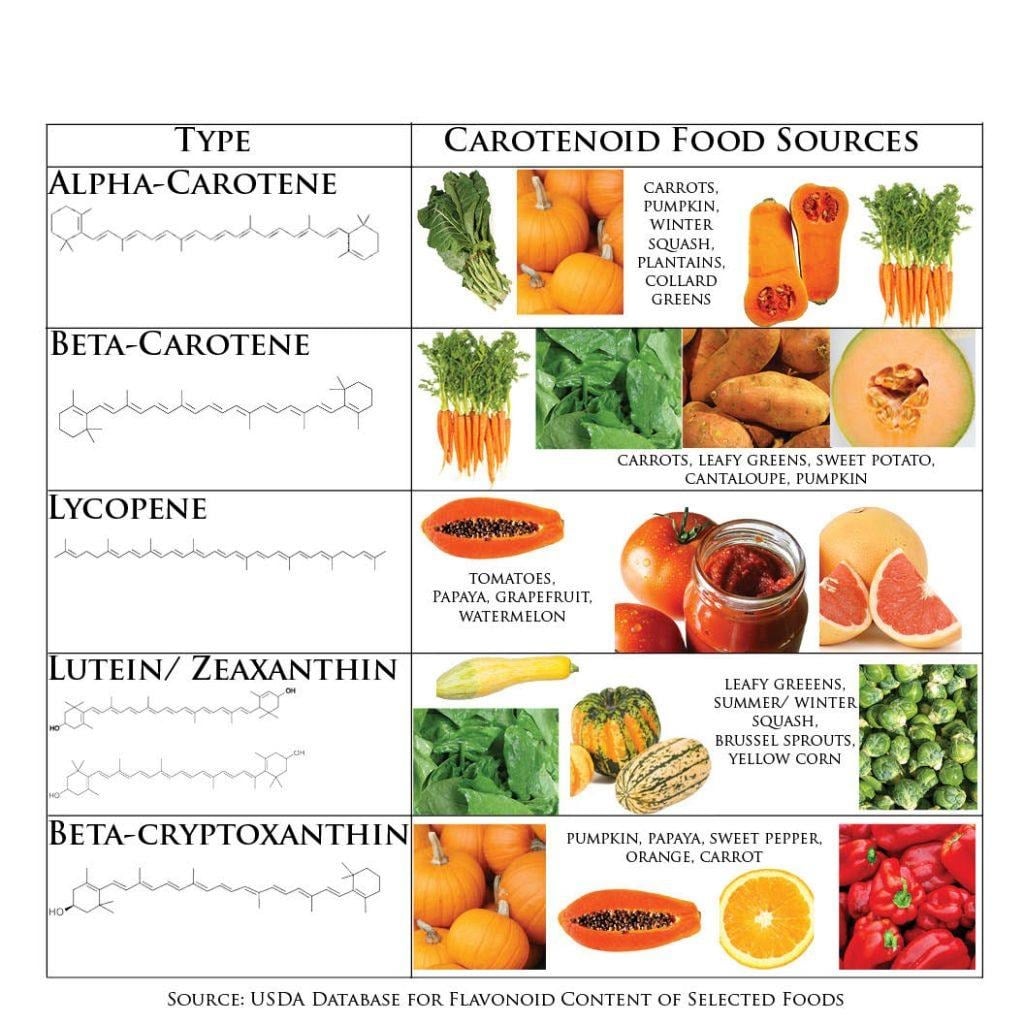
Carotenoids, a widely distributed group of non-nitrogenous pigments, are responsible for the yellow, orange, or red coloration in many fruits and vegetables. Their structure, consisting of eight isoprene units, gives them a characteristic long chain of conjugated double bonds that are responsible for their light absorption properties. Factors such as ripening stage, processing environment, and time affect carotenoid coloration.
Visual representation of carotenoids
Isoprene: C5H8
Terpene: 2*Isoprene = C10H16
Tetraterpene = 4*Terpene = 8*Isoprene = C40H64
Two classes of Carotenoids include:
- Xanthophylls
- Carotenes
| Class of Carotenoid | Type | Color | Examples |
| Carotene(Without Oxygen) | Beta-Carotene | Orange | Carrot, Sweet potato, Broccoli, Spinach, Cantaloupe |
| Lycopene | Yellow | Tomato, Watermelon, Red cabbage | |
| Alpha-Carotene | Yellowish-Orange | Vegetables (Pumpkin, Squash, Broccoli, Green beans, Green peas) | |
| Xanthophyll(With Oxygen) | Lutein | Yellow | Plumage coloration in Songbirds |
| Zeaxanthin | Orange-Yellow | Zea mays (common yellow maize) | |
| Astaxanthin | Deep Red to Purple | Red-orange Coloration in Flamingo, Salmon, Shrimp | |
| Capsanthin | Bright Orange- red | Paprika fruit (Capsicum annuum) | |
| Violaxanthin | Orange | Green vegetables, Microalgae (Chlorella ellipsoidea) |
Melanin
Melanin is a heteropolymer pigment derived from the amino acid tyrosine. Melanin synthesis (melanogenesis) requires the enzyme tyrosinase, where the oxidation of tyrosine to dopaquinone further leads to melanin. This process occurs in specialized cells called melanocytes in the skin, hair follicles, and eyes. Melanin exists in the following three types:
- Eumelanin: the most common form of melanin. Higher Eumelanin level tends to result in brown and black Coloration in human skin, eyes, feathers, and fur.
- Pheomelanin: Pheomelanin possesses sulfur-containing units, producing lighter yellow to reddish colorations.
- Neuromelanin: Neuromelanin is found in the brain in areas like the substantia nigra. It comprises polymerized dopamine and other catecholamines (a benzene ring with two hydroxyl groups at a side chain). Its function has not been studied well.
Melanin plays a crucial role in camouflage, allowing animals to blend with their surroundings. Industrial melanism is a fascinating example observed in the peppered moth (Biston betularia). In areas of industrial pollution, darker individuals were favored by natural selection due to their Coloration, which provided better camouflage against soot-colored backgrounds.
Furthermore, melanin also helps absorb UV radiation, regulates thermoregulation, heals wounds, and protects the immune system and body from predation.
Anthocyanin
Anthocyanins are a group of water-soluble pigments that belong to the flavonoid class of secondary metabolites found in plants, fungi, and some bacteria. These pigments result in vibrant hues of red, purple, and blue. It belongs to a class of natural products called flavonoids, which are synthesized from phenylalanine and malonyl-CoA in plants. It consists of a sugar molecule (primarily glucose) attached to a non-sugar molecule called Anthocyanidin in its core, which is responsible for color production. The pH of the vacuole in the plant cell determines color.
Different types of Anthocyanidin in the Anthocyanin pigment include the following:
| Anthocyanidin | Color | Examples |
| Cyanidin | Red to Purple | Blackberry, Cranberry, Elderberry |
| Delphinidin | Blue to Purple | Grapes, Bilberry, Blackcurrant, Eggplant |
| Pelargonidin | Orange to Red | Strawberry, Red radish, Pomegranates, Crane’s bill |
| Peonidin | Pink to Red | Peonies, Cherry, Sweet potato |
| Petunidin | Purple to Blue | Petunia, Chokeberry (Aronia sp.) |
| Malvidin | Purple to Red | Red wine, Plum, most grape varieties |
| Rosinidin | Pink to Purple | Flowers of Catharanthus roseus |
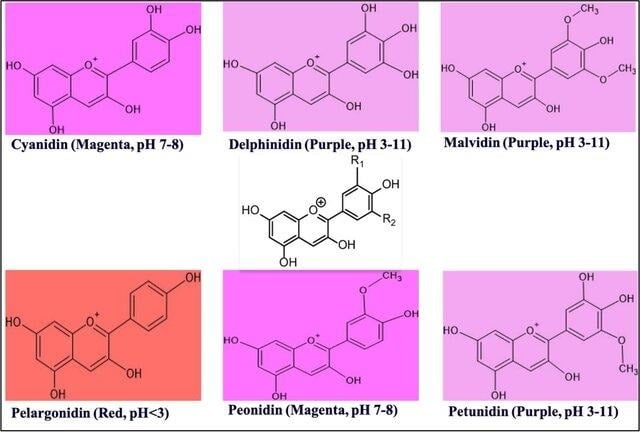
Anthocyanins are responsible for the vibrant colors of many flowers, fruits, and vegetables. These colors attract pollinators and seed dispersers, aiding in plant reproduction. Anthocyanin also acts as a “natural sunscreen” by absorbing UV radiation and scavenging free radicals, protecting plants from excessive light damage and photooxidative stress.
Pterin
Pterins are nitrogenous, heterocyclic pigments responsible for hues of red, orange, or yellow colorations. It is one of those pigments responsible for bright or cryptic animal colorations. Some commonly identified varieties of Pterins include Xanthopterin, Isoxanthopterin, Leucopterin, Drosopterin, Aurodrosopterin, Erythropterin, and Sepiapterin. They are found in butterflies, grasshoppers, and some birds’ feathers.
Betalains
Betalains are water-soluble pigments responsible for red and yellow hues in plants. They are exclusively found in the family Caryophyllales (including Red beetroots Beta vulgaris, Leafy Amaranth Amaranthus sp., fruits of cacti Opuntia sp., Eulychnia sp., and Hylocerus sp.). They also occur in higher fungi, replacing anthocyanin pigment.
Note: Several pieces of literature refer to all these types of Coloration due to pigments in different ways. Cells that produce pigments are referred to as chromatophores. Chromatophores can occur in various types, and they are:
- Melanophores (producing black or brown pigment, eumelanin, pheomelanin)
- Xanthophores (producing yellow pigment, pteridine, carotenoids)
- Erythrophores (producing red pigment, carotenoid)
- Iridophores (a resemblance to structural Coloration forming iridescence; it reflects light using guanine crystals)
- Leucophores (reflect all lights appearing white)
Structure-Based Coloration
Structural Coloration is a phenomenon in which colors arise not from pigments but from the physical interaction of light with micro- and nano-sized structures. This process produces vibrant, iridescent hues that shift depending on the viewing angle. It is widespread and found in butterfly wings, bird feathers, exoskeletons, marine organisms, and even some plants.
Structural colors can result from four primary optimal mechanisms:
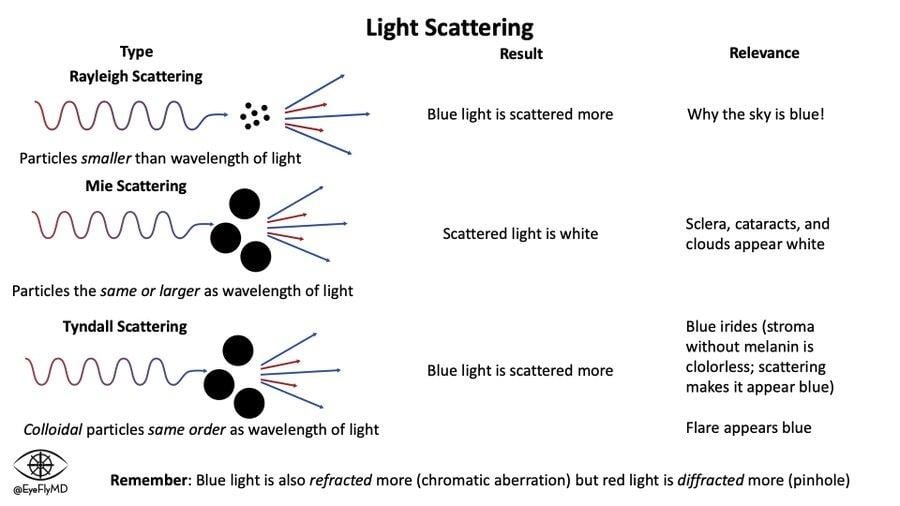
Scattering (Rayleigh, Tyndall, and Mie Scattering)
Light waves can disperse when they are allowed to pass through a medium but hit an obstacle. The interaction with microscopic or nanoscopic structures creates an illusion of blue Coloration, even though no blue pigment is present. This phenomenon is called Rayleigh Scattering. Suppose the particle sizes are more significant but small enough to remain suspended in a medium. It is Tyndall scattering. Tyndall scattering occurs in colloidal suspensions and emulsions rather than in gases (Rayleigh scattering).
When the interaction of light waves with structures results in all wavelengths of light being scattered equally, the phenomenon is called Mie scattering. This results in the body’s white Coloration.
Examples: The blue eye color in humans and some animals occurs due to the Tyndall effect.
The blue color in bird feathers is due to Rayleigh scattering in microscopic keratin-air structures within the feather cells.
The white Coloration of polar bear fur is due to Mie scattering of light within its fur, which is composed of transparent keratin with hollow, structured cores as large scattering centers. These structures also prevent UV light from reaching the polar bear’s black skin, and the process minimizes photodegradation to maintain an effective insulation system.
Source: https://x.com/EyeFlyMD/status/1674176094663249921
Thin-film Interference
Thin-film interference is the phenomenon where light waves reflect off a thin transparent layer’s lower and upper boundaries. Depending on the layer’s thickness, some wavelengths undergo constructive (enhancing specific colors) or destructive interferences (eliminating other colors). This creates iridescence due to amplification or cancellation of specific wavelengths.
Example: Morpho butterflies scale contains nano-layered cuticles that reflect and appear blue. Soap bubbles and Oil slicks also occur because of this phenomenon. The golden metallic sheen in the Golden beetle (Chrysina resplendens) also results from a layered cuticle that reflects light selectively.
Diffraction Gratings
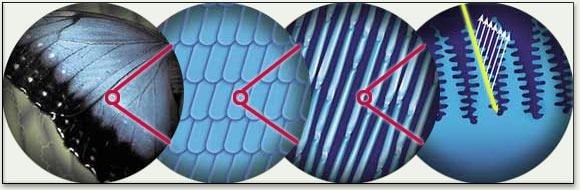
A diffraction grating consists of regularly spaced ridges that split light into different colors, like a prism. Animals here include peacock feathers, where keratin and melanin layer different light into shimmering green. The Exoskeleton of Beetles (Jewel beetle) has diffraction gratings, creating metallic hues. Similarly, the wings of the Morpho Butterfly have microscopic ridges acting like diffraction gratings, resulting in intense blue Coloration.
Photonic Crystals
Photonic crystals are nanostructured materials within a periodic structure that selectively allow certain wavelengths of light to pass. They have repeating patterns in their reflection, causing Bragg’s reflection.
This coloration phenomenon is angle-independent, meaning it can be viewed from any angle. Example: In Parides serositis (Emerald-patched cattle heart butterfly), nano-sized holes in the chitin of wing scales form photonic crystals that reflect green light uniformly at different angles without iridescence.
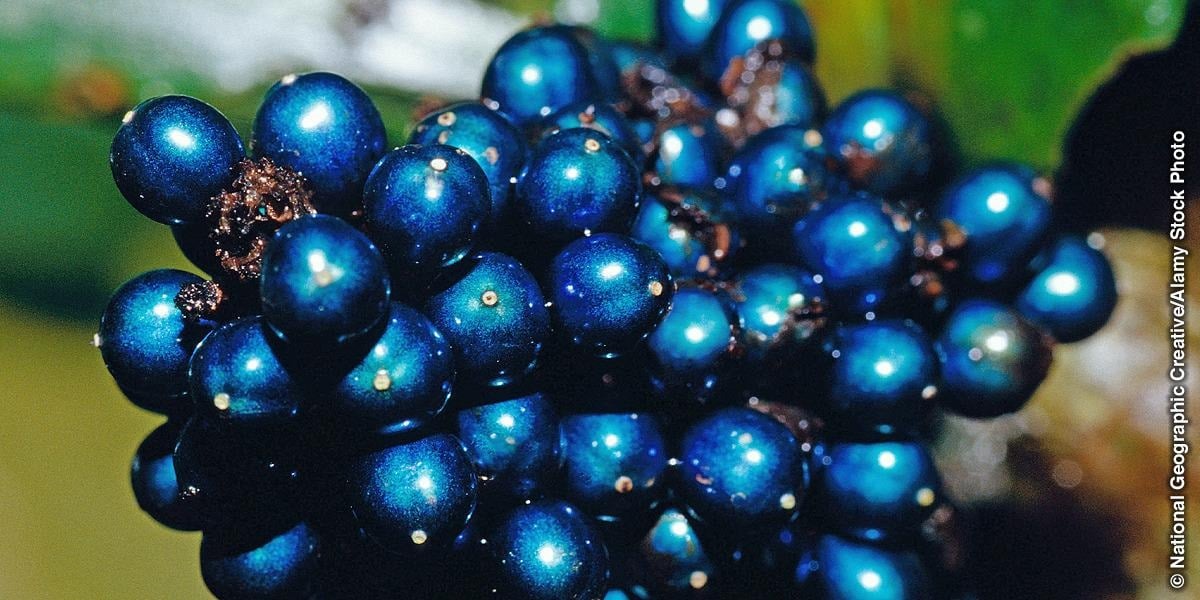
Marble Berry (Pollia condensata) is the most intensely colored blue fruit in the world. Its Coloration relies on Bragg’s reflection within photonic crystals, producing a deep blue color that never fades.
(Source: https://www.jw.org/en/library/magazines/awake-no4-2017-august/pollia-berry-brilliant-blue/)
Structural Coloration in nature is indeed a significant source of inspiration in various fields, such as:
Studies on iridescent colors in butterfly wings or shells of beetles are inspiring scientists to create new coatings for textiles and cosmetics. Blue Coloration, being very rare in nature, is only obtainable through the phenomenon of structural Coloration. Hence, these innovations can create more vibrant makeup, fabrics that can change color with movement, or more energy-efficient displays.
Significance of Coloration in Living Organisms
Coloration in living organisms is an essential feature that has evolved and served various purposes across various organisms. Its significance can be categorized into the following topics:
Camouflage
Camouflage refers to the ability of an organism to blend into its surroundings to avoid detection by predators or prey. This form of Coloration makes it difficult for predators to spot the organism or enables the prey to evade being seen.
Example: Chameleons (Chamaeleonidae) change their color rapidly with their surroundings as they possess specialized cells called iridophores within their skin layer. This skin cell contains nano-sized crystals that selectively reflect light. Concerning the surroundings, the Chameleon can increase the spacing between the crystals; hence, a more significant gap created can reflect a longer wavelength of light. So, this variation in the space between crystals can change color from blue, green, and yellow to orange.
Aposematism (Warning Coloration)
Aposematism coloration involves displaying bright Coloration to warn predators, indicating that the organism is toxic, dangerous, or unpalatable.
Example: Red, Yellow, or Black spots or Coloration aided by melanin in the bodies of Poison dart frogs, Monarch butterflies, and Coral snakes warn predators of their toxic nature.
Sexual (Mate) Attraction
Bright colors or distinct patterns in an individual can signal health, genetic fitness, or dominance, making the individual more attractive to a potential mate.
Example: Peacocks (Pavo cristatus): Male peacock tail feathers possess a photonic crystal structure within the barbules. They are composed of melanin rods and keratin arranged in a regular pattern. The unique arrangement of melanin causes iridescence in peacock feathers.
The size, shape, and Coloration of feathers signal genetic fitness in females. The peacocks use these tails as a form of communication to signal genetic fitness to females during courtship displays.
Mimicry
Mimicry is the ability of an organism to resemble another object or species to be protected, prey, or to possess a survival advantage. Example: The Viceroy butterfly (Limenitis Archippus) resembles the color of the toxic monarch butterfly (Danaus plexippus) so as to avoid predation.
Protection from UV radiation
Melanin pigmentation is known to protect organisms from ultraviolet radiation, which can cause serious issues. Example: Skin pigmentation in mammals that evolved in regions with high UV radiation tends to have darker skin, indicating a high level of melanin.
References
- The Editors of Encyclopaedia Britannica. (1998, July 20). Porphyrin | Photosynthesis, HEME, proteins. Encyclopedia Britannica. Retrieved from
- https://www.britannica.com/science/porphyrin#:~:text=porphyrin%2C%20any%20of%20a%20class,combined%20with%20metals%20and%20protein
- Smith, K. (2003). Porphyrins. In Elsevier eBooks (pp. 493–506). Retrieved from https://doi.org/10.1016/b0-08-043748-6/01050-1
- Galván, I., Camarero, P. R., Mateo, R., & Negro, J. J. (2016). Porphyrins produce uniquely ephemeral animal coloration, a possible signal of virginity. Scientific Reports, 6(1). Retrieved from https://doi.org/10.1038/srep39210
- Khoo, H., Prasad, K. N., Kong, K., Jiang, Y., & Ismail, A. (2011). Carotenoids and their isomers: color pigments in fruits and vegetables. Molecules, 16(2), Retrieved from 1710–1738. https://doi.org/10.3390/molecules16021710
- Fox, D. L. (1955). Astaxanthin in the American Flamingo. Nature, 175(4465), 942–943. Retrieved from https://doi.org/10.1038/175942a0
- McGraw, K., Beebee, M., Hill, G., & Parker, R. (2003). Lutein-based plumage coloration in songbirds results from selective pigment incorporation into feathers. Comparative Biochemistry and Physiology Part B Biochemistry and Molecular Biology, 135(4), 689–696. Retrieved from https://doi.org/10.1016/s1096-4959(03)00164-7
- Wikipedia contributors. (2025, January 14). Α-Carotene. Retrieved from https://en.wikipedia.org/wiki/%CE%91-Carotene#:~:text=dL%20among%20women.-,Dietary%20sources,%2C%20collards%2C%20leaf%20lettuce%2C%20avocado
- Burri, B. (2013). Carotenoids: chemistry, sources and physiology. In Elsevier eBooks (pp. 283–291). Retrieved from https://doi.org/10.1016/b978-0-12-375083-9.00044-1
- Ottocento, C., Rojas, B., Burdfield-Steel, E., Furlanetto, M., Nokelainen, O., Winters, S., & Mappes, J. (2024). Diet influences resource allocation in chemical defense but not melanin synthesis in an aposematic moth. Journal of Experimental Biology, 227(3). Available at https://doi.org/10.1242/jeb.245946
- Dormán, G., Flachner, B., Hajdú, I., & András, C. (2021). Target identification and polypharmacology of nutraceuticals. In Elsevier eBooks (pp. 315–343). Retrieved from https://doi.org/10.1016/b978-0-12-821038-3.00023 9
- Husain, A., Chanana, H., Khan, S. A., Dhanalekshmi, U. M., Ali, M., Alghamdi, A. A., & Ahmad, A. (2022). Chemistry and pharmacological actions of delphinidin, a dietary purple pigment in anthocyanidin and anthocyanin forms. Frontiers in Nutrition, 9. Retrieved from https://doi.org/10.3389/fnut.2022.746881
- https://www.sciencedirect.com/topics/agricultural-and-biological-sciences/pelargonidin
- https://www.sciencedirect.com/topics/chemistry/malvidin#:~:text=Malvidin%20is%20the%20most%20abundant,red%20grapes%20and%20red%20wine.
- Wikipedia contributors. (2023, June 20). Peonidin. Wikipedia. Retrieved from https://en.wikipedia.org/wiki/Peonidin
- Andrade, P., & Carneiro, M. (2021). Pterin-based pigmentation in animals. Biology Letters, 17(8), 20210221. Retrieved from https://doi.org/10.1098/rsbl.2021.0221
- Rahimi, P., Abedimanesh, S., Mesbah-Namin, S. A., & Ostadrahimi, A. (2018). Betalains are nature-inspired pigments in health and diseases. Critical Reviews in Food Science and Nutrition, 59(18), 2949–2978. Retrieved from https://doi.org/10.1080/10408398.2018.1479830
- Nature curiosity: Why is blue so rare in the animal kingdom? (n.d.). Accelerator. Retrieved from https://www.reconnectwithnature.org/news-events/the-buzz/nature-curiosity-why-blue-so-rare-animals/#:~:text=When%20we%20see%20blue%20animals,us%20because%20of%20Rayleigh%20scattering.
- Fruit skin has a bright blue pointillist appearance, Biological Strategy, AskNature. (n.d.). Retrieved from https://asknature.org/strategy/fruit-skin-has-bright-blue-pointillist-appearance/#:~:text=The%20Pollia%20condensata%20fruit’s%20brilliant,of%20helicoidally%20stacked%20cellulose%20microfibrils.
- The adaptive significance of Coloration in mammals – GCF Resource Library. (n.d.). GCF Resource Library. Retrieved from https://library.giraffeconservation.org/download/the-adaptive-significance-of-coloration-in-mammals/https://encyclopedia.pub/entry/23757
- Zi, J., Yu, X., Li, Y., Hu, X., Xu, C., Wang, X., Liu, X., & Fu, R. (2003). Coloration strategies in peacock feathers. Proceedings of the National Academy of Sciences, 100(22), Retrieved from 12576–12578. https://doi.org/10.1073/pnas.2133313100
- Fox, D. L. (1979). Biochromy: Natural Coloration of living things. University of California Press.
- Doucet, S. M., & Meadows, M. G. (2009). Iridescence: a functional perspective. Journal of the Royal Society Interface, 6(suppl_2). Retrieved from https://doi.org/10.1098/rsif.2008.0395.focus
- 24. Saito, A. (2011). Material design and structural color inspired by biomimetic approach. Science and Technology of Advanced Materials, 12(6), 064709. Retrieved from
- https://doi.org/10.1088/1468-6996/12/6/064709
- Catalog Of Life’s Colors Created To Assist The Hunt For Extraterrestrial Life | IFLScience. https://www.iflscience.com/catalog-lifes-colors-created-assist-hunt-extraterrestrial-life-27574
- Plant Science – Sustainable Stories. https://msuriseblog.wordpress.com/category/plant-science/
- Blood cell – Hemostasis.com. https://www.hemostasis.com/blood-cell/
