
Thymus- Structure and Functions
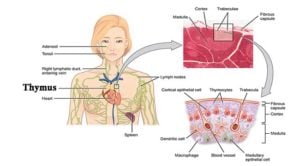
The thymus is a lymphocyte-rich, bilobed, encapsulated organ located behind the sternum, above and in front of the heart. The activity of the thymus is maximal in the fetus and … Read more
Immunology is an emerging branch of medical science that deals with studies related to different aspects of the immune system like the cells, structure, function, response against antigens, and disorders.
The thymus is a lymphocyte-rich, bilobed, encapsulated organ located behind the sternum, above and in front of the heart. The activity of the thymus is maximal in the fetus and … Read more
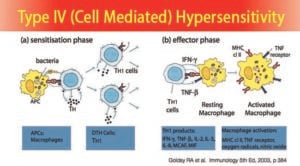
Hypersensitivity refers to increased reactivity or exaggerated immune response of a host to an antigen to which it has been previously exposed. According to the most widely accepted classification of … Read more
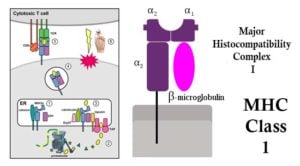
Major Histocompatibility Complex (MHC) is a part of the genome of all vertebrates that code for molecules which are important in immune recognition. In humans, the MHC is a cluster … Read more
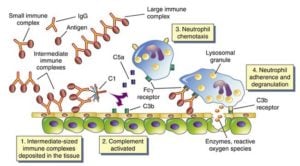
The term hypersensitivity denotes a condition in which an exaggerated immune response of a host results in inappropriate reactions that leads to destruction of host tissues. According to the most … Read more
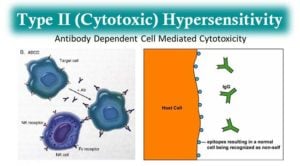
Mechanism of Type II Hypersensitivity Reactions Examples of Type II Hypersensitivity Rhesus incompatibility (Rh hemolytic disease) During subsequent pregnancies, when Rh –ve mother conceive Rh +ve fetus, small numbers of fetal … Read more
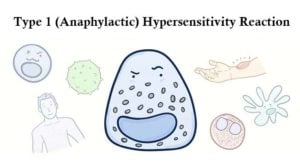
Hypersensitivity is increased reactivity or increased sensitivity by the animal body to an antigen to which it has been previously exposed. The most widely adopted current classification is that of … Read more
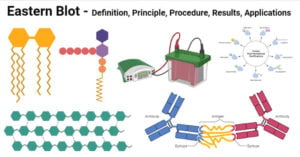
Eastern blot is a molecular biology technique that is used to detect post-translational modifications in proteins and the presence of components like lipids and carbohydrates. Eastern blot was discovered as … Read more
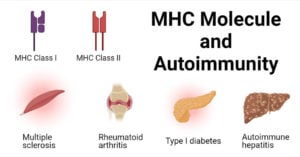
What is an MHC Molecule? Human leukocyte antigen is a major histocompatibility complex present on chromosome 6 of the human genome. Size: 3.6 Mb approx. They are divided into 3 … Read more
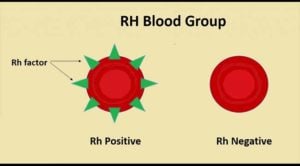
The second major blood grouping system is the Rhesus (Rh) system. Philip Levine, in 1939, discovered that the sera of most women who gave birth to infants with hemolytic disease … Read more
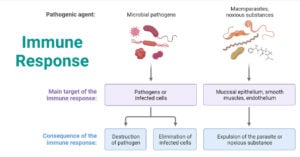
Immune Response is a mechanism of how the immune system of the host’s body responds to a harmful foreign particle or pathogen (antigen) in the body. It entails recognizing the … Read more