Innate Immune System- An Introduction
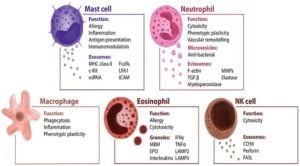
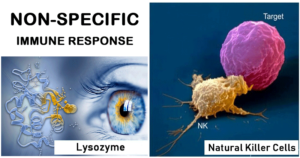
The innate immune system provides the first line of host defense against microbes, before adaptive immune responses have had sufficient time to develop. The mechanisms of innate immunity exist before … Read more
Immunology is an emerging branch of medical science that deals with studies related to different aspects of the immune system like the cells, structure, function, response against antigens, and disorders.
The innate immune system provides the first line of host defense against microbes, before adaptive immune responses have had sufficient time to develop. The mechanisms of innate immunity exist before … Read more
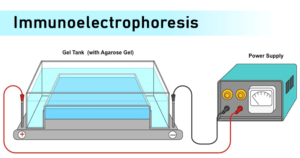
Principle of Immunoelectrophoresis When an electric current is applied to a slide layered with gel, the antigen mixture placed in wells is separated into individual antigen components according to their … Read more
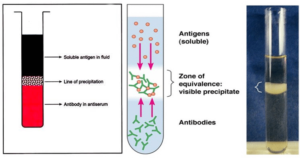
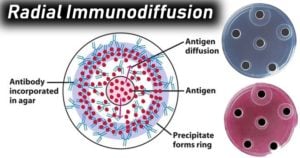
Immuno-diffusion is a technique for the detection or measurement of antibodies and antigens by their precipitation which involves diffusion through a substance such as agar or gel agarose. Simply, it … Read more
Interactions of antibodies and antigens, in the form of various tests, have been developed to determine the presence or absence of antibodies or antigens in a sample. A type of … Read more
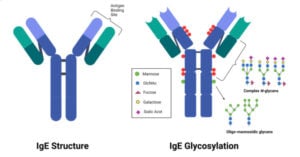
Immunoglobulin E (IgE) Definition Immunoglobulin E (IgE) is one of the 5 classes of immunoglobulins, which is defined by the presence of epsilon (ε) heavy chain. It is present in … Read more
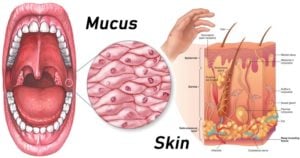
Before a microbe or parasite can invade the host and cause infection, it must first attach to and penetrate the surface epithelial layers of the body. Organisms gain entrance into … Read more
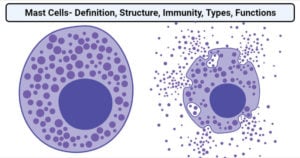
Mast cells are cells of the immune system of the hematopoietic lineage that remain widely distributed in vascularized tissues throughout the body. Mast cells, unlike other immune cells, do not … Read more
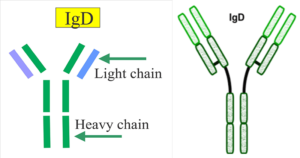
Immunoglobulin D (IgD) is a unique immunoglobulin with a low concentration in serum and the exact function of which is not known. IgD represents about 0.25% of the total serum … Read more
Defence mechanism refers to the ways in which the body protects itself from invasion of pathogenic organisms or other foreign materials such that it provides defence against their harmful effects. … Read more
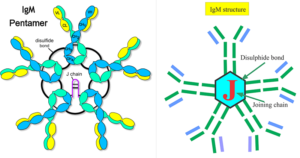
Immunoglobulin M (IgM) is an antigen receptor on B cells and the first antibody produced in an immune response. It is present both on B cells, and as a soluble … Read more