Skip to content
Microbe Notes

Microbe Notes

  • Home
  • Life Sciences
    • Biochemistry
    • Bioinformatics
    • Biology
    • Biotechnology
    • Botany
    • Cell Biology
    • Genetics
    • Molecular Biology
    • Zoology
  • Microbiology
    • Agricultural Microbiology
    • Bacteriology
    • Basic Microbiology
    • Environmental Microbiology
    • Food Microbiology
    • Mycology
    • Parasitology
    • Virology
  • Laboratory and Diagnostics
    • Biochemical Test
    • Culture Media
    • Diagnostic Tests
    • Instrumentation
    • Microscopy
    • Staining
  • Medical Sciences
    • Cancer Biology
    • Human Anatomy
    • Human Physiology
    • Immunology
    • Infections and Diseases
    • Medical Devices
    • Pharmacology
  • Health Sciences
    • Epidemiology
    • Research Methodology
  • Resources
    • Difference Between
    • Microbiology Terms
    • Microorganisms Note
    • Syllabus

Human Anatomy

Human anatomy is the science that deals with the physical morphology and structure of the human body. 

  • Human anatomy is further divided into two groups; gross anatomy and microscopic anatomy. Gross anatomy involves study related to anatomical structures that can be seen with unaided eyes, while microscopic anatomy is the study of minute anatomical structures, histology, and cytology.
  • Humans belong to the Subphylum Vertebrate of the Phylum Chordata as they have the characteristic internal skeleton with a backbone of vertebrae.
  • Other typical mammalian structures in humans include hair, mammary glands, and highly developed sense organs.
  • Besides, among mammals, humans have a predominantly two-legged (bipedal) posture, along with a highly developed intellectual.
  • The chemical composition of the human body is composed of water and organic compounds like proteins, carbohydrates, and lipids.
  • The human body is composed of specialized systems for different purposes; the digestive system for digestion, the respiratory system for respiration, the reproductive system for reproduction, and the skeletal and muscular system for movement.
  • Cells are the fundamental units of the human body consisting of trillions of cells in the body. The cells together form tissues.
  • Four basic types of tissues are found in humans, each of which is specialized for a particular purpose; epithelial tissue for covering the body, muscular tissue for movement, nerve tissues for signaling, and connective tissue for transport of nutrients.
  • The following organization of the human body is organs. An organ is composed of a group of specialized tissues from a structural and functional unit.
  • Organs are followed by the system as the final organization of the human body. The body includes nine major organ systems, each composed of various organs and tissues that work together as a functional unit.
  • Information on human anatomy is essential during the analysis of signs of symptoms of different diseases and disease diagnoses.
  • It also allows an understanding of the relationship between different organ systems and the changes occurring in the body’s anatomy during growth.

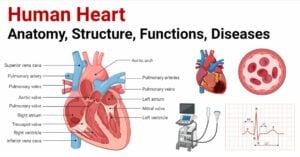
Human Heart- Location, Anatomy, Structure, Functions
August 3, 2023 by Prashant Dahal
Human Heart

The heart is a hollow muscular pumping organ that generates pressure to circulate the blood through the blood vascular system under the influence of cardiac action potential. In general terms, … Read more
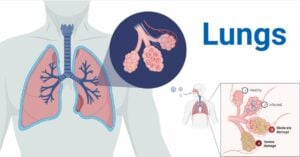
Lungs- Definition, Structure, Location, Functions, Diseases

August 3, 2023August 3, 2023 by Shouri Kushal
Lungs

Lungs are the respiratory organs in our body. All the gas exchange that occurs in our body takes place in the lungs. Normally humans have two lungs on either side … Read more

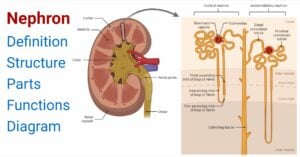
Nephron- Definition, Structure, Physiology, Functions

August 3, 2023 by Nidhi Dewangan
Nephron Diagram

Vertebrates are the only group that has well-developed functional kidneys to conserve water in terrestrial environments. Primitive vertebrates like fish excrete ammonia (NH4) as the byproduct of protein metabolism. Birds and … Read more

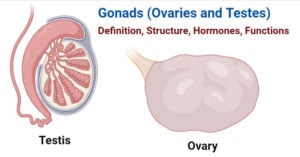
Gonads (Ovaries and Testes)- Definition, Structure, Hormones, Functions

August 3, 2023 by Anupama Sapkota
Gonads (Ovaries and Testes)

What are Gonads? Gonads Definition The male and female gonads are endocrine glands that produce sex hormones essential for the development of reproductive organs and the proper functioning of the … Read more

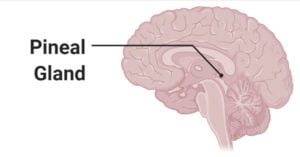
Pineal Gland- Definition, Structure, Hormones, Functions, Disorders

August 3, 2023 by Anupama Sapkota
Pineal Gland

What is Pineal Gland? Definition of Pineal Gland The pineal gland is an endocrine gland present at the geometric center of the brain that is essential in the circadian cycle … Read more

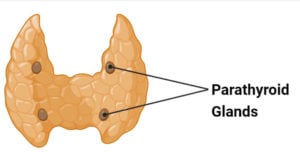
Parathyroid Gland- Definition, Structure, Hormones, Functions, Disorders

August 3, 2023 by Anupama Sapkota
Parathyroid Gland

What is Parathyroid Gland? Definition of Parathyroid Gland The parathyroid gland is a type of endocrine gland that occurs in the upper and lower poles of the thyroid gland. There … Read more

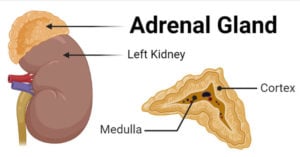
Adrenal Gland- Structure, Hormones, Functions, Disorders

August 3, 2023 by Anupama Sapkota
Adrenal Gland

The adrenal glands, also called suprarenal glands, are a pair of glands occurring on the top of kidneys and produce different steroid hormones. Structure of Adrenal Gland There are two … Read more

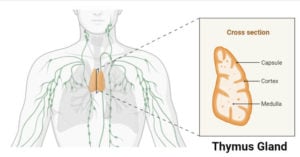
Thymus Gland- Definition, Structure, Hormones, Functions, Disorders

August 3, 2023 by Anupama Sapkota
Thymus Gland

What is Thymus Gland? Definition of Thymus Gland The thymus gland is one of the key organs in the lymphatic system, which occurs in the mediastinum below the sternum. The … Read more

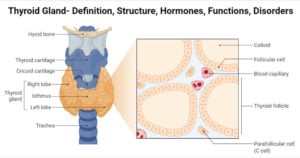
Thyroid Gland- Definition, Structure, Hormones, Functions, Disorders

August 3, 2023 by Anupama Sapkota
Thyroid Gland Structure

What is Thyroid Gland? Thyroid Gland Definition The thyroid gland is an endocrine gland that occurs in the neck and is essential for iodine metabolism and secretion of thyroid hormones. … Read more

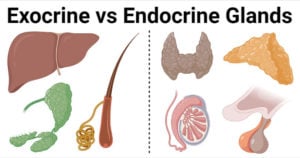
Exocrine vs. Endocrine Glands: 8 Differences, Examples

August 3, 2023 by Anupama Sapkota
Exocrine-Glands-vs-Endocrine-Glands

Exocrine Glands Definition Exocrine glands are the glands with ducts that allow the cells to secrete their products into those ducts so that they can be released onto the surface … Read more

Older posts
Newer posts
← Previous Page1 … Page3 Page4 Page5 Next →

Topics / Categories

  • Agricultural Microbiology (30)
  • Bacteriology (141)
  • Basic Microbiology (64)
  • Biochemical Test (114)
  • Biochemistry (226)
  • Bioinformatics (28)
  • Biology (147)
  • Biotechnology (63)
  • Botany (113)
  • Cancer Biology (2)
  • Cell Biology (107)
  • Culture Media (68)
  • Diagnostic Tests (6)
  • Difference Between (89)
  • Environmental Microbiology (15)
  • Epidemiology (30)
  • Food Microbiology (52)
  • Genetics (88)
  • Human Anatomy (48)
  • Human Physiology (37)
  • Immunology (124)
  • Infections and Diseases (53)
  • Instrumentation (73)
  • Medical Devices (17)
  • Microscopy (35)
  • Molecular Biology (137)
  • Mycology (44)
  • Parasitology (28)
  • Pharmacology (28)
  • Research Methodology (20)
  • Staining (30)
  • Syllabus (20)
  • Virology (64)
  • Zoology (40)
  • Our Team
  • Advisory Board
  • About Us
  • Contact Us
  • Editorial Policy
  • Privacy Policy
  • Cookie Policy
  • Disclaimer (Terms and Conditions)
© 2026 Microbe Notes. Made with ♡ by Sagar Aryal.