Skip to content
Microbe Notes

Microbe Notes

  • Home
  • Life Sciences
    • Biochemistry
    • Bioinformatics
    • Biology
    • Biotechnology
    • Botany
    • Cell Biology
    • Genetics
    • Molecular Biology
    • Zoology
  • Microbiology
    • Agricultural Microbiology
    • Bacteriology
    • Basic Microbiology
    • Environmental Microbiology
    • Food Microbiology
    • Mycology
    • Parasitology
    • Virology
  • Laboratory and Diagnostics
    • Biochemical Test
    • Culture Media
    • Diagnostic Tests
    • Instrumentation
    • Microscopy
    • Staining
  • Medical Sciences
    • Cancer Biology
    • Human Anatomy
    • Human Physiology
    • Immunology
    • Infections and Diseases
    • Medical Devices
    • Pharmacology
  • Health Sciences
    • Epidemiology
    • Research Methodology
  • Resources
    • Difference Between
    • Microbiology Terms
    • Microorganisms Note
    • Syllabus

Human Anatomy

Human anatomy is the science that deals with the physical morphology and structure of the human body. 

  • Human anatomy is further divided into two groups; gross anatomy and microscopic anatomy. Gross anatomy involves study related to anatomical structures that can be seen with unaided eyes, while microscopic anatomy is the study of minute anatomical structures, histology, and cytology.
  • Humans belong to the Subphylum Vertebrate of the Phylum Chordata as they have the characteristic internal skeleton with a backbone of vertebrae.
  • Other typical mammalian structures in humans include hair, mammary glands, and highly developed sense organs.
  • Besides, among mammals, humans have a predominantly two-legged (bipedal) posture, along with a highly developed intellectual.
  • The chemical composition of the human body is composed of water and organic compounds like proteins, carbohydrates, and lipids.
  • The human body is composed of specialized systems for different purposes; the digestive system for digestion, the respiratory system for respiration, the reproductive system for reproduction, and the skeletal and muscular system for movement.
  • Cells are the fundamental units of the human body consisting of trillions of cells in the body. The cells together form tissues.
  • Four basic types of tissues are found in humans, each of which is specialized for a particular purpose; epithelial tissue for covering the body, muscular tissue for movement, nerve tissues for signaling, and connective tissue for transport of nutrients.
  • The following organization of the human body is organs. An organ is composed of a group of specialized tissues from a structural and functional unit.
  • Organs are followed by the system as the final organization of the human body. The body includes nine major organ systems, each composed of various organs and tissues that work together as a functional unit.
  • Information on human anatomy is essential during the analysis of signs of symptoms of different diseases and disease diagnoses.
  • It also allows an understanding of the relationship between different organ systems and the changes occurring in the body’s anatomy during growth.

Chambers of the Heart: Auricles and Ventricles

August 7, 2023 by Prashant Dahal
Chambers of the Heart

The heart is internally divided into several compartments, well separated by septum and valves, called the chambers of the heart. The human heart has four chambers, two auricles, and two … Read more

Pericardium: Definition, Structure, Functions, Diseases

August 5, 2023 by Prashant Dahal
Pericardium

The pericardium is a double-layered sac that surrounds the heart externally. It is a double-walled sac-like structure; hence, it is also called the pericardial sac. Pericardium Structure Histologically, the pericardium … Read more

Layers of the Heart: Epicardium, Myocardium, Endocardium

August 6, 2023August 4, 2023 by Prashant Dahal
Layers of the Heart

There are three layers of the heart. They are: 1. Epicardium (Outermost Layer of Heart) Epicardium Structure Functions of Epicardium Epicardium-associated Diseases 2. Myocardium (Middle Layer of Heart) Myocardium Structure … Read more

Heart Valves: Types, Structure, Functions, Diseases

August 3, 2023 by Prashant Dahal
Heart Valves

Heart valves are the specialized flap or cusp-like structures inside the heart composed primarily of dense connective tissues that maintain the one-way flow of the blood inside the heart i.e., … Read more

Capillaries: Structure, 3 Types, Functions, Diseases

August 3, 2023 by Prashant Dahal
Capillaries

Capillaries are incredibly small and finer blood vessels connecting the arterioles with the venules. They are the smallest blood vessels in our body. Though it seems to be the branch … Read more

Veins: Definition, Structure, Types, Functions, Diseases

August 3, 2023 by Prashant Dahal
Veins

Veins are the blood vessels that collect the deoxygenated blood from the various tissues and organs of the body and transport it back to the heart. The blood vessels that … Read more

Lymphatic System- Organs, Functions, Diseases

August 3, 2023 by Prashant Dahal
Lymphatic System

The lymphatic system is an organ system in vertebrates that helps collect (excess interstitial fluid) lymph from tissues and the transportation of the fluid back to the bloodstream for re-circulation. … Read more

Human Cardiovascular System- Organs, Functions, Diseases

August 3, 2023 by Prashant Dahal
Cardiovascular System of Human

The cardiovascular system is an organ system in animals comprising the heart and a closed circuit of blood vessels that are responsible for circulating blood throughout the body. It is … Read more

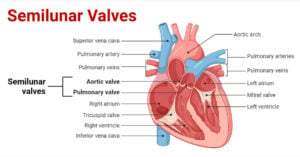
Semilunar valves- Definition, Anatomy, Types, Dysfunction

August 3, 2023August 3, 2023 by Dibyak Kapali
Semilunar valves

The heart valves are pivotal in maintaining the systolic and diastolic phases of the cardiac cycle.  There are two types of heart valves. They are: Atrioventricular valves consist of the … Read more

Types of Muscle Tissue (Skeletal, Smooth, Cardiac Muscle)

August 3, 2023 by Prashant Dahal
Types of Muscle Tissue

Muscle tissues are the soft body tissue of animals made up of thin, elongated muscle fibers that generate and apply forces for the movement and functioning of different parts of … Read more

Older posts
Newer posts
← Previous Page1 Page2 Page3 Page4 Page5 Next →

Topics / Categories

  • Agricultural Microbiology (30)
  • Bacteriology (141)
  • Basic Microbiology (64)
  • Biochemical Test (114)
  • Biochemistry (226)
  • Bioinformatics (28)
  • Biology (147)
  • Biotechnology (63)
  • Botany (113)
  • Cancer Biology (2)
  • Cell Biology (107)
  • Culture Media (68)
  • Diagnostic Tests (6)
  • Difference Between (89)
  • Environmental Microbiology (15)
  • Epidemiology (30)
  • Food Microbiology (52)
  • Genetics (88)
  • Human Anatomy (48)
  • Human Physiology (37)
  • Immunology (124)
  • Infections and Diseases (53)
  • Instrumentation (73)
  • Medical Devices (17)
  • Microscopy (35)
  • Molecular Biology (137)
  • Mycology (44)
  • Parasitology (28)
  • Pharmacology (28)
  • Research Methodology (20)
  • Staining (30)
  • Syllabus (20)
  • Virology (64)
  • Zoology (40)
  • Our Team
  • Advisory Board
  • About Us
  • Contact Us
  • Editorial Policy
  • Privacy Policy
  • Cookie Policy
  • Disclaimer (Terms and Conditions)
© 2026 Microbe Notes. Made with ♡ by Sagar Aryal.