Skip to content
Microbe Notes

Microbe Notes

  • Home
  • Life Sciences
    • Biochemistry
    • Bioinformatics
    • Biology
    • Biotechnology
    • Botany
    • Cell Biology
    • Genetics
    • Molecular Biology
    • Zoology
  • Microbiology
    • Agricultural Microbiology
    • Bacteriology
    • Basic Microbiology
    • Environmental Microbiology
    • Food Microbiology
    • Mycology
    • Parasitology
    • Virology
  • Laboratory and Diagnostics
    • Biochemical Test
    • Culture Media
    • Diagnostic Tests
    • Instrumentation
    • Microscopy
    • Staining
  • Medical Sciences
    • Cancer Biology
    • Human Anatomy
    • Human Physiology
    • Immunology
    • Infections and Diseases
    • Medical Devices
    • Pharmacology
  • Health Sciences
    • Epidemiology
    • Research Methodology
  • Resources
    • Difference Between
    • Microbiology Terms
    • Microorganisms Note
    • Syllabus

Human Anatomy

Human anatomy is the science that deals with the physical morphology and structure of the human body. 

  • Human anatomy is further divided into two groups; gross anatomy and microscopic anatomy. Gross anatomy involves study related to anatomical structures that can be seen with unaided eyes, while microscopic anatomy is the study of minute anatomical structures, histology, and cytology.
  • Humans belong to the Subphylum Vertebrate of the Phylum Chordata as they have the characteristic internal skeleton with a backbone of vertebrae.
  • Other typical mammalian structures in humans include hair, mammary glands, and highly developed sense organs.
  • Besides, among mammals, humans have a predominantly two-legged (bipedal) posture, along with a highly developed intellectual.
  • The chemical composition of the human body is composed of water and organic compounds like proteins, carbohydrates, and lipids.
  • The human body is composed of specialized systems for different purposes; the digestive system for digestion, the respiratory system for respiration, the reproductive system for reproduction, and the skeletal and muscular system for movement.
  • Cells are the fundamental units of the human body consisting of trillions of cells in the body. The cells together form tissues.
  • Four basic types of tissues are found in humans, each of which is specialized for a particular purpose; epithelial tissue for covering the body, muscular tissue for movement, nerve tissues for signaling, and connective tissue for transport of nutrients.
  • The following organization of the human body is organs. An organ is composed of a group of specialized tissues from a structural and functional unit.
  • Organs are followed by the system as the final organization of the human body. The body includes nine major organ systems, each composed of various organs and tissues that work together as a functional unit.
  • Information on human anatomy is essential during the analysis of signs of symptoms of different diseases and disease diagnoses.
  • It also allows an understanding of the relationship between different organ systems and the changes occurring in the body’s anatomy during growth.

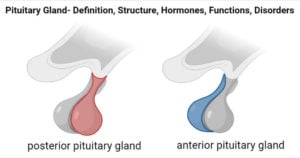
Pituitary Gland- Definition, Structure, Hormones, Functions, Disorders
August 3, 2023 by Anupama Sapkota
Pituitary-Gland

What is Pituitary Gland? Definition of Pituitary Gland The pituitary gland is an endocrine gland that works to maintain cellular homeostasis in the body by the release of different hormones. … Read more
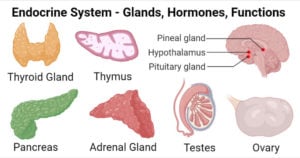
Endocrine System- Definition, Glands, Hormones, Functions, Disorders

August 3, 2023 by Anupama Sapkota
Endocrine System

What is Endocrine System? Definition of Endocrine System An endocrine system is a group of ductless glands where the secretory cells diffuse the hormones directly into the bloodstream. The glands … Read more

Breast- Definition, Structure, Functions and Breast Cancer

August 3, 2023 by Anupama Sapkota
Structure of Breast

Breasts or mammary glands are a pair of structures present in the thoracic region of primates. These glands are present in both the male and female primates, but in males, … Read more

Human Male Reproductive System: Organs, Structure, Functions

November 4, 2023August 3, 2023 by Anupama Sapkota
Organs of the Male Reproductive System

Disclaimer: The information and images presented on this page are for academic, study, and educational purposes only. The terms, keywords, and images used on this page may not be suitable … Read more

Bone vs. Cartilage: 15 Major Differences, Examples

October 20, 2026August 3, 2023 by Anupama Sapkota
Differences between Bone and Cartilage (Bone vs Cartilage)

Bone Definition A bone is a connective tissue where the living cells, tissues, and other components are enclosed within hard non-living intercellular material. The two important constituents of bone are … Read more

Human Embryo Transfer- Conditions, Types, Procedure

August 3, 2023 by Yashaswi Sharma
Human Embryo Transfer

Image Source: shivamivfcentredelhi.blogspot.com/ History of Embryo Transfer Conditions for Embryo Transfer Types of Embryo Transfers Once fertilization has occurred, there are a few different options available for embryo transfer: Once … Read more

The Human Digestive System: Organs, Functions, Diagram

September 19, 2024August 3, 2023 by Sagar Aryal, PhD
The Human Digestive System

The human digestive system is the collective name used to describe the alimentary canal, some accessory organs, and a variety of digestive processes that take place at different levels in … Read more

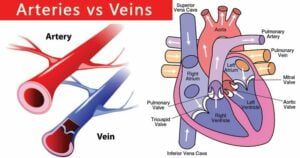
Arteries vs. Veins: 27 Major Differences

August 3, 2023 by Sagar Aryal, PhD
Differences between Arteries and Veins

Arteries and veins are two of the body’s main type of blood vessels through which blood flow in the body. The arteries carry oxygenated blood away from the heart while the veins carry … Read more

Newer posts
← Previous Page1 … Page4 Page5

Topics / Categories

  • Agricultural Microbiology (30)
  • Bacteriology (141)
  • Basic Microbiology (64)
  • Biochemical Test (114)
  • Biochemistry (226)
  • Bioinformatics (28)
  • Biology (147)
  • Biotechnology (63)
  • Botany (113)
  • Cancer Biology (2)
  • Cell Biology (107)
  • Culture Media (68)
  • Diagnostic Tests (6)
  • Difference Between (89)
  • Environmental Microbiology (15)
  • Epidemiology (30)
  • Food Microbiology (52)
  • Genetics (88)
  • Human Anatomy (48)
  • Human Physiology (37)
  • Immunology (124)
  • Infections and Diseases (53)
  • Instrumentation (73)
  • Medical Devices (17)
  • Microscopy (35)
  • Molecular Biology (137)
  • Mycology (44)
  • Parasitology (28)
  • Pharmacology (28)
  • Research Methodology (20)
  • Staining (30)
  • Syllabus (20)
  • Virology (64)
  • Zoology (40)
  • Our Team
  • Advisory Board
  • About Us
  • Contact Us
  • Editorial Policy
  • Privacy Policy
  • Cookie Policy
  • Disclaimer (Terms and Conditions)
© 2026 Microbe Notes. Made with ♡ by Sagar Aryal.