
Bifidobacterium longum is a type of probiotic that resides in the human gastrointestinal tract, particularly abundant in infants, and remains a significant component of the adult gut microbiota.
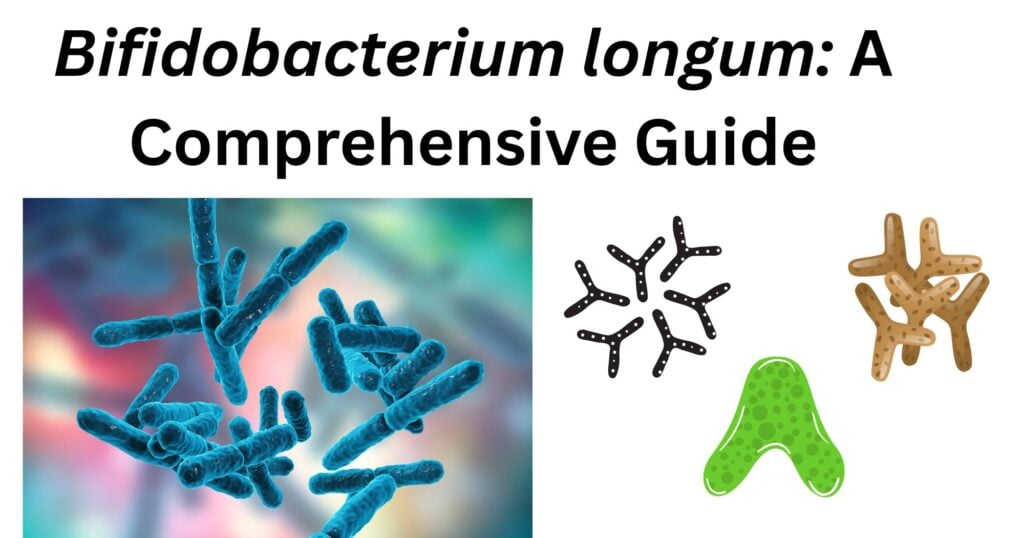
It survives in low-oxygen conditions and ferments carbohydrates, such as oligosaccharides, into lactic acid and acetic acid, creating an acidic environment that inhibits the growth of harmful pathogens. This bacterium supports digestion, increases nutrient absorption, strengthens the intestinal barrier, and plays a crucial role in modulating the immune system.
Taxonomy and Classification of Bifidobacterium longum
Domain: Bacteria
Kingdom: Bacilli
Phylum: Actinomycota
Class: Actinomycetes
Order: Bifidobacteriales
Family: Bifidobacteriaceae
Genus: Bifidobacterium
Species: B. longum
Morphology and Microscopy of Bifidobacterium longum
- It is a Gram-positive bacterium.
- It is rod-shaped, often short to long, with characteristic Y- or V-shaped bifurcations.
- It occurs either singly or in pairs or in short chains.
- It is pleomorphic, showing variable shapes, including curved or club-shaped rods.
- Non-motile
- Non-spore-forming
Appears as a purple-colored, slightly curved rod, often in a Y- or V-shaped arrangement when observed under the microscope.
Cultural and Growth Characteristics of Bifidobacterium longum
- Strict anaerobes
- Optimum temperature: 36-38˚C
- Optimum pH: 6.5-7
- Grows well on enriched media such as de Man-Rogosa-Sharpe agar (MRS Agar) supplemented with cysteine.
- On MRS Agar: small to medium-sized, convex, smooth surface, circular colonies are formed.
- On Blood Agar: small to medium-sized, smooth, convex, white to cream, soft, sometimes slightly mucoid colonies are formed.
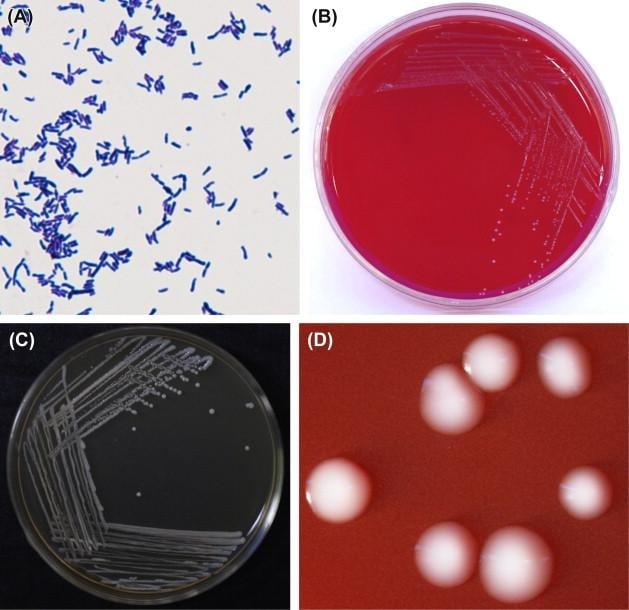
Source: https://www.sciencedirect.com/topics/immunology-and-microbiology/bifidobacterium
Biochemical and Identification Tests of Bifidobacterium longum
| Tests | Results |
| Gram Staining | Positive |
| Catalase | Negative |
| Oxidase | Negative |
| O/F | Fermentative |
| Indole | Negative |
| Motility | Negative |
| Gas | Negative |
| Gelatin Hydrolysis | Negative |
| Nitrate Reduction | Negative |
| Fermentation of | |
| Amylose | Variable |
| Glucose | Positive |
| Galactose | Positive |
| Maltose | Variable |
| Mannose | Negative |
| Lactose | Positive |
| Mannitol | Negative |
| Ribose | Negative |
| Starch | Negative |
| Cellobiose | Negative |
| Sucrose | Variable |
| Xylose | Negative |
| Sorbitol | Negative |
| Raffinose | Negative |
| Trehalose | Negative |
| Enzymatic Reactions | |
| Fructose 6-phosphoketolase | Positive |
| Arabinosidases | Positive |
| Glucosidases | Positive |
| Glutamate dehydrogenase | Positive |
| Glutamine Synthetase | Positive |
| Hexosaminidases | Positive |
| ONPG (β-galactosidase) | Positive |
Pathogenesis and Virulence Factors of Bifidobacterium longum
- B. longum is a normal commensal flora of the human gastrointestinal tract, especially in infants and adults.
- This bacterium is generally non-pathogenic and rarely causes disease.
- Instead of causing disease, it plays a protective role in the host.
- However, in immunocompromised individuals, it may cause opportunistic infections, but it is extremely rare.
The main pathogenesis is actually a beneficial interaction, including:
Maintenance of Gut Microbiota Balance
- This bacterium competes with the harmful microorganisms for space and nutrients.
- It assists in the maintenance of a healthy intestinal microbial ecosystem.
Inhibition of Pathogenic Bacteria
- It secretes acids like lactic acid and acetic acid, decreasing intestinal pH.
- It also produces bacteriocin-like substances, which suppress pathogens like E. coli and Salmonella spp.
Enhancement of Intestinal Barrier Function
- The bacterium strengthens the tight junctions of intestinal epithelial cells.
- It hinders the translocation of hazardous microbes and toxins.
Modulation of the Immune System
- This bacterium stimulates anti-inflammatory responses.
- It increases IgA production and balances immune cells.
- It assists in the reduction of allergy risk and inflammatory diseases.
Improvement of Digestion
- It helps in the fermentation of dietary fibers and complex carbohydrates, forming short-chain fatty acids that provide energy to colon cells.
Synthesis of Vitamin
- It helps in the production of certain B vitamins, such as folate and B12.
Protection against Gastrointestinal Disorders
- It helps to decrease diarrhea, constipation, and irritable bowel symptoms and supports recovery after use of an antibiotic.
Reduction of Harmful Metabolites
- It lowers the production of toxic substances such as ammonia and phenols in the gut.
Virulence Factors (Functional or Beneficial Factors) of Bifidobacterium longum
Unlike pathogenic bacteria, B. longum lacks conventional virulence factors such as toxins, enzymes that damage host tissues, or mechanisms for active invasion. Instead, its presence in the gut is associated with beneficial effects, supporting host health rather than causing disease. Instead, it has functions and beneficial factors:
Adhesion Factors
- The bacterium possesses various surface proteins and polysaccharides that help it attach to the intestinal epithelial cells.
- This attachment enhances colonization and blocks adherence of pathogens.
Exopolysaccharides (EPS)
- It assists in colonization and biofilm formation.
- It also contributes to immune modulation and protection against stress.
Production of Organic Acids
- Production of organic acids such as lactic acid and acetic acid lowers intestinal pH, suppressing harmful pathogens.
Bacteriocin-like Substances
- Bacteria produce antimicrobial compounds that inhibit pathogenic bacteria.
Enzymatic Activity
- Bacteria secrete various enzymes that aid in the metabolism of carbohydrates and digestion.
- This enzymatic activity supports host nutrition and gut health.
Immune Modulation Factors
- Bacteria enhance anti-inflammatory response and stimulate mucosal immunity.
Stress Tolerance Mechanisms
- Stress tolerance mechanisms of bacteria make them capable of surviving in acidic pH and bile salts of the gastrointestinal tract.
Epidemiology and Transmission of Bifidobacterium longum
Unlike pathogenic bacteria, B. longum is a commensal and probiotic bacterium, so its epidemiology mainly focuses on its presence, distribution, and abundance in humans and other hosts rather than disease incidence. It is the major inhabitant of the human gut microbiota, especially in infants and adults. In infants, it dominates the gut flora in breastfed infants up to 90% of bifidobacteria.
In adults, the prevalence of bacteria is low, while still maintaining gut microbial balance. Colonization of B. longum varies according to age, diet, health status, and geography. This bacterium is primarily present in fermented foods, probiotics, and some dairy products and can survive in the gut when ingested, contributing to microbiota diversity.
The prevalence of B. longum is influenced by geography, antibiotic usage, which lowers the presence of B. longum, and health conditions such as inflammatory bowel disease, which lower the abundance of bacteria.
Since B. longum is a beneficial bacterium, its transmission mainly involves natural colonization rather than disease spread.
Vertical Transmission
- Transmitted from mother to baby during birth, especially during vaginal delivery.
- Bacteria are also transferred through breast milk.
- In the infant gut, early colonization occurs via maternal vaginal and fecal microbiota.
Environmental and Dietary Transmission
- Bacteria are transferred from surrounding environments, like family members and surfaces containing bacteria.
- Can be transmitted from food products such as fermented foods like yogurt, kefir, and probiotic supplements.
Gut-to–gut Transmission
- Bacteria can spread indirectly among individuals through the fecal-oral route; it is part of normal microbiota exchange but not pathogenic transmission.
Beneficial Effects of Bifidobacterium longum
Impact on Gut and Digestive Wellness
- This bacterium contributes to maintaining the integrity of the intestinal barrier.
- The intestinal barrier functions as a selective filter permitting passage of nutrients into the bloodstream but blocking harmful substances, toxins, and undigested food particles.
- The bacteria notably support digestive health by helping in the cleavage of complex carbohydrates and fibers.
- This breakdown generates energy as well as useful compounds such as lactic acid and acetic acid, which help to maintain an acidic environment in the colon, making the colon unfavorable for many pathogens, providing a protective effect against infections.
Support Gut Barrier Function
- B. longum maintains the integrity of the barrier by increasing the synthesis of mucin, a protective layer that lines the gut, and by promoting the tight junctions between intestinal cells.
- It helps to seal the gut, decreasing the risk of systemic inflammation and activation of the immune system.
Enhancing Nutrient Metabolism
- It plays an important role in increasing metabolism and absorption of various nutrients.
- It also aids in the fermentation of dietary fibers and produces short-chain fatty acids (SCFAs) like butyrate, propionate, and acetate.
- SCFAs exhibit systemic effects, regulating metabolism of glucose, regulation of appetite, and immune responses, in that way contributing to metabolic health.
Addressing Inflammation in the Body
- The bacteria possess the capacity to regulate the immune system and reduce systemic inflammation.
Laboratory Diagnosis of Bifidobacterium longum
Laboratory diagnosis is generally performed for research, microbiome studies, or probiotic quality control.
Sample Collection
- A fecal sample is most suitable for gut colonization studies.
- Food samples are useful for probiotics in dairy and supplements.
Gram Staining
- Under the microscope, bacteria appear as purple colored, slightly curved rods, often in Y- or V-shaped arrangements.
Culture
- On MRS Agar: small to medium-sized, convex, smooth surface, circular colonies are formed.
- On Blood Agar: small to medium-sized, smooth, convex, white to cream, soft, sometimes slightly mucoid colonies are formed.
Biochemical Tests
- After culture, colonies from incubated plates are tested for biochemical tests and confirmed as B. longum based on the following results:
| Tests | Results |
| Gram Staining | Positive |
| Catalase | Negative |
| Oxidase | Negative |
| O/F | Fermentative |
| Indole | Negative |
| Motility | Negative |
| Gas | Negative |
| Gelatin Hydrolysis | Negative |
| Nitrate Reduction | Negative |
Molecular Methods
- 16SrRNA Gene Sequencing: It is used for accurate identification and differentiation from other bifidobacteria.
- PCR-based Assays: It uses species-specific primers for B. longum.
Treatments of Bifidobacterium longum Infection
It does not require treatment. In fact, it is used therapeutically as a probiotic. B. longum is administered as a probiotic for:
- Used in the prevention and treatment of diarrhea that can be infectious or antibiotic-associated.
- Used in the relief of symptoms of irritable bowel syndrome.
- Can be used after antibiotic therapy in gut microbiota restoration.
- Used in allergy reduction and modulation of the immune system.
Prevention and Control of Bifidobacterium longum Infection
Prevention and control usually refer to maintaining its healthy presence in the gut and preventing rare opportunistic infections in vulnerable individuals.
Maintaining Healthy Gut Colonization
-Dietary Intake
- Consume prebiotics like dietary fibers and oligosaccharides to promote growth.
- Consume fermented foods or probiotic supplements containing B. longum.
-Breastfeeding
- It provides natural colonization for infants through breast milk.
-Avoid Unnecessary Antibiotics
- Antibiotics can lower the populations of bacteria, so avoid unnecessary use of antibiotics.
Preventing Rare Opportunistic Infections
High-risk individuals, such as immunocompromised patients and premature infants, should:
- Carefully monitor or avoid administration of live probiotics.
- Ensure proper sterilization while handling probiotic products in hospital settings.
Hygiene Measures
- Ensure proper hand hygiene and safe food handling to stop gut translocation of bacteria in vulnerable patients.
Conclusion
B. longum is a Gram-positive, anaerobic, non-motile bacterium that is a key component of the human gut microbiota, especially in infants. It is a non-pathogenic bacterium and provides various health benefits, including maintenance of gut microbiota balance, increasing intestinal barrier function, producing beneficial metabolites such as short-chain fatty acids, and modulating the immune system. Transmission takes place primarily via maternal transfer and dietary intake of probiotic foods. Laboratory diagnosis is done mainly through culture, microscopy, biochemical tests, and molecular methods. Overall, B. longum is a protective, beneficial microorganism essential for gut health and widely used in probiotic therapies.
References
- Zhao, L., Wang, S., Dong, J., Shi, J., Guan, J., Liu, D., Liu, F., Li, B., & Huo, G. (2021). Identification, characterization, and antioxidant potential of Bifidobacterium longum subsp. longum strains isolated from the feces of healthy infants. Frontiers in Microbiology, 12, 756519. https://doi.org/10.3389/fmicb.2021.75651
- Aryal, S. (2022, March 8). Biochemical test of Bifidobacterium bifidum. Microbe Notes. https://microbenotes.com/biochemical-test-of-bifidobacterium-bifidum/
- Yi, D. H., Kim, Y.-T., Kim, C.-H., Shin, Y.-S., & Lee, J.-H. (2018). Isolation and characterization of Bifidobacterium longum subsp. longum BCBL-583 for probiotic applications in fermented foods. Journal of Microbiology and Biotechnology, 28(11), 1846–1849. https://doi.org/10.4014/jmb.1809.09029
- Wong, C. B., Odamaki, T., & Xiao, J.-Z. (2019). Beneficial effects of Bifidobacterium longum subsp. longum BB536 on human health: Modulation of gut microbiome as the principal action. Journal of Functional Foods, 54, 506–519. https://doi.org/10.1016/j.jff.2019.02.002
- Odamaki, T., Bottacini, F., Kato, K., Mitsuyama, E., Yoshida, K., Horigome, A., Xiao, J.-Z., & van Sinderen, D. (2018). Genomic diversity and distribution of Bifidobacterium longum subsp. longum across the human lifespan. Scientific Reports, 8(1), 85. https://doi.org/10.1038/s41598-017-18391-x
- Massive Bio. (2025, December 3). Bifidobacterium Longum: Gut health and inflammation. MassiveBio.com. https://massivebio.com/bifidobacterium-longum-gut-health-and-inflammation-bio/
