
Invariant Natural Killer T (iNKT) cells are a unique subset of lymphocytes that share characteristics of both natural killer cells and αβ T cells. They are characterized by a semi-invariant T-cell receptor (TCR) that recognizes glycolipid antigens presented by the CD1d molecule.
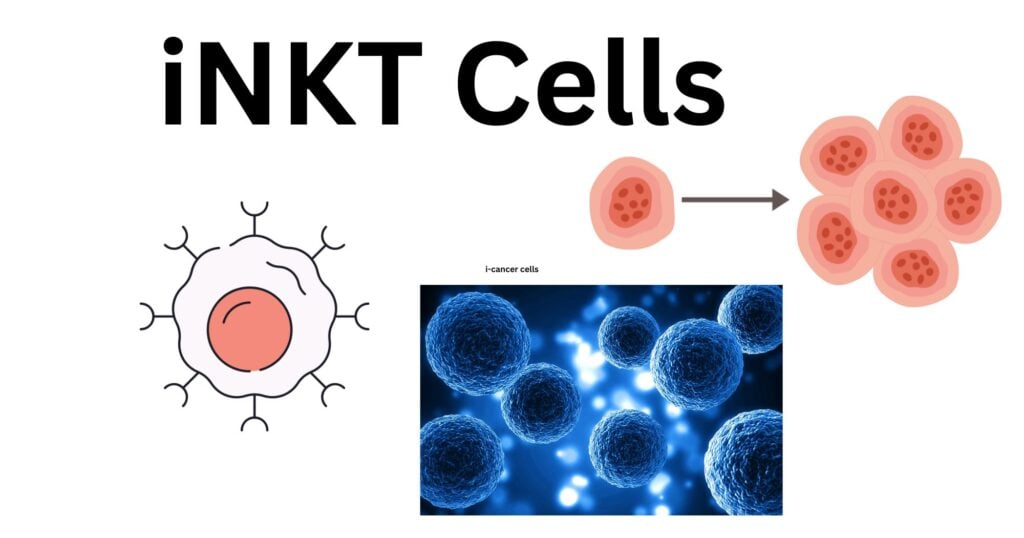
These cells bridge the innate and adaptive immune systems by enabling rapid control of viral and microbial infections. They constitute 0.01% to 1% human peripheral blood lymphocytes but exert a disproportionately large impact through cytokine production (Stanevich et al., 2023; von Beck et al., 2023; Hikichi et al., 2022).
How do iNKT Cells differ from Conventional T cells and NK cells?
iNKT cells recognize lipid antigens that are presented by monomorphic CD1d molecules, whereas conventional T cells recognize peptide fragments presented by polymorphic MHC molecules (Vogt & Mattner, 2021; Cosway et al., 2021).
| iNKT Cells | Conventional T cells |
| -It recognizes lipid antigens that are presented by the monomorphic CD1d molecule | -It recognizes peptide fragments that are presented by polymorphic MHC molecules |
| -It has fully functional effectors that are ready for an immediate response | -It requires a priming period to become activated |
| iNKT Cells | NK Cells |
| -The cells originate from the T cell lineage | -The cells originate from the innate lymphoid lineage |
| -They possess a TCR | -They do not possess TCR |
Development and Maturation of iNKT Cells in the Thymus
iNKT cells develop from CD4+CD8+ double-positive thymocyte precursors, uniquely driven by the transcription factors PLZF (promyelocytic leukemia zinc finger) and EGR2, which direct their innate-like effector program (Cosway et al., 2021; Cosway et al., 2020; Cui et al., 2024; Hackstein & Klenerman, 2023).
The initial phase of development starts from the thymic cortex and culminates in maturation within the thymic medulla, where medullary thymic epithelial cells promote survival through critical signals such as IL-15 transpresentation (Cosway et al., 2021).
The iNKT Cell T-Cell Receptor (TCR) and Lipid-Antigen Recognition (CD1d)
iNKT cells possess TCR cells specialized for stereospecific recognition of lipids and glycolipids (Rotolo et al., 2025; Laub et al., 2025). In humans, this semi-invariant receptor that utilizes the TRAV10-TRAJ18 ɑ-chain is paired with a limited repertoire of 𝛃-chains (TRBV25-1). These are the receptors that bind with the CD1d molecule, which has a hydrophobic binding pocket mainly designed for long hydrophobic tails of lipid molecules. This mechanism enables iNKT cells to detect metabolic changes (Vogt & Mattner, 2021; Cui et al., 2024)
Activation of iNKT Cells: Glycolipid Antigens and Cytokine/Chemokine Signals
iNKT cells activate through two primary pathways: TCR-dependent ligation and TCR-independent cytokine signaling. TCR-dependent activation occurs via the CD1d molecule presented by glycolipids, such as ɑ-galactosylceramide (ɑ-GalCer) derived from marine sponges. Additionally, synthetic analogs like 7DW8-5 trigger a rapid cascade of antiviral cytokines and chemokines. Beyond lipid ligation, iNKT cells respond to bystander signals from proinflammatory cytokines (IL-12 and IL-18), secreted by antigen-presenting cells during infection (Vogt & Mattner, 2021; Cui et al., 2024; Tsuji et al., 2023; Niedzielska et al., 2025).
Subsets of iNKT Cells and Their Distinct Cytokine Profiles (Th1, Th2, Th17, Regulatory)
iNKT cells are categorized into various subsets that parallel helper T cells (Th) subsets due to their heterogeneous functions (Ye et al., 2022; Cosway et al., 2021; Niedzielska et al., 2025). Some of their cytokine profiles include:
- iNKT1 (Th1-like): They help to express transcription factor T-bet and secrete IFN-𝛄 and TFN-ɑ, supporting cell immunity and tumor killing.
- iNKT2 (Th2-like): They express GATA-3/PLZF and produce IL-4, IL-5, and IL-13, supporting humoral immunity and mucosal defense.
- iNKT17 (Th17-like): They define ROR𝛄t, and they produce IL-17A. They are vital for mucosal barrier protection.
- Regulatory iNKT (NKT10): they produce IL-10, helping to maintain immune tolerance and suppressing excessive inflammation.
iNKT cells in Innate Immunity: Rapid response and Bridging to Adaptive Immunity
iNKT cells can respond to stimuli within minutes to hours due to their pre-primed state. This provides a rapid first line of defense, and upon activation, they release burst cytokines, acting as immunological bridges that promote the maturation of dendritic cells (DCs) and the activation of other effectors like NK cells and CD8+ T cells. This interaction is bidirectional, creating a feedback loop that amplifies the broader adaptive immune response, ensuring coordinated efforts against pathogen or malignant cells (Cui et al., 2024; Niedzielska et al., 2025).
iNKT Cells in Infection and Microbial Immunity
iNKT cells protect against a broad spectrum of pathogens by recognizing microbial-derived glycolipids and diacylglycerols (Vogt & Mattner, 2021). Tsuji et al. (2023) showed that stimulated iNKT cells block infections from major respiratory virus families, including SARS-CoV-2, RSV, and Influenza. In clinical settings, adoptive transfer of donor iNKT cells has demonstrated life-saving potential for patients suffering from respiratory distress syndrome.
Role of iNKT Cells in Tumor Surveillance and Anti-Cancer Immunity
In the tumor microenvironment (TME), iNKT cells mount a multi-pronged attack by lysing tumor cells through the release of perforin and granzymes. This further enhances anti-cancer immunity by remodelling the TME, eliminating immunosuppressive M2-like macrophages and myeloid-derived suppressor cells (MDSCs). iNKT cells also support adaptive immunity by promoting epitope spreading, which allows recognition of a broader range of tumor-specific antigens and leads to more durable, long-term responses (Bedard et al., 2017; Liu et al., 2022).
iNKT Cells in Autoimmunity, Allergy, and Inflammatory Diseases
iNKT cells maintain homeostasis and help manage autoimmune diseases. However, they can also exacerbate conditions like asthma and nasal polyps if skewed toward excessive type 2 or type 17 responses (Niedzielska et al., 2025). Their regulatory capabilities are also being harnessed to manage Graft-versus-Host Disease (GVHD) in transplant patients. They can suppress alloreactive donor T cells while preserving graft-versus-leukemia effects, offering a way to prevent lethal transplant complications (Boonchalermvichian et al., 2024).
Tissue Distribution: Where iNKT Cells Reside- Liver, Blood, Lymphoid and Non-Lymphoid Organs
iNKT cells are tissue-resident lymphocytes that are found in the liver, blood, spleen, lung, and adipose tissue, and they are exceptionally abundant in liver sinusoids, where crawling along vessel walls to intercept pathogens. Their phenotypic variety is also influenced by the specific microenvironment in which they reside in different tissues harboring in varying ratios of iNKT1, iNKT2, or iNKT17 subsets (Ye et al., 2022).
Therapeutic Potential: iNKT-Based Immunotherapy, Vaccine Adjuvants, and Cell Therapy
iNKT cells hold potential for next-generation medicine, including as vaccine adjuvants to boost T-cell responses. This also helps in “off-the-cell” allogeneic cell therapies. Donor iNKT cells can be transferred without the risk of GVHD because they are restricted to the monomorphic CD1d molecule, allowing universal donor cell banks. However, advanced engineering, such as CAR-iNKT cells, has advanced to clinical trials for targeting difficult-to-treat solid tumors like neuroblastoma and renal cell carcinoma (Niedzielska et al., 2025; Rotolo et al., 2025; Kent et al., 2023).
Conclusion
iNKT cells act as the immune system’s “special forces” units, poised as bioaccumulators. While conventional T cells function as a massive army that requires specific protein intelligence and time to mobilize, iNKT cells are pre-stationed in tissues. They carry specialized equipment with the ability to detect lipid antigens and immediately trigger cytokine air strikes that call in adaptive reinforcements to handle a crisis before it spins out of control.
References
- Bedard, M., Salio, M., & Cerundolo, V. (2017). Harnessing the power of invariant natural killer T cells in cancer immunotherapy. Frontiers in Immunology, 8. https://doi.org/10.3389/fimmu.2017.01829
- Boonchalermvichian, C., Yan, H., Gupta, B., Rubin, A., Baker, J., & Negrin, R. S. (2024). invariant Natural Killer T cell therapy as a novel therapeutic approach in hematological malignancies. Frontiers in Transplantation, 3. https://doi.org/10.3389/frtra.2024.1353803
- Cao, T.-P., Shahine, A., Cox, L. R., Besra, G. S., Moody, D. B., & Rossjohn, J. (2024). A structural perspective of how T cell receptors recognize the CD1 family of lipid antigen-presenting molecules. The Journal of Biological Chemistry, 300(8), 107511. https://doi.org/10.1016/j.jbc.2024.107511
- Chatterjee, P., Brahma, S., Cresswell, P., & Bandyopadhyay, S. (2025). CD1d‐iNKT axis in infectious diseases: Lessons learned from the past. Scandinavian Journal of Immunology, 101(4). https://doi.org/10.1111/sji.70024
- Cosway, E. J., James, K. D., Lucas, B., Anderson, G., & White, A. J. (2020). The thymus medulla and its control of αβT cell development – PMC. Seminars in Immunopathology, 43(1). https://doi.org/10.1007/s00281-020-00830-z
- Cosway, E. J., James, K. D., Lucas, B., Anderson, G., & White, A. J. (2021). The thymus medulla and its control of αβT cell development. Seminars in Immunopathology, 43(1), 15–27. https://doi.org/10.1007/s00281-020-00830-z
- Cui, G., Abe, S., Kato, R., & Ikuta, K. (2024). Insights into the heterogeneity of iNKT cells: Tissue-resident and circulating subsets shaped by local microenvironmental cues. Frontiers in Immunology, 15, 1349184. https://doi.org/10.3389/fimmu.2024.1349184
- Hackstein, C.-P., & Klenerman, P. (2023). MAITs and their mates: “Innate-like” behaviors in conventional and unconventional T cells. Clinical and Experimental Immunology, 213(1), 1–9. https://doi.org/10.1093/cei/uxad058
- Hikichi, T., Sakamoto, M., Harada, M., Saito, M., Yamane, Y., Tokumura, K., & Nakamura, Y. (2022). Identification of cytotoxic T cells and their T cell receptor sequences targeting COVID-19 using MHC class I-binding peptides. Journal of Human Genetics, 67(7), 411–419. https://doi.org/10.1038/s10038-022-01013-4
- Iyoda, T., Yamasaki, S., Ueda, S., Shimizu, K., & Fujii, S.-I. (2023). Natural killer T and natural killer cell-based immunotherapy strategies targeting cancer. Biomolecules, 13(2), 348. https://doi.org/10.3390/biom13020348
- Kent, A., Crump, L. S., & Davila, E. (2023). Beyond αβ T cells: NK, iNKT, and γδT cell biology in leukemic patients and potential for off-the-shelf adoptive cell therapies for AML. Frontiers in Immunology, 14, 1202950. https://doi.org/10.3389/fimmu.2023.1202950
- Kucuksezer, U. C., Aktas Cetin, E., Esen, F., Tahrali, I., Akdeniz, N., Gelmez, M. Y., & Deniz, G. (2021). The role of natural killer cells in autoimmune diseases. Frontiers in Immunology, 12, 622306. https://doi.org/10.3389/fimmu.2021.622306
- Laub, A., de Almeida, N. R., & Huang, S. (2025). Unconventional T cells in anti-cancer immunity. Frontiers in Immunology, 16. https://doi.org/10.3389/fimmu.2025.1618393
- Liu, Y., Wang, G., Chai, D., Dang, Y., Zheng, J., & Li, H. (2022). iNKT: A new avenue for CAR-based cancer immunotherapy. Translational Oncology, 17, 101342. https://doi.org/10.1016/j.tranon.2022.101342
- Niedzielska, M., Chalmers, A., Popis, M. C., Altman-Sharoni, E., Addis, S., Beulen, R., Rudqvist, N.-P., Chantzoura, E., Purbhoo, M. A., Chand, D., & Exley, M. A. (2025). CAR-iNKT cells: Redefining the frontiers of cellular immunotherapy. Frontiers in Immunology, 16, 1625426. https://doi.org/10.3389/fimmu.2025.1625426
- Rotolo, A., Mason, N. J., & Exley, M. A. (2025). Innate iNKT cells: From biological insight to clinical impact. Frontiers in Immunology, 16. https://doi.org/10.3389/fimmu.2025.1653183
- Stanevich, O. V., Alekseeva, E. I., Sergeeva, M., Fadeev, A. V., Komissarova, K. S., Ivanova, A. A., Simakova, T. S., Vasilyev, K. A., Shurygina, A.-P., Stukova, M. A., Safina, K. R., Nabieva, E. R., Garushyants, S. K., Klink, G. V., Bakin, E. A., Zabutova, J. V., Kholodnaia, A. N., Lukina, O. V., Skorokhod, I. A., … Bazykin, G. A. (2023). SARS-CoV-2 escape from cytotoxic T cells during long-term COVID-19. Nature Communications, 14(1), 149-. https://doi.org/10.1038/s41467-022-34033-x
- Tsuji, M., Nair, M. S., Masuda, K., Castagna, C., Chong, Z., Darling, T. L., Seehra, K., Hwang, Y., Ribeiro, Á. L., Ferreira, G. M., Corredor, L., Coelho-dos-Reis, J. G. A., Tsuji, Y., Mori, M., Boon, A. C. M., Diamond, M. S., Huang, Y., & Ho, D. D. (2023). An immunostimulatory glycolipid that blocks SARS-CoV-2, RSV, and influenza infections in vivo. Nature Communications, 14(1), 3959-. https://doi.org/10.1038/s41467-023-39738-1
- Vogt, S., & Mattner, J. (2021). Nkt cells contribute to the control of microbial infections. Frontiers in Cellular and Infection Microbiology, 11, 718350. https://doi.org/10.3389/fcimb.2021.718350
- von Beck, T., Navarrete, K., Arce, N. A., Gao, M., Dale, G. A., Davis-Gardner, M. E., Floyd, K., Mena Hernandez, L., Mullick, N., Vanderheiden, A., Skountzou, I., Kuchipudi, S. V., Saravanan, R., Li, R., Skolnick, J., Suthar, M. S., & Jacob, J. (2023). A wild boar cathelicidin peptide derivative inhibits severe acute respiratory syndrome coronavirus-2 and its drifted variants. Scientific Reports, 13(1), 14650. https://doi.org/10.1038/s41598-023-41850-7
- Wang, R., Lan, C., Benlagha, K., Camara, N. O. S., Miller, H., Kubo, M., Heegaard, S., Lee, P., Yang, L., Forsman, H., Li, X., Zhai, Z., & Liu, C. (2024). The interaction of innate immune and adaptive immune system. MedComm, 5(10). https://doi.org/10.1002/mco2.714
- Ye, X., Bao, Q., Chen, H., Meng, Q., Li, Q., Sun, L., Li, J., Lei, W., Wen, W., He, W., Jiao, L., Fang, B., Gao, Y., & Li, C. (2022). Type 2 and type 17 invariant natural killer T cells contribute to local eosinophilic and neutrophilic inflammation and their function is regulated by mucosal microenvironment in nasal polyps. Frontiers in Immunology, 13, 803097. https://doi.org/10.3389/fimmu.2022.803097
