
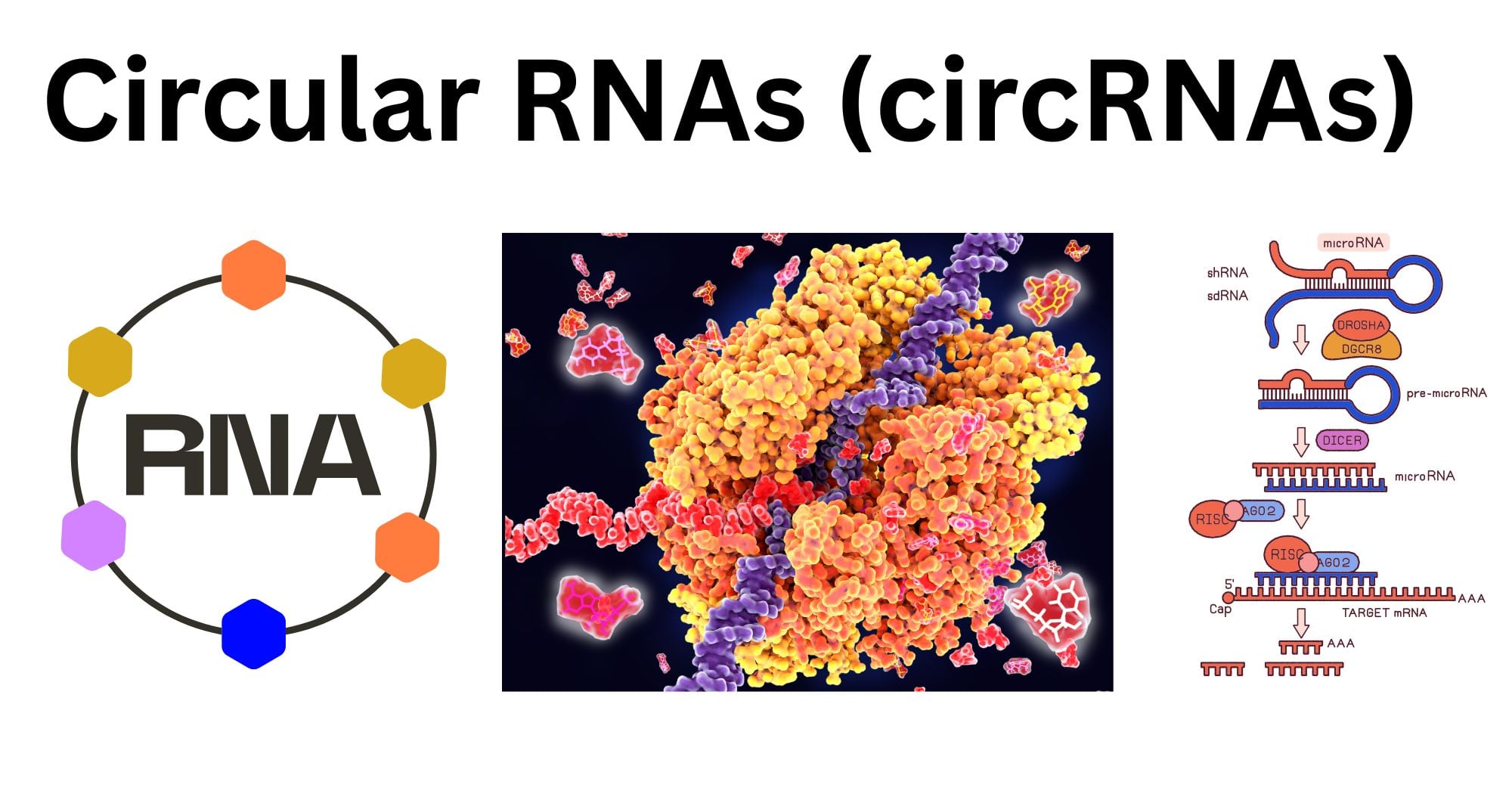
Circular RNAs (circRNAs) are covalently closed-loop RNA molecules that lack the free 3′ and 5′ ends characteristic of linear RNAs.
- First identified in the 1970s in plant viroids and viruses.
- They were long dismissed as splicing artifacts or junk RNA resulting from errors in mRNA processing.
- Modern high-throughput sequencing has revealed that circRNAs are abundantly expressed across eukaryotes, including metazoans, plants, and fungi.
- Over 150,000 unique human circRNAs have been identified, many of which are highly conserved across species.
- They generally exhibit low expression levels compared to linear counterparts but show high tissue-specific and cell-type-specific patterns.
- CircRNAs are particularly prominent in the mammalian brain, where they are expressed at significantly higher levels than in other tissues and are often enriched in synaptosomes.
Biogenesis via Back-Splicing
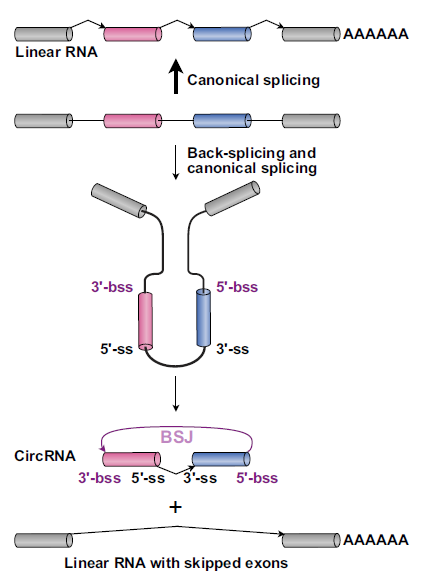
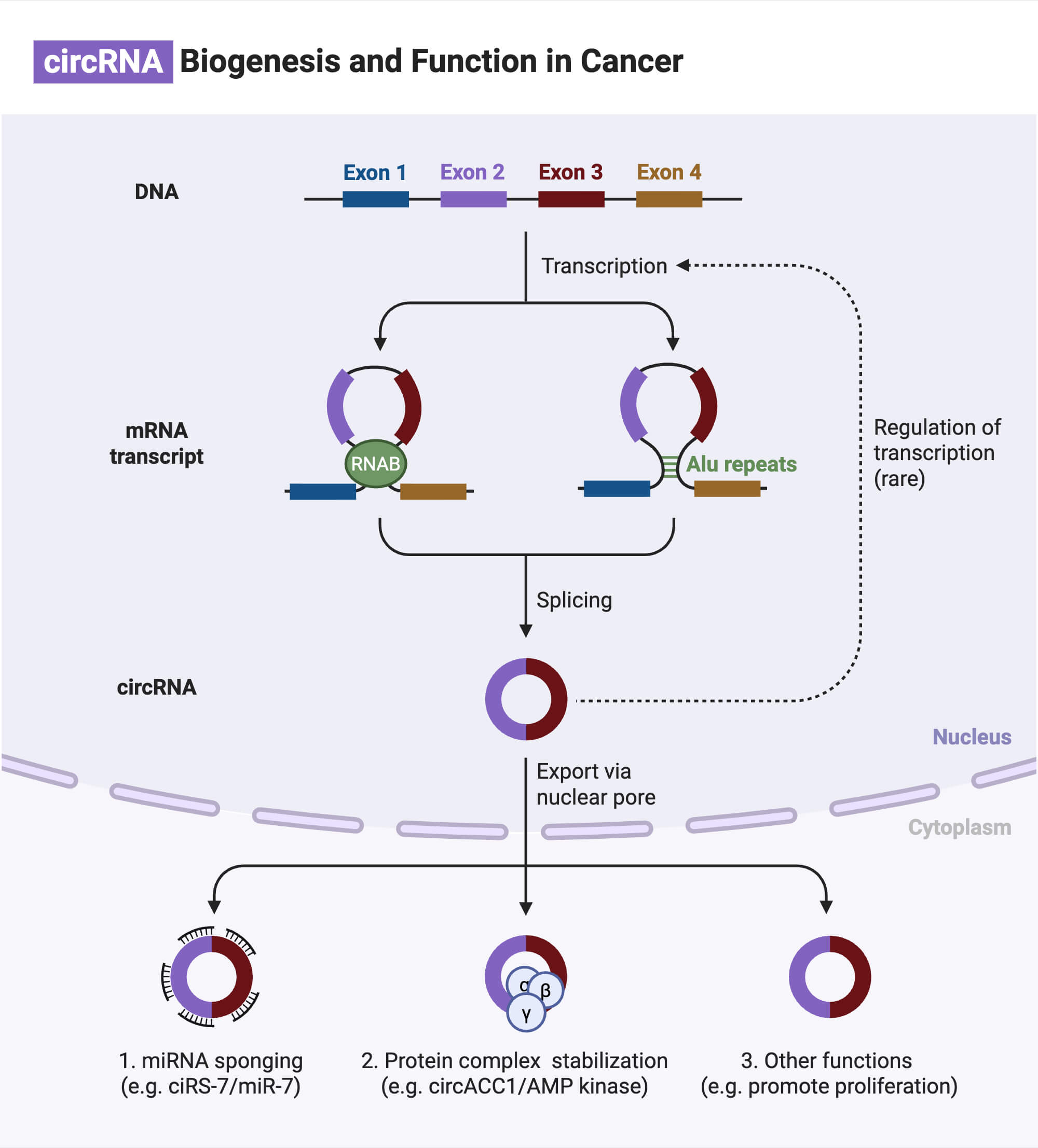
The Back-Splicing Mechanism: Most studied circRNAs are produced from precursor mRNA (pre-mRNA) through back-splicing, a process where a downstream 5′ splice donor site is covalently joined to an upstream 3′ splice acceptor site.
Spliceosomal Machinery: This process is catalyzed by the canonical spliceosomal machinery and occurs in competition with canonical linear splicing.
Regulatory Elements:
- Cis-elements: Biogenesis is often facilitated by intronic complementary sequences (ICSs), such as Alu elements in humans. These sequences pair across the flanking introns, bringing the distal splice sites into proximity.
- Trans-acting factors: RNA-binding proteins (RBPs) like Quaking (QKI), Muscleblind (MBL), and NOVA2 can promote circularization by binding specific motifs in flanking introns and dimerizing to bridge the splice sites.
Other Models: While back-splicing is the primary model, others include intron lariat-driven circularization, where exons are circularized within an escaped lariat during exon skipping, and the formation of circular intronic RNAs (ciRNAs) from lariats that escape debranching.
Structural Properties and Stability of Circular RNAs (circRNAs)
- Covalent Closure: The defining feature of circRNAs is their covalently closed loop, linked by a 3′-5′ phosphodiester bond.
- Lack of Termini: They lack the 5′ 7-methylguanosine cap and 3′ polyadenylated tail found in linear mRNAs.
- Exceptional Stability: Because they lack free ends, circRNAs are highly resistant to exonuclease degradation, such as by RNase R.
- Long Half-Life: Their half-lives are significantly longer than those of linear RNAs. For example, the median half-life of circRNAs in mammary cells is 18.8–23.7 hours, compared to 4.0–7.4 hours for linear counterparts.
- Age-Dependent Accumulation: Due to this stability, circRNAs accumulate linearly as an organism ages, especially in post-mitotic tissues like neurons, making them superior age markers compared to mRNAs.
Mechanisms of Action of Circular RNAs (circRNAs)
Transcriptional Regulation
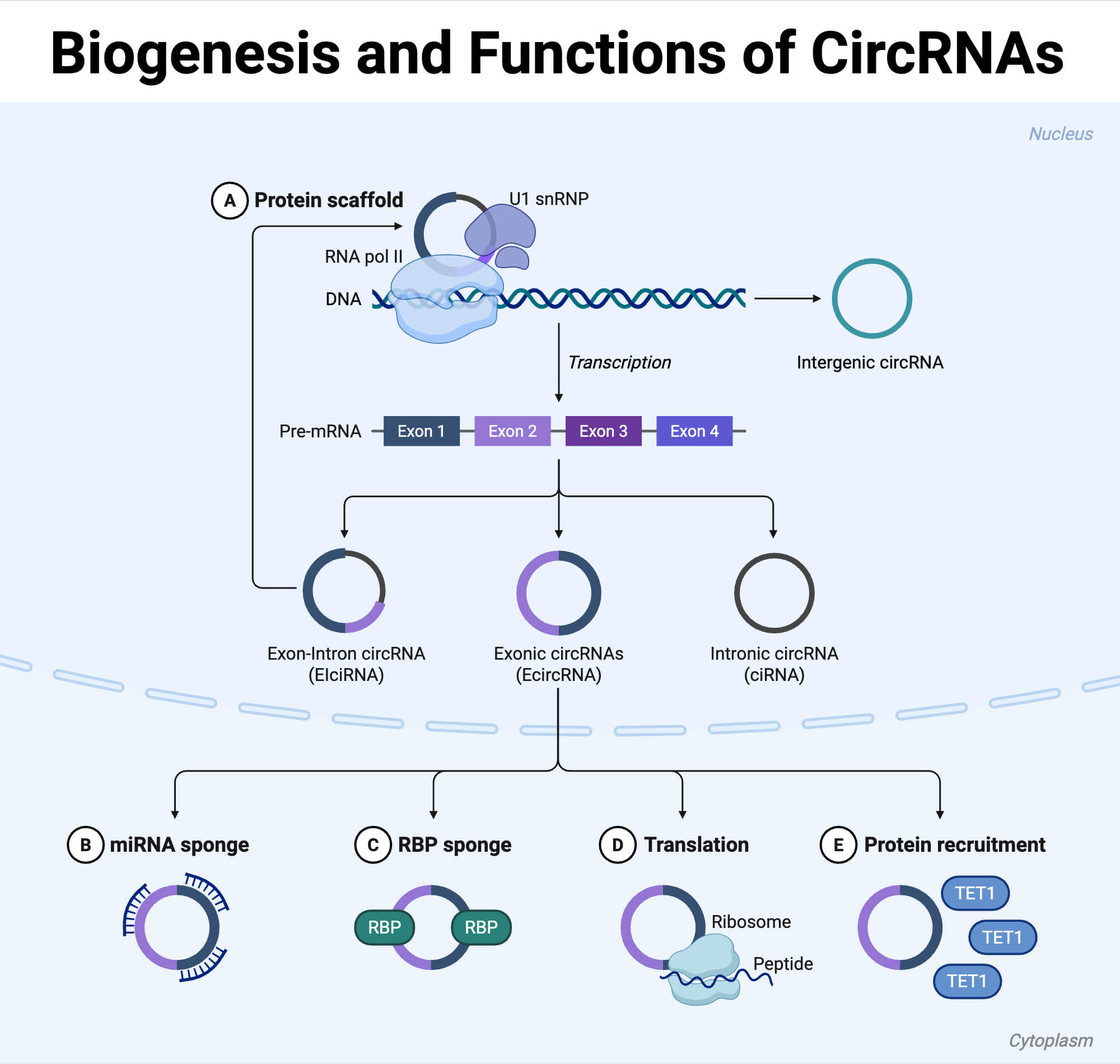
Nuclear-retained circRNAs, such as EIciRNAs, can interact with U1 snRNPs and RNA Polymerase II to promote the transcription of their parental genes.
ciRNAs accumulate at transcription sites to serve as positive regulators of parental gene expression.
Splicing Interference
The processing of circRNAs naturally competes with the splicing of their linear cognates, often resulting in lower levels of linear mRNA inclusion for those exons.
Protein Interaction (Sponges and Scaffolds)
- CircRNAs can act as protein sponges or decoys, sequestering RBPs in the cytoplasm to prevent their nuclear translocation or activity.
- They also function as protein scaffolds, facilitating the assembly of multi-protein complexes or orchestrating protein-protein interactions.
RNA Modification (m6A)
Internal modifications like N6-methyladenosine (m6A) are widely distributed on circRNAs, influencing their biogenesis, transport, and translation potential.
The miRNA Sponge Effect
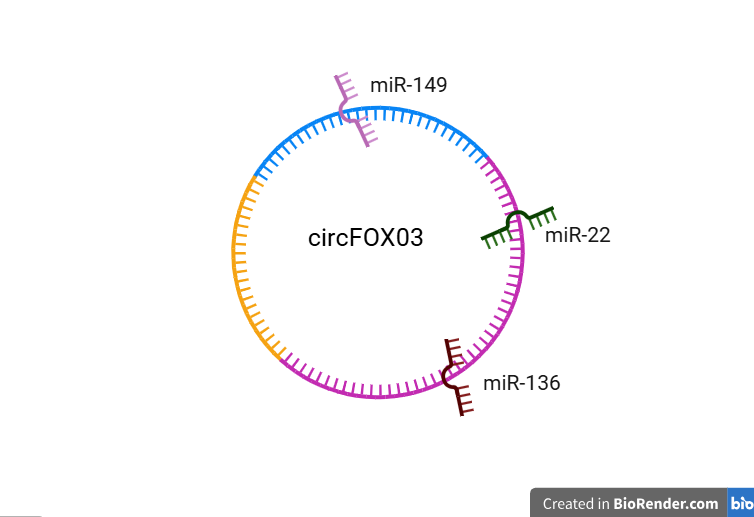
- Many circRNAs act as competing endogenous RNAs (ceRNAs) by possessing miRNA response elements (MREs) that sequester microRNAs.
- By sponging miRNAs, circRNAs prevent them from binding to their target mRNAs, thereby derepressing gene expression.
- Most endogenous circRNAs are expressed at too low a level and contain too few binding sites to act as effective super-sponges for most miRNAs, suggesting other mechanisms may be more common.
- Key Examples:
- CDR1as (ciRS-7): Contains over 60 conserved binding sites for miR-7, making it a highly effective regulator in the brain.
- circSry: A testis-specific circRNA with 16 target sites for miR-138.
Protein Translation Potential
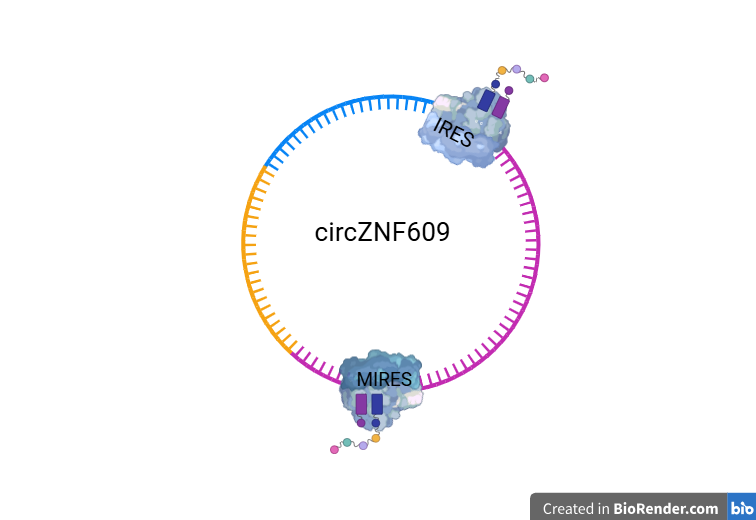
- Cap-Independent Translation: Lacking 5′ caps and 3′ tails, circRNAs cannot use canonical translation. Instead, they use Internal Ribosome Entry Sites (IRESs) or m6A-induced ribosome engagement sites (MIRESs).
- Open Reading Frames (ORFs): Some circRNAs contain ORFs and start/stop codons that allow them to produce functional polypeptides.
- Examples:
- circZNF609: Encodes a protein involved in controlling myoblast proliferation.
- circMbl: Produces a peptide in the brain, particularly under starvation stress.
- circAβ: Derived from the APP gene, it can translate into an amyloid-beta-containing polypeptide in Alzheimer’s disease.
- Biological Roles: These circRNA-derived proteins may act as competitors or functional partners to linear-encoded proteins.
Methods of Identification of Circular RNAs (circRNAs)
- Library Preparation: Unlike standard RNA-seq, identifying circRNAs requires rRNA depletion and non-poly(A) selection, since circRNAs lack poly(A) tails.
- RNase R Enrichment: A standard step involves treating RNA samples with RNase R, which digests linear RNA while preserving circular species, significantly enriching the circRNA fraction.
- Bioinformatic Pipelines: Identifying circRNAs depends on detecting Back-Splice Junction (BSJ) reads that map non-colinearly to the genome. Common algorithms include find_circ, CIRI2, and STAR-chip.
- Experimental Validation:
- qRT-PCR: The gold standard, using divergent primers that flank the junction site to amplify only the circular form.
- Northern Blotting: Provides a direct way to confirm circularity as circRNAs migrate more slowly than linear counterparts of the same length.
- Sanger Sequencing: Used to confirm the exact sequence of the BSJ after PCR amplification.
Role of Circular RNAs (circRNAs) in Disease Pathogenesis
Cardiovascular Disease (CVD)
- Hypertrophy: circSLC8A1 and circMYO9A are upregulated during heart enlargement and promote pathological growth by sponging protective miRNAs.
- Atherosclerosis: circANRIL acts as a context-dependent rheostat, binding the ribosome factor PES1 to regulate smooth muscle cell behavior and plaque stability.
Neurological Disorders
- Alzheimer’s Disease (AD): Global dysregulation of circRNAs is observed. circHOMER1 is significantly reduced, while circAβ may provide an alternative pathway for plaque formation.
- Parkinson’s Disease (PD): circSNCA and circPANK1 sponge miR-7, leading to increased alpha-synuclein levels and neurotoxic aggregation.
- Schizophrenia: Characterized by a global reduction in circRNA levels in postmortem brain tissue, possibly increasing miRNA bioavailability and disrupting synaptic gene networks.
Cancer
circRNAs act as oncogenes (e.g., circAGFG1) or tumor suppressors (e.g., circTADA2A) by modulating proliferation, apoptosis, and metastasis.
Diagnostic Biomarkers
- Stability in Biofluids: Their resistance to exonucleases makes them exceptionally stable in extracellular plasma, blood, saliva, urine, and exosomes.
- Tissue Specificity: circRNAs are often more tissue-specific than linear RNAs, allowing them to serve as liquid biopsy indicators of organ-specific disease states.
- Aging and Experience Markers: Because they accumulate linearly with time, they are superior age markers compared to mRNAs. They can also reveal past environmental stimuli (e.g., heat stress) even weeks after the exposure.
- Diagnostic Performance: Multicenter studies have shown that panels of circRNAs (e.g., CircPanel for HCC) have superior sensitivity and specificity compared to traditional markers like alpha-fetoprotein.
Therapeutic Applications of Circular RNAs (circRNAs)
Loss-of-Function (LOF) Strategies
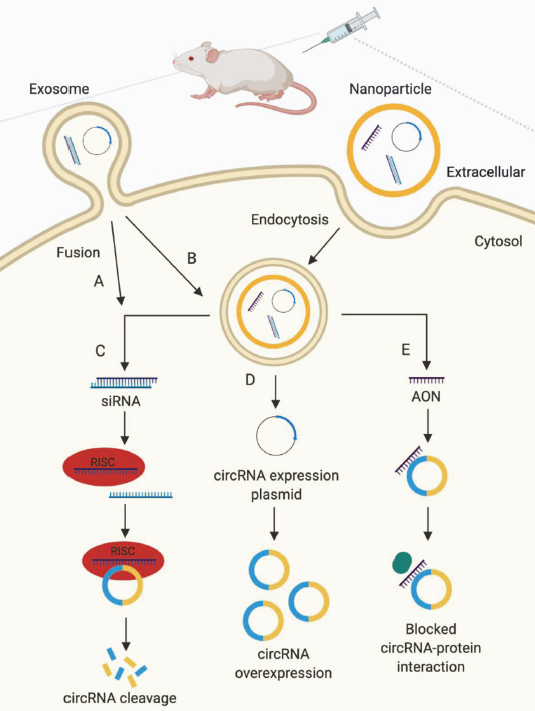
- RNAi (siRNA/shRNA): Targets the unique BSJ sequence to degrade circRNAs without affecting linear mRNA.
- Antisense Oligonucleotides (ASOs): Used to silence upregulated circRNAs or block protein interaction sites.
- CRISPR-Cas13: A promising new tool for selective RNA degradation with high specificity and low mismatch tolerance.
Gain-of-Function (GOF) Strategies
- Expression Plasmids: Using inverted intronic repeats to drive back-splicing and overexpressing specific circRNAs.
- Engineered circmiRs: Artificially designed circRNAs can be constructed to target multiple pathogenic miRNAs simultaneously.
Delivery Platforms
- AAV Vectors: Used for long-term, tissue-specific expression (e.g., AAV9 for cardiomyocytes).
- Nanoparticles (LNPs and Gold NPs): Protect RNA payloads from degradation and facilitate cellular uptake with reduced immunogenicity.
- Exosomes: Biocompatible, natural carriers for delivering circRNA-targeting agents across barriers like the blood-brain barrier.
Conclusions
Circular RNAs (circRNAs) are a distinct class of covalently closed RNA molecules formed primarily through spliceosome-mediated back-splicing, a process often facilitated by intronic complementary sequences and protein factors. Their unique looped structure confers exceptional stability and resistance to exonucleases, granting them significantly longer half-lives than linear RNAs and making them highly reliable diagnostic biomarkers in biofluids like blood and saliva.
Functionally versatile, circRNAs regulate gene expression by acting as miRNA sponges, protein scaffolds, or transcriptional modulators, and some even possess protein translation potential via cap-independent mechanisms. Identified through specialized bioinformatic pipelines and validated by methods like RNase R enrichment and divergent qRT-PCR, these molecules play critical roles in the pathogenesis of cancers, cardiovascular diseases, and neurological disorders.
CircRNAs represent a promising therapeutic frontier, with current research focused on using engineered circular sponges and advanced delivery systems like nanoparticles to target pathogenic circuits.
References
- Alali, R., Almansori, M., Vatte, C., Akhtar, M. S., Abduljabbar, S. S., Al-Matroud, H., Alnuwaysir, M. J., Radhi, H. A., Keating, B., Habara, A., & Al-Ali, A. K. (2025). Circular RNAs in Cardiovascular Disease: Mechanisms, Biomarkers, and Therapeutic Frontiers. In Biomolecules (Vol. 15, Number 10). Multidisciplinary Digital Publishing Institute (MDPI). https://doi.org/10.3390/biom15101455
- Drula, R., Braicu, C., Chira, S., & Berindan-Neagoe, I. (2023). Investigating Circular RNAs Using qRT-PCR; Roundup of Optimization and Processing Steps. International Journal of Molecular Sciences, 24(6). https://doi.org/10.3390/ijms24065721
- Hatzimanolis, O., Sykes, A. M., & Cristino, A. S. (2025). Circular RNAs in neurological conditions – computational identification, functional validation, and potential clinical applications. In Molecular Psychiatry (Vol. 30, Number 4, pp. 1652–1675). Springer Nature. https://doi.org/10.1038/s41380-025-02925-1
- He, A. T., Liu, J., Li, F., & Yang, B. B. (2021). Targeting circular RNAs as a therapeutic approach: current strategies and challenges. In Signal Transduction and Targeted Therapy (Vol. 6, Number 1). Springer Nature. https://doi.org/10.1038/s41392-021-00569-5
- Kirio, K., Patop, I. L., Anduaga, A. M., Harris, J., Pamudurti, N., Su, T. N., Martel, C., & Kadener, S. (2025). Circular RNAs exhibit exceptional stability in the aging brain and serve as reliable age and experience indicators. Cell Reports, 44(4). https://doi.org/10.1016/j.celrep.2025.115485
- Lavenniah, A., Luu, T. D. A., Li, Y. P., Lim, T. B., Jiang, J., Ackers-Johnson, M., & Foo, R. S. Y. (2020). Engineered Circular RNA Sponges Act as miRNA Inhibitors to Attenuate Pressure Overload-Induced Cardiac Hypertrophy. Molecular Therapy, 28(6), 1506–1517. https://doi.org/10.1016/j.ymthe.2020.04.006
- Li, X., Yang, L., & Chen, L. L. (2018). The Biogenesis, Functions, and Challenges of Circular RNAs. In Molecular Cell (Vol. 71, Number 3, pp. 428–442). Cell Press. https://doi.org/10.1016/j.molcel.2018.06.034
- Nie, G., Peng, D., Li, B., Lu, J., Cai, Y., Xiong, X., & Cheng, N. (2021). Diagnostic Accuracy of Serum/Plasma Circular RNAs and the Combination of Circular RNAs and α-Fetoprotein for Detecting Hepatocellular Carcinoma: A Meta-Analysis. In Frontiers in Genetics (Vol. 12). Frontiers Media S.A. https://doi.org/10.3389/fgene.2021.722208
