Skip to content
Microbe Notes

Microbe Notes

  • Home
  • Biological Sciences
    • Biochemistry
    • Bioinformatics
    • Biology
    • Biotechnology
    • Botany
    • Cell Biology
    • Genetics
    • Molecular Biology
    • Zoology
  • Microbiology
    • Agricultural Microbiology
    • Bacteriology
    • Basic Microbiology
    • Environmental Microbiology
    • Food Microbiology
    • Immunology
    • Mycology
    • Parasitology
    • Virology
  • Laboratory Methods
    • Biochemical Test
    • Culture Media
    • Instrumentation
    • Microscopy
    • Staining
  • Health and Medical
    • Diseases
    • Epidemiology
    • Human Anatomy and Physiology
    • Medical Devices
    • Pharmacology
  • Resources
    • Difference Between
    • Microbiology Terms
    • Microorganisms Note
    • Protocols
    • Research Methodology
    • Syllabus

Bacteriology

Bacteriology is a branch or discipline of science that studies different characteristics of bacteria and their association with other organisms or disciplines.

  • Over the years, the discipline of bacteriology has evolved from the microbiological tests performed only by physicians, the application of the germ theory of disease and economic concerns relating to the spoilage of foods and wine to the use of bacteria to simpler forms of laboratory tests and the production of new nutritious food and antibiotics.
  • The study of bacteria began with the discovery of the microscope and was mostly limited to experts and scientists of that time.
  • The initial advances in pathogenic bacteriology began with the identification and characterization of bacteria associated with specific diseases.
  • Nowadays, however, bacteriology is used in various other fields like food, pharmaceuticals, agriculture, and the environment.
  • Significant advances made in bacteriology over the last century have resulted in the development of many useful vaccines like pneumococcal polysaccharide vaccine, diphtheria toxoid as well as antibiotics.
  • At present, most bacterial diseases in humans and their infectious agents have been identified, although significant variants continue to evolve and sometimes emerge.
  • Studies made in bacteriology have also allowed the use of gene recombination technology in bacteria to produce improved bacterial strains that can then be used in various areas.
  • The importance of bacteriology continues to grow throughout the years as many diseases and disorders associated with almost all living beings are caused by bacteria.
  • Studies of non-pathogenic bacteria that exist in a symbiotic relationship with plants and animals are even beneficial to said organisms.
  • The identification and classification of bacteria into different groups have allowed for a convenient way of studying these bacteria and the formation of a separate branch, systemic bacteriology, that deals with taxonomy.
  • Besides, bacteriological studies, subsequently, have also been divided into different areas like soil bacteriology, public-health bacteriology, industrial bacteriology, etc.
  • Bacteriological studies have been the focal point for disease diagnosis and treatment, and their importance continues to grow with the emergence of new bacteria and associated diseases.

Enterobacteriaceae Cultural Characteristics

July 27, 2021June 18, 2021 by Anupama Sapkota
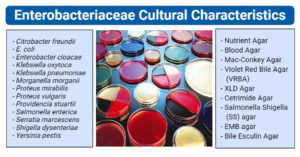
Enterobacteriaceae Cultural Characteristics

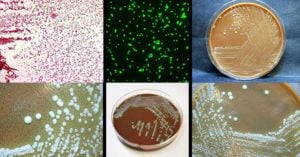
Image Source: Cole-Parmer Instrument Company. Cultural Characteristics of Citrobacter freundii Citrobacter freundii on Nutrient Agar Smooth, convex, translucent, or opaque grey colored with a shiny surface and entire margin; mucoid … Read more

Pathogenesis and Clinical manifestations of Francisella tularensis

August 10, 2021June 1, 2021 by Sagar Aryal, PhD
Pathogenesis and Clinical manifestations of Francisella tularensis

Pathogenesis of Francisella tularensis Francisella tularensis is carried by many species of wild rodents, rabbits, beavers. Humans become infected by handling the carcasses or skin of infected animals, by inhaling … Read more

Laboratory diagnosis of Listeriosis caused by Listeria monocytogenes

August 10, 2021May 24, 2021 by Sagar Aryal, PhD
Laboratory diagnosis of Listeriosis caused by Listeria monocytogenes

Laboratory diagnosis of Listeriosis caused by Listeria monocytogenes Specimens: Cerebrospinal fluid (CSF), Blood Microscopy Gram-stain preparations of cerebrospinal fluid (CSF) typically show no organisms because the bacteria are generally present in … Read more

Habitat and Morphology of Shigella dysenteriae

July 27, 2021May 10, 2021 by Sagar Aryal, PhD
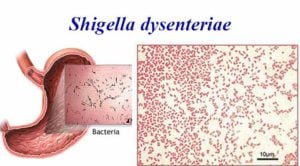
Habitat and Morphology of Shigella dysenteriae

Habitat of Shigella dysenteriae They are found worldwide. Humans are only the natural host. They are also found in human intestinal tract. They are mostly found in the area where … Read more

Laboratory Diagnosis, Treatment and Prevention of Francisella tularensis

August 10, 2021May 8, 2021 by Sagar Aryal, PhD
Laboratory diagnosis of Francisella tularensis

Laboratory diagnosis of Francisella tularensis Specimen Scrapings from infected ulcers, lymph node biopsies, and sputum, whole blood. Serum is generally collected from all patients early in disease and during convalescence. … Read more

Laboratory diagnosis, treatment and prevention of Leptospira interrogans

August 10, 2021May 2, 2021 by Sagar Aryal, PhD
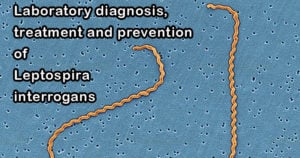
Laboratory diagnosis, treatment and prevention of Leptospira interrogans

Laboratory diagnosis of Leptospira interrogans Specimens Specimens consist of aseptically collected blood in a heparin tube, CSF, urine, or tissues for microscopic examination and culture. Serum is collected for agglutination … Read more

Habitat and Morphology of Listeria monocytogenes

July 27, 2021May 2, 2021 by Sagar Aryal, PhD
Habitat and Morphology of Listeria monocytogenes

Habitat of Listeria monocytogenes They are the natural pathogens of wide range of animals, birds, fish, ticks and crustacean. They are saprophytic in soil, water, sewage and plants decaying. They … Read more

Pathogenesis and Clinical manifestation of Gardenerella vaginalis

August 10, 2021April 22, 2021 by Sagar Aryal, PhD
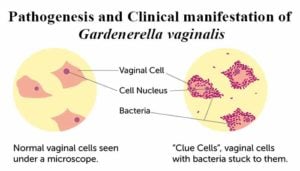
Pathogenesis and Clinical manifestation of Gardenerella vaginalis

Pathogenesis of Gardenerella vaginalis A. Adherence of G. vaginalis to Host Epithelium: Initial Steps in Invasion The initial steps of establishing infection include adherence to host receptor sites, production of … Read more

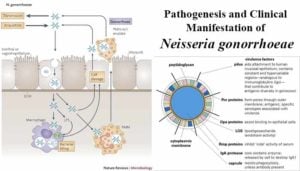
Pathogenesis and Clinical Manifestation of Neisseria gonorrhoeae

July 27, 2021April 17, 2021 by Sagar Aryal, PhD
Pathogenesis and Clinical Manifestation of Neisseria gonorrhoeae

Virulence factors or antigenic structures of Neisseria gonorrhoeae A. Pili Pili are the hair like appendages that extend up to several micrometers from the gonococcal surface. It mediates the exchange … Read more

Collection and transport of stool specimens

August 10, 2021April 16, 2021 by Sagar Aryal, PhD
Collection and transport of stool specimens

Faecal specimens should be collected in the early stages of the diarrhoeal disease, when pathogens are present in the highest number, and preferably before antimicrobial treatment is started, if appropriate. … Read more

Older posts
Newer posts
← Previous Page1 … Page13 Page14 Page15 Next →

Topics / Categories

  • Agricultural Microbiology (30)
  • Bacteriology (141)
  • Basic Microbiology (64)
  • Biochemical Test (114)
  • Biochemistry (225)
  • Bioinformatics (28)
  • Biology (149)
  • Biotechnology (61)
  • Botany (113)
  • Cell Biology (108)
  • Culture Media (68)
  • Difference Between (89)
  • Diseases (59)
  • Environmental Microbiology (15)
  • Epidemiology (29)
  • Food Microbiology (52)
  • Genetics (87)
  • Human Anatomy and Physiology (84)
  • Immunology (124)
  • Instrumentation (73)
  • Medical Devices (15)
  • Microscopy (35)
  • Molecular Biology (136)
  • Mycology (44)
  • Parasitology (28)
  • Pharmacology (28)
  • Protocols (8)
  • Research Methodology (20)
  • Staining (30)
  • Syllabus (20)
  • Virology (69)
  • Zoology (40)
  • Our Team
  • Advisory Board
  • About Us
  • Contact Us
  • Editorial Policy
  • Privacy Policy
  • Cookie Policy
  • Disclaimer (Terms and Conditions)
© 2026 Microbe Notes. Made with ♡ by Sagar Aryal.