Complement- Properties and Nomenclature
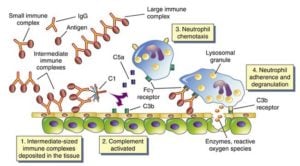
Complement refers to a set of serum proteins that cooperates with both the innate and the adaptive immune systems to eliminate blood and tissue pathogens. Various complement components bind and … Read more
Structure of Norwalk Virus (Norovirus) The virus is non-enveloped, round, 27-nm particles with a ‘ragged’ outer edge but lacking a definite surface structure. It has a buoyant density of 1.33–1.41 g/cm3, … Read more
Lymph nodes are small solid structures placed at varying points along the lymphatic system such as the groin, armpit and mesentery. They contain both T and B lymphocytes as well … Read more
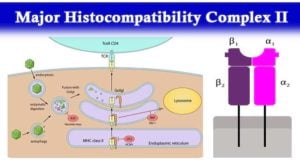
Major Histocompatibility Complex (MHC) is a part of the genome of all vertebrates that code for molecules which are important in immune recognition. In humans, the MHC is a cluster … Read more
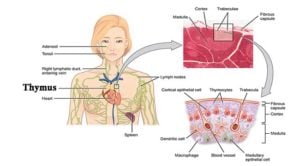
The thymus is a lymphocyte-rich, bilobed, encapsulated organ located behind the sternum, above and in front of the heart. The activity of the thymus is maximal in the fetus and … Read more
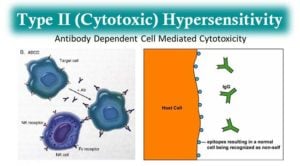
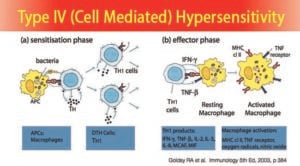
Hypersensitivity refers to increased reactivity or exaggerated immune response of a host to an antigen to which it has been previously exposed. According to the most widely accepted classification of … Read more
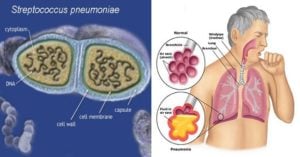
Habitat of Streptococcus pneumoniae Morphology of Streptococcus pneumoniae Genomes of Streptococcus pneumoniae
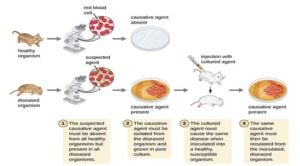
Koch’s postulate forms the very basis of the pathogenic microbiology. The causality of almost all infectious diseases is based on the postulate and theories developed by Robert Koch, who is … Read more
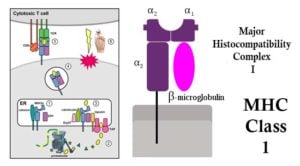
Major Histocompatibility Complex (MHC) is a part of the genome of all vertebrates that code for molecules which are important in immune recognition. In humans, the MHC is a cluster … Read more
Biochemical reactions are significant in the identification of bacterial isolates and in the identification of different bacterial species. These tests depend on the presence of certain enzymes, such as catalase, … Read more