
Respiration is a catabolic process by which organisms convert the energy stored in food molecules like glucose into Adenosine Triphosphate (ATP). This can take place either in the presence of oxygen (aerobic) or in the absence of oxygen (anaerobic).
Plant respiration is the specialised process by which plants convert glucose into ATP. It takes place in the mitochondria of every living plant cell, which is necessary for maintaining different functions.

During plant respiration, glucose molecules are hydrolyzed in a stepwise process to release energy, together with water and carbon dioxide as by-products. Plants exchange their gases through tiny pores called stomata.
Aerobic and anaerobic respiration
Respiration can be aerobic or anaerobic based on the presence or absence of oxygen.
Aerobic respiration takes place when oxygen is present, and it is the most efficient mode of energy production. In this respiration, glucose is completely hydrolyzed into carbon dioxide and water within the mitochondria. During normal conditions, one glucose molecule can yield 36-38 molecules of ATP on average.
Anaerobic respiration, on the other hand, occurs in the absence of oxygen in the cytoplasm, which yields only 2 ATP molecules from a glucose molecule. The by-products are ethanol and lactic acid. This type of respiration can help plants to survive temporarily in oxygen-depleted situations.
Read Also: Aerobic vs. Anaerobic Respiration
Dark respiration and photorespiration
Apart from these, plants also carry out photorespiration and dark respiration.
Dark respiration is referred to as the continuous breakdown of sugars to yield energy, which takes place both in the presence and absence of light, and it is a necessary mitochondrial process for energy supply.
On the other hand, photorespiration refers to a light-dependent reaction that takes place when the enzyme RuBisCO fixes oxygen rather than carbon dioxide as a result of excess oxygen levels, during intense temperature and light conditions. This is considered energetically wasteful because it results in the loss of already fixed carbon and no production of ATP.
Glycolysis
The term ‘glycolysis’ originated from the Greek word ‘Glycos’ meaning sugar and ‘lysis’ meaning breakdown or splitting. This is also known as the EMP pathway, based on its discovery by three scientists, Gustav Embden, Otto Meyerhof, and J. Parnas.
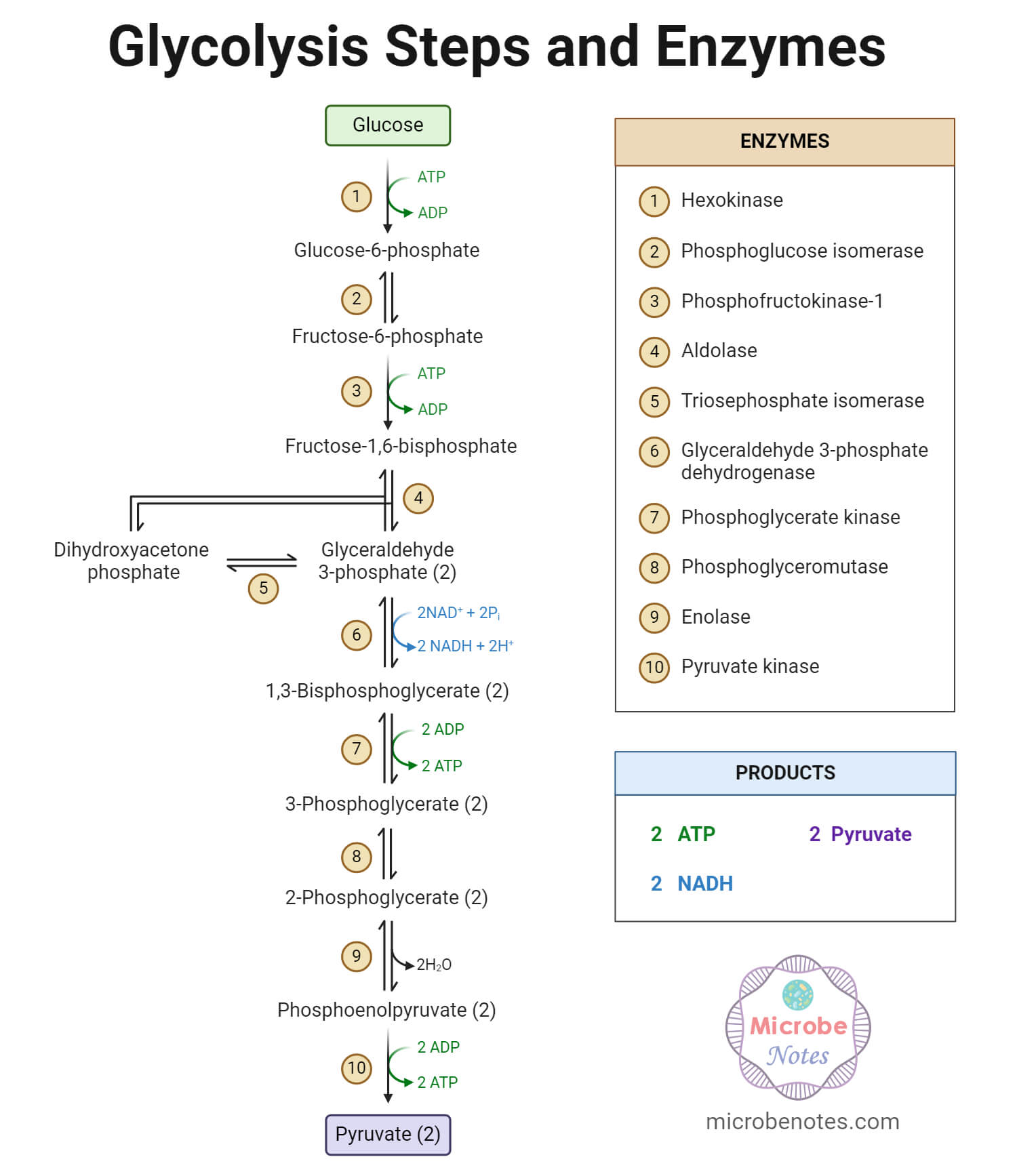
In anaerobic organisms, it is the only process of respiration. Glycolysis is carried out in the cytoplasm of cell of all living organisms. During this process, glucose is partially oxidised to form two molecules of pyruvic acid, a three-carbon compound. In plants, glucose is obtained from sucrose, as the end product of photosynthesis. Sucrose is broken down into glucose and fructose with the help of an enzyme called invertase, which enters into glycolytic pathway. The reaction takes place in 10 steps, which are as follows-
Step1
Glucose and fructose are converted to glucose-6-phosphate.
Enzyme involved- hexokinase.
Step 2
This phosphorylated form then isomerises into fructose-6-phosphate.
Enzyme involved- Phosphoglucose Isomerase.
Step 3
Fructose-6-phosphate is converted to fructose-1,6-bisphosphate. Here, ATP is utilised.
Enzyme involved- Phosphofructokinase.
Step 4
Fructose-1,6-bisphosphate splits into two 3-carbon compounds, glyceraldehyde-3-phosphate and Dihydroxyacetone Phosphate.
Enzyme involved- Aldolase.
Step 5
Dihydroxyacetone phosphate is changed into glyceraldehyde-3-phosphate.
Enzyme involved- Triose Phosphate Isomerase.
Step 6
2 molecules of Glyceraldehyde-3-phosphate are now formed, which is converted into 1,3 1,3-bisphosphoglycerate, NADH is produced.
Enzyme involved- Glyceraldehyde-3-Phosphate Dehydrogenase.
Step 7
1, 3-Bisphosphoglycerate is converted to 3-phosphoglycerate. Here, ATP is formed.
Enzyme involved- phosphoglycerate kinase.
Step 8
The phosphate group from the 3rd carbon of 3-phosphoglycerate is shifted to the 2nd carbon, forming 2-phosphoglycerate.
Enzyme involved- Phosphoglycerate mutase.
Step 9
2-phosphoglycerate is converted to phosphoenolpyruvate by removing water
Enzyme involved- enolase.
Step 10
Phosphoenolpyruvate is converted to pyruvate. ATP is formed in this step.
Enzyme involved- Pyruvate Kinase.
Glycolysis End Products
2 molecules of pyruvic acid are the major product of glycolysis. In glycolysis, 4 ATP molecules are formed in total, but 2 are consumed in the early stages, so a net gain of 2 ATP molecules is achieved. Glycolysis also yields 2 NADH molecules for every glucose molecule, which are utilized in subsequent phases of cellular respiration to produce additional ATP.
There are three principal ways by which pyruvic acid is disposed; these are alcoholic fermentation, lactic acid fermentation and Krebs cycle.
Fermentation occurs under anaerobic conditions in most prokaryotes and unicellular eukaryotes. However, other organisms undergo the Krebs cycle, which requires oxygen.
Pyruvate, which is synthesized in the cytosol, after entering the mitochondrial matrix, gets oxidatively decarboxylated by a complex series of reactions catalysed by pyruvic dehydrogenase. Reactions catalysed by pyruvic dehydrogenase involve the use of multiple coenzymes, viz., NAD+ and Coenzyme A. Two molecules of NADH are formed out of the metabolism of two molecules of pyruvic acid (derived from one molecule of glucose during glycolysis) during this process. The acetyl CoA subsequently proceeds to a cycle, the tricarboxylic acid cycle, which is also referred to as the Krebs’ cycle in honour of the scientist Hans Krebs, who first described it.
Kreb’s Cycle
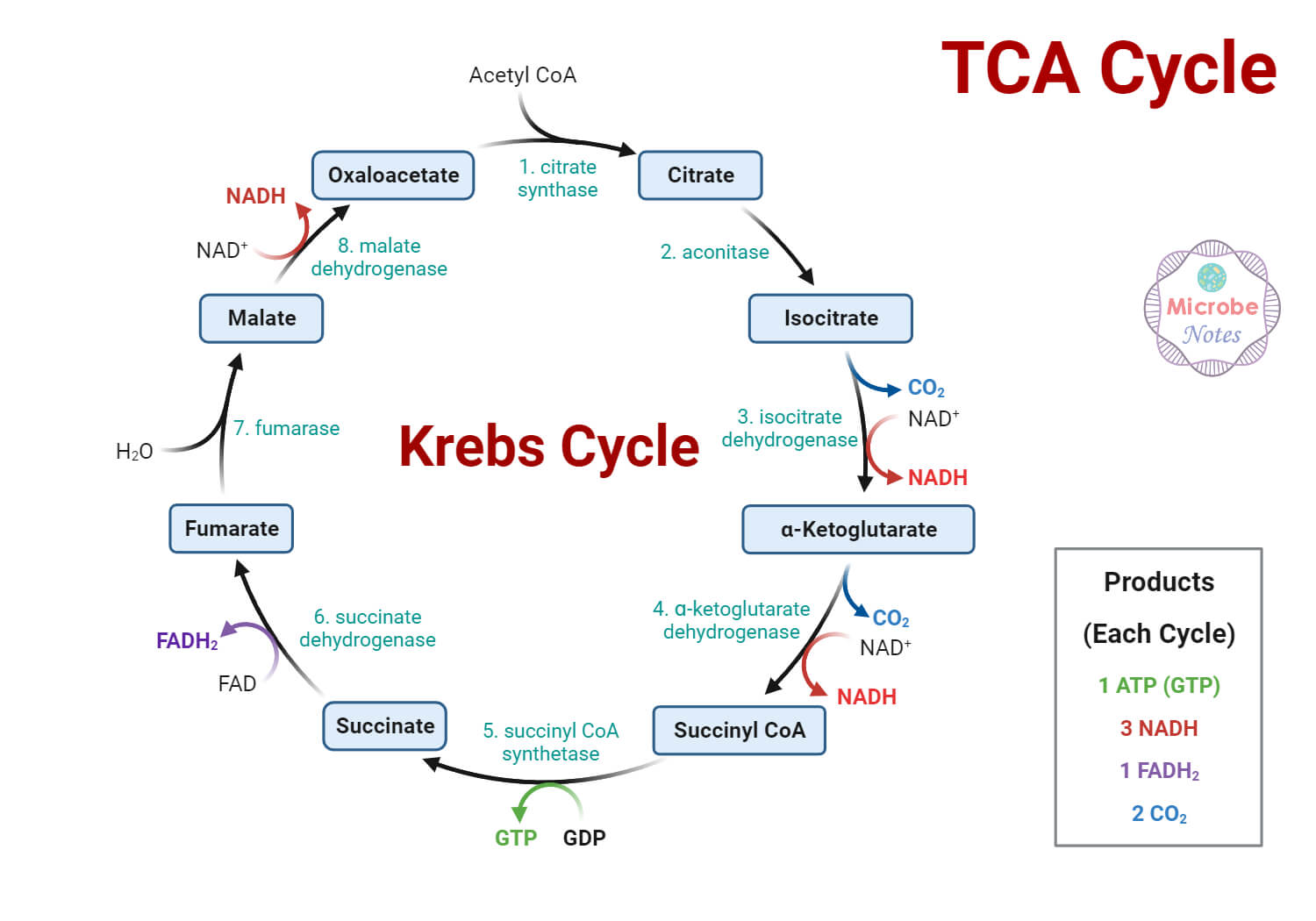
Kreb’s cycle, or citric acid cycle or TCA cycle, is an important process of aerobic respiration which occurs in the mitochondria of plant cells. It begins after glycolysis when pyruvate is converted to acetyl-CoA and has eight steps-
Step 1- Acetyl CoA (2-C compound) reacts with oxaloacetate (4-C compound) to produce citrate (6-Carbon compound).
Enzyme involved- Citrate synthase.
Step 2- Citrate is converted to isocitrate, a structural isomer.
Enzyme involved- Acotinase.
Step 3- Isocitrate is converted to α-Ketoglutarate (5-carbon compound), releasing CO2 and NADH formation.
Enzyme involved- Isocitrate dehydrogenase.
Step 4- α-Ketoglutarate is further oxidized to give succinyl-CoA (4-carbon). Another CO₂ is released, and NADH is produced.
Enzyme involved- α-Ketoglutarate dehydrogenase.
Step 5- Succinyl-CoA is converted into succinate, producing one molecule of ATP (or GTP).
Enzyme involved: Succinyl-CoA synthetase.
Step 6– Succinate is oxidized to give fumarate, and FADH₂ is generated.
Enzyme involved- Succinate dehydrogenase.
Step 7- Fumarate is hydrated to produce malate.
Enzyme involved- Fumarase.
Step 8- Malate is oxidized to reform oxaloacetate, and another NADH is formed.
Enzyme involved- Malate dehydrogenase.
Total Yield per Single Acetyl-CoA Molecule= 3 NADH +1 FADH₂ +1 ATP (or GTP) +2 CO₂. 2 -acetyl-CoA is formed from one glucose molecule, so the cycle goes twice for one molecule of glucose, thus doubling the yield.
Electron Transport Chain or Electron Transport System
Following Glycolysis and Kreb’s cycle, the Electron Transport Chain is the last process of aerobic respiration in plant cells, which takes place in the inner mitochondrial membrane. Here, the electrons are passed along a chain of protein complexes (Complex I to IV) that are embedded within the inner membrane. Energy is released as electrons pass from one complex to the next. This energy is used to transport protons H+ from the mitochondrial membrane to the intermembrane space, establishing a protein gradient. This proton creates a gradient and then passes into the matrix via the ATP synthase complex, during which ATP synthase utilises the potential energy of this movement to synthesize ATP from ADP and inorganic Phosphate, which is referred to as oxidative phosphorylation.
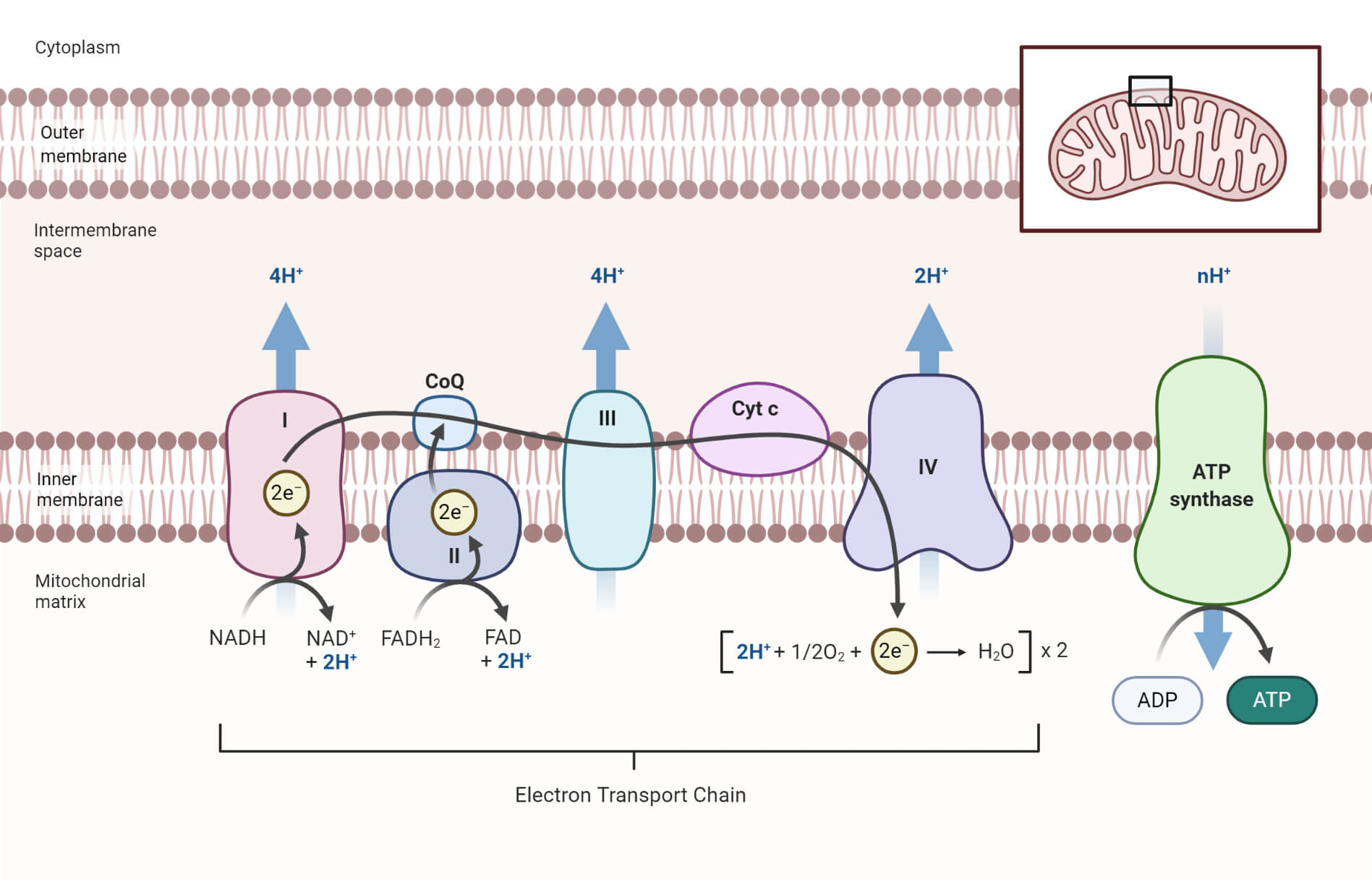
At the end of the chain, oxygen is the terminal electron acceptor. It pairs with the electrons and protons to create water (H₂O). Oxygen is necessary for aerobic respiration because without it, the chain would terminate, and energy production would cease. This phase is the most energy-efficient phase of cellular respiration, creating most of the ATP- about 34 of the 38 total ATP molecules produced from one molecule of glucose.
Mitochondria, the powerhouse of cells
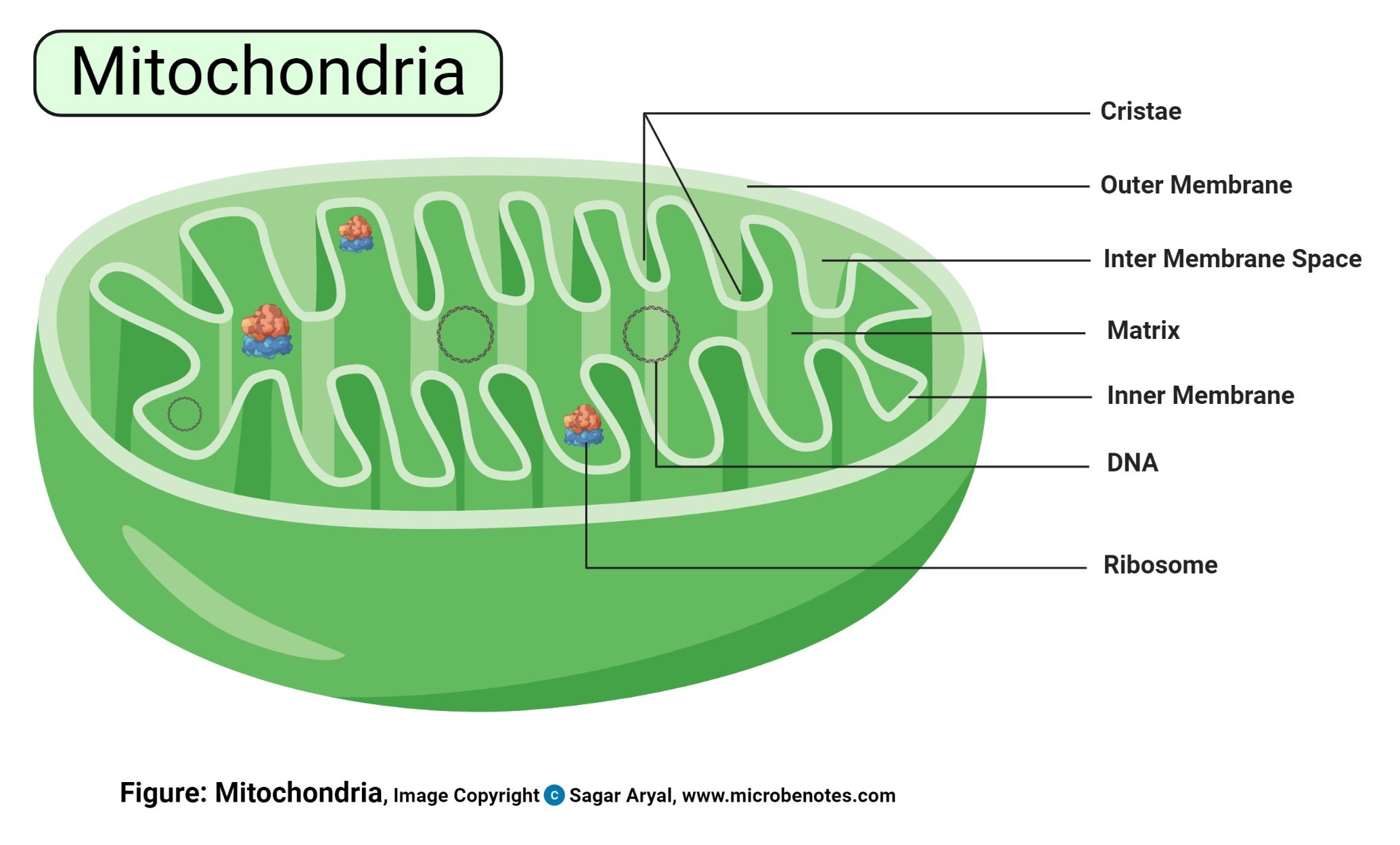
Mitochondria are membrane-bound organelles referred to as the “powerhouse” of both plant and animal cells because of their critical function in energy generation. In plants, mitochondria carry out aerobic respiration by hydrolyzing sugars (principally glucose) to liberate energy trapped in ATP (adenosine triphosphate), which is needed for numerous physiological activities such as cell division, transport of nutrients, and stress perception. Although chloroplasts are the characteristic organelles in plants, the mitochondria play a vital role in the conversion of the chemical energy in photosynthetic products into cellular energy.
Equation for Plant Respiration and Energy Yield (ATP)
The general chemical equation for aerobic respiration in plant cells is:
C₆H₁₂O₆ (glucose) + 6 O₂ → 6 CO₂ + 6 H₂O + ATP (energy)
This equation encapsulates the multi-step process where glucose is broken down with oxygen to release carbon dioxide, water, and, most importantly, ATP. The energy yield per molecule of glucose from aerobic respiration in plants is around 36 to 38 molecules of ATP. This is how the ATP is typically divided among the steps:
Glycolysis (cytoplasm): 2 ATP (net)
Krebs Cycle (mitochondrial matrix): 2 ATP
Electron Transport Chain (inner mitochondrial membrane): ~32–34 ATP
This high efficiency makes aerobic respiration a very effective energy production process in plants, especially when they need to support all sorts of metabolic activities such as cell division, transport of nutrients, and active growth.
Factors affecting Plant Respiration
Factors determining the rate of plant respiration are:
Temperature– Rate of respiration rises with rise in temperature as a result of increased enzyme activity up to an optimum temperature after which enzymes are denatured.
Oxygen– Aerobic respiration requires oxygen, aerobic respiration is lowered by hypoxic or anoxic environments, and such environments can initiate anaerobic respiration, producing fewer ATP.
Sugar availability- Low availability of sugars can reduce the rate of respiration, while high accumulation can be an indication of imbalance in metabolic regulation.
Measurement of Plant Respiration
Measuring plant respiration involves observing the amount of oxygen consumed and the amount of carbon dioxide released. These two gases provide insights into the intensity of a plant’s metabolic activities. Various equipment and techniques are utilized to examine such gas exchange among plant tissues, which are mentioned below-
Closed System Respirometry– In this technique, the plant part is kept in a sealed vessel, and the variation in gas content is recorded after a period of time. When the plant breathes, oxygen content decreases and carbon dioxide content increases. This technique is easy and suitable for small samples, but it cannot record changes continuously.
Open Flow-Through Systems– In this case, fresh air is passed over the plant sample continuously in a chamber. What the difference is in gas levels before and after going through the chamber informs us how much the plant is breathing. This technique can provide real-time measurements and is convenient for examining changes in various conditions.
Infrared Gas Analyzers (IRGAs)– IRGAs are sensors that monitor the amount of carbon dioxide in the air by measuring how much infrared light it will absorb. They are usually applied in field experiments to measure how much CO₂ a leaf produces when respiring. They are quick, accurate, and responsive.
Clark-Type Oxygen Electrodes- This device measures the amount of oxygen consumed by the plant. It has a special sensor that generates an electric current when there is oxygen around it. The current indicates the amount of oxygen being consumed by the plant. The sensors are highly accurate but should be treated with care.
Optical Oxygen Sensors (Optodes)- These are new sensors that employ light to quantify oxygen concentrations. They can be used to observe live plant tissues without causing damage to them. Because they are not invasive, they can be applied to longer experiments and even in soil systems to quantify root respiration.
Automated and High-Throughput Systems- In the laboratory, researchers employ equipment that is capable of measuring respiration in numerous plant samples simultaneously. Such systems are useful for mass studies, such as seed quality testing or the comparison of various crop varieties. Some sensors are even field-compatible, allowing easier remote monitoring of crops.
Occasionally, rather than measuring gases directly, researchers observe the heat released during breathing or test for chemical signs such as ATP (an energy molecule). These indirect measures provide hints about the level of activity of a plant’s respiration.
Respiration and Photosynthesis, similarities and differences
Photosynthesis and respiration are two important processes in plants, but they are opposite processes. Photosynthesis occurs in daylight, where the plant utilizes carbon dioxide and water to produce glucose (sugar) and oxygen. This is a process that stores energy. Respiration occurs constantly (day and night). During respiration, plants break down the glucose produced during photosynthesis to release energy in the form of ATP for growth and other activities. While photosynthesis withdraws oxygen from the atmosphere, respiration deposits it. Combining the two processes maintains gas equilibrium in the environment and provides the plant with both food and energy to stay alive.
Role of Respiration in plant growth, maintenance, and stress response
Respiration is necessary for supplying plants with energy to grow and remain healthy. Energy yielded during respiration (in the form of ATP) is utilized in every part of the plant-root tips to developing leaves. It fuels cell division, nutrient acquisition, and the formation of new tissue. Even if a plant is not growing visibly, it still requires energy for maintenance-e.g., fixing damaged cells, stabilizing membranes, and transporting water and minerals. Under stressful situations like drought, extreme temperatures, or infestation by pests and diseases, the requirement for energy is greater. Respiration aids in the production of protective chemicals and repair processes to assist the plant in staying alive. Therefore, without proper breathing, a plant will not be able to grow, recover from stress, or even survive for a long period.
Respiration in germination, growth, and storage of crops
At various phases of the life of a crop, respiration performs varied functions. In germination, seeds depend upon stored food resources. Respiration disintegrates these resources to provide energy, by which the new seedling will develop until it can produce food using photosynthesis. Plants need lots of energy during the active growth stage for such activities as leaf enlargement, root growth, and flower formation; thus, the rate of respiration is high. After harvest, fruits and vegetables respire. During storage, if respiration goes on too rapidly, it causes loss of water, softening, spoilage, and breakdown of nutrients. That’s why storage conditions like oxygen levels, humidity, and temperature are all carefully controlled to slow down respiration and maximize shelf life. In short, respiration is paramount at each stage from initial sprouting to the last phase in storage.
Environmental impacts
Plant respiration makes a significant contribution to the Earth’s carbon cycle. Through respiration, plants emit carbon dioxide (CO₂) into the air. This CO₂ is initially absorbed by plants through photosynthesis, so respiration releases some of it back. In forests, grasslands, and agricultural lands, this adds a lot of CO₂ to the atmosphere. The ratio between photosynthesis (which takes CO₂ away) and respiration (which puts it back) influences the climate and carbon on our planet. Climate change, on the other hand, influences plant respiration. For instance, increased temperatures might raise respiration levels, releasing more CO₂. Plant respiration is investigated by scientists to be able to understand how the ecosystem functions and how to better manage carbon. Climate-resilient agricultural practices are developed through this, and natural resources are preserved.
Common Misconceptions on Plant “Breathing“
Most people believe that plants release oxygen and absorb carbon dioxide. It’s true of photosynthesis by day, but here’s the whole story. Plants require oxygen, too, if they’re to survive. Plants absorb oxygen and emit carbon dioxide during respiration, same like animals. Both day and night, it goes on constantly.” The general myth is that photosynthesis and respiration are distinct or never occur simultaneously, but during the daytime, they both occur simultaneously. As leaves are producing food and releasing oxygen during photosynthesis, they are also utilizing some of that oxygen for respiration to obtain energy. Learning about these processes dispels misconceptions and reveals that plants are not merely “oxygen factories” but also consume oxygen for their survival.
Conclusion
Plant respiration is an ongoing and essential process sustaining life from the seed stage to maturity and beyond. It supplies energy for growth, upkeep, and survival, particularly during stress. Whether sprouting a seed, fueling root development, or maintaining stored fruits, respiration is constantly in action. Respiration is also a critical component of the Earth’s carbon cycle, connecting plants to the planet’s climate system. While much maligned, respiration is as crucial as photosynthesis to plant biology. With increased knowledge and technology, we can now more effectively understand and control plant respiration to enhance agriculture and conserve the environment.
References
- Unknown, U. (2025). RESPIRATION IN PLANTS. In BIOLOGY (pp. 153–155). https://ncert.nic.in/textbook/pdf/kebo112.pdf
- Bower, J., Jobling, J., Patterson, B., & Ryan, D. (1998). A method for measuring the respiration rate and respiratory quotient of detached plant tissues. Postharvest Biology and Technology, 13(3), 263–270. https://doi.org/10.1016/s0925-5214(98)00014-3
- Amthor, J. S. (2024). After photosynthesis, what then: Importance of respiration to crop growth and yield. Field Crops Research, 321, 109638. https://doi.org/10.1016/j.fcr.2024.109638
- Taiz, L., Zeiger, E., Moller, I.M., & Murphy, A. (2015). Plant Physiology and Development. Sinauer Associates.
- Düsing, K., Asshoff, R., & Hammann, M. (2018). Students’ conceptions of the carbon cycle: identifying and interrelating components of the carbon cycle and tracing carbon atoms across the levels of biological organisation. Journal of Biological Education, 53(1), 110–125. https://doi.org/10.1080/00219266.2018.1447002
- Respiration. (n.d.). Oxford Academic. https://academic.oup.com/plphys/pages/respiration-focus-collection
- Factor effecting respiration. (2013, December 17). [Slide show]. SlideShare. https://www.slideshare.net/slideshow/factor-effecting-respiration/29281435
- Admin. (2021, September 15). Respiration in plants. BYJUS. https://byjus.com/biology/plant-respiration/
- Definition of respiration in plants. (2022, April 4). Unacademy. https://unacademy.com/content/neet-ug/study-material/biology/definition-of-respiration-in-plants/
- Kinhal, V. (2023, February 3). Plant respiration: Its importance and applications. CID Bio-Science. https://cid-inc.com/blog/plant-respiration-its-importance-and-applications/
- Telikicherla, D., & Sharma, N. (2025, May 2). Respiration in plants. CK-12 Foundation. https://flexbooks.ck12.org/cbook/cbse-biology-class-10/section/1.7/primary/lesson/respiration-in-plants/
