
Clostridium tetani is the causative agent of tetanus. Spores of Clostridium tetani are responsible for a disease commonly found in soil, ash, human feces and gut, feces of some animals, and on the surfaces of rusty tools such as needles, nails, and wire.
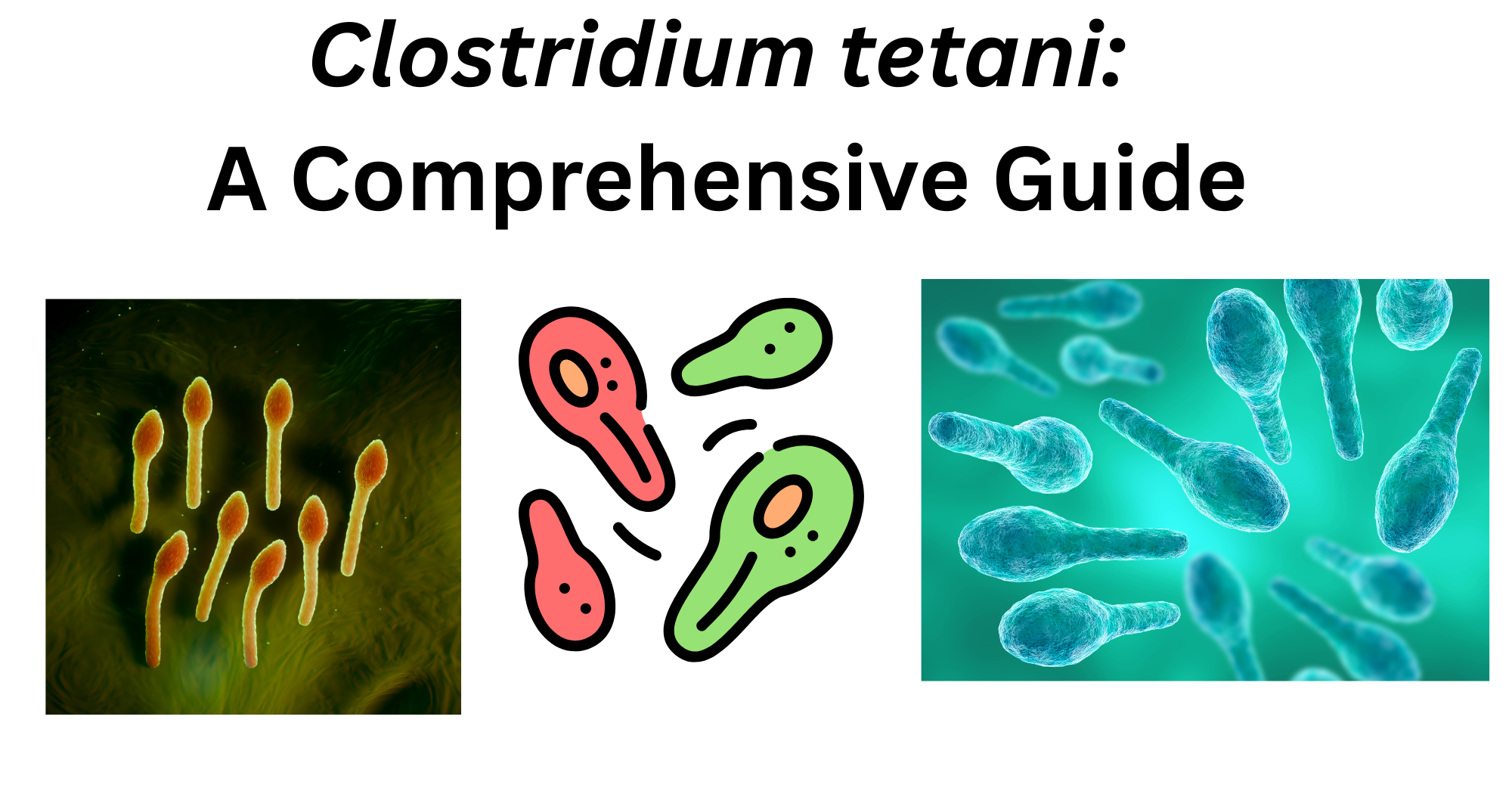
Tetanus does not spread from person to person but can enter through wounds and burns. The spores are resistant to heat and most antiseptics, which is why they can survive for years.
Taxonomy and Classification of Clostridium tetani
Domain: Bacteria
Kingdom: Bacillati
Phylum: Bacillota
Class: Clostridia
Order: Eubacteriales
Family: Clostridiaceae
Genus: Clostridium
Species: C. tetani
Morphology and Microscopy of Clostridium tetani
- Gram-positive, rod –shaped bacilli
- Approximately 0.5 µm wide and 2.5 µm long in size, which occur singly or in chains.
- Motile by peritrichous flagella
- Non capsulated
- Spore forming
- Contain spores that are spherical, terminal, and bulging with a drumstick appearance.
Under the microscope, they are seen as pink-colored, rod-shaped bacilli with green-colored spores.
Cultural and Growth Characteristics of Clostridium tetani
- Obligate anaerobes
- Optimum temperature: 37˚C
- Optimum pH: 7.4
- Grows fairly well in ordinary media with a burnt organic smell.
- Nutrient Agar: swarming growth, irregularly round, 2-5mm in diameter, grayish yellow with granular surface, translucent, ill-defined edges.
- Blood Agar: shows β-hemolysis.
- Cooked Meat Medium: grows well with turbidity and gas formation. Meat is not digested but turns black after long incubation.
- Lactose Egg Yolk Milk Medium: no proteolysis or lactose fermentation, no opalescence, no pearly layer.
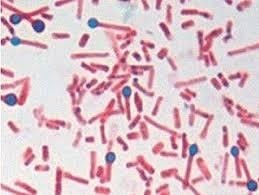
Fig 1: Microscopic Structure of C. tetani
Source: https://www.researchgate.net/figure/a-Spores-and-bacteria-of-Clostridium-tetani-with-a-typical-drum-stick-shape-isolated_fig1_277205153
Biochemical and Identification Tests of Clostridium tetani
| Tests | Results |
| Gram Staining | Positive |
| Catalase | Negative |
| Indole | Variable |
| MR (Methyl Red) | Negative |
| VP (Voges Proskauer) | Negative |
| H2S | Positive |
| Motility | Positive |
| Gas | Positive |
| Gelatin Hydrolysis | Positive |
| Nitrate Reduction | Negative |
| Fermentation of | |
| Glucose | Negative |
| Maltose | Negative |
| Ribose | Negative |
| Lactose | Negative |
| Mannitol | Negative |
| Dnase | Positive |
| Arabinose | Negative |
| Cellobiose | Negative |
| Xylose | Negative |
| Sucrose | Negative |
| Mannose | Negative |
| Galactose | Negative |
| Starch | Negative |
| Glycogen | Negative |
| Enzymatic Reactions | |
| Esculin Hydrolysis | Negative |
| Lecithinase | Negative |
| Superoxide Dismutase | Negative |
| Lipase | Negative |
| Neuraminidase | Negative |
Pathogenesis and Virulence Factors of Clostridium tetani
- Clostridium tetani enters the body through wounds or lacerations where many cells are dead.
- Then the spores germinate in the presence of anaerobic conditions
- After that, toxins that are harmful to the human nervous system are produced and circulated through the blood and lymphatics.
- Among the toxins produced, tetanospasmin, also known as tetanus toxin, binds at multiple sites in the central nervous system, including peripheral motor end plates, the spinal cord, the brain, and the sympathetic nervous system.
- The clinical findings begin when the toxin obstructs neurotransmitter release, thereby hindering inhibitory impulses.
- Spasms in the pharyngeal muscles cause difficulty swallowing.
- This can then lead to seizures and can affect the autonomic nervous system, causing death.
C. tetani produces two types of exotoxins, which function as virulence factor which are explained below:
Tetanolysin
- It is a Heat-liable and oxygen-labile toxin.
- Acts as a leucotoxin
- It is a hemolysin antigenically related to the oxygen-labile hemolysins produced by C. perfringens and S. pyogenes.
- It destroys living tissue adjacent to the infection and promotes bacterial multiplication.
Tetanospasmin
- Is proteinous in nature
- Is a heat-labile but oxygen-stable toxin
- Is a plasmid-encoded neurotoxin
- Responsible for the clinical manifestations of tetanus.
- It is antigenic and is specifically neutralized by antitoxin.
- Obstructs the inhibitory nerve impulses by hindering the release of neurotransmitters, which cause spastic paralysis.
Epidemiology and Transmission of Clostridium tetani
Tetanus occurs mostly in developing countries where there is a deficiency in immunity, and in those areas that are affected by natural disasters.
In the US, between 2001 and 2008, the average incidence of tetanus was 0.01% in 100,000 people. Then, from 2009 to 2015, 197 cases of tetanus were reported, with 16 deaths in the US.
In the European Union in 2023, 73 cases of tetanus were reported, of which 13 were confirmed, an increase compared with the previous year. The graph of tetanus virus infection shows a decline from 69 cases in 2019 to 32 in 2020, followed by a rise to 50 cases in 2021 and 53 in 2022.
The highest-risk groups are newborns, women, and elderly people. 13 fatal tetanus cases reported in 2023 were reported in women aged 79 and above. In 2010, there were 1822 cases of tetanus in Uganda and 1038 cases in DRC, accounting for 50% of cases in Africa.
In 2015, about 56,000 tetanus-related deaths were reported worldwide, among which 35% occurred in newborns. Tetanus is often related to trauma and open wounds of all sizes and types. Similarly, tetanus is most common in pregnant women and newborns who are not properly vaccinated and delivered in unhygienic environments.
C. tetani is transmitted through various ways:
- Bacteria are transmitted from soil or through rusted or contaminated iron nails.
- Spread through dirty knives and tools, which contaminate wounds and cuts.
- Newborns can be infected by instruments used to cut the umbilical cord, which are dirty or contaminated with soil.
- During surgery, which is carried out without proper asepsis.
- Spreads through injuries, such as wounds and superficial abrasions.
Risk factors
There are various risk factors associated with C. tetani infection, which are listed below:
- Age above 65 years
- An immunocompromised person with another disease
- A person having no vaccination
- Those who had outdated tetanus booster shots
- Those who are using intravenous drugs
- People having co-morbidities such as diabetes mellitus
Similarly, natural disasters such as landslides, earthquakes, tsunamis, and hurricanes are not responsible for the rise in tetanus levels in the environment; however, tetanus cases may increase during these disasters because wounds lead to tetanus exposure.
Clinical Manifestations of Clostridium tetani
Incubation period is generally 8 days, but it can range from 1 to 21 days. There are 3 forms of infection that are caused by C. tetani.
- Generalized Tetanus
- It is the most common type, accounting for more than 80% of reported cases.
- Is presented in a descending pattern
- Trismus
- Lockjaw
- Stiffness of the neck
- Difficulty in swallowing
- Rigidity in abdominal muscles
- Sweating
- Elevation in temperature
- Rise in blood pressure
- Increase in heart rate
- Spasms
These symptoms last for 3 to 4 weeks, and complete recovery may take months.
Localized Tetanus
- It is an uncommon type of tetanus.
- Persistent contraction of muscles near the site of the wound.
- It is milder and can progress to generalized tetanus.
Cephalic Tetanus
- It is a rare form of tetanus that results from a wound.
- Results in weakened face muscles and causes spasms of jaw muscles.
- Involves cranial nerves, especially in the facial area.
- Occurs occasionally along with otitis media in which C. tetani is found as the flora of the middle ear or following a head wound.
Neonatal Tetanus
- Is a form of generalized tetanus that occurs commonly in newborn infants.
- Found in infants born without protective passive immunity.
- It commonly occurs via infection of the unhealed umbilical stump.
- Symptoms usually appear from 4 to 14 days after birth.
There are some complications of tetanus, which are listed below:
- Fractures
- Hypertension and/or abnormal heart rhythm
- Aspiration pneumonia
- Nosocomial infections
- Pulmonary embolism
- Laryngospasm
- Death
Laboratory Diagnosis of Clostridium tetani
Sample Collection
- Wound swabs and excised bits of tissue from the necrotic depths of wounds are used as samples.
Gram Staining
- Appears as pink, rod-shaped bacilli with terminal, round spores, giving a drumstick appearance.
Culture
- Specimens are inoculated on suitable culture media.
- Then the inoculated plates are incubated at 37˚C for 24-48 hours.
Nutrient Agar: swarming growth, irregularly round, grayish yellow with granular surface, translucent colonies.
On Blood Agar: swarming growth which spreads throughout the plate.
On Robertson Cooked Meat (RCM) Media: converts meat particles black and produces foul odor.
Biochemical Tests
After culture, colonies from incubated plates are tested for biochemical tests and identified C. tetani based on the following results:
| Tests | Results |
| Gram Staining | Negative |
| Catalase | Negative |
| Indole | Variable |
| MR (Methyl Red) | Negative |
| VP (Voges Proskauer) | Negative |
| H2S | Positive |
| Motility | Positive |
| Gas | Positive |
Toxigenicity Test
Various strains of C. tetani are tested for toxin production by following these ways:
In vitro hemolysis inhibition test
- Shows hemolysis on part of the blood agar without any antitoxin, but does not show any hemolysis on part with antitoxins.
- This is because antitoxin, which is present in the agar, inhibits the toxin’s hemolytic activity.
In vivo mouse inoculation test
- RCM broth, having black turbid growth, is inoculated at the tip of the tail of the experimental mouse.
- Then the tested animal develops stiffness in the tail, which progresses to the hind limbs on the side where inoculation was done.
- Then it proceeds to the other side’s limb, then to the trunk and forelimbs.
- Death may occur within 2 days.
Spatula Tests
- It is the most useful and simple bedside diagnostic test.
- It is based on touching the oropharynx with a spatula or tongue blade.
- This test especially induces a gag reflex.
- If a person tries to throw out a spatula, it is diagnosed as a negative test, but if a person bites the spatula, it is considered a positive test.
- Is 94% sensitive and 100% specific.
Vaccination of Clostridium tetani
- Post-exposure Prophylaxis: If a person bears a tetanus-prone wound, such as wounds contaminated with dirt, soil, saliva, and feces, punctured wounds, wounds from burns, crushing, and frostbite, and has an incomplete vaccination status, they should receive antitoxins as well as tetanus toxoid vaccination.
- The tetanus vaccine is routinely given to children as part of the diphtheria and tetanus toxoids and acellular pertussis dose.
- This vaccine consists of 5 doses, generally given in the thigh or arm of children at are 2 months, 4 months, 6 months, 15 to 18 months, and 4 to 6 years.
- The first booster dose is given at ages 11 to 18 years, and subsequent booster doses are given every 10 years.
- Individuals travelling to tetanus-prone areas should consult a doctor about vaccinations.
- A booster dose is recommended in the third trimester of a pregnancy, regardless of the mother’s vaccination schedule.
Treatments of Clostridium tetani Infections
In treating stiffness and spasms, patients are prescribed the following medications:
- Anti-convulsants, such as diazepam, relax muscles by preventing spasms, help in the reduction of anxiety, and work as a sedative.
- Baclofen, a muscle relaxant, suppresses nerve signals from the brain to the spinal cord, reducing muscle tension.
- Neuromuscular blocking agents such as pancuronium and vecuronium block the signals from nerves to muscle fibers and are used to control muscle spasms.
- Antibiotics such as Metronidazole or Penicillin are prescribed.
- Tetanus immune globulin is used to neutralize the toxin.
- Surgery
- If the wound caused by tetanus is huge, it may be removed surgically.
- Nutrition
- Requires a high daily calorie intake due to increased muscle activity.
- Ventilator
- If vocal cords or respiratory muscles are affected, patients may need the support of a ventilator to assist in breathing.
- Vaccination
- It is the main preventive measure.
Prevention and Control of Clostridium tetani
- Clean the wound immediately with soap and water, then cover it properly with waterproof adhesive dressings until healed.
- Maintain proper hand hygiene before and after touching wounds.
- Wounds should be regularly assessed.
- Protective footwear and gloves should be worn when handling rusty or sharp objects.
- If wounds are deep and contaminated, seek medical help.
Conclusion
C. tetani is the most common bacterium found in soil and the intestinal tracts of animals, which infects people through wounds and burns, causing a potentially fatal disease known as tetanus. Tetanus is an illness triggered mainly by the production of neurotoxin (tetanospasmin).
Early diagnosis and treatment are important, especially in developing countries with limited access to vaccination, highlighting the necessity of routine immunization and addressing challenges in healthcare in low-resource countries. Vaccinations are the main preventive measures which are used in controlling infection by C. tetani.
References
- BrainKart. (n.d.). Clostridium tetani. BrainKart. https://www.brainkart.com/article/Clostridium-Tetani_41015/
- Centers for Disease Control and Prevention (CDC). (2024, April 25). Chapter 21: Tetanus. In Epidemiology and Prevention of Vaccine-Preventable Diseases (Pink Book). https://www.cdc.gov/pinkbook/hcp/table-of-contents/chapter-21-tetanus.html
- Elsevier. (n.d.). Clostridium tetani. ScienceDirect Topics. https://www.sciencedirect.com/topics/medicine-and-dentistry/clostridium-tetani
- Swedish University of Agricultural Sciences. (2023, March 8). Clostridium tetani. VetBact. https://www.vetbact.org/?artid=32
- George, E. K., De Jesus, O., Tobin, E. H., & Vivekanandan, R. (2024, February 26). Tetanus (Clostridium tetani infection). In StatPearls. StatPearls Publishing. https://www.ncbi.nlm.nih.gov/books/NBK482484/
- European Centre for Disease Prevention and Control. (2025, September 16). Tetanus: Annual epidemiological report for 2023. ECDC. https://www.ecdc.europa.eu/en/publications-data/tetanus-annual-epidemiological-report-2023
- European Centre for Disease Prevention and Control. (2025, September 16). Tetanus: Annual epidemiological report for 2023. ECDC. https://www.ecdc.europa.eu/en/publications-data/tetanus-annual-epidemiological-report-2023
- The Open University. (n.d.). Clostridium tetani. OpenLearn Create. https://www.open.edu/openlearncreate/mod/oucontent/view.php?id=86§ion=8.5.2
- Mayo Clinic. (n.d.). Tetanus: Symptoms and causes. Retrieved February 24, 2026, from https://www.mayoclinic.org/diseases-conditions/tetanus/symptoms-causes/syc-20351625
- Communicable Diseases Agency. (2025, July 15). Tetanus. https://www.cda.gov.sg/professionals/diseases/tetanus/
- Medical News Today. (2023, June 26). Tetanus: Symptoms, causes, and treatments. https://www.medicalnewstoday.com/articles/163063
