
Clostridium botulinum is a Gram-positive, rod-shaped bacterium that produces botulinum toxin. This neurotoxin causes the serious disease botulism. The bacterium is predominantly found as spores in soil and marine sediments worldwide, and it can contaminate food under anaerobic conditions.
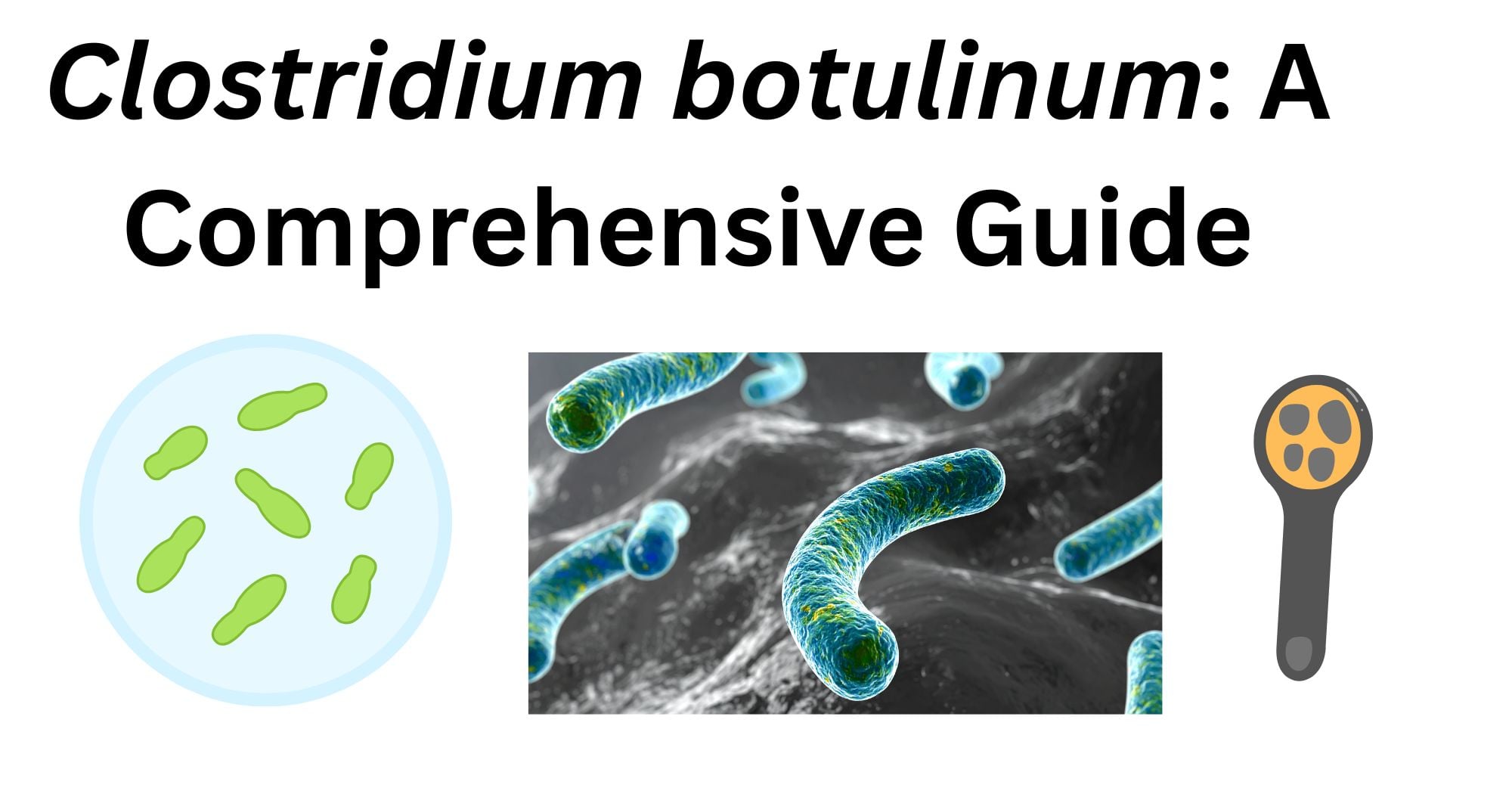
Infection or intoxication leads to flaccid paralysis by inhibiting acetylcholine release at neuromuscular junctions. C. botulinum is associated with food-borne, infant, and wound botulism. It is a medically important pathogen.
Taxonomy and Classification of Clostridium botulinum
Domain: Bacteria
Phylum: Bacillota
Class: Clostridia
Order: Eubacteriales
Family: Clostridiaceae
Genus: Clostridium
Species: C. botulinum
Morphology and Microscopy of Clostridium botulinum
- Gram-positive bacilli that can occur singly, in pairs, or sometimes in chains.
- Shows “tennis racket” or “drumstick” appearance
- Pleomorphic
- Approximately 0.6 – 1.4*3.0 – 20.2µm.
- Spore-former producing oval, sub-terminal spores
- Motile with peritrichous flagella
- Non-capsulated
After Gram staining, they appear as large gram-positive rod-shaped bacteria with sub-terminal spores giving a “tennis racket” or drumstick” appearance under the microscope.
Cultural and Growth Characteristics of Clostridium botulinum
- Obligate anaerobes
- Optimum temperature: 35˚C to 37˚C
- Optimum pH: 7 to 7.5
- It grows on enriched anaerobic media.
- On Nutrient Agar: After 48 hours of incubation, irregular colonies appear with a 3- 8 mm diameter. The colonies demonstrate uniform, steady growth and exhibit a grayish-white coloration
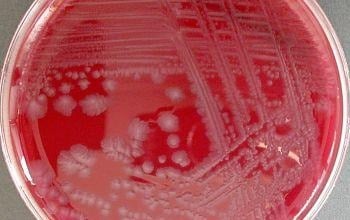
- On Blood Agar: Colonies are medium to large, grayish in color, translucent, with an irregular edge, flat to slightly raised, which often shows β-hemolysis and may produce a foul odor.
- On Robertson’s Cooked Meat Medium: It shows turbidity in broth and produces gas. The meat particles become blackened after 24 hours of incubation and emit a strong putrefactive odor, highlighting that this indicates proteolytic activity and anaerobic decomposition by C. botulinum.
- On Lactose Egg Yolk Milk Agar: Colonies are grayish with an iridescent surface and produce opalescence in this medium.
Biochemical and Identification Tests of Clostridium botulinum
| Tests | Results |
| Gram Staining | Positive |
| Catalase | Negative |
| Oxidase | Negative |
| H2S | Positive |
| Ammonia Production | Positive |
| Gelatin Hydrolysis | Positive |
| Indole | Negative |
| 6.5% NaCL | Negative |
| 20% Bile | Negative |
| Meat Digestion | Mostly Positive |
| Milk Digestion | Mostly Positive |
| Fermentation of | |
| Glucose | Positive |
| Galactose | Negative |
| Glycogen | Negative |
| Lactose | Negative |
| Ribose | Negative |
| Starch | Negative |
| Sucrose | Negative |
| Arabinose | Negative |
| Maltose | Negative |
| Mannose | Negative |
| Mannitol | Negative |
| Raffinose | Negative |
| Rhamnose | Negative |
| Xylose | Negative |
| Trehalose | Negative |
| Amino Acid Utilization | |
| Glycine | Positive |
| Proline | Positive |
| Tyrosine | Positive |
| Arginine | Positive |
| Tryptophan | Positive |
| Serine | Positive |
| Phenylalaine | Positive |
| Enzymatic Reactions | |
| Lecithinase | Negative |
| Superoxide Dismutase | Positive |
| Esculin Hydrolysis | Positive |
| Casein Hydrolysis | Positive |
| Lipase | Positive |
| Tryptophan Deaminase | Negative |
Pathogenesis of Clostridium botulinum
- C. botulinum is composed of 150,000 Da progenitor protein (A-B toxins).
- It contains a small subunit A with zinc-endopeptidase activity and a large subunit B, which is non-toxic.
- The toxin forms a complex with non-toxic proteins, which protect the neurotoxins during the passage through the digestive tract.
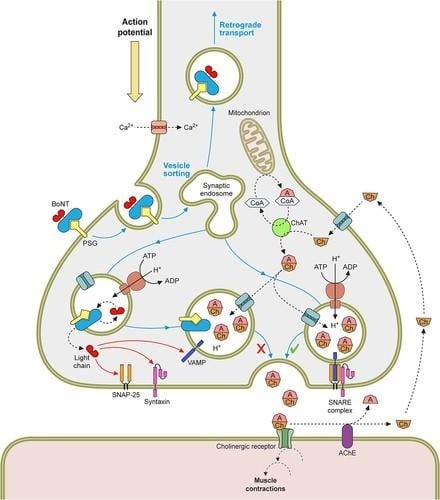
- The carboxyl-terminal of the toxin, heavy chain, interacts with specific sialic acid receptors together with glycoproteins found on the outer surface of the motor neurons and activates endocytosis of the toxin.
- The neurotoxins stay at the neuromuscular junction; acidification of the endosome activates the N-terminal and heavy chain-mediated release of the light chain.
- The botulinum endopeptidase deactivates the protein that governs the release of acetylcholine by obstructing the neurotransmission at the peripheral cholinergic synapses.
- During normal nerve cell function, a nerve impulse in the CNS triggers the fusion of acetylcholine-filled vesicles with the neuron’s cytoplasmic membrane, resulting in the release of acetylcholine (ACh) into the synaptic cleft.
- Binding of the ACh receptor of the cytoplasmic membrane of the cell activates a series of events that cause the contraction of the muscle.
- The botulinum toxin hinders the fusion of ACh with the neural cytoplasmic membrane, resulting in the clinical manifestations of botulinum.
Virulence Factors of Clostridium botulinum
Botulinum Neurotoxin (BoNT)
- It is a protein neurotoxin made up of two chains: heavy chain (100kDa) and light chain (50 kDa). The heavy chain binds to the nerve terminals, while the light chain is a toxin component that is enzymatically active.
- It consists of 7 antigenic types: A, B, C, D, E, F, and G. Among these types, types A, B, E, and F are most commonly associated with human botulism.
- It acts as a neuromuscular junction and causes neuromuscular blockage and paralysis.
Spore Formation
- It produces highly resistant spores that resist harsh environmental conditions such as heat and drying.
- It is important for the transmission and persistence in the environment.
Enzymatic Activity
- It secretes enzymes that help in the invasion of tissue and bacterial growth in wounds or the intestine.
Epidemiology of Clostridium botulinum
- Botulism outbreaks are generally sporadic, small, and rare. Most outbreaks are associated with food-borne botulism resulting from the consumption of contaminated home-canned or commercially produced food products.
- From 1920 to 2014, approximately 197 outbreaks of food-borne botulism were reported in the United States, Canada, Europe, Asia, Africa, and other regions, with 55% of these occurring in the United States.
- In Canada, 55 outbreaks of infant botulism were recorded between 2006 and 2021.
- Likewise, 239 cases associated with wound botulism were reported between 2005 and 2017 in the United States, among which 93% was linked with injection drug use.
- In the last 15 years, only 6 cases were reported from Australia, which were associated with infant botulism.
- In the same way, 31 cases of infant botulism were reported from Japan since 1986.
- Correspondingly, 978 cases were reported from California in the United States since 1976.
- Adult intestinal toxemia botulism is sporadic and is very rare, with only 33 cases reported from 1986 to 2018, among which 3 cases were reported in Canada.
- The risk factors for wound and food-borne botulism are injection drug use and ingestion of home-canned food.
- For infant botulism, key risk factors include living in rural areas, consuming honey within the first year of life, and exposure to soil, especially among individuals who work with soil.
Transmission of Clostridium botulinum
C. botulinum is transmitted through various routes depending on the form of botulism:
Food-borne Transmission
- It takes place by the consumption of botulinum neurotoxin present in contaminated food.
- The common sources are improperly home-made foods, smoked or fermented fish products, and poorly preserved foods. Although rare, store-bought food products can be the source of botulinum neurotoxin.
Infant Botulism
- It is caused by the consumption of spores, but not the toxin.
- The common sources are honey, dust, or soil containing spores.
Wound Botulism
- The spores enter through the wounds and produce a toxin.
- It is most common in traumatic injuries and injection drug users.
Latrogenic Botulism
- It is caused by the overuse of cosmetic products, such as those used for wrinkles.
- It is also caused if a heavy amount of toxin is injected for medical reasons, like for the treatment of migraine headaches.
Clinical Manifestations of Clostridium botulinum
Food-borne Botulism
Symptoms begin 12 to 72 hours after consumption of the toxin and include:
Gastrointestinal Symptoms
- Nausea
- Vomiting
- Abdominal Pain or Discomfort
- Swollen Belly
- Diarrhea is sometimes followed by constipation
Neurological Symptoms
- Blurred or Double Vision (Diplopia)
- Drooping Eyelids (Ptosis)
- Difficulty Speaking (Dysarthria)
- Difficulty Swallowing (Dysphagia)
- Dry mouth
- Dilated Pupils (Mydriasis)
As the poisoning deteriorates, it leads to paralysis, which spreads to other parts of the body, and it only affects movement. The symptoms include:
- Descending symmetrical flaccid paralysis
- Respiratory muscle paralysis can lead to death.
- Constipation and ileus
- Urinary Retention
- Trouble Breathing (Dyspnea)
- Low Blood Pressure (Hypotension)
- Slow Heart Rate (Bradycardia)
Infant Botulism
Infant botulism occurs in children under 1 year of age. After ingestion, spores typically take 2 to 4 weeks to germinate and colonize the infant’s gut before symptoms appear.
Early Signs
- Constipation
- Poor Feeding
- Weak Cry
Neurological Signs
- Poor Head Control
- Floppy Baby Syndrome (Hypotonia)
- Lethargy
- Weak Sucking and Swallowing
If untreated, symptoms may advance to respiratory failure.
Wound Botulism
Symptoms generally develop 4 to 14 days after wound contamination. These may include:
- Local infection can be mild or absent.
- Blurred Vision
- Difficulty Swallowing (Dysphagia)
- Descending paralysis similar to food-borne botulism
Adult Intestinal Toxemia
It is a very rare form of botulism that occurs by the same route as infant botulism, but is common in adults. Symptoms include:
- Abdominal Pain
- Blurred Vision
- Diarrhea
- Dysarthria
- Imbalance
- Weakness in arms and hands
Complications
Complications include:
- Long-term Weakness
- Aspiration Pneumonia
- Extreme Tiredness (Fatigue)
- Nervous System Issues
Laboratory Diagnosis of Clostridium botulinum
Sample Collection and Transportation
Depending on the type of botulism, samples are:
- Serum (blood): for the detection of circulating toxin
- Gastric contents or vomitus: in food-borne botulism,
- Stool: in infant botulism
- Wound Swab, pus, or tissues: in wound botulism
- Suspected food samples: for the detection of toxin
Samples should be collected as soon as possible after the onset of symptoms from the patients. The blood samples should be collected in a sterile vial without an anticoagulant. Typically, 15-20ml serum and 25-50gm stool should be collected from adults, while only 2ml serum and as much stool as possible should be collected from children.
Microscopy
- After Gram staining of smears of stool or suspected foods, they appear as large gram-positive rod-shaped bacteria with sub-terminal spores giving a “tennis racket” or drumstick” appearance under the microscope.
Culture
- On Nutrient Agar: After 48 hours of incubation, irregular colonies appear with a 3- 8 mm diameter. The colony shows consistent growth and is grayish-white in color.
- On Blood Agar: Colonies are medium to large, grayish in color, translucent, with an irregular edge, flat to slightly raised, which often shows β-hemolysis and may produce a foul odor.
- On Robertson’s Cooked Meat Medium: It shows turbidity in broth and produces gas. The meat particles become blackened after 24 hours of incubation and emit a strong putrefactive odor, indicating proteolytic activity and anaerobic decomposition by Clostridium botulinum.
- On Lactose Egg Yolk Milk Agar: Colonies are grayish with an iridescent surface and produce opalescence in this medium.
Biochemical Tests of Clostridium botulinum
After culture, colonies from incubated plates are tested for biochemical tests and identified as C. botulinum based on the following results:
| Tests | Results |
| Catalase | Negative |
| Oxidase | Negative |
| H2S | Positive |
| Ammonia Production | Positive |
| Gelatin Hydrolysis | Positive |
| Indole | Negative |
| 6.5% NaCL | Negative |
| 20% Bile | Negative |
| Meat Digestion | Mostly Positive |
| Milk Digestion | Mostly Positive |
Toxin Detection
Mouse Bioassay
- It is the “gold standard” test for the detection of active botulinum toxin.
- This in vivo bioassay involves the intraperitoneal injection of suspected contaminated food into a mouse, which is then observed for 4-6 days for the development of disease or death.
- If that lethal action can be neutralized in another set of mice by inserting antibodies against one of the botulinum toxin serotypes, it verifies the presence of botulinum neurotoxin.
Immunoassay
- ELISA is the most commonly used immunoassay, which detects the botulinum neurotoxins present in stool, serum, or food.
Endopeptidase assays
- It is highly specific and has no cross-reactivity between different botulinum toxins.
- It is based on a specific breakdown of synaptic proteins by various botulinum neurotoxins, merged with immunological identification of separated peptides, or identification of fluorescence released while a peptide-quenched chromophore is cleaved.
Polymerase Chain Reaction (PCR)
- It identifies the neurotoxin genes and is ideal for the identification of C. botulinum.
- Further typing can be carried out through Amplified Fragment Length Polymorphism (AFLP) and Pulse-Field Gel Electrophoresis (PFGE).
Treatments of Clostridium botulinum
Antitoxin Therapy
- Botulinum antitoxin is the most important treatment and should be given as early as possible.
- Botulism Antitoxin Hepavalent and BabyBIG are given, which prevent the advancement of paralysis and the following complications.
Wound Management
- It involves the surgical debridement of infected wounds to remove the toxin-producing bacteria and necrotic tissue.
Supportive Care
- Mechanical ventilation may be required due to respiratory muscle paralysis.
- Extreme care and attention should be given to the bladder and bowel to prevent complications like urinary tract infections, DVT, and pressure ulcers.
- Intensive care monitoring should be done for the progression of paralysis.
Antibiotic Therapy
- It is used only in wound botulism.
- Common drugs are Penicillin G and Metronidazole.
Prevention and Control of Clostridium botulinum
For Food-Borne Botulism
- Always use the correct temperature and pressure for home-made food products.
- Do not consume improperly canned or bulging containers of food.
- Always cook food properly to destroy toxins.
- Do not consume improperly cooked raw meat products or seafood.
- Always store perishable foods at low temperatures to reduce bacterial growth.
- Avoid vacuum-packed or fermented foods unless properly processed.
- To prevent cross-contamination, always keep raw and cooked food separate.
For Infant Botulism
- Do not feed honey to infants under 1 year.
- As far as possible, prevent exposure to dust or soil contaminated with spores.
For Wound Botulism
- Clean wounds properly and avoid contamination with soil or dust.
- Safe practices among injection drug users.
For Iatrogenic Botulism
- Use only Health Sciences Authority (HSA) approved cosmetic products.
Conclusion
C. botulinum is a Gram-positive, anaerobic, spore-forming bacterium widely found in the environment and known for producing botulinum neurotoxin. It is responsible for causing botulism, a serious illness characterized by difficulty swallowing, difficulty breathing, and flaccid paralysis that can even lead to death if untreated.
The disease is transmitted through three main routes: ingestion of preformed toxin in contaminated food (food-borne botulism), ingestion of spores that germinate and produce toxin in the intestines of infants (infant botulism), and contamination of wounds with spores that subsequently produce toxin (wound botulism).
Diagnosis relies mainly on microscopy, culture, toxin detection, and molecular methods. Early diagnosis and immediate administration of antitoxin are crucial for survival. Prevention and control rely on proper food safety measures, avoidance of honey in infants, and wound management.
References
- U.S. Department of Agriculture, Food Safety and Inspection Service. (n.d.). Botulism. Retrieved April 21, 2026, from https://www.fsis.usda.gov/food-safety/foodborne-illness-and-disease/illnesses-and-pathogens/botulism
- Microbiologyclass.net. (2023, July 12). Clostridium botulinum. https://microbiologyclass.net/clostridium-botulinum/
- Microbe Notes. (2022, September 5). Biochemical test of Clostridium botulinum. https://microbenotes.com/biochemical-test-of-clostridium-botulinum/
- Rawson, A. M., Dempster, A. W., Humphreys, C. M., & Minton, N. P. (2023). Pathogenicity and virulence of Clostridium botulinum. Virulence, 14(1), 2205251. https://doi.org/10.1080/21505594.2023.2205251
- Public Health Agency of Canada. (2024, June). Clostridium botulinum: Pathogen safety data sheet – Infectious substances. Government of Canada. https://www.canada.ca/en/public-health/services/laboratory-biosafety-biosecurity/pathogen-safety-data-sheets-risk-assessment/clostridium-botulinum.html
- McCallum, N., Gray, T. J., Wang, Q., Ng, J., Hicks, L., Nguyen, T., Yuen, M., Hill-Cawthorne, G. A., & Sintchenko, V. (2015). Genomic epidemiology of Clostridium botulinum isolates from temporally related cases of infant botulism in New South Wales, Australia. Journal of Clinical Microbiology, 53(9), 2846–2853. https://doi.org/10.1128/JCM.00143-15
- Communicable Diseases Agency. (2025). Botulism. Government of Singapore. https://www.cda.gov.sg/professionals/diseases/botulism/
- Centers for Disease Control and Prevention. (2024). Botulism: About botulism. https://www.cdc.gov/botulism/about/index.html
- Cleveland Clinic. (2025). Botulism. https://my.clevelandclinic.org/health/diseases/17828-botulism
- Global Biodiversity Information Facility (GBIF). (n.d.). GBIF backbone taxonomy: Species 113663272. Retrieved April 22, 2026, from https://www.gbif.org/species/113663272
- Lindström, M., & Korkeala, H. (2006). Laboratory diagnostics of botulism. Clinical Microbiology Reviews, 19(2), 298–314. https://doi.org/10.1128/CMR.19.2.298-314.2006
- Australian Centre for Disease Control (CDC). (2024). Botulism: Laboratory case definition (Version 1.1). Public Health Laboratory Network. https://www.cdc.gov.au/system/files/2025-09/botulism-laboratory-case-definition_0.pdf
