
Cardiac Cycle and its 5 Phases

The cardiac cycle is a continuous closed sequence of events that results in the continuous and systematic contraction and relaxation of the chambers of the heart. It includes all the … Read more
Human physiology is a branch of natural science that deals with the functioning of the human body.
The cardiac cycle is a continuous closed sequence of events that results in the continuous and systematic contraction and relaxation of the chambers of the heart. It includes all the … Read more

The regular contraction and relaxation of the chambers of the heart in a rhythmic cycle are called heartbeat. The cardiac action potential generated by the SA node and conducted by … Read more

Heart Conduction System Also called the cardiac conduction system or the intrinsic conduction system of the heart or electrical conduction system of the heart, is a group of specialized cells … Read more

Hemostasis is the physiological process of stopping bleeding (hemorrhage). It protects the body from blood loss and exsanguination and restores blood circulation within the blood vessels. In general, it includes … Read more

Hemorrhage, commonly known as bleeding, means the escape of circulating blood from blood vessels due to the rupture of blood vessels. Simply it is acute blood loss from the disrupted … Read more

Blood group, also known as blood type, is a category (type) of blood groups based on the presence and absence of blood group antigens in the surface (membrane) of the … Read more

Selective Reabsorption is the process during urine formation that helps retain a large amount of water, salts, and other particular substances from the nephric filtrate by reabsorbing them in the … Read more

Ultrafiltration is simply a process by which toxic substances released during the body’s metabolism, along with some other essential components such as water and nutrients, are filtered in and out … Read more
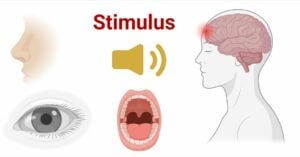
A stimulus is any detectable change in the physical or chemical structure of an organism’s internal and external environment, leading to a change in environmental or physiological factors. These factors … Read more
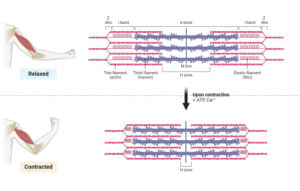
Muscle contraction is the stretching of the muscle fibers generating tension within the muscle cells/fibers. In some cases, tension can also be generated in muscle without muscle stretching. Hence, the … Read more