Skip to content
Microbe Notes

Microbe Notes

  • Home
  • Life Sciences
    • Biochemistry
    • Bioinformatics
    • Biology
    • Biotechnology
    • Botany
    • Cell Biology
    • Genetics
    • Molecular Biology
    • Zoology
  • Microbiology
    • Agricultural Microbiology
    • Bacteriology
    • Basic Microbiology
    • Environmental Microbiology
    • Food Microbiology
    • Mycology
    • Parasitology
    • Virology
  • Laboratory and Diagnostics
    • Biochemical Test
    • Culture Media
    • Diagnostic Tests
    • Instrumentation
    • Microscopy
    • Staining
  • Medical Sciences
    • Cancer Biology
    • Human Anatomy
    • Human Physiology
    • Immunology
    • Infections and Diseases
    • Medical Devices
    • Pharmacology
  • Health Sciences
    • Epidemiology
    • Research Methodology
  • Resources
    • Difference Between
    • Microbiology Terms
    • Microorganisms Note
    • Syllabus

Human Physiology

Human physiology is a branch of natural science that deals with the functioning of the human body.

  • It includes various physiological activities like digestion, respiration, spermatogenesis, oogenesis, and excretion, all of which occur in a coordinated way between various organs and systems.
  • Physiology includes the mechanical, physical, bioelectrical, and biochemical functioning of a healthy human body.
  • A normal human body works as a result of the regulated system of networking between different systems. These interactions work towards maintaining homeostasis.
  • The concept of homeostasis is important in human physiology as it explains that the internal environment of an organism moves in a direction to maintain an equilibrium.
  • In the human body, homeostasis is maintained at the system level with each system trying to maintain its homeostasis.
  • Human physiology, like human anatomy, describes the mechanisms from the molecular to the cellular level, integrating the working of the entire body.
  • Based on the information obtained via studies done on human physiology, it is understood that the cells, tissues, organs, and systems together work to maintain a healthy human body.
  • Besides, certain compounds or chemicals produced in the body like enzymes and hormones also aid in the process of human physiology.
    A slight change in the working of a single organ in the body might affect the working of the entire body overall.
  • Human physiology is closely related to human anatomy where the anatomy of an organ or tissue plays a significant role in the physiology of the said organ or tissue.
  • Human physiology is also interrelated with clinical medicine and microbiology where different microorganisms found within the body aid in different processes like bacteria in the gut producing acid and other enzymes that aid in digestion.
  • During the life cycle of humans, the body undergoes multiple changes which are influenced by changes in anatomy and changes in environmental factors. The physiology of the body thus adapts to such changes to maintain homeostasis.

Childbirth (Labor Process)- Features, Stages, Mechanism

October 20, 2026August 3, 2023 by Yashaswi Sharma
Childbirth (Labor Process)

Image Source: Dare Alla Luce Doula and Medchrome. Labor is a physiologic process during which the fetus, its associated membranes, the umbilical cord, and the placenta are expelled from the … Read more

Menstrual Cycle- Definition, Hormones, Phases, Diagram

October 20, 2026August 3, 2023 by Anupama Sapkota
Menstrual Cycle

Menstrual Cycle Definition The menstrual cycle is the process of discharge of blood and other things from the vagina of a woman every month from puberty to menopause excluding pregnancy. … Read more

Heart Embryology- Development of the Heart

October 20, 2026August 3, 2023 by Yashaswi Sharma
cardiac development embryology of heart

Image Source: drsvenkatesan.com Development of the Heart (Heart Embryology) The development of the heart can be studied under the following headings: 1. Generation and fusion of the developing heart tubes … Read more

Human Embryogenesis- Definition, Process, Stages

October 20, 2026August 3, 2023 by Yashaswi Sharma
image030

Human embryogenesis steps Human embryogenesis is completed in two stages: (a)  Germinal stage and (b)  Embryonic period proper stage Image Source: intranet.tdmu.edu.ua Germinal Stage: Embryonic period proper: Gastrulation Neurulation Organogenesis … Read more

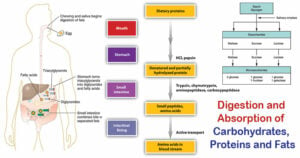
Digestion and Absorption of Carbohydrates, Proteins and Fats

October 20, 2026August 3, 2023 by Sagar Aryal, PhD
Digestion and Absorption of Carbohydrates, Proteins and Fats

Carbohydrates, fats, and proteins are the major nutrients the body needs for growth, repair, movement, and maintaining tissue and organ function. These macromolecules are broken down and absorbed into the … Read more

Functions of The Human Digestive System

October 20, 2026August 3, 2023 by Sagar Aryal, PhD
Functions of the Human Digestive System

Digestion is important for breaking down food into nutrients, which the body uses for energy, growth, and cell repair. The digestive system is not only uniquely constructed to perform its specialized … Read more

Type 1 Diabetes vs Type 2 Diabetes (14 major differences)

October 20, 2026June 20, 2021 by Anupama Sapkota
type 1 diabetes and type 2 diabetes

Image Source: Everyday Health. (Gwen Shockey/Alamy) Differences between type 1 diabetes and type 2 diabetes Features Type 1 diabetes Type 2 diabetes Nature of disease It is an autoimmune disease … Read more

Newer posts
← Previous Page1 … Page3 Page4

Topics / Categories

  • Agricultural Microbiology (30)
  • Bacteriology (141)
  • Basic Microbiology (64)
  • Biochemical Test (114)
  • Biochemistry (226)
  • Bioinformatics (28)
  • Biology (147)
  • Biotechnology (63)
  • Botany (113)
  • Cancer Biology (2)
  • Cell Biology (107)
  • Culture Media (68)
  • Diagnostic Tests (6)
  • Difference Between (89)
  • Environmental Microbiology (15)
  • Epidemiology (30)
  • Food Microbiology (52)
  • Genetics (88)
  • Human Anatomy (48)
  • Human Physiology (37)
  • Immunology (124)
  • Infections and Diseases (53)
  • Instrumentation (73)
  • Medical Devices (17)
  • Microscopy (35)
  • Molecular Biology (137)
  • Mycology (44)
  • Parasitology (28)
  • Pharmacology (28)
  • Research Methodology (20)
  • Staining (30)
  • Syllabus (20)
  • Virology (64)
  • Zoology (40)
  • Our Team
  • Advisory Board
  • About Us
  • Contact Us
  • Editorial Policy
  • Privacy Policy
  • Cookie Policy
  • Disclaimer (Terms and Conditions)
© 2026 Microbe Notes. Made with ♡ by Sagar Aryal.