
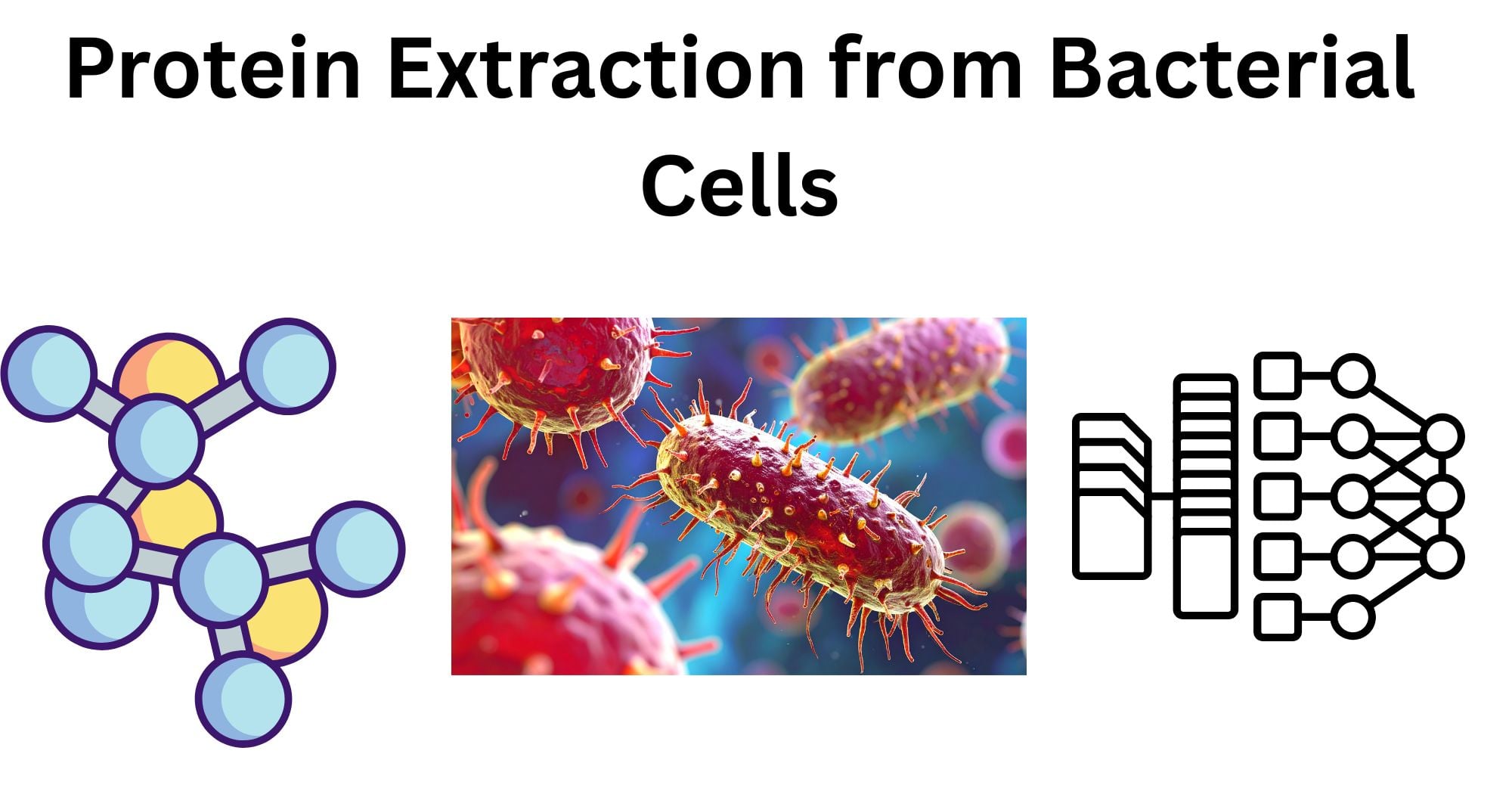
Protein extraction from bacterial cells is a fundamental step in molecular biology, biotechnology, and proteomics research. The process involves disrupting the bacterial cell envelope to release intracellular proteins into a suitable buffer while preserving their structural and functional integrity. Efficient protein extraction is essential for downstream applications such as enzyme assays, Western blotting, mass spectrometry, and structural studies.
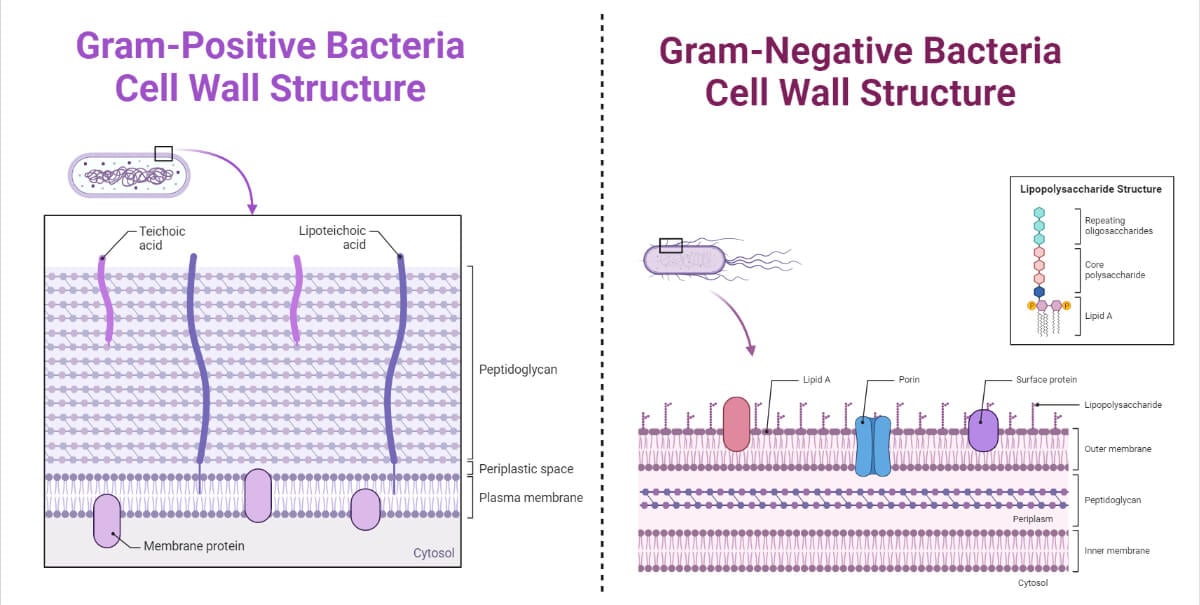
Bacterial cells, especially Gram-positive species, possess rigid cell walls composed of peptidoglycan, which can make lysis challenging. Gram-negative bacteria, although structurally less rigid, still require effective disruption methods to release cytoplasmic and membrane-associated proteins. According to resources from Thermo Fisher Scientific (n.d.), cell lysis strategies generally fall into mechanical, chemical, enzymatic, or combined approaches. The choice of method depends on the bacterial strain, the protein’s localization, and the intended downstream application.
A comprehensive understanding of cell lysis and protein solubilization is crucial because improper extraction can result in protein degradation, denaturation, or low yield. Reviews in proteomics emphasize that optimization of buffer composition, temperature control, and protease inhibition are key factors influencing extraction efficiency and reproducibility (Creative Proteomics, n.d.; Jiang et al., 2025).
Key Reagents of Protein Extraction from Bacterial Cells
| Reagent | Typical Concentration / Amount | Purpose |
| Tris-HCl buffer | 10–50 mM, pH 7.4–8.0 | Maintains stable pH during extraction |
| NaCl | 50–150 mM | Maintains ionic strength and protein solubility |
| EDTA | 1–5 mM | Chelates divalent cations, inhibits metalloproteases |
| Lysozyme | 0.1–1 mg/mL | Degrades peptidoglycan in bacterial cell wall |
| Detergents (e.g., Triton X-100, SDS) | 0.1–1% | Solubilizes membrane proteins |
| Protease inhibitor cocktail | As recommended by the manufacturer | Prevents protein degradation |
| DNase I | 5–10 µg/mL | Reduces viscosity by degrading DNA |
Buffers typically contain Tris-HCl to stabilize pH, salts such as NaCl to maintain ionic strength, and EDTA to inhibit metal-dependent proteases (Thermo Fisher Scientific, n.d.). Detergents may be added to solubilize membrane proteins, whereas lysozyme facilitates the enzymatic lysis of bacterial cell walls. Protease inhibitors are strongly recommended to prevent protein degradation during extraction (Creative Proteomics, n.d.).
Principle of Protein Extraction from Bacterial Cells
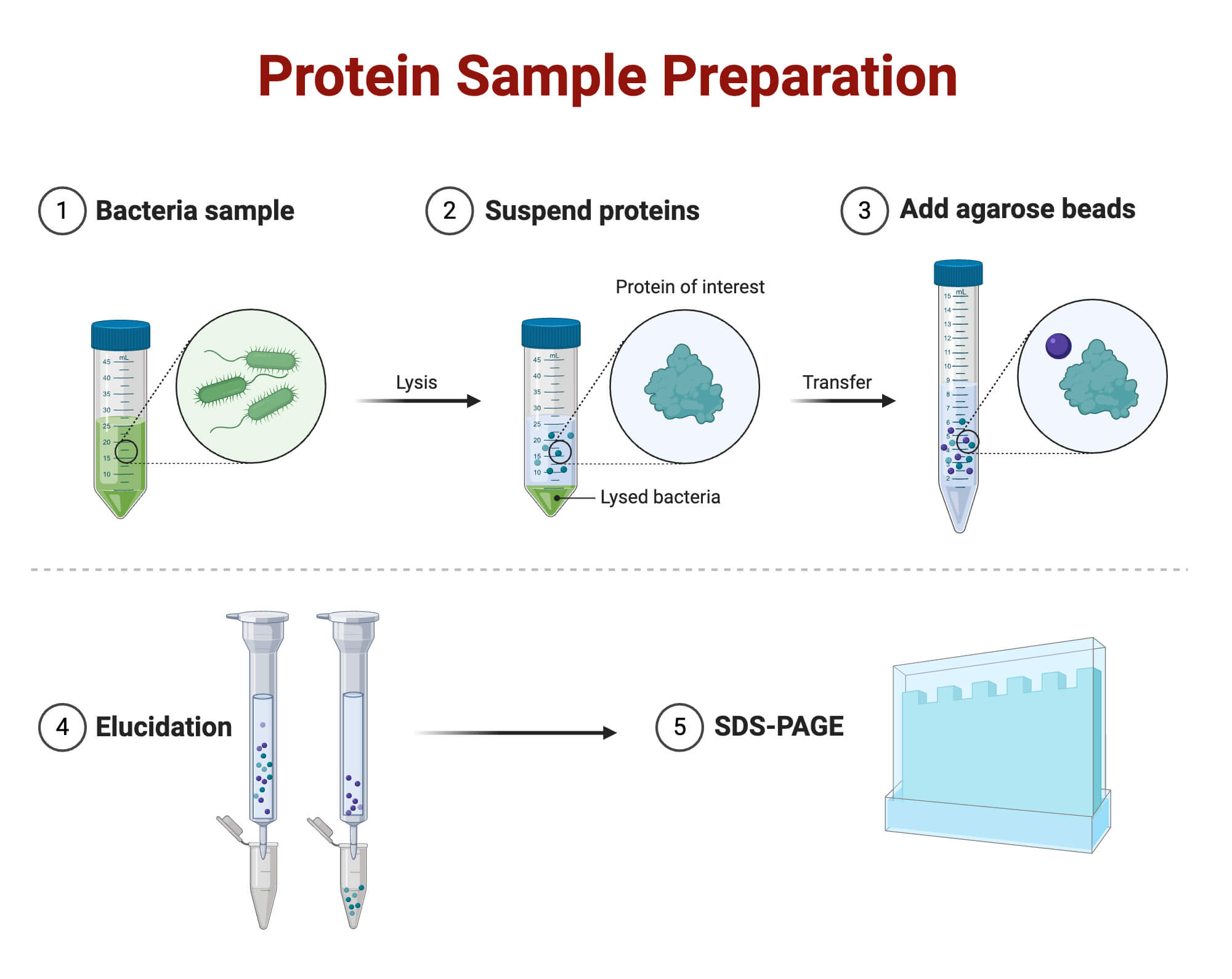
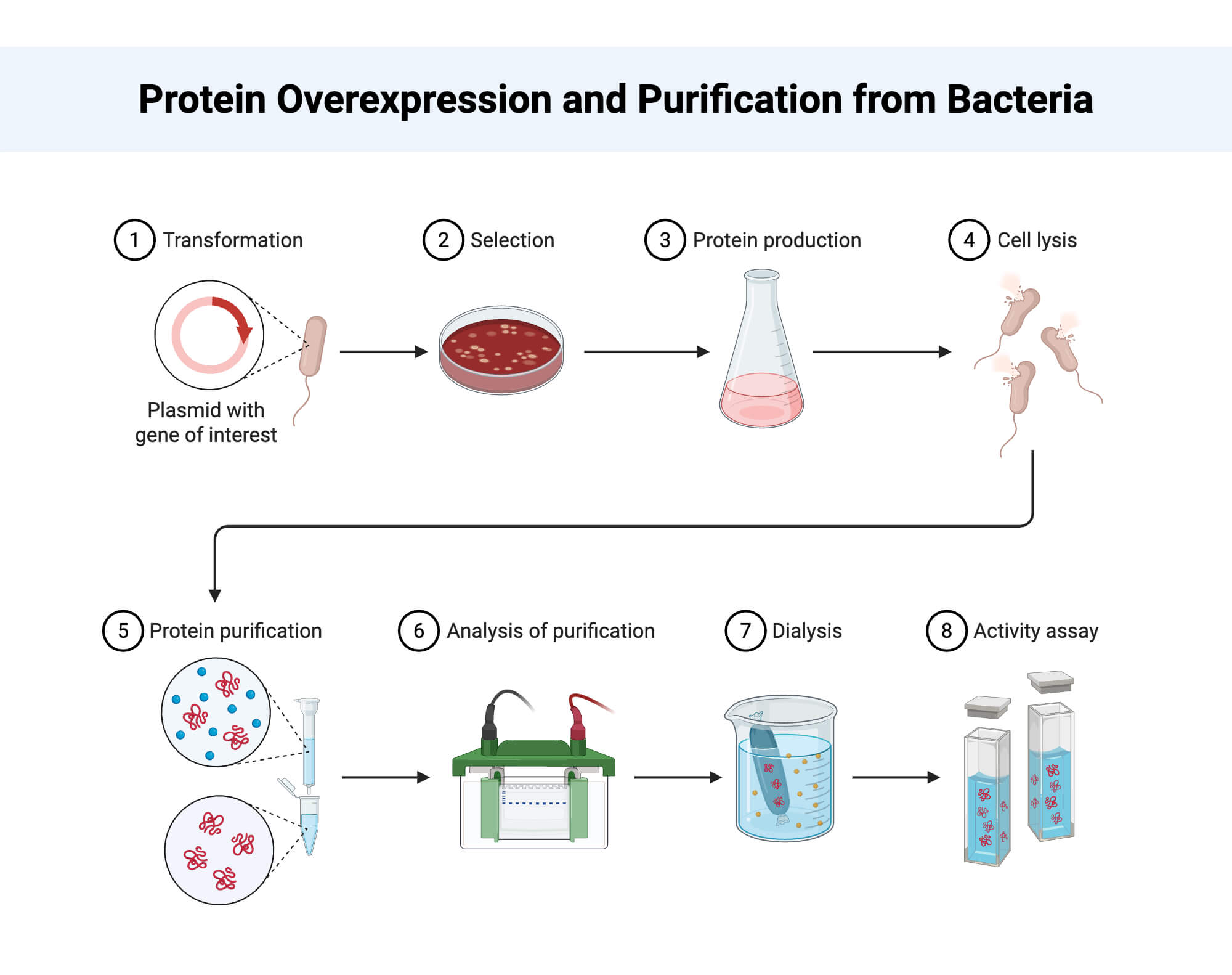
The principle of protein extraction from bacterial cells is based on cell lysis, followed by the solubilization and stabilization of the released proteins. Lysis disrupts the bacterial membrane and cell wall, releasing intracellular contents into the extraction buffer.
Mechanical methods such as sonication or high-pressure homogenization physically shear the cell envelope. Chemical methods involve detergents that disrupt lipid bilayers, while enzymatic methods employ lysozyme to digest peptidoglycan (Thermo Fisher Scientific). Often, a combination of these methods is used for optimal efficiency.
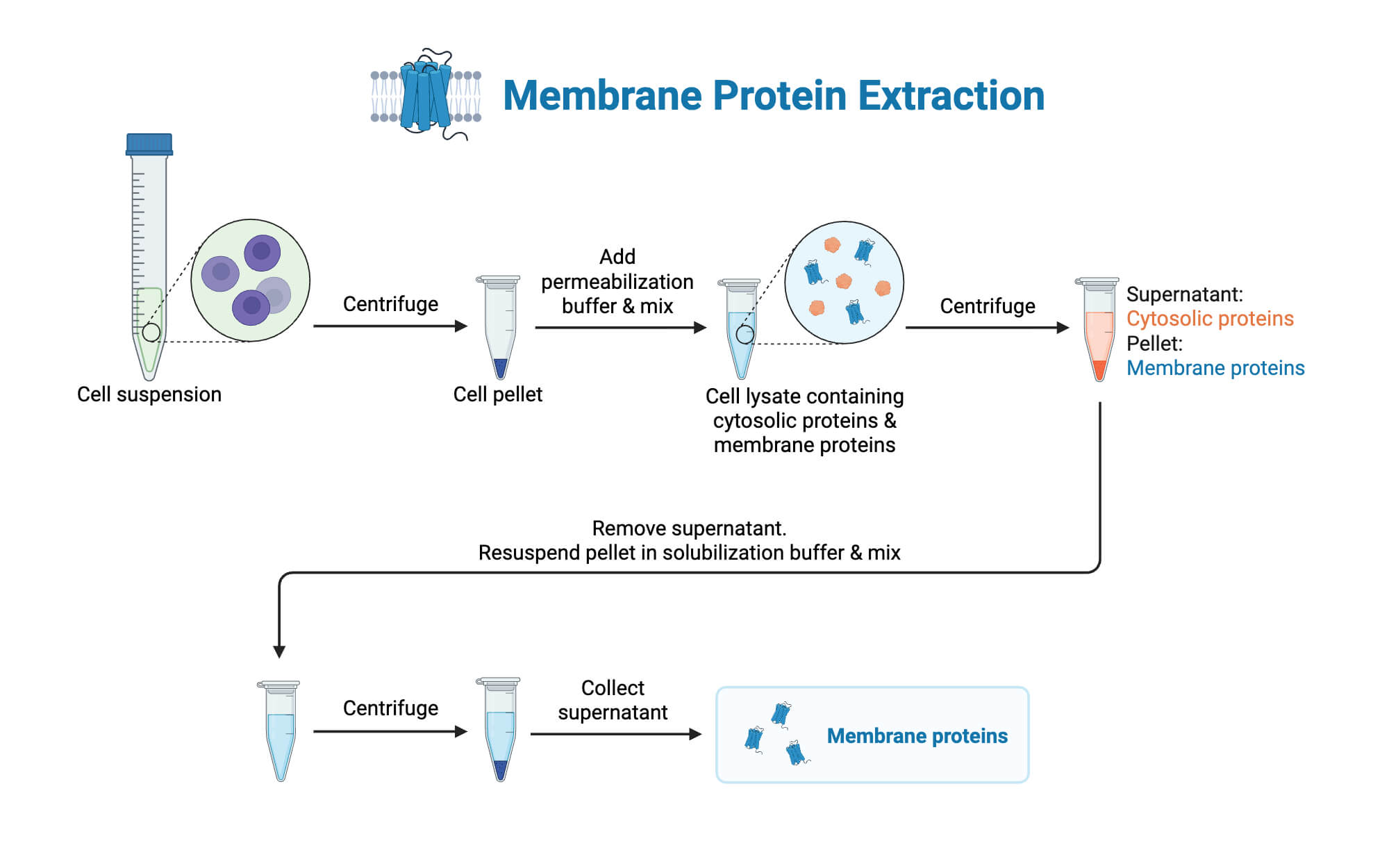
After lysis, centrifugation separates soluble proteins (supernatant) from insoluble debris (pellet). The supernatant contains cytoplasmic and soluble proteins, while membrane proteins may require detergent-containing buffers for solubilization. Temperature control (usually 4°C) is essential to prevent proteolytic degradation and protein denaturation (Jiang et al., 2025).
Steps / Protocol of Protein Extraction from Bacterial Cells
Extraction of Total Protein from Fresh Bacterial Cells
-Reagents Preparation:
–Lysis Buffer (prepare fresh, pH 8.5–9.0)
–50 mM Tris-HCl
–2 mM EDTA
–100 mM NaCl
–0.5% Triton X-100
–Adjust pH to 8.5–9.0
–Before use, add:
- Lysozyme: 100 µg/mL
- PMSF (protease inhibitor): 1 µL/mL
-Use approximately 10–50 mL lysis buffer per 1 g wet bacterial pellet.
-Procedure:
Harvesting Bacterial Cells:
- Centrifuge bacterial culture at 12,000 g for 15 minutes at 4°C.
- Discard supernatant.
- Wash pellet twice with cold PBS.
Cell Lysis:
- Resuspend the pellet in 1 mL lysis buffer per 1 g wet cells.
- Incubate on ice for 20–30 minutes to allow lysozyme digestion.
Sonication:
Sonicate using the following settings:
- 300 W power
- 10 seconds ON / 10 seconds OFF
- Total sonication time: 20 minutes
– Keep samples on ice to prevent overheating.
– Repeat freeze–thaw cycle 3 times if necessary.
– Continue until the solution becomes less turbid (indicating lysis).
Removal of Debris:
- Centrifuge at 1,000 g for 10 minutes at 4°C.
- Collect the supernatant: this contains total soluble protein.
Downstream Use:
- Use directly for SDS-PAGE.
- Or dialyze against 1% SDS and lyophilize if concentration is required.
- Store at −20°C or −80°C.
Total Protein Isolation from TRIzol Lysate
This method is used when protein recovery is required after RNA extraction.
Phase Separation:
- After TRIzol homogenization, add chloroform.
- Centrifuge at 10,000 g for 15 minutes at 2–8°C.
- Remove the upper aqueous phase (used for RNA extraction).
DNA Precipitation:
- Add 0.3 mL ethanol per 1 mL TRIzol used.
- Incubate 3 minutes at room temperature.
- Centrifuge at ≤2,000 g for 5 minutes at 2–8°C.
Protein Precipitation:
- Transfer supernatant to a new tube.
- Add 1.5 mL isopropanol per 1 mL TRIzol used.
- Incubate 10 minutes at room temperature.
- Centrifuge at 12,000 g for 10 minutes at 2–8°C.
- Discard supernatant.
Washing:
- Add 2 mL 95% ethanol containing 0.3 M guanidine hydrochloride per 1 mL TRIzol used.
- Incubate 20 minutes at room temperature.
- Centrifuge at 7,500 g for 5 minutes at 2–8°C.
- Repeat washing twice.
- Wash once with 2 mL absolute ethanol.
- Air dry pellet (5–10 minutes).
Protein Solubilization:
- Dissolve the pellet in 1% SDS solution.
- Incubate at 50°C water bath until fully dissolved.
- Centrifuge at 10,000 g for 10 minutes at 2–8°C to remove insoluble material.
- Collect supernatant for protein analysis.
Alternative Method
Instead of precipitation, dialyze the phenol phase 3 times against 1% SDS at 2–8°C using a dialysis bag. Centrifuge at 1,000 g for 10 minutes to remove debris.
Extraction of Hydrophobic Membrane Proteins (Triton X-114 Method)
This method enriches hydrophobic membrane proteins.
Preparation of Extraction Buffer:
- 1% Triton X-114
- 150 mM NaCl
- 10 mM Tris-HCl
- 1 mM EDTA
- Adjust pH to 8.0
Procedure:
Harvest and Wash Cells:
- Centrifuge bacteria at 15,000 g for 15 minutes at 4°C.
- Wash 3 times with PBS containing 5 mM MgCl₂.
- Centrifuge again at 15,000 g for 15 minutes at 4°C.
Extraction:
- Add 1 mL cold extraction buffer to the pellet.
- Incubate at 4°C for 2 hours with gentle mixing.
- Centrifuge at 17,000 g for 10 minutes.
- Collect supernatant.
Phase Separation:
- Increase Triton X-114 concentration to 2%.
- Add 20 mM CaCl₂.
- Incubate at 37°C for 10 minutes to induce phase separation.
- Centrifuge at 1,000 g for 10 minutes at room temperature.
- Two phases will form:
- Upper aqueous phase
- Lower detergent-rich phase (membrane proteins)
Protein Precipitation:
- Add 10 volumes of cold acetone to each phase.
- Incubate on ice for 45 minutes.
- Centrifuge at 17,000 g for 30 minutes at 4°C.
- Wash pellet 3 times with deionized water.
Final Solubilization
- Dissolve pellet in 1% SDS solution.
- Measure protein concentration.
- Analyze using SDS-PAGE.
Observations and Results
After successful lysis, the bacterial suspension typically changes from opaque to more translucent due to cell disruption. During centrifugation, a visible pellet forms at the bottom of the tube, consisting of cell debris and insoluble material.
The supernatant appears clear or slightly cloudy and contains extracted proteins. Increased viscosity before DNase treatment indicates nucleic acid release. After DNase addition, the lysate becomes less viscous and easier to pipette.
Protein concentration is commonly quantified using assays such as the BCA or Bradford method. A standard curve is generated using known protein concentrations, and sample absorbance values are compared to determine yield (Thermo Fisher Scientific, n.d.).
Modifications of Protein Extraction from Bacterial Cells
- Use of Mechanical Homogenization: High-pressure homogenizers can be employed for large-scale protein extraction, particularly in industrial applications, improving lysis efficiency.
- Inclusion of Stronger Detergents: For membrane protein studies, stronger detergents such as SDS may be used to enhance solubilization (Creative Proteomics, n.d.).
- Adjusting Buffer Composition: Buffer pH and ionic strength may be optimized depending on the protein’s isoelectric point to improve solubility.
- Temperature Optimization: Performing all steps at 4°C minimizes proteolytic degradation and preserves protein stability.
- Sequential Extraction: Stepwise extraction using different buffers can separate cytoplasmic, membrane, and insoluble fractions.
Troubleshooting of Protein Extraction from Bacterial Cells
| Problem | Likely Cause | Solution |
| Low protein yield | Incomplete lysis | Increase sonication time or lysozyme concentration |
| Protein degradation | Protease activity | Add fresh protease inhibitors; keep samples cold |
| High viscosity | Released DNA | Add DNase I and incubate briefly |
| Protein precipitation | Incorrect buffer pH | Adjust buffer pH and ionic strength |
| Poor solubilization of membrane proteins | Inadequate detergent | Increase detergent concentration appropriately |
Quality Assessment of the Isolated Protein
- Protein Concentration Measurement: A crucial metric following extraction is determining the concentration of the isolated protein sample using standardized biochemical assays such as the BCA or Bradford assay. These allow comparison of yield between methods and ensure sufficient amounts for downstream analysis.
- Purity Assessment: Purity is evaluated by analyzing extracts on SDS-PAGE or equivalent electrophoretic techniques, which reveal the relative absence or presence of contaminating proteins or degraded fragments. A clear distribution of bands suggests minimal degradation and contaminants.
- Integrity Evaluation: High integrity indicates that the proteins remain structurally intact post-extraction. This is often assessed by the presence of expected molecular weight bands and the absence of smearing or low molecular weight fragments on SDS-PAGE gels, indicating limited proteolysis during extraction.
- Reproducibility Check: Consistent results across technical replicates indicate reliable extraction conditions. In comparative studies, methods such as SDT-B-U/S (boiling plus ultrasound) showed higher reproducibility in peptide and protein identification than other protocols, reflecting the stable quality of extracted proteins (Jiang et al., 2025).
Safety Tips and Precautions of Protein Extraction from Bacterial Cells
- Proper PPE: Always wear personal protective equipment, including gloves, a lab coat, and eye protection.
- Avoid Aerosol Formation: Processes like sonication and vortexing can generate aerosols.
- Use of Protease Inhibitors: Add protease inhibitors immediately before lysis to prevent degradation of target proteins by bacterial proteases.
- Handle Hazardous Chemicals Carefully: Many extraction buffers include detergents and reducing agents (e.g., SDS, DTT). These are irritants and can be toxic at higher concentrations.
- Temperature Control: Keep samples cold (e.g., on ice) to slow protease activity. Some steps involve heating (e.g., boiling in certain protocols), but this is controlled for specific purposes and should be monitored to prevent accidental over-denaturation.
Storage and Long‑Term Stability of Isolated Protein
- Short-Term: Store freshly extracted protein samples at 4°C if they will be used within hours to a few days. This minimizes denaturation but is not suitable for long storage.
- Freezing for Long-Term: For extended preservation, aliquot and freeze proteins at −20°C or −80°C. Lower temperatures slow enzymatic degradation and preserve structural and functional features.
- Avoid Repeated Freeze–Thaw: Repeated freeze–thaw cycles denature proteins and reduce activity or integrity. Use small aliquots so individual samples can be thawed independently without affecting others.
- Add Stabilizers if Needed: Certain proteins may benefit from the addition of stabilizing agents (e.g., glycerol) before freezing—especially if they are sensitive to freezing stress.
Applications of Protein Extraction from Bacterial Cells
- Proteomic Analysis: Extracted bacterial proteins serve as the foundation for proteomic workflows in which proteins are identified and quantified using mass spectrometry, often following trypsin digestion. Efficient extraction improves the depth of proteomic profiling, especially for membrane and low-abundance proteins.
- Enzyme Activity Assays: Isolated proteins can be tested for biochemical activities, such as metabolic enzyme functions, to understand physiological states or responses to stress.
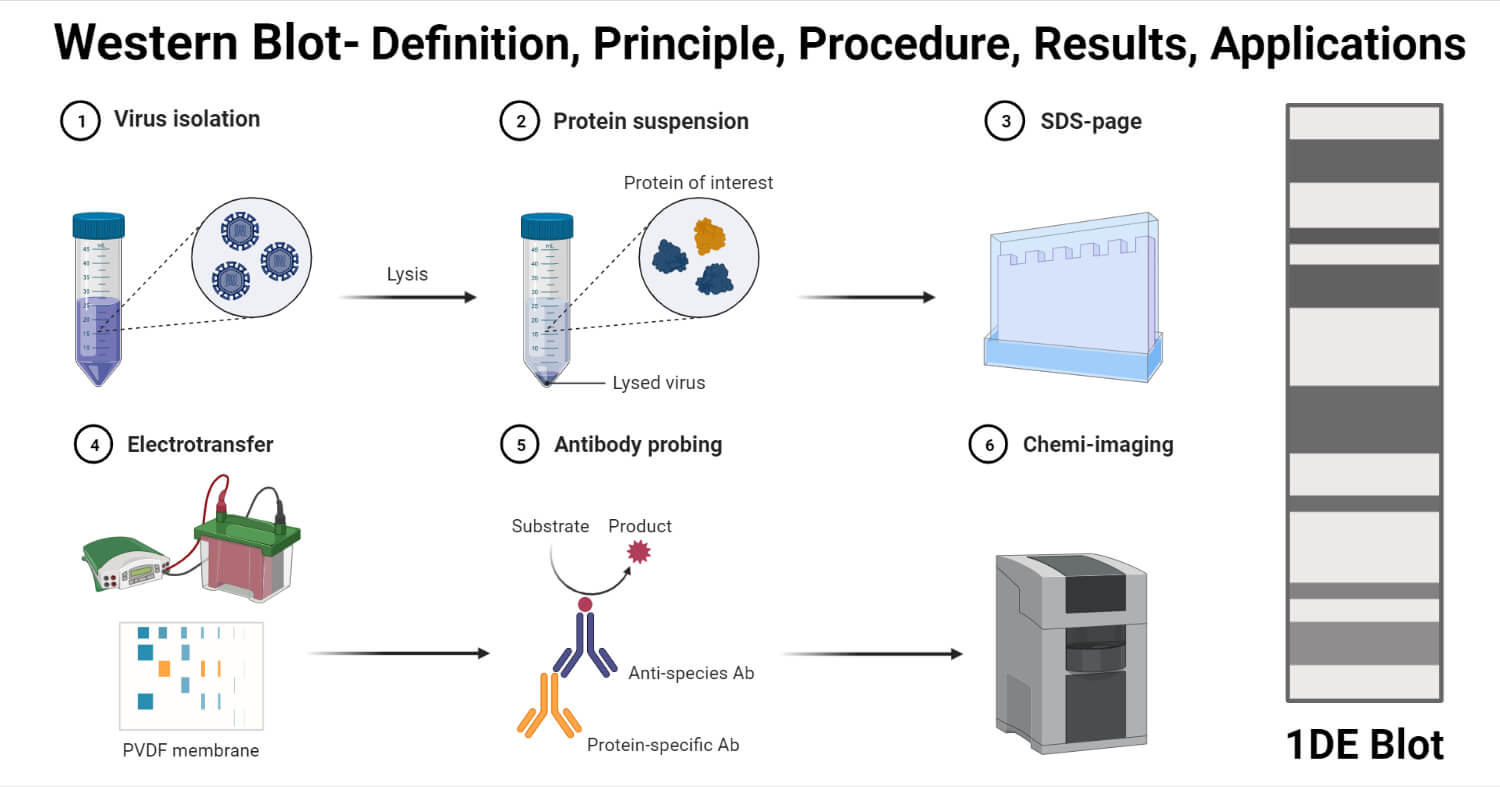
- Western Blotting and Immunoassays: Target proteins can be assayed with specific antibodies to confirm expression levels or investigate regulatory mechanisms.
- Structural Studies: Extracts can be used for structural characterization, including secondary and tertiary structure analyses, using techniques from circular dichroism to crystallography.
- Biotechnological Production: Protein extraction is central for recombinant protein production studies in engineered bacteria, where yield and purity determine the success of downstream purification and application.
Advantages of Protein Extraction from Bacterial Cells
- Comprehensive Proteome Coverage: Optimized extraction protocols can maximize recovery of cytosolic, membrane, and low-abundance proteins, enabling holistic proteome characterization.
- Method Flexibility: A range of physical and chemical lysis techniques exists (sonication, detergents, heat), allowing researchers to tailor approaches to specific bacterial types (Gram-positive vs. Gram-negative) and research goals.
- Scalability: Methods such as sonication or harsh detergents can be scaled from small analytical volumes to preparative yields depending on experimental needs.
- Compatibility with Downstream Techniques: Properly extracted proteins can be used across multiple analytical platforms, from electrophoresis to mass spectrometry to functional assays.
Limitations of Protein Extraction from Bacterial Cells
- Incomplete Lysis: Certain bacterial cell walls, particularly Gram-positive species, are resistant to lysis. Inefficient disruption yields incomplete proteome representation.
- Protein Denaturation: Harsh conditions (e.g., heat, strong detergents) can denature proteins and affect functional studies if not carefully controlled.
- Protease Activity: Residual proteases can degrade proteins if inhibitors are insufficient or buffers are not properly optimized.
- Extraction Bias: Different methods may preferentially recover certain protein classes (e.g., soluble over membrane), leading to analytical bias.
Conclusion
Protein extraction from bacterial cells is an essential experimental step bridging cell biology with analytical biochemistry. Quality assessment ensures that yields are high and samples are intact, while safety and storage practices guarantee reproducibility and stability. Applications span from fundamental proteomics to biotechnology, yet limitations such as incomplete lysis and denaturation persist. Understanding and optimizing extraction protocols, guided by comparative studies such as those evaluating multiple SDS and ultrasonication-based methods, can significantly enhance the accuracy and depth of research conclusions in bacterial proteomics.
References
- Jiang H, Han A, Zhang Y, et al. Evaluation of protein extraction methodologies on bacterial proteomic profiling: a comparative analysis. Front Microbiol. 2025;16:1586662. Published 2025 Jul 17. doi:10.3389/fmicb.2025.1586662
- Haberl Meglič S, Janež N, Peterka M, Flisar K, Kotnik T, Miklavčič D. Evaluation and Optimization of Protein Extraction From E. coli by Electroporation. Front Bioeng Biotechnol. 2020;8:543187. Published 2020 Sep 8. doi:10.3389/fbioe.2020.543187
- Thermo Fisher Scientific. (n.d.). Overview of cell lysis and protein extraction. Thermo Fisher Scientific Protein Biology Resource Library. Retrieved [date you accessed it], from https://www.thermofisher.com/np/en/home/life-science/protein-biology/protein-biology-learning-center/protein-biology-resource-library/pierce-protein-methods/overview-cell-lysis-and-protein-extraction.html
- Creative Proteomics. Overview of Cell Lysis and Protein Extraction. Creative-proteomics.com. Published 2020. Accessed July 19, 2026. https://www.creative-proteomics.com/resource/overview-cell-lysis-protein-extraction.htm
- Carreras HZ. An Introduction to protein purification: methods, technologies and applications. Analysis & Separations From Technology Networks. Published July 5, 2024. https://www.technologynetworks.com/analysis/articles/an-introduction-to-protein-purification-methods-technologies-and-applications-388443/
- Steward K. Gram Positive vs Gram Negative. Immunology & Microbiology From Technology Networks. Published December 18, 2023. https://www.technologynetworks.com/immunology/articles/gram-positive-vs-gram-negative-323007/
