The Prenatal Developmental Period
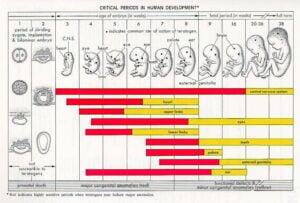
The human body, like that of most animals, develops from a single cell produced by the union of a male and a female gamete (or sex cell). Cell division, cell migration, programmed cell death (apoptosis), … Read more
Biology is a vast discipline that deals with the study of living beings and their vital processes, that deal with the physicochemical aspects of life.
Biology is a natural science that utilizes different structural and functional concepts for the differentiation of living beings from non-living beings.
At present times, as a result of cross-disciplinary research, other disciplines like chemistry, physics, computer science, and medicine have been integrated with biology, resulting in areas like biochemistry, biophysics, biomedicine, and bioinformatics.
Biology is further divided into separate branches for the convenience of study, even though all of these branches are interrelated to one another.
Biology is separated into botany (the study of plants) and zoology (the study of animals), morphology (structure), and physiology (function).
Living beings have been divided into different kingdoms, phylum, classes, orders, and genus to make the identification and studies related to different organisms more feasible.
Traditionally, biology was only associated with the structure and function of living beings.
With time, however, biology deals with the fundamental levels of life, resulting in a separate discipline termed, molecular biology.
Biology has now been developed into modern biology which is based on certain foundations like cell theory, evolution, genetics, homeostasis, and chemical energy.
Biology defines cell as the fundamental unit of life, which is common in all living beings, microscopic, and macroscopic.
Besides, other concepts like evolution and genomics further help in understanding the origin, evolution, and relationship among living beings.
Genetics is another component of biology that helps in the differentiation of living beings based on their genomic composition.
Homeostasis is another crucial unit of biology which suggests that all living organisms maintain a constant internal environment.
Non-living parts of the world like the air, water, and soil have been closely related to the living world, which creates a close relationship between biology and the environment.
Developmental biology is a branch of natural science that studies various interactions involved in the formation of the heterogeneous shape, structure, and size of different organisms that occur during the development of an embryo into an adult.
Cancer biology is a branch of biology that studies the complex expression of genes, proteins, and biological processes that initiated the development and growth of cancers.
The human body, like that of most animals, develops from a single cell produced by the union of a male and a female gamete (or sex cell). Cell division, cell migration, programmed cell death (apoptosis), … Read more
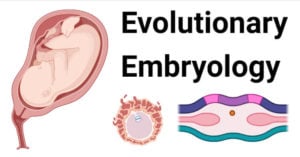
Advent of Evolutionary Embryology Embryonic Homologies Homologous structures Analogous structures Embryology and Theory of Evolution Embryology supports the theory that organisms have a common ancestor (in accordance to theory of … Read more
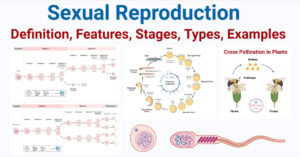
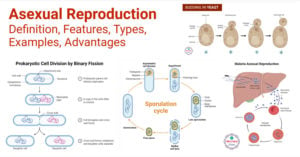
Reproduction in biology is defined as the process of producing offspring of the same kind. It ensures the continuity of life forms from generation to generation. It is the essential … Read more
Reproduction is a biological process of producing offspring of a living organism. It is the basis for continuing life from generation to generation. It is seen in every living organism; … Read more
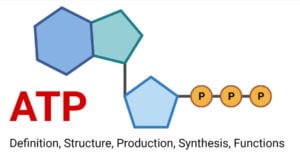
ATP (Adenosine Triphosphate) is a pyrophosphate molecule that provides energy for conducting metabolic processes, i.e., sustaining the life of a cell. It is a complex organic high-energy compound that provides … Read more
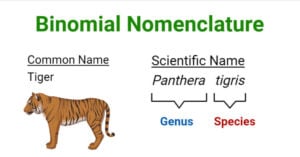
In the scientific community of biology, the identification of organisms also includes naming them with some unique names which are universally acceptable and are the same everywhere around the world. … Read more
Heterotrophs Definition Heterotrophs are organisms that do not produce their food and depend on other organisms for their food and energy. Heterotrophs are a group of organisms that are distinct … Read more
Autotrophs are organisms that are capable of producing their own food by using various inorganic components like water, sunlight, air, and other chemical substances. Types of Autotrophs Autotrophs can be … Read more
Anabolism Definition Anabolism is a set of enzyme-catalyzed reactions that synthesize relatively complex molecules from simple structures in living systems. Anabolism is also called biosynthesis as it is involved in … Read more
Syntrophism Definition Syntrophism or syntrophy is a special kind of interaction between two metabolically different organisms where they interact by short-distance metabolite transfer. This type of association enables the organisms … Read more