Skip to content
Microbe Notes

Microbe Notes

  • Home
  • Biological Sciences
    • Biochemistry
    • Bioinformatics
    • Biology
    • Biotechnology
    • Botany
    • Cell Biology
    • Genetics
    • Molecular Biology
    • Zoology
  • Microbiology
    • Agricultural Microbiology
    • Bacteriology
    • Basic Microbiology
    • Environmental Microbiology
    • Food Microbiology
    • Immunology
    • Mycology
    • Parasitology
    • Virology
  • Laboratory Methods
    • Biochemical Test
    • Culture Media
    • Instrumentation
    • Microscopy
    • Staining
  • Health and Medical
    • Diseases
    • Epidemiology
    • Human Anatomy and Physiology
    • Medical Devices
    • Pharmacology
  • Resources
    • Difference Between
    • Microbiology Terms
    • Microorganisms Note
    • Protocols
    • Research Methodology
    • Syllabus

Biochemistry

Biochemistry is a branch of science that deals with the structure, composition, and metabolism of biomolecules found in different living organisms.

  • Biochemistry is also termed ‘biological chemistry’ as it deals with the chemistry of life that utilizes techniques from analytical, inorganic, and organic chemistry.
  • Metabolic processes in living beings are composed of catabolic and anabolic processes. Both of these processes involve metabolic reactions involving biochemical compounds.
  • Biochemistry is also used in techniques that help to understand the interactions, metabolism, and functions of biomolecules.
  • Important biomolecules like proteins, carbohydrates, fats, nucleic acid, vitamins, etc. are essential structural and physiological components of living organisms.
  • The study of the biochemical composition of living beings is important as it helps to understand the molecular mechanisms of various biochemical phenomena like respiration, photosynthesis, fermentation, etc.
  • The findings of these studies, in turn, can be applied in industries, nutrition, medicine, and agriculture for different purposes.
  • The rate of biochemical reactions, enzymes, and the concentration of substrates and products give essential information about the organism.
  • Biochemical reactions form the basis of biochemical testing that is used for the identification and differentiation of microorganisms into different groups.
  • Results of studies involving different biochemical tests can be applied for the production of pharmaceutical products that selectively inhibit certain metabolic processes.
  • Techniques in biochemistry have been increasingly combined with techniques from other fields like agriculture, genetic, molecular biology, and biophysics.
  • Biochemistry also allows the understanding of nutritional requirements for different living organisms.
  • Biochemical compounds have been increasingly used even for the diagnosis of different diseases like diabetes.
  • The determination of the genetic composition of living beings is also a part of biochemistry which helps in genetic studies and diagnosis of genetic diseases.
  • Biochemical analysis of different biomolecules assists in the study relating to the origin and evolution of living beings.
  • An understanding of different biochemical processes helps to understand the complexity of different groups of living beings and their relationship with one another.

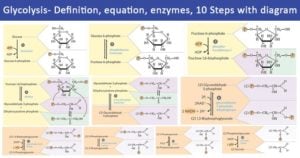
Glycolysis: 10 Steps, Enzymes, Equation, Regulation, Diagram
March 24, 2026March 18, 2026 by Anupama Sapkota
Glycolysis- definition, equation, enzymes, 10 Steps with diagram

Glycolysis is the central pathway for glucose catabolism in which glucose (6-carbon compound) is converted into pyruvate (3-carbon compound) through a sequence of 10 steps. Image Source: Lehninger Principles of … Read more
Ramachandran Plot: Principle, Tools, Applications, Errors

March 16, 2026March 11, 2026 by Khushi Sharma
Protein Structure

The Ramachandran plot is a fundamental tool in structural biology used to visualize the energetically allowed regions for backbone dihedral angles in a protein. Because protein folding is constrained by … Read more

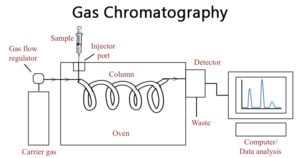
Gas Chromatography: Principle, Parts, Steps, Procedure, Uses

March 13, 2026March 8, 2026 by Sanju Tamang
Principle of Gas Chromatography

Gas chromatography (GC) is a type of chromatography used to separate and analyze volatile compounds. This separation occurs in an instrument called gas chromatograph that uses an inert gas as … Read more

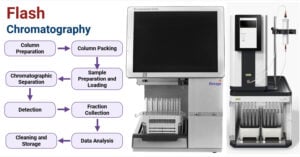
Flash Chromatography: Principle, Parts, Steps, Examples, Uses

March 13, 2026March 7, 2026 by Sanju Tamang
Flash Chromatography

Flash chromatography is a method used for the rapid separation and purification of chemical compounds in a mixture. It is also known as flash column chromatography or medium-pressure liquid chromatography. … Read more

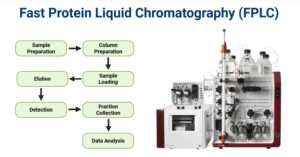
Fast Protein Liquid Chromatography (FPLC): Principle, Steps, Uses

March 11, 2026March 6, 2026 by Sanju Tamang
Fast Protein Liquid Chromatography (FPLC)

Fast Protein Liquid Chromatography (FPLC) is a liquid chromatography technique used for the separation and purification of proteins and other biomolecules. It was developed in the 1980s by Pharmacia and … Read more

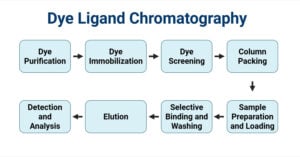
Dye Ligand Chromatography: Principle, Components, Steps, Uses

March 10, 2026March 5, 2026 by Sanju Tamang
Dye Ligand Chromatography

Dye ligand chromatography is a type of affinity chromatography that uses synthetic dyes as ligands to purify target biomolecules, such as proteins and enzymes, from complex mixtures.  Unlike traditional affinity … Read more

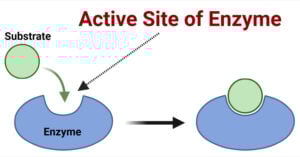
Active Site of Enzymes and Proteins

March 4, 2026 by Shreya Subba
Active Site of Enzymes and Proteins

The active site is the region in the enzyme’s (a type of protein) structure, containing amino acid residues, where catalysis occurs. These active sites are 3D crevices or chiral clefts … Read more

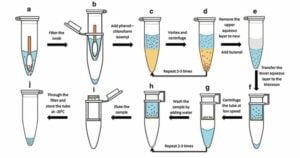
Phenol-Chloroform Method of DNA Extraction

March 3, 2026March 2, 2026 by Sandeep Shakya
Phenol-Chloroform Method of DNA Extraction

The phenol-chloroform method of DNA extraction is the technique that separates nucleic acids from proteins and other cellular components by exploiting their different solubilities in water and organic solvents. After … Read more

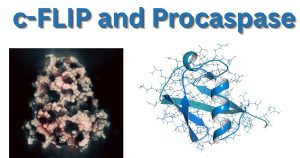
Caspases and c-FLIP (Cellular FLICE-inhibitory protein)

March 22, 2026February 26, 2026 by Khushi Sharma
c-FLIP and Procaspase

What are Caspases? Caspases play a critical role in apoptosis and belong to a family of protease enzymes involved in apoptosis, inflammation, and other cellular processes. Structurally, caspases typically consist … Read more

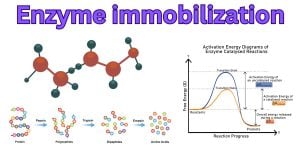
Enzyme Immobilization: Classification, Methods, Applications

March 22, 2026February 19, 2026 by Khushi Sharma
Enzyme immobilization

Enzymes are biological catalysts, primarily protein macromolecules, that act as highly efficient catalysts in living systems. Their fundamental role is to significantly accelerate (speed up) biochemical reactions without being used … Read more

Older posts
Newer posts
← Previous Page1 Page2 Page3 … Page21 Next →

Topics / Categories

  • Agricultural Microbiology (30)
  • Bacteriology (134)
  • Basic Microbiology (63)
  • Biochemical Test (114)
  • Biochemistry (206)
  • Bioinformatics (26)
  • Biology (142)
  • Biotechnology (41)
  • Botany (112)
  • Cell Biology (108)
  • Culture Media (68)
  • Difference Between (89)
  • Diseases (53)
  • Environmental Microbiology (14)
  • Epidemiology (28)
  • Food Microbiology (52)
  • Genetics (81)
  • Human Anatomy and Physiology (75)
  • Immunology (117)
  • Instrumentation (71)
  • Medical Devices (5)
  • Microscopy (31)
  • Molecular Biology (109)
  • Mycology (36)
  • Parasitology (28)
  • Pharmacology (22)
  • Protocols (9)
  • Research Methodology (20)
  • Staining (30)
  • Syllabus (20)
  • Virology (62)
  • Zoology (39)
Microbe Notes Android Application
  • Gas Liquid Chromatography: Principle, Parts, Steps, Uses
  • Gel Permeation Chromatography: Principle, Parts, Steps, Uses
  • Hydrodynamic Chromatography (HDC): Principle, Steps, Uses
  • HPLC: Principle, Instrumentation, Steps, Types, Uses, Diagram
  • Female Reproductive System: Organs, Structure & Functions
  • Our Team
  • Advisory Board
  • About Us
  • Contact Us
  • Editorial Policy
  • Privacy Policy
  • Cookie Policy
  • Disclaimer (Terms and Conditions)
© 2026 Microbe Notes. Made with ♡ by Sagar Aryal.