
In QC, effective calibration and maintenance of equipment is central to producing reliable results, meeting regulatory expectations, and avoiding failures.
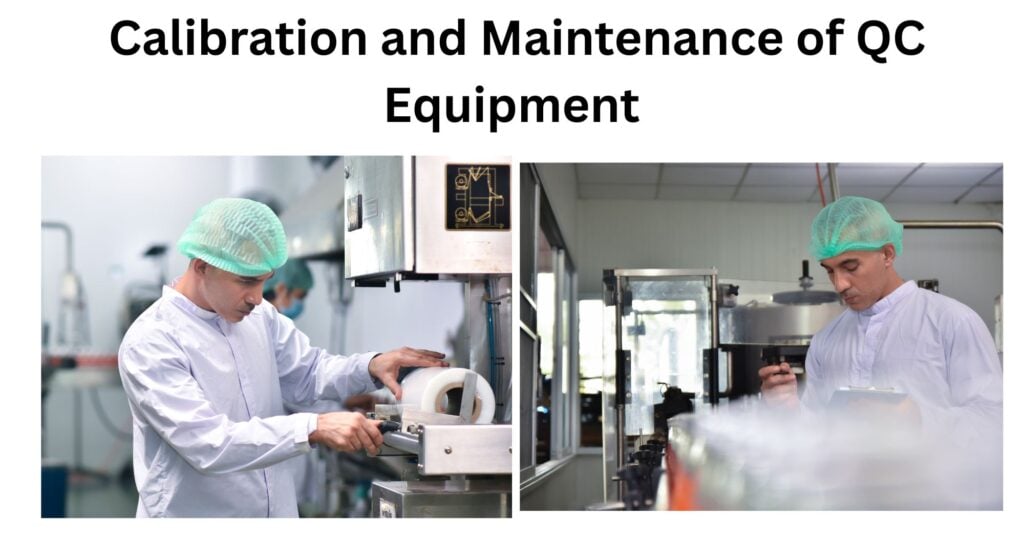
Calibration and Maintenance of QC Equipment
It is an important area in maintaining quality.
Overview of Equipment Management
Equipment management is a structured approach covering the full lifecycle of equipment: selection, installation, qualification, calibration, routine use, maintenance, and eventual retirement. A robust equipment management system ensures clear ownership and responsibilities for each instrument. There should be well- defined procedures for use, calibration, and maintenance records for each piece of equipment in use. A formal QMS involves control of environmental conditions, software, and accessories, regular internal audits, and performance monitoring. ISO/ IEC 17025 is used by testing and calibration laboratories for reliable and repeatable measurements to ensure operational excellence. In sectors like nuclear medicine and healthcare, well-designed QC programs with routine tests and documentation are considered essential for instrument reliability and patient safety.
Calibration vs. Verification vs. Validation
The terms calibration, verification, and validation are often confused to have the same meanings, but they have distinct meanings in measurement and quality control.
Calibration is the process of comparing an instrument’s result with a reference standard across a range of values. This estimates the uncertainty and deviations of equipment from the expected value and documents it. A good calibration practice is crucial for the accuracy and precision of the results obtained.
Verification confirms that an instrument or method meets pre-defined requirements or acceptance criteria. It is performed more frequently than calibration and is a routine performance check.
Validation demonstrates that a method or system is fit for its intended use/ purpose. It is broader, covering parameters such as accuracy, precision, linearity, and robustness. It ensures that a product, process, or equipment performs its intended task, producing consistent results according to predefined criteria.
Understanding meanings clearly is necessary to avoid gaps in control. Here, calibration aligns to standards, verification checks ongoing performance, and validation proves the suitability of the overall measurement process.
The Importance of Metrological Traceability
Metrological traceability links a measurement result to recognized reference, i.e., national or international standards, through an unbroken chain of calibrations, each with stated uncertainties. Metrological traceability provides confidence that measurements are comparable over time, between sites, and across laboratories. It is a basis for demonstrating competence and regulatory compliance in calibration and testing labs. It ensures greater consistency in international trade, healthcare diagnosis, and manufacturing quality. ISO 9001 clearly states measurement traceability and requires equipment to be calibrated or verified at specific intervals against traceable standards. This is especially applicable when traceability is necessary for product quality.
Governing Standards (ISO 17025 and GMP)
QC equipment calibration and maintenance are governed by two major frameworks: ISO/IEC 17025:2017 and Good Manufacturing Practices (GMP).
ISO 17025:2017 is a general requirement for the competence of testing and calibration laboratories. It sets requirements for both the management system and the technical operations of the lab. It covers: technical requirements, quality assurance activities, competence, impartiality, and consistent operations. Technical requirements include facilities, environmental conditions, methods and validation of methods, proper equipment, metrological traceability, sampling, handling, and results and reporting. Quality assurance activities include proficient testing, internal QC, and audits.
GMPs are regulations that require validated processes, qualified equipment, and documented calibration and maintenance, and clear criteria for acceptance to ensure product quality and safety. It is a sector-specific regulation specific to pharmaceutical, food, herbal medicine, etc. However, it imposes similar requirements on pharmaceutical manufacturers and medical device companies.
Establishing a Calibration Schedule
A calibration schedule assigns each instrument a defined interval at which it must be recalibrated. An effective calibration schedule is risk-based rather than purely time-based. The key considerations for scheduling calibration include:
- Criticality of measurement to product quality or patient safety
- Historical performance, deviations, or failure data
- Manufacturer recommendations and regulatory requirements
- Environmental conditions and frequency of use
In practice, many laboratories use a combination of routine daily/ weekly verification and periodic full calibration by internal or external providers.
Qualification of Equipment (IQ, OQ, PQ)
For any instrument to be used in a laboratory, a formal qualification is necessary before use. A three-stage process, including IQ, OQ, and PQ, provides documented assurance that the equipment is fit for its intended purpose in regulated environments.
Installation Qualifications (IQ) verify that the instrument is installed correctly (utilities, environment, documentation) according to specifications.
Operational Qualification (OQ) demonstrates that the equipment operates as intended across the operational range. For example, for an autoclave, OQ would verify that it achieves and maintains the required temperature and pressure throughout its cycle.
Performance Qualification (PQ) confirms that the system performs effectively in routine use with actual samples or processes over time.
These qualification steps form the backbone of demonstrating technical competence and fitness for purpose. Along with equipment qualification, method validation, and ongoing calibration are also major aspects.
Preventive Maintenance Strategies
Preventive maintenance, as the name suggests, minimizes unexpected failures and supports consistent measurement performance. Preventive Maintenance Strategies use manufacturer-recommended tasks such as cleaning, lubrication, replacement of consumables and critical parts, and so on, to ensure smooth functioning. Environmental control (temperature, humidity, vibrations) is also a major element in maintaining calibration integrity. Modern laboratories also integrate preventive and predictive maintenance by using condition monitoring, digital tools, or AI-based analytics to plan interventions before failure. Every PM activity must also be recorded and documented, which is subject to audit reviews. Maintenance after breakdown is not acceptable as it can disrupt testing schedules and compromise product integrity. So preventive maintenance is necessary to prevent loses due to unplanned failures.
Handling Out-of-Tolerance (OOT) Results
An out-of-tolerance (OOT) event is when a calibration reveals that an instrument is operating out of its accepted tolerance limit. When OOT is revealed, a structured response is necessary. The equipment must be immediately removed from service and labelled clearly. Then, the extent of impact must be investigated by reviewing the last acceptable calibration date, drift magnitude, and affected batches or test series. Potential impact on product quality and patient safety must be assessed and documented, and risk-based product impact evaluation must be performed. Finally, corrective actions (repair, recalibrate, adjust schedule) must be implemented, and preventive measures should be considered to avoid recurrence.
ISO 17025 and best-practice QMS approaches emphasize corrective action, root cause analysis, and documentation for all nonconformities, including OOT events.
Managing Third-Party Calibration Providers
Some laboratories outsource their calibration activities to accredited external providers, given that they are qualified, monitored, and acceptable under ISO 17025 and GMP. They must be selected and controlled carefully. ISO/IEC 17025- accredited laboratories that demonstrate competence, traceability, and controlled measurement are preferred. The calibration providers are periodically evaluated for their performance, such as turnaround time, quality of documentation, and responsiveness to queries. Clear technical requirements should be defined beforehand, and certificates should be reviewed for traceability statements, uncertainty evaluation, and OOT notifications and adjustment records.
Documentation and Audit Readiness
In a quality system, a process that is not documented might as well not have happened. So, comprehensive, well-organized documentation is key to quality and audit readiness. The required documents are calibration certificates, maintenance records, qualification reports, SOPs for equipment use, calibration, verification, training, and competency records for QC performance, records of deviations, OOT events, and corrective and preventive actions. Digitization of quality management systems improves traceability, data integrity, and audit readiness. So, the major task in QMS is to ensure records are complete, retrievable, and protected from unauthorized access.
Conclusion
Robust and periodic calibration and maintenance of QC equipment is an element on which quality systems depend for the reliability of results. However, it requires more than periodic checks. It demands an integrated system of metrological traceability, risk-based scheduling, equipment qualification, preventive and predictive maintenance, and disciplined documentation. International standards like ISO/IEC 17025 and GMP provide a framework for anchoring these activities to ensure that results are reliable, comparable, and defensible in audits.
While working with external parties, ensuring that they are competent and accredited providers is a must to maintain quality consistency. So, keeping a robust system in place for calibration and maintenance of equipment protects both the laboratory and the people who depend on its results.
References
- C. Melchers GmbH & Co. – Malaysia Branch, & Aslam, M. (2022). A Review of Effectiveness on Quality Management System for Calibration Activity (ISO 9001:2015, ISO/IEC 17025:2017 and Conventional Method). E-Journal of Nondestructive Testing, 27(12). https://doi.org/10.58286/27545
- Panagiotidou, E., Chountalas, P. T., Magoutas, A. I., Georgakellos, D. A., & Lagodimos, A. G. (2025). Systematic Identification and Validation of Critical Success Factors for ISO/IEC 17025 Implementation. Administrative Sciences, 15(2), 60. https://doi.org/10.3390/admsci15020060
