What are the types of Mutations?
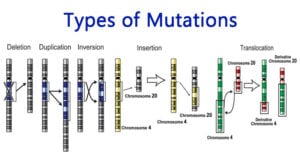
The mutation is a process that produces a gene or chromosome that differs from the wild type (arbitrary standard for what “normal” is for an organism). The mutation may result … Read more
 Sagar Aryal, PhD
The mutation is a process that produces a gene or chromosome that differs from the wild type (arbitrary standard for what “normal” is for an organism). The mutation may result … Read more
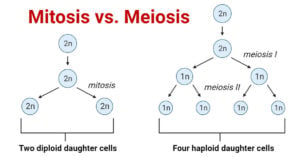
Here are some of the differences between Mitosis and Meiosis S.N. Character Mitosis Meiosis 1. Alternate Name Equational Division Reduction Division 2. Discovered by Walther Flemming Oscar Hertwig 3. … Read more
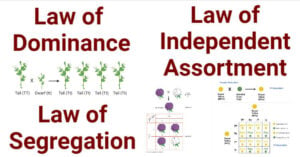
Mendel’s Experiment Mendel carried out breeding experiments in his monastery’s garden to test inheritance patterns. He selectively cross-bred common pea plants (Pisum sativum) with selected traits over several generations. After crossing … Read more

The research process is incomplete without the collection of data, which starts after the identification of the research problems and chalking out research design. There are several methods involved in … Read more

Depending on the measurements, there are four different types of data that can be achieved. These different types of data are nominal, ordinal, interval and ratio data. These different variances … Read more

Data is a set of values of subjects with respect to qualitative or quantitative variables. Data is raw, unorganized facts that need to be processed. Data can be something simple … Read more

Working of FASTA and BLAST The main difference between BLAST and FASTA is that BLAST is mostly involved in finding of ungapped, locally optimal sequence alignments whereas FASTA is involved in finding similarities between less … Read more
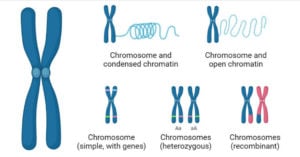
What are Chromosomes? In the nucleus of each cell, the DNA molecule is packaged into thread-like structures called chromosomes. Each chromosome is made up of DNA tightly coiled many times … Read more
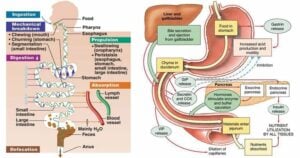
Digestion Definition The process by which food is broken down into simple chemical compounds that can be absorbed and used as nutrients or eliminated by the body is called digestion. … Read more
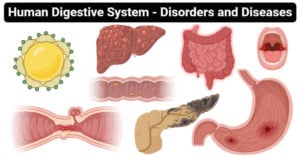
The primary purpose of the gastrointestinal tract is to break food down into nutrients, which can be absorbed into the body to provide energy. Food must be ingested into the … Read more