
What if microorganisms could be induced to acquire or lose desirable properties without scientists being able to foresee all the changes in their genes that would cause this? This is possible through adaptive laboratory evolution (ALE) methods which simulate evolution under controlled laboratory conditions. Instead of engineering specific genes, researchers grow microbial populations, conditions are optimized for a desirable genetic trait, and over time, these populations develop and adapt to produce better organisms (Dragosits & Mattanovich, 2013).
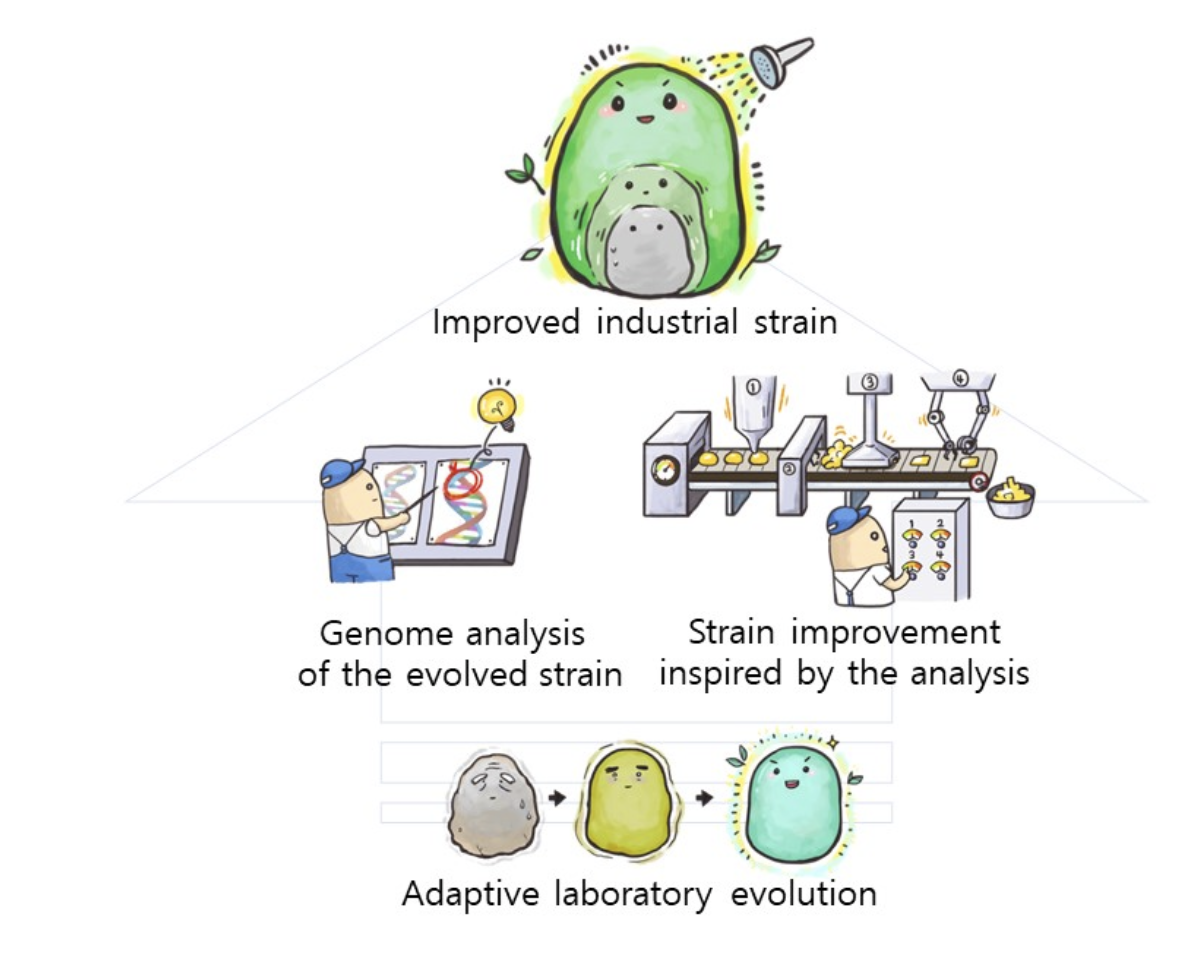
A directed experimental evolution method where microbial populations are repeatedly grown and selected in a well-controlled environment, called Adaptive Laboratory Evolution (ALE). The conditions can range from lack of nutrients, high temperatures, inhibitory chemicals, strange carbon sources, to stress effects relevant to industry. Over time, organisms that have favorable genetic variants are more likely to be represented in later generations, leading to a generation of organisms with better fitness or advantageous metabolic traits (Sandberg et al., 2019).
ALE is not traditional genetic engineering, which predetermines changes, but it is an adaptive process that occurs on the road of evolution. It does not, however, ensure a specific mutation or result. It’s all about finding a biological solution that is not something the researchers might have thought of.
Principle of Adaptive Laboratory Evolution (ALE)
The theory of ALE is based on Darwinian evolution: variation, inheritance and natural selection. Genetic variation is continually occurring in microbial populations as a result of mutations and other genetic events. Oftentimes, certain variants can be more successful at reproducing when environmental conditions are favorable, leaving more descendants that pass on the trait to future generations.
If one bacterial population is exposed to the increasing concentration of an inhibitory compound, it may have a high proportion of sensitive bacteria initially. The rare variants that are more tolerant will survive and reproduce better. The changes in the genetic makeup they pass on to their offspring make tolerance more common in a population.
The fundamental process involves three interconnected mechanisms:
Genetic variation: Mutations arise spontaneously during DNA replication or through other mutational processes.
Selection: Environmental conditions favor organisms with characteristics that improve survival or reproduction.
Population adaptation: Beneficial variants increase in frequency over successive generations, changing the population’s overall phenotype.
Importantly, selection does not deliberately produce the mutation required by the organism. Instead, existing or newly arising variation is filtered by the environment. Adaptation can also involve several mutations interacting, rather than a single genetic change (Conrad et al., 2011; Lenski, 2017).
Experimental Design and Setup for ALE
A successful ALE experiment begins with a clearly defined evolutionary objective. Researchers must decide which characteristic they want to improve, how that characteristic can be selected, and how the resulting adaptation will be measured.
Key experimental considerations include:
- Starting organism: Select a well-characterized microbial strain with suitable growth characteristics and genetic stability.
- Selection pressure: Identify an environmental condition that rewards the desired phenotype, such as substrate utilization, stress tolerance, or product-associated fitness.
- Culture environment: Define the medium, temperature, pH, oxygen availability, agitation, and other relevant conditions.
- Transfer strategy: Choose between serial transfer and continuous cultivation, depending on the experimental objective.
- Replicates and controls: Maintain independent evolutionary populations and, where appropriate, ancestral or control populations to distinguish reproducible adaptation from random outcomes.
- Sampling plan: Preserve ancestral and intermediate populations for phenotypic testing and genomic analysis.
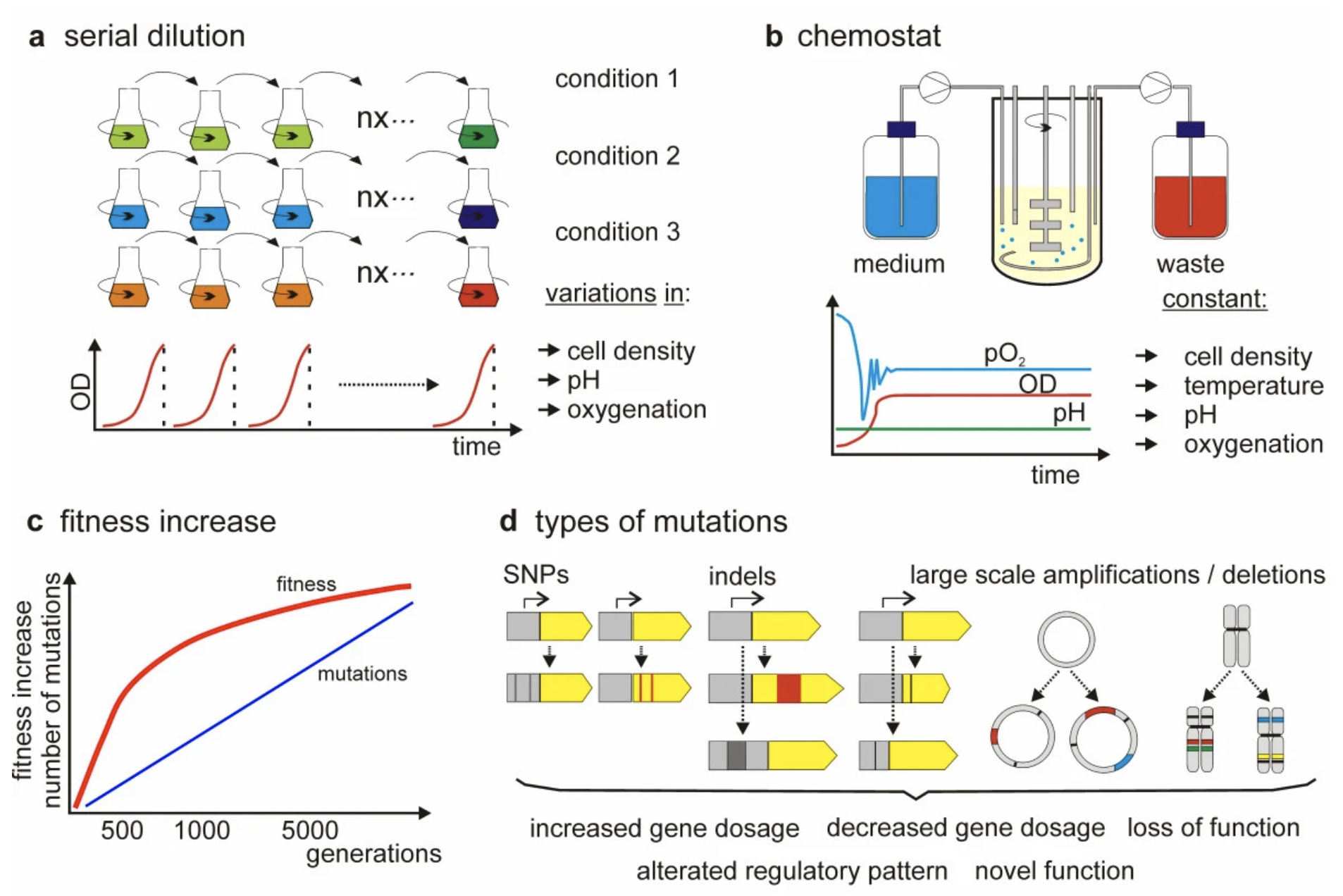
Selection pressure requires particular care. If the conditions are not severe enough, improved variants will only gain a little, but if they are too harsh, the population may not grow at all. Gradual stress escalation, pilot experiments, and growth measurements can help establish a suitable selection regime (Van den Bergh et al., 2018; LaCroix et al., 2017).
Types of Adaptive Laboratory Evolution (ALE)
ALE can be classified according to the cultivation system, selection strategy, or biological objective.
| Type | Principle and purpose |
| Serial batch evolution | Populations grow in discrete batches and are periodically transferred into fresh medium. |
| Chemostat-based evolution | Continuous nutrient supply and culture removal maintain growth under a controlled limiting condition. |
| Turbidostat-based evolution | Culture density is monitored and medium addition is adjusted to maintain approximately constant turbidity. |
| Stress-gradient evolution | Selection pressure is progressively intensified to encourage adaptation to increasingly demanding conditions. |
| Substrate-driven evolution | A particular nutrient or carbon source favors organisms capable of utilizing it efficiently. |
| Accelerated ALE | Automation, engineered mutation systems, or optimized experimental strategies aim to shorten the time required to obtain useful adaptations. |
Serial batch cultivation is relatively simple and widely accessible. Continuous systems provide tighter control over growth conditions, although they require specialized equipment. Accelerated approaches can improve experimental efficiency, but their effectiveness depends on the organism, target phenotype, and method employed. Adapted from Mavrommati et al., 2021; Declerck et al., 2025.
ALE Experimental Workflow and Procedure
Although individual experiments differ, most follow a common sequence from experimental planning to validation.
- Define the objective: Specify the target trait and establish measurable indicators of improvement.
- Characterize the ancestor: Record baseline growth, substrate consumption, stress tolerance, or product formation.
- Establish replicate populations: Inoculate the chosen organism into an appropriate selection environment, preserving the ancestral stock.
- Apply selection: Cultivate populations under the chosen conditions using serial transfers or a continuous system.
- Monitor adaptation: Measure growth and other relevant characteristics at regular intervals.
- Preserve samples: Freeze representative population samples where suitable, allowing researchers to revisit earlier evolutionary stages.
- Isolate and characterize evolved strains: Compare individual isolates and whole populations to identify promising candidates.
- Validate performance: Test whether the improved phenotype persists under standardized conditions and whether the benefit extends to the intended application.
- Investigate the genetic basis: Sequence selected population/isolates and look for mutations linked to adaptation.
These stages are iterative rather than strictly linear. If populations stop improving, lose viability, or develop undesirable characteristics, researchers may need to reconsider the selection conditions. A robust workflow therefore combines continuous observation with periodic experimental reassessment (Sandberg et al., 2019).
Microorganisms Used in Adaptive Laboratory Evolution (ALE)
Microorganisms are particularly suitable for ALE because they reproduce rapidly, generate substantial population sizes, and can be cultivated under reproducible conditions.
- Escherichia coli: A well-characterized bacterial model used to investigate metabolism, nutrient utilization, stress tolerance, and genetic adaptation.
- Saccharomyces cerevisiae: A yeast widely studied for fermentation, bioethanol production, and industrial bioprocessing.
- Corynebacterium glutamicum: An industrial bacterium used in amino acid production and metabolic engineering.
- Bacillus species: Useful for studying enzyme production, industrial fermentation, and tolerance to challenging cultivation conditions.
- Pseudomonas species: Investigated for their metabolic versatility, bioconversion potential, and ability to utilize diverse compounds.
- Microalgae: Explored for improvements in growth, environmental tolerance, and the production of biomass and valuable metabolites.
The choice depends on the desired application, available genetic information, growth requirements, and ease of cultivation. Importantly, adaptation demonstrated in one organism cannot automatically be assumed to occur in another (Lee & Kim, 2020; Mavrommati et al., 2021).
Genetic Mutations and Evolutionary Adaptation in ALE
Evolutionary adaptation can arise through changes affecting genes, regulatory sequences, gene expression, and interactions among metabolic pathways. Mutations may alter enzyme activity, transporter function, stress responses, or the allocation of cellular resources.
For example, improved growth on an alternative carbon source may involve changes in substrate transport, metabolic enzymes, or regulatory proteins controlling the relevant pathway. Stress tolerance may emerge through membrane remodeling, altered efflux activity, improved protein maintenance, or changes in cellular regulation.
Several evolutionary mechanisms can contribute:
- Beneficial mutations: Increase reproductive success under the selected conditions.
- Epistasis: Occurs when the effect of one mutation depends on other genetic changes.
- Clonal interference: Arises when competing beneficial variants spread simultaneously through a population.
- Genetic drift: Random changes in variant frequencies, particularly important in small populations.
- Trade-offs: Improvements in one environment may reduce performance under other conditions.
Adaptation is therefore not necessarily a straightforward accumulation of individually beneficial mutations. Some changes provide advantages only in combination, while others persist because they compensate for the disadvantages of earlier mutations. Population history and selection conditions can consequently influence the evolutionary outcome (Dettman et al., 2012; Lenski, 2017).
Methods for Monitoring and Measuring Evolution in ALE
Monitoring helps researchers determine whether adaptation is occurring, how rapidly populations are changing, and whether improvements remain biologically meaningful.
Common monitoring approaches include:
- Growth curves: Measure changes in lag phase, growth rate, and maximum culture density.
- Competition assays: Compare the reproductive fitness of evolved organisms against their ancestors under defined conditions.
- Substrate and product measurements: Quantify nutrient consumption, product concentration, yield, and productivity.
- Stress-tolerance assays: Evaluate performance under relevant environmental challenges.
- Colony and population analysis: Examine phenotypic diversity and identify emerging variants.
- Metabolic flux analysis: Uses experimental measurements, often involving isotope-labelled substrates, to estimate the distribution of metabolites through metabolic pathways.
A crucial distinction is that growth, fitness, yield, and productivity are not interchangeable. A strain may grow faster while producing less desired product per unit of substrate. Consequently, measurements should reflect the actual objective rather than relying on growth alone (Long & Antoniewicz, 2018).
Whole-Genome Sequencing and Genomic Analysis in ALE
Whole-genome sequencing (WGS) helps explain the genetic changes accompanying adaptation. Comparing evolved organisms with their ancestors allows scientists to discover mutations that resulted during selection and learn about any potential consequences of the mutations.
A typical analysis involves sequencing ancestral and evolved samples, aligning reads to an appropriate reference genome, identifying variants, and annotating mutations in coding and regulatory regions. Population sequencing can provide information on the proportion of variants in mixed populations, while sequencing of isolated clones can provide information about the mutations in individual lineages.
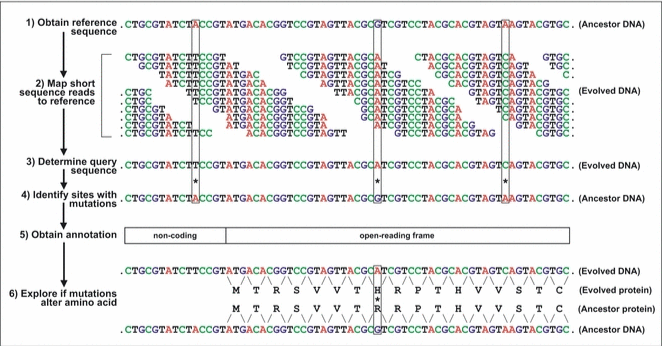
But, the discovery of a mutation does not prove that it is responsible for the enhanced phenotype. To prove causality researchers may have to create candidate mutations, reverse them or conduct complementary functional experiments. The genetic changes could be further correlated to changes in cellular activity using transcriptomic analysis and metabolic modelling.
Resources such as ALEdb compile mutations reported in experimental evolution studies, helping researchers compare evolutionary outcomes across organisms and experiments (Phaneuf et al., 2018). When the genomic analysis is combined with well crafted phenotypic assays, ALE shifts from the realm of strain improvement to a powerful tool to help understand biological adaptation (Conrad et al., 2011; Dettman et al., 2012).
Applications of Adaptive Laboratory Evolution (ALE)
ALE has applications across industrial biotechnology, environmental science, and fundamental biological research.
- Industrial fermentation: Improves microbial tolerance to ethanol, organic acids, temperature fluctuations, and other process-related stresses.
- Metabolic engineering: Helps identify mutations that redirect cellular resources toward desired products or improve the utilization of alternative feedstocks.
- Biochemical production: Supports the development of strains producing amino acids, organic acids, enzymes, biofuels, and other valuable compounds.
- Waste valorization: Encourages the utilization of unconventional or waste-derived substrates for microbial growth and bioconversion.
- Environmental biotechnology: Investigates microbial adaptation to pollutants and supports research into biodegradation.
- Fundamental evolutionary biology: Reveals how mutations spread, populations diversify, and organisms respond to changing environments.
ALE is particularly useful if the genetics behind a desired phenotype is complex or not well understood. It can be used in conjunction with metabolic engineering to detect the possible targets for further rational modification, and to relate observed performance to underlying biological mechanisms (Dragosits & Mattanovich, 2013; Sandberg et al., 2019).
Advantages of Adaptive Laboratory Evolution (ALE)
ALE offers several practical and scientific advantages:
- Minimal prior genetic knowledge: Adaptation can be initiated without knowing every gene responsible for the target trait.
- Access to unexpected solutions: Evolution may reveal combinations of mutations that conventional engineering would overlook.
- Improved strain performance: Selection can enhance fitness under specific production conditions.
- Compatibility with genetic engineering: Evolved mutations can guide subsequent strain design and metabolic optimization.
- Experimental reproducibility: Controlled conditions and independent populations allow systematic comparisons of evolutionary outcomes.
- Discovery of biological mechanisms: Sequencing and functional validation reveal how organisms adapt to environmental challenges.
While the benefits are great, ALE is not a panacea; it can complement rational engineering in certain instances. It is effective only if the experimental context is reliable in promoting the desired response (Mavrommati et al., 2021).
Limitations and Challenges of Adaptive Laboratory Evolution (ALE)
Despite its potential, ALE presents important challenges.
- Time requirements: Some desirable adaptations require many generations, particularly when beneficial mutations arise infrequently.
- Unpredictable outcomes: Evolution does not guarantee that a specific phenotype will emerge.
- Selection mismatches: Improved growth may not translate into higher product yield or industrial productivity.
- Unwanted trade-offs: Adapted strains may lose performance under different conditions or acquire undesirable characteristics.
- Population complexity: Multiple competing lineages can make evolutionary trajectories difficult to interpret.
- Causal uncertainty: Sequencing identifies genetic associations, but functional experiments are often needed to confirm causation.
- Scale-up difficulties: Laboratory advantages may disappear in industrial environments with different oxygen transfer, nutrient gradients, or process dynamics.
- Resource demands: Long experiments require cultivation facilities, careful sampling, storage, and analytical support.
Accelerated ALE and automated cultivation may reduce experimental time and labor, while mathematical modelling can improve experimental design. Nevertheless, faster evolution does not eliminate the need for rigorous phenotypic validation and genomic interpretation (LaCroix et al., 2017; Declerck et al., 2025).
Conclusion
Adaptive laboratory evolution is a proof of the practicality of natural selection in biotechnology. Operating under carefully designed conditions, researchers can not only observe the genetic changes associated with adaptation but also create improved phenotypes of microorganisms.
It is most powerful when it can provide a solution based on biology without having to fully understand how to obtain it. But, careful experimental design, monitoring and validation beyond growth is needed to be successful at ALE. The combination of evolution and genome sequencing, metabolic analysis, and genetic engineering can help make strain improvement more systematic and informative. With growing development of automation and computational modelling, ALE is expected to become more of a versatile tool for industry innovation and evolutionary discovery.
References
- Conrad, T. M., Lewis, N. E., & Palsson, B. Ø. (2011). Microbial laboratory evolution in the era of genome-scale science. Molecular Systems Biology, 7. https://doi.org/10.1038/msb.2011.42
- Declerck, L., Bouchon, F., Demeester, W., Guidi, C., & De Mey, M. (2025). Accelerated adaptive laboratory evolution: A tool for evolutionary biotechnology. Biotechnology Advances. https://doi.org/10.1016/j.biotechadv.2025.108741
- Dettman, J. R., Rodrigue, N., Melnyk, A. H., Wong, A., Bailey, S. F., & Kassen, R. (2012). Evolutionary insight from whole-genome sequencing of experimentally evolved microbes. Molecular Ecology, 21. https://doi.org/10.1111/j.1365-294x.2012.05484.x
- Dragosits, M., & Mattanovich, D. (2013). Adaptive laboratory evolution – principles and applications for biotechnology. Microbial Cell Factories, 12. https://doi.org/10.1186/1475-2859-12-64
- LaCroix, R. A., Palsson, B. Ø., & Feist, A. M. (2017). A model for designing adaptive laboratory evolution experiments. Applied and Environmental Microbiology, 83. https://doi.org/10.1128/aem.03115-16
- Lee, S., & Kim, P. (2020). Current status and applications of adaptive laboratory evolution in industrial microorganisms. Journal of Microbiology and Biotechnology, 30. https://doi.org/10.4014/jmb.2003.03072
- Lenski, R. E. (2017). Experimental evolution and the dynamics of adaptation and genome evolution in microbial populations. The ISME Journal, 11. https://doi.org/10.1038/ismej.2017.69
- Long, C. P., & Antoniewicz, M. R. (2018). How adaptive evolution reshapes metabolism to improve fitness: Recent advances and future outlook. Current Opinion in Chemical Engineering, 22. https://doi.org/10.1016/j.coche.2018.11.001
- Mavrommati, M., Daskalaki, A., Papanikolaou, S., & Aggelis, G. (2021). Adaptive laboratory evolution principles and applications in industrial biotechnology. Biotechnology Advances. https://doi.org/10.1016/j.biotechadv.2021.107795
- Phaneuf, P. V., Gosting, D., Palsson, B. Ø., & Feist, A. M. (2018). ALEdb 1.0: A database of mutations from adaptive laboratory evolution experimentation. Nucleic Acids Research. https://doi.org/10.1093/nar/gky983
- Sandberg, T. E., Salazar, M. J., Weng, L. L., Palsson, B. Ø., & Feist, A. M. (2019). The emergence of adaptive laboratory evolution as an efficient tool for biological discovery and industrial biotechnology. Metabolic Engineering, 56. https://doi.org/10.1016/j.ymben.2019.08.004
- Van den Bergh, B., Swings, T., Fauvart, M., & Michiels, J. (2018). Experimental design, population dynamics, and diversity in microbial experimental evolution. Microbiology and Molecular Biology Reviews, 82. https://doi.org/10.1128/mmbr.00008-18
