
The central dogma dictates that the information flows from genomic DNA to mRNA transcripts to proteins. The proteins, more specifically enzymes, are then integrated into metabolic pathways, influencing the concentration of the substrates and products.
The flux, or change of these small molecules, called metabolites, generates the phenotype in an organism or a biological system. Metabolites can then be defined as small molecules that are chemically transformed during metabolism. Metabolomics, in this context, becomes a powerful tool for the study of metabolites.
What is Metabolomics?
Metabolomics is an emerging field of ‘omics’ research defined as the combined discipline of genomics, transcriptomics, and proteomics, which are also known as multi-omics.
The metabolome refers to the complete set of endogenous metabolites, their intermediates, and their products in a biological system. Metabolomics can then be defined as a large-scale study of metabolites within cells, tissues, biofluids, or organisms. The word was first coined in the 1990s and was used to describe techniques to measure the metabolites present within a cell or organism following a genetic variation or physiological stimulus. It provides a complete picture of the biochemistry of a biological system.
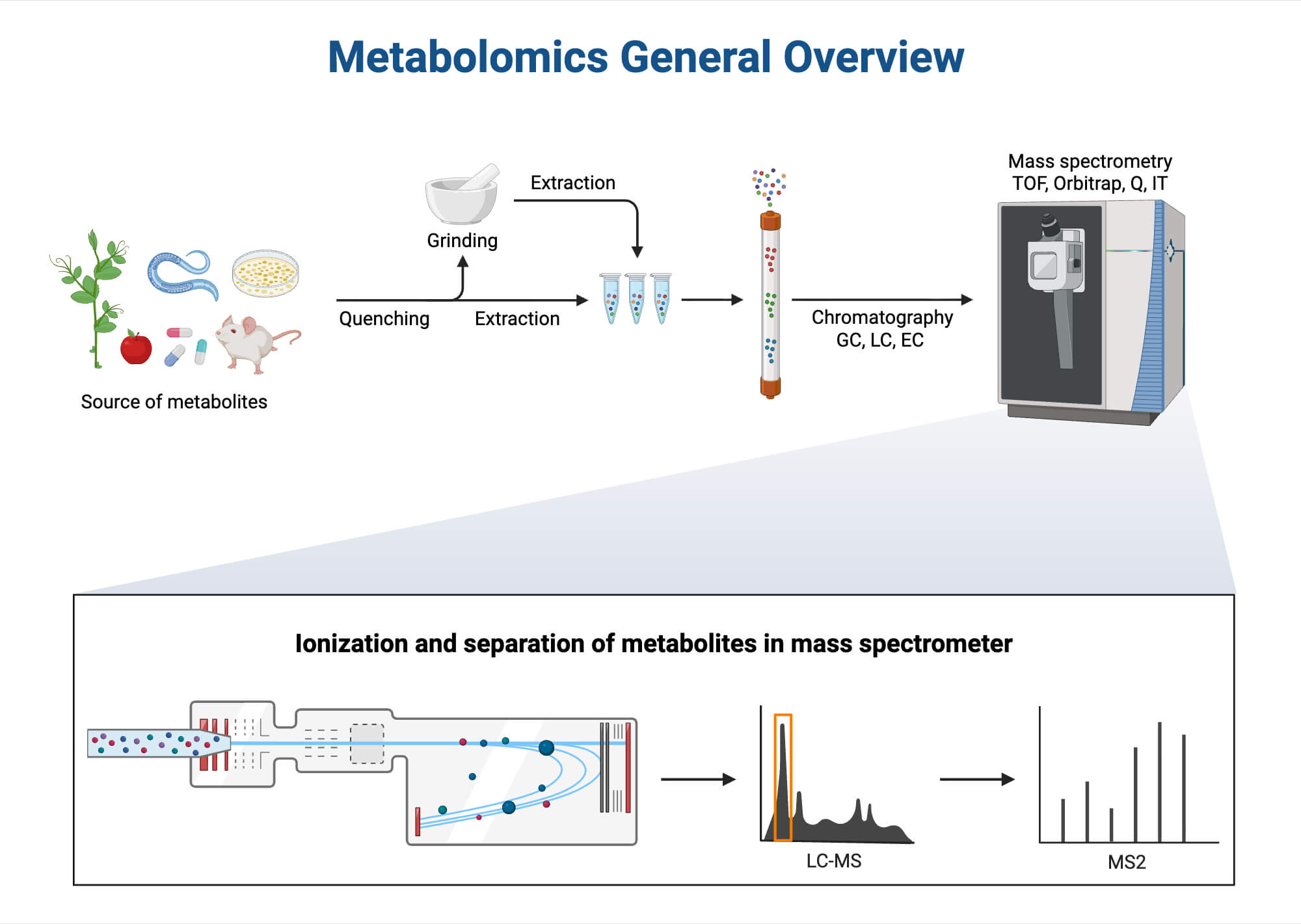
Since most of the interventions in metabolomics are the analysis of small compounds, techniques such as mass spectrometry (MS) and nuclear magnetic resonance (NMR) are common. Mass spectrometry can be used to measure thousands of metabolites simultaneously from a small to no amount of sample. When coupled with bioinformatic tools, metabolomics provides a more comprehensive analysis of cellular metabolites.
During recent years, the field of metabolomics has made remarkable progress. Newer tools are being implemented that offer an understanding of the correlation of biochemical changes with phenotype.
Principle of Metabolomics
The main principle of metabolomics is to correlate the biochemical changes of a metabolite to phenotype. Unlike genes and proteins, which are controlled through epigenetic and translational modifications, metabolites exist in direct relationship with biochemical activity and phenotype. In general, metabolomics is defined as the global metabolite profiling or the differential study of the metabolome between experimental and control groups when subjected to an external stimulus. This stimulus can be drug treatment, a biochemical or environmental stress, or pathologies such as mutant/resistance-bred organisms. This provides a better understanding of the state of cellular and biological processes at varying stages of growth. The discipline is said to be the nearest representation of phenotype and shows immense potential in the field of agriculture, biomarker discovery, environmental research, medicine, and others.
Techniques associated with compound extraction and determination of its chemical composition are widely used in metabolomics. They are as follows:
- Solvent Extraction Methods
- Solid-liquid extraction
- Liquid-liquid extraction
- Chromatography
- Mass spectrometry (MS)
- Matrix-assisted Laser Desorption/Ionization (MALDI)
- LC/MS
- GC/MS
- Nuclear Magnetic Resonance (NMR)
- Ultraviolet-visible Spectroscopy
- Flame ionization
Types of Metabolomics
The first step in performing a metabolomics experiment is to determine the number of metabolites to be measured for the study. This ultimately defines the experimental question and shapes its design. Two approaches are used, which are as follows:
Targeted metabolomics
Targeted metabolomics approach focuses on a specific set of metabolites in accordance to a hypothetical research question. The approach is fixed for one or more biological pathways. The targeted metabolomics approach is effective for pharmacokinetics studies of drug metabolism, for measuring the influence of genetic changes in an enzyme. Techniques such as MS and NMR are widely used in such types of studies because of their specificity and reproducibility.
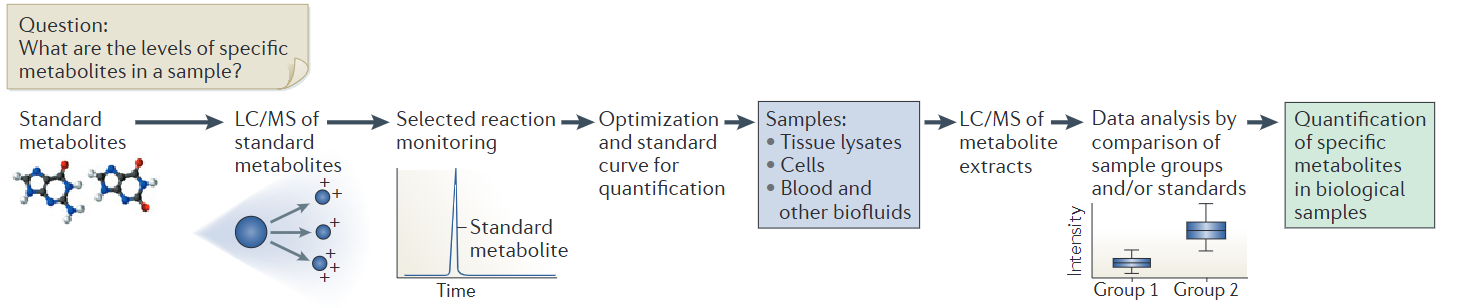
Workflow of Targeted Metabolomics
- The initial research question determines the choice of metabolites or their pathway to be studied.
- Before proceeding to the actual metabolite, a pure standard compound of the target metabolite must first be analyzed and optimized to generate a standard curve for quantification.
- The samples are then extracted from tissues, cells, microbes, etc., using specific downstream extraction methods depending on the chemistry of the compound to be extracted.
- The specific metabolic extracts are then analyzed using LC/MS.
- The standard curve is used to quantitatively determine the concentration of the target metabolite in the samples.
Untargeted metabolomics
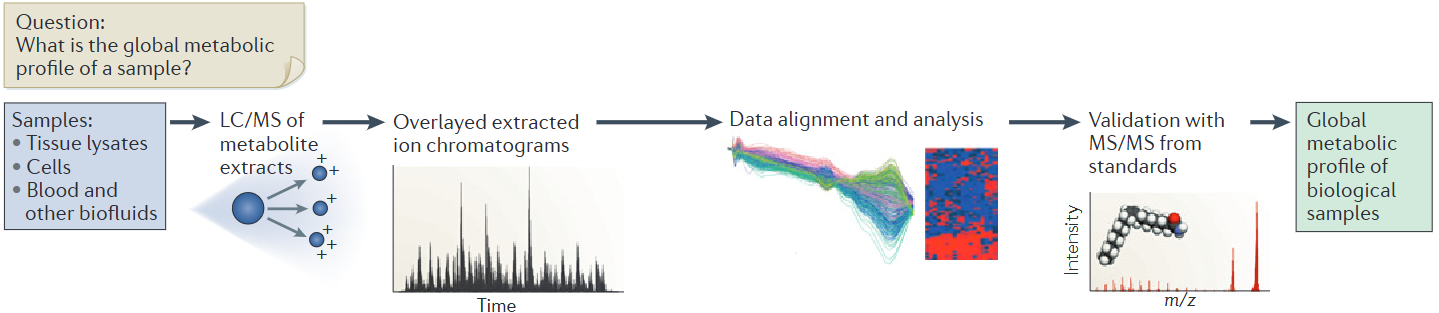
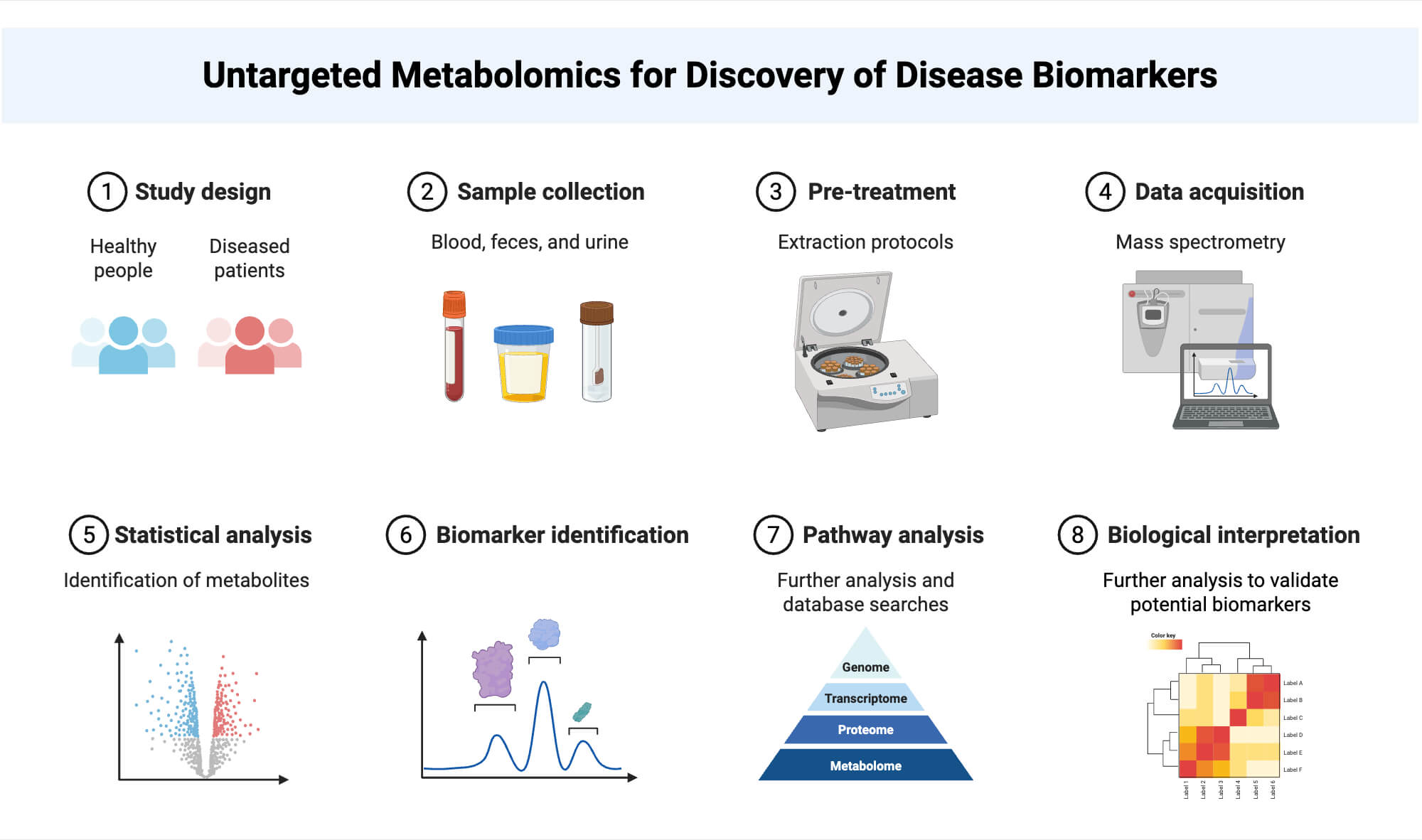
Untargeted or global metabolomics is global in scope and can be utilized to measure as many metabolites in a biological sample as possible. The samples can then be compared without bias. MS and NMR techniques are still used; however, LC followed by MS (LC/MS) allows for the screening of most metabolites. Unlike targeted metabolomics, this approach is a complex endeavor that generates a massive amount of data that cannot be manually analyzed. It is extensive on statistics and computation.
Workflow of Untargeted metabolomics
- Since untargeted metabolomics aims to detect all measurable metabolites, the study starts with the extraction of metabolites from the samples.
- The metabolites are extracted using solvent systems to screen a wide range of chemicals.
- The extracted compounds are then analyzed through LC/MS, GC/MS, or CE/MS.
- The raw data generated requires quality control, which includes peak detection, normalization, noise filtering, and retention time alignment.
- Statistical tools are implemented to detect patterns between chemical groups.
- Large spectral libraries and databases such as METLIN, KEGG, etc. are used to match the spectral data.
- Finally, the metabolites are annotated to metabolic pathways and interpreted for biological importance.
Challenges of Metabolomics
- Metabolomics is a comprehensive data analysis of the complex metabolite pool. This proves to be a difficult task.
- A massive number of publicly available data relating to metabolites is uncharacterized. Mass-spectrometry-based experiments are still needed for many biosystems.
- Statistical validation of large-scale data is often not accurate. The high metabolite diversity of a system brings about a larger false discovery rate, which is a major disadvantage of metabolomics.
- Untargeted metabolomics may reveal that the number of metabolites in a biological system is much larger than anticipated. Since metabolomes are not encoded into the genome, these kinds of studies become complicated when attempting to analyze an undefined set of molecules.
Applications of Metabolomics
- Popular metabolomics databases such as The Human Metabolome Database (HMDB), KEGG, and METLIN are publicly available and have a high repertoire of MS and NMR-based spectra. The data from these sources can be used to facilitate metabolite identification and data interpretation.
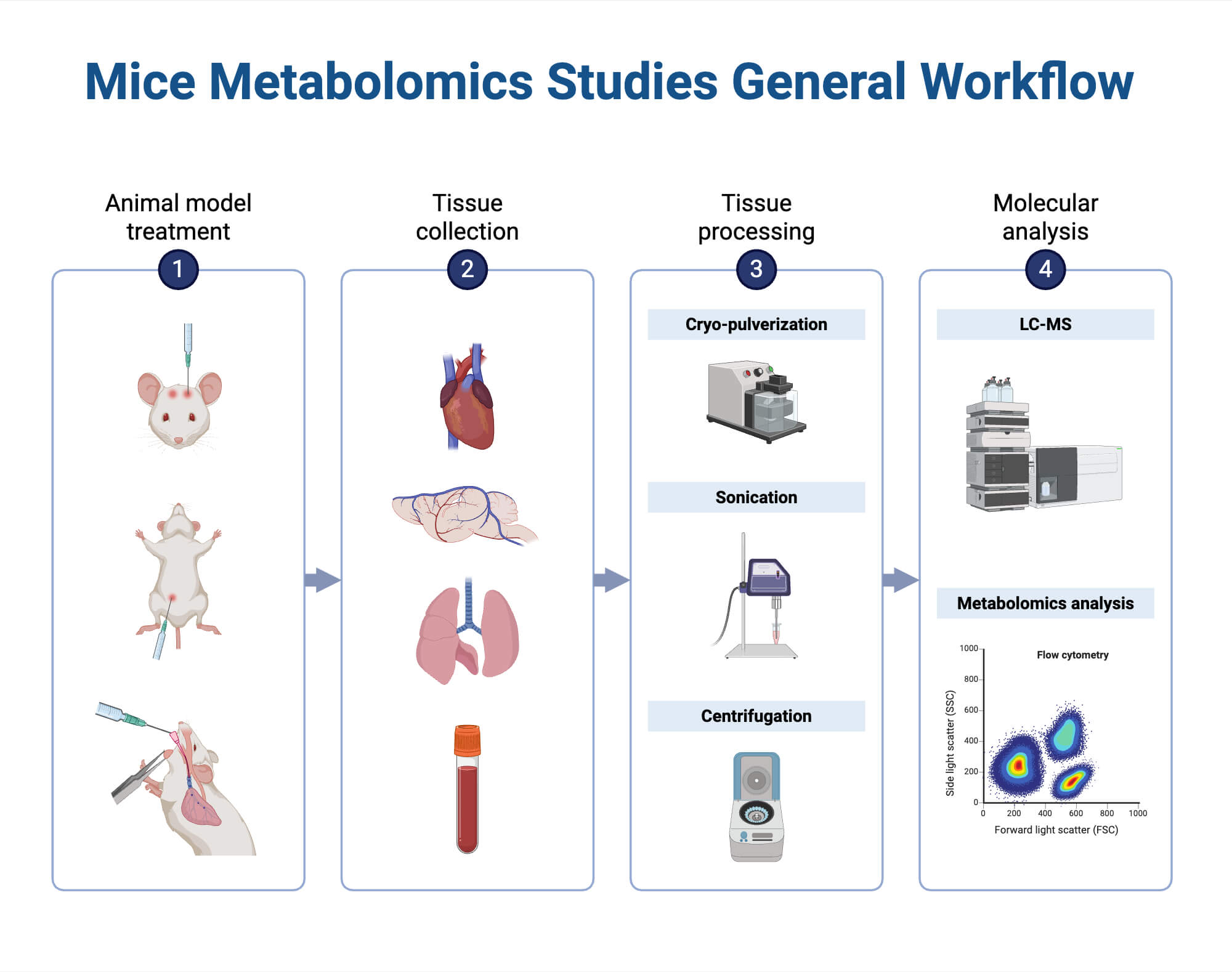
- Metabolomics is viable in pharmaceuticals for drug designing, toxicity assessment, pharmacokinetics, i.e., how drugs are distributed throughout the body, for the potential analysis of novel medicinal compounds.
- The mass-scale study of a biosystem reveals its functions, which can be used to improve and transfer such systems for better intervention. This might be a biomarker discovery of cancer, diabetes, cardiovascular diseases, etc.
- In functional genomics, metabolomics is optimal for the determination of the phenotype caused by gene manipulation, such as insertions or deletions.
- In microbiology, the metabolic fingerprinting of microbes can be a powerful tool to investigate the microbial dynamics and their secondary metabolites in response to certain stimuli.
- In nutrition and food, metabolites can be examined in response to diet for age, sex, body composition, and genetics.
- Plant metabolomics is used to study the abiotic and biotic stresses and their impact on plants. Many bioactive compounds in medicinal plants are still unidentified. These can be improved, and their pathways can be potentially enhanced.
References
- Clish, C. B. (2015). Metabolomics: An emerging but powerful tool for precision medicine. Cold Spring Harbor Molecular Case Studies, 1(1), a000588. https://doi.org/10.1101/mcs.a000588
- Johnson, C. H., Ivanisevic, J., & Siuzdak, G. (2016). Metabolomics: Beyond biomarkers and towards mechanisms. Nature Reviews Molecular Cell Biology, 17(7), 451–459. https://doi.org/10.1038/nrm.2016.25
- Metabolomics. (n.d.). SpringerLink. Retrieved April 21, 2025, from https://link.springer.com/journal/11306/journal/11306
- Patti, G. J., Yanes, O., & Siuzdak, G. (2012). Metabolomics: The apogee of the omics trilogy. Nature Reviews Molecular Cell Biology, 13(4), 263–269. https://doi.org/10.1038/nrm3314
- Practical Guide to Metabolomics—NP. (n.d.). Retrieved April 21, 2025, from https://www.thermofisher.com/in/en/home/industrial/mass-spectrometry/mass-spectrometry-learning-center/mass-spectrometry-applications-area/metabolomics-mass-spectrometry/practical-guide-metabolomics.html
- Singh, A. (2020). Tools for metabolomics. Nature Methods, 17(1), 24–24. https://doi.org/10.1038/s41592-019-0710-6
