Plant Growth Rate: Factors, Measurement, Applications
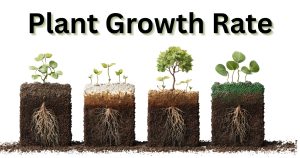
Plant growth rate is the rate at which a plant or its components grow in size, mass, or complexity due to irreversible physiological reactions. It involves a series of irreversible … Read more
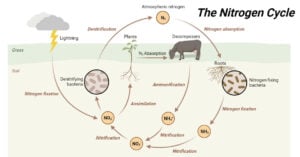
The movement of nitrogen between the atmosphere, biosphere, and geosphere in different forms is called the nitrogen cycle and is one of the major biogeochemical cycles. Importance of Nitrogen in Ecosystems Nitrogen is vital for maintaining … Read more
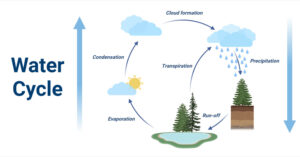
The water cycle, or the hydrological cycle, is the continuous circulation of water between the hydrosphere, atmosphere, and lithosphere. In the hydrological cycle, the water from sources like oceans, lakes, … Read more
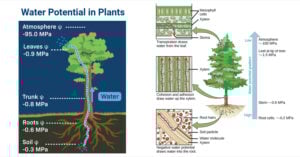
Water Potential (Ψ) deals with how the potential energy of a plant is measured. Relative movement of water and two systems, water potential and its movement, water is calculated using … Read more
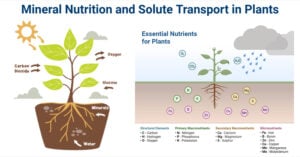
Plant growth and development depend upon mineral nutrition as a basic necessity. Mineral nutrients are taken up from the soil in their ionic form and serve distinctive biochemical and physiological … Read more
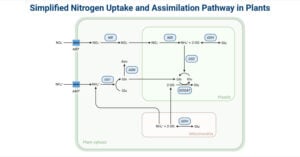
Nitrogen assimilation is a vital process by which inorganic nitrogen, such as nitrate and ammonium, is converted into usable organic forms, including amino acids, nucleotides, and proteins. These are important … Read more
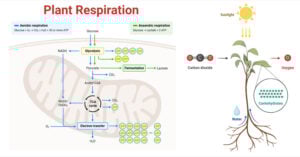
Respiration is a catabolic process by which organisms convert the energy stored in food molecules like glucose into Adenosine Triphosphate (ATP). This can take place either in the presence of … Read more
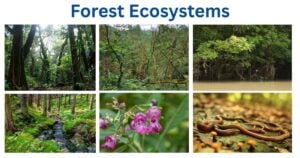
Forest ecosystems are complex, dynamic, self-contained associations of biotic and abiotic factors. It is most prominently dominated by trees, shrubs, and other vegetation and animal groups. Forest ecosystems play a … Read more
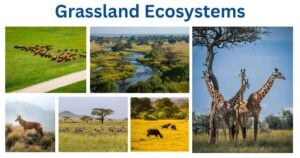
Grassland ecosystems are expansive natural areas dominated by grasses with sparse trees and shrubs. This ecosystem exists in places where rainfall is too scarce as compared to forest ecosystems but … Read more
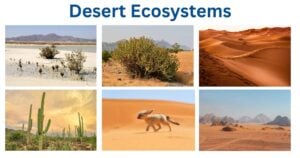
Desert ecosystems are among the most extreme and least-favorable habitats on the planet, with severe climatic conditions. The ecosystem is ecologically relevant to only those species that are specifically adapted … Read more