
The trachea is a significant part of the respiratory system. It is a long, vertical tube made of cartilaginous rings, which extend from the larynx to the primary bronchi within the lower respiratory tract.
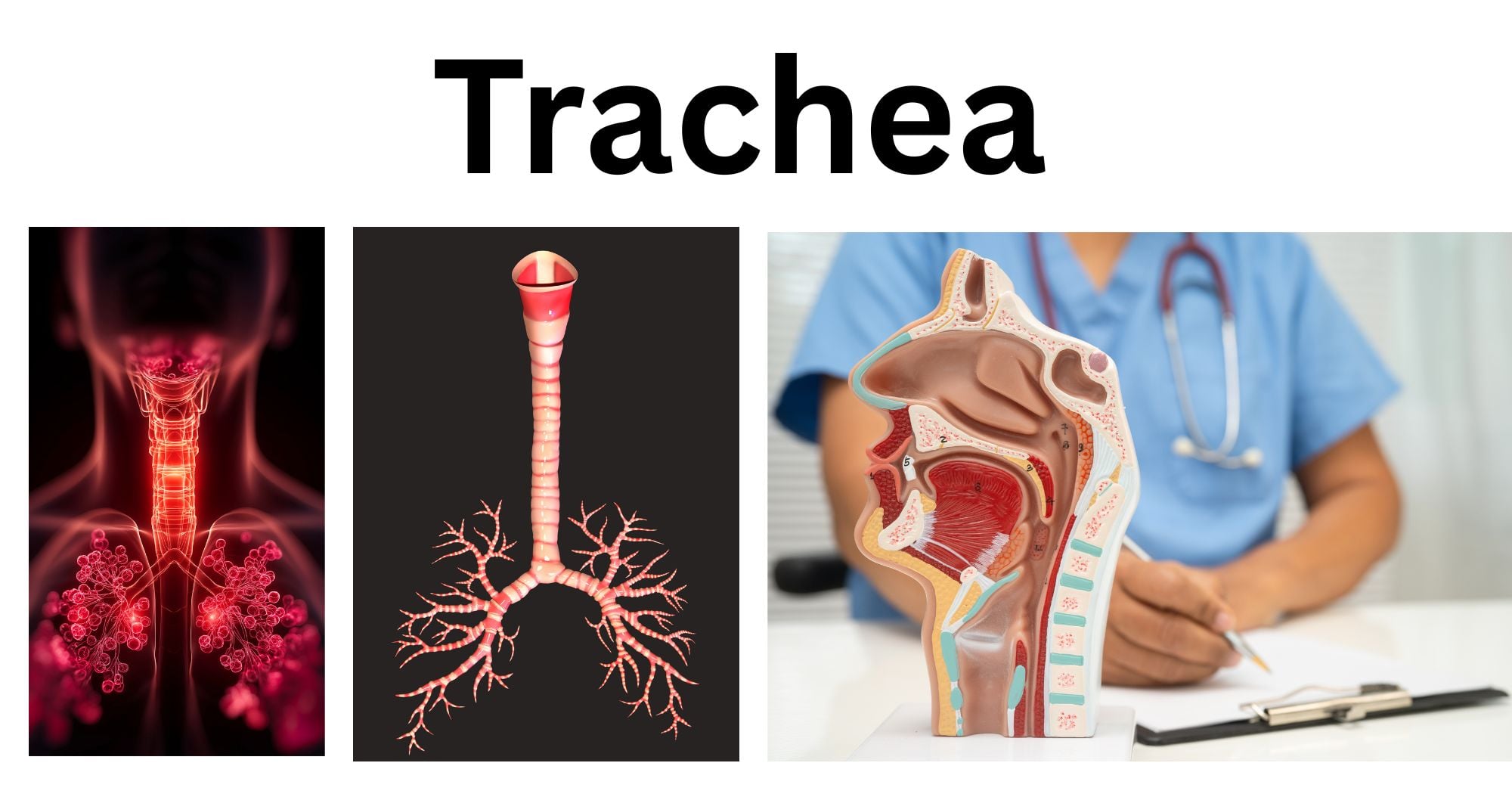
It is also known as the ‘windpipe’ because it functions as the air passageway during the process of breathing.
Anatomy and Structure of the Trachea
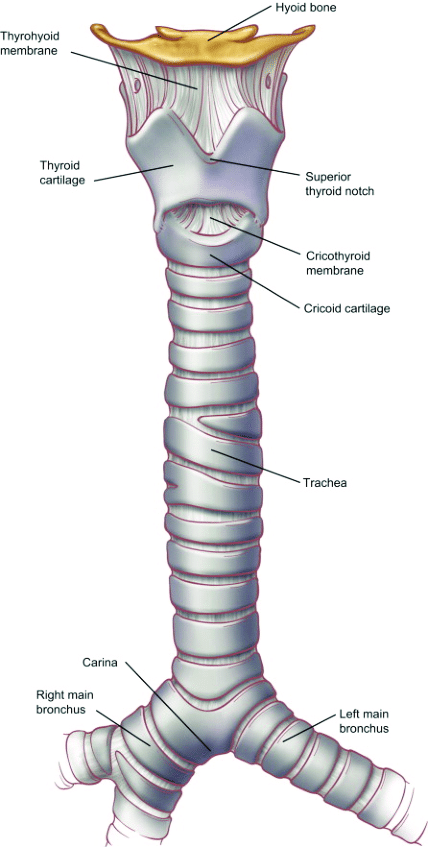
Source: https://www.researchgate.net/figure/Structure-of-the-trachea-Anterior-view_fig1_324160076
- The trachea is a hollow, elongated tubular structure that begins right below the larynx and ends with the carina (the point where the trachea terminates and divides into right and left primary bronchi) in the tracheo-bronchial region.
- The size and shape of the human trachea vary among children, males, and females.
- Anteroposteriorly, it is composed of 16-20 tracheal rings made of hyaline cartilage. They commonly appear in the incomplete C-shapes.
- The tracheal rings are interconnected by the elastic fibers and ligaments. The inner surface of the trachea is lined with a mucosal membrane that consists of goblet cells. Additionally, it also contains cilia.
- The trachea does not contain cartilage in its posterior end; however, the posterior wall consists of the elastic connective tissues and bundles of smooth muscles known as the trachealis muscles. They provide sufficient elasticity and flexibility to the trachea.
- Anatomically, the trachea consists of 2 parts: the cervical trachea and the thoracic trachea
-Cervical Trachea: It is the upper portion of the trachea (approximately 6-7 cm long) that begins from the C6 vertebra, at the lower part of the cricoid cartilage in the larynx, and terminates at the superior thoracic aperture (thoracic inlet).
-Thoracic Trachea: It is the lower part of the trachea that is present within the superior mediastinum. It extends from the superior thoracic aperture and ends at the carina, at the T4–T5 thoracic vertebra. It is also located anterior to the esophagus.
- The length of the windpipe is approximately 10-13 cm in an adult, while the diameter ranges from 1.5-2.5 cm. Generally, males have longer tracheae in comparison to females. However, research in 3D imaging of the trachea shows that females have a longer cervical part, while males have a longer thoracic part.
The Purpose of C-shaped Hyaline Cartilage Rings
- C-shaped hyaline cartilages are present as the tracheal rings throughout the trachea in the respiratory system.
- Their purpose is to provide structural support to the trachea and prevent the collapse of the airway during breathing, while their incomplete C-shape facilitates the flexibility and permits the esophagus to expand during swallowing.
- They ensure an open airway through which the air flows in and out of the lungs during the inspiration and expiration processes.
- In addition, the contraction of the trachealis muscles narrows down the diameter of the trachea and increases the velocity of the air. Consequently, they help in the expulsion of the foreign particles or mucus during coughing.
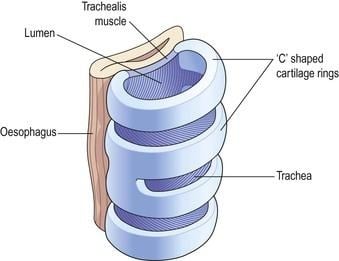
Source: https://basicmedicalkey.com/the-respiratory-system-2/#s0280
Functions of the Trachea in the Respiratory System
- One of the primary functions of the trachea is to allow the air to pass from the upper respiratory tract to the lungs via the tracheobronchial system while transporting the carbon dioxide-rich air to the oral and nasal cavity for excretion.
- The mucosal membrane of the trachea is essential to protect the respiratory route. It secretes the mucus, which traps dust or any harmful particles and prevents their entry into the lungs. The ciliated structures in the tracheal walls excrete these unwanted particles during coughing.
- The trachea is also responsible for humidifying the inhaled air before it reaches the alveoli. It warms, moistens, and conditions the air.
- The sensory afferent nerves, present in the trachea, facilitate the coughing reflex, which is a mechanism that helps to clear irritants and mucus from the respiratory tract.
Histology of the Trachea (Cartilage, Epithelium, and Mucosa)
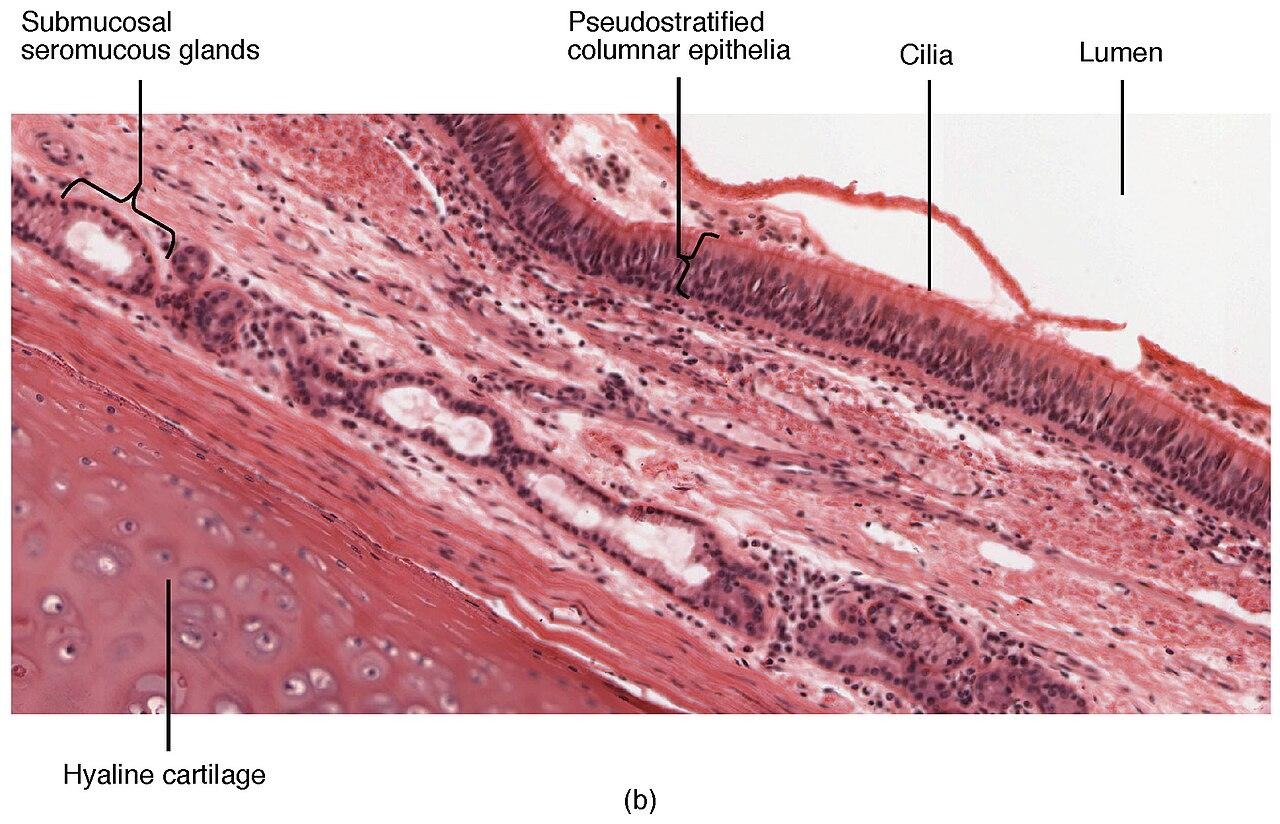
Histologically, the trachea consists of 4 layers:
- Mucosal layer: The trachea consists of an inner layer of mucosal membrane. It is lined with ciliated pseudostratified columnar epithelium along with the goblet cells. These cells secrete the mucus that traps the unwanted foreign debris present in the inhaled air, preventing it from reaching the lungs and protecting the respiratory tract. The inner layer of the trachea also consists of cilia. They move upward, push the mucus through the trachea, propel the trapped foreign particles and dust towards the pharynx, and finally, excrete them out from the respiratory tract.
- Submucosal layer: This layer is present below the mucosal layer. It consists of blood vessels, nervous tissues, elastin, and collagen fibers.
- Layer of hyaline cartilage: The submucosal layer is surrounded by a layer of hyaline cartilage. They are rigid and flexible tissues that provide structural support. The smooth muscles, known as the trachealis muscles, are located posterior to the cartilaginous rings. They help to decrease the tracheal diameter in order to allow the forced expulsion of air during the coughing reflex.
- Adventitia: It is the outermost layer of the trachea, which consists of loose connective tissue.
Mechanism of Air Conduction and Filtration in the Trachea
- The trachea plays a critical role in the air conduction and filtration mechanisms in the respiratory system.
- During respiration, the air passes through the nasal cavity. It passes down along the larynx, trachea, and bronchi and is transported to the alveoli in the lungs.
- Along the airway passage, the trachea helps to warm and moisten the air before it reaches the lungs. This is essential to prevent dehydration and protect the lung tissue.
- The cartilaginous rings provide the required structural integrity to the trachea that prevents it from collapsing during breathing.
- In addition, the trachealis muscles also play a vital role in conducting the air. They contract to reduce the tracheal diameter, consequently, increasing the velocity of air within the airway passage.
- Furthermore, the trachea is also involved in the air filtration process. It filters the air via the mucus layer and hairy cilia. Mucus traps the unwanted foreign particles and microorganisms, while the upward movement of cilia propels the trapped particles and expels them from the respiratory tract by the mucociliary clearance mechanism.
Blood Supply and Innervation of the Trachea
Blood Supply of the Trachea
- The trachea receives the vascular supply through the segmental arteries.
- The upper cervical part of the trachea receives blood from the branches of inferior thyroid arteries that originate from the thyrocervical trunk, while, on the other hand, the bronchial arteries stemming from the aorta vascularize the lower thoracic part of the trachea (i.e., distal trachea and carina).
- These branches create a lateral longitudinal anastomosis along the lateral walls, from which the transverse intercartilaginous arteries penetrate between the rings. The transverse blood vessels, known as the segmental arteries, supply blood to the tracheal cartilages, mucosa, and submucosa.
- The posterior wall of the trachea receives the blood supply from the branches of the oesophageal arteries.
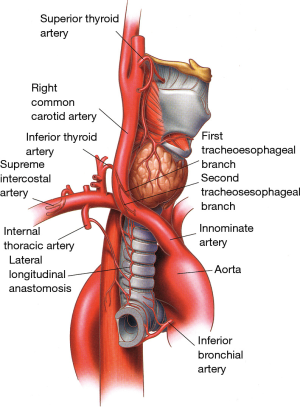
Source: https://jtd.amegroups.org/article/view/6635/6351
Nerve innervations of the Trachea
- The trachea receives the parasympathetic nervous innervations mainly from the preganglionic fibers in the tenth cranial nerve (the vagus nerve). They enter the superior mediastinum and branch off to give the left and right recurrent laryngeal nerves.
- The left and right recurrent laryngeal nerves further divide, and their branches travel underneath the aortic arch and right subclavian artery, respectively. These branches travel superiorly along the tracheo-oesophageal groove.
- Contrarily, the sympathetic nervous innervations to the trachea are provided by the postganglionic fibers. They stem from the sympathetic trunks through the pulmonary plexus. These fibers innervate the tracheal smooth muscles.
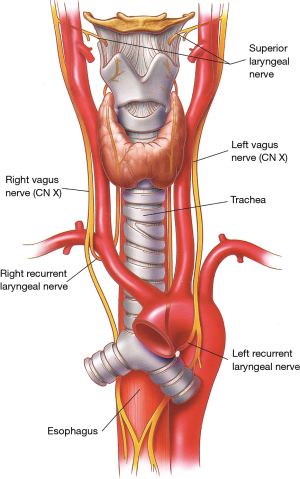
Source: https://jtd.amegroups.org/article/view/6635/6351
Common Diseases and Disorders of the Trachea
The trachea provides an open airway for the transport of inhaled air to the lungs and exhaled air to the external environment in the respiratory tract. Tracheal disorders refer to conditions in which certain inflammations or tumors cause the tracheal airway route to narrow or collapse, resulting in dyspnea.
Primarily, the tracheal disorders have been categorized as tracheomalacia and tracheal stenosis.
- Tracheomalacia: It is a condition in which the cartilaginous rings, forming the tracheal tube, break down and lose their structural integrity. Chronic infections, gastroesophageal reflux disease (GERD), polychondritis, etc., are common causes of tracheomalacia.
- Tracheal stenosis: It is a condition in which the diameter of the tracheal tube narrows to the extent that the air cannot be transported to the lungs. The common causes that lead to tracheal stenosis are tracheostomy, prolonged intubation, chest trauma, chemotherapeutic radiation, tumors pressing against the tracheal walls, chronic inflammation, etc.
Some other diseases associated with the trachea include:
- Tracheitis: It refers to the acute infection of the trachea caused by a few species of bacteria, such as Staphylococcus aureus.
- Tracheoesophageal fistula (TEF): It is a condition that leads to the unusual connection of the windpipe with the foodpipe. It can be congenital in newborns or acquired in adults via certain kinds of trauma or cancer.
The symptoms of these tracheal disorders are wheezing, coughing, difficulty in breathing (dyspnea), bluish skin tone, cough with blood, noisy breathing, trouble swallowing food, etc.
Diagnostic Imaging and Bronchoscopy of the Trachea
The tracheal disorders can be diagnosed via several tests, such as pulmonary function tests, pulmonary ventilation scans, etc.; however, tracheal imaging and bronchoscopy are the preferred diagnostic methods to examine for abnormalities in the trachea.
Imaging
Benign and malignant tumors in the tracheal region are difficult to diagnose. Some of the imaging methods used for examining the cancerous and noncancerous cells in the trachea include:
Computed tomography (CT): A CT scan helps to demonstrate the tracheal anatomy and evaluate the structures adjacent to the trachea. The CT scans help to detect tumors, tracheomalacia, and stenosis.
Radiography (X-ray) and MRI: The chest x-ray and MRI are the diagnostic tools to examine the abnormalities in the areas related to the trachea, such as the mediastinum.
Bronchoscopy
It is the diagnostic procedure in which a tube, provided with a camera and light, is inserted through the respiratory airway to visualize any kind of defects in the trachea, bronchi, and lungs. There are two major types of bronchoscopy:
Flexible Bronchoscopy: This type of bronchoscopy is usually used to collect biopsy samples. The bronchoscope is flexible and easy to pass down the airway.
Rigid Bronchoscopy: A rigid metal tube is used in this type of bronchoscopy. They are commonly used to visualize and remove the foreign particles in the lower respiratory tract, treat bleeding, or place the stents.
How to Keep the Trachea Healthy
Some of the tips to keep our trachea healthy are:
- Avoid cigarette smoking, as smoking can cause chronic inflammation in the tracheal muscles and cause tracheostenosis.
- Drink plenty of water and stay hydrated: It helps to thin the mucus lining of the airway.
- Using air humidifiers and purifiers can help to keep the toxic irritants and pollutants away from the airway.
Conclusion
The trachea, also called the windpipe, acts as the major air pathway in the respiratory tract that permits the air to pass from the larynx to the bronchi. It is supported by the C-shaped hyaline cartilages connected by the fibrous elastic tissues and bundles of trachealis muscles, which together provide rigid structure, support, and flexibility to the trachea. The trachea is also involved in mucociliary clearance and air conditioning.
References
- Breatnach, E., Abbott, G. C., & Fraser, R. G. (1984). Dimensions of the normal human trachea. AJR. American journal of roentgenology, 142(5), 903–906. https://doi.org/10.2214/ajr.142.5.903
- Downey, R. P., & Samra, N. S. (2023, July 24). Anatomy, thorax, tracheobronchial tree. StatPearls – NCBI Bookshelf. https://www.ncbi.nlm.nih.gov/books/NBK556044/
- Drevet, G., Conti, M., & Deslauriers, J. (2016). Surgical anatomy of the tracheobronchial tree. PubMed, 8(Suppl 2), S121-9. https://doi.org/10.3978/j.issn.2072-1439.2016.01.69
- File:Respiratory histology 05.jpg – Embryology. (n.d.). https://embryology.med.unsw.edu.au/embryology/index.php?title=File:Respiratory_histology_05.jpg
- Fletcher, J. (2024, January 23). Trachea: Everything you need to know. https://www.medicalnewstoday.com/articles/trachea#conditions
- Furlow, P. W., & Mathisen, D. J. (2018). Surgical anatomy of the trachea. Annals of Cardiothoracic Surgery, 7(2), 255–260. https://doi.org/10.21037/acs.2018.03.01
- Liao, Libin & Yao, Xueping & Han, Mingguo & Bai, Shengbin. (2022). A Fresh Perspective on Histology and Embryology – A Lens on Aesthetics. International Journal of Morphology. 40. 1400-1403. 10.4067/S0717-95022022000501400.
- Libretexts. (2024, May 20). 10.5: Air conduction- Larynx, Trachea, Bronchi and Bronchioles. Medicine LibreTexts. https://med.libretexts.org/Bookshelves/Veterinary_Medicine/Veterinary_Histology_(Jennings_and_Premanandan)/10%3A_Respiratory_System/10.05%3A_Air_conduction-_Larynx_Trachea_Bronchi_and_Bronchioles
- Matsuoka, S., Shimizu, K., Koike, S., Takeda, T., Miura, K., Eguchi, T., & Hamanaka, K. (2022). Significance of the evaluation of tracheal length using a three-dimensional imaging workstation. Journal of Thoracic Disease, 14(11), 4276–4284. https://doi.org/10.21037/jtd-22-595
- Mieczkowski, B., & Seavey, B. F. (2023, August 7). Anatomy, head and neck, Trachea. StatPearls – NCBI Bookshelf. https://www.ncbi.nlm.nih.gov/books/NBK448070/
- Premanandan, R. J. a. C. (2017, August 22). Air conduction: Larynx, Trachea, Bronchi and Bronchioles. Veterinary Histology. https://ohiostate.pressbooks.pub/vethisto/chapter/10-larynx-trachea-bronchi-and-bronchioles/
- Professional, C. C. M. (2026, April 24). Trachea. Cleveland Clinic. https://my.clevelandclinic.org/health/body/21828-trachea
- Radiopaedia.org. (n.d.). Radiopaedia. https://radiopaedia.org/articles/trachea
- Shepard, J. O., Flores, E. J., & Abbott, G. F. (2018). Imaging of the trachea. Annals of Cardiothoracic Surgery, 7(2), 197–209. https://doi.org/10.21037/acs.2018.03.09
- , U. (2016, July 18). Trachea and Bronchi. Veterian Key. https://veteriankey.com/trachea-and-bronchi/
- Trachea. (2023, September 19). Kenhub. https://www.kenhub.com/en/library/anatomy/the-trachea
- Trachea and larynx. (n.d.). Physiopedia. https://www.physio-pedia.com/Trachea_and_Larynx
- Tracheal Disorders: Symptoms and Causes | Tampa General Hospital. (n.d.). https://www.tgh.org/institutes-and-services/conditions/tracheal-disorders
- UpToDate. (n.d.). UpToDate. https://www.uptodate.com/contents/radiology-of-the-trachea/print
- Wikipedia contributors. (2026, March 28). Trachea. Wikipedia. https://en.wikipedia.org/wiki/Trachea

This article provides a clear and well-structured explanation of the trachea, covering its anatomy, functions, histology, and clinical significance in an easy-to-understand manner. I especially appreciate how the content breaks down complex concepts into digestible sections while maintaining scientific accuracy. As a reader, I found the illustrations and detailed explanations particularly helpful for understanding the role of the trachea in respiratory health. Educational resources like this are invaluable for students, healthcare professionals, and anyone interested in learning more about human anatomy. Thank you for creating such informative and accessible content.