
Antigen, Immunogen, and Hapten
Antigen
- An antigen is a molecule recognized by the immune system, specifically by B-cell or T-cell receptors in conjunction with major histocompatibility complex (MHC) molecules.
- Antigens can be a wide range of biological molecules, including metabolites, sugars, lipids, proteins, and nucleic acids.
- They can bind to antibodies or T-cell receptors, but not all antigens can trigger an immune response. Only those that activate lymphocytes are called immunogens.
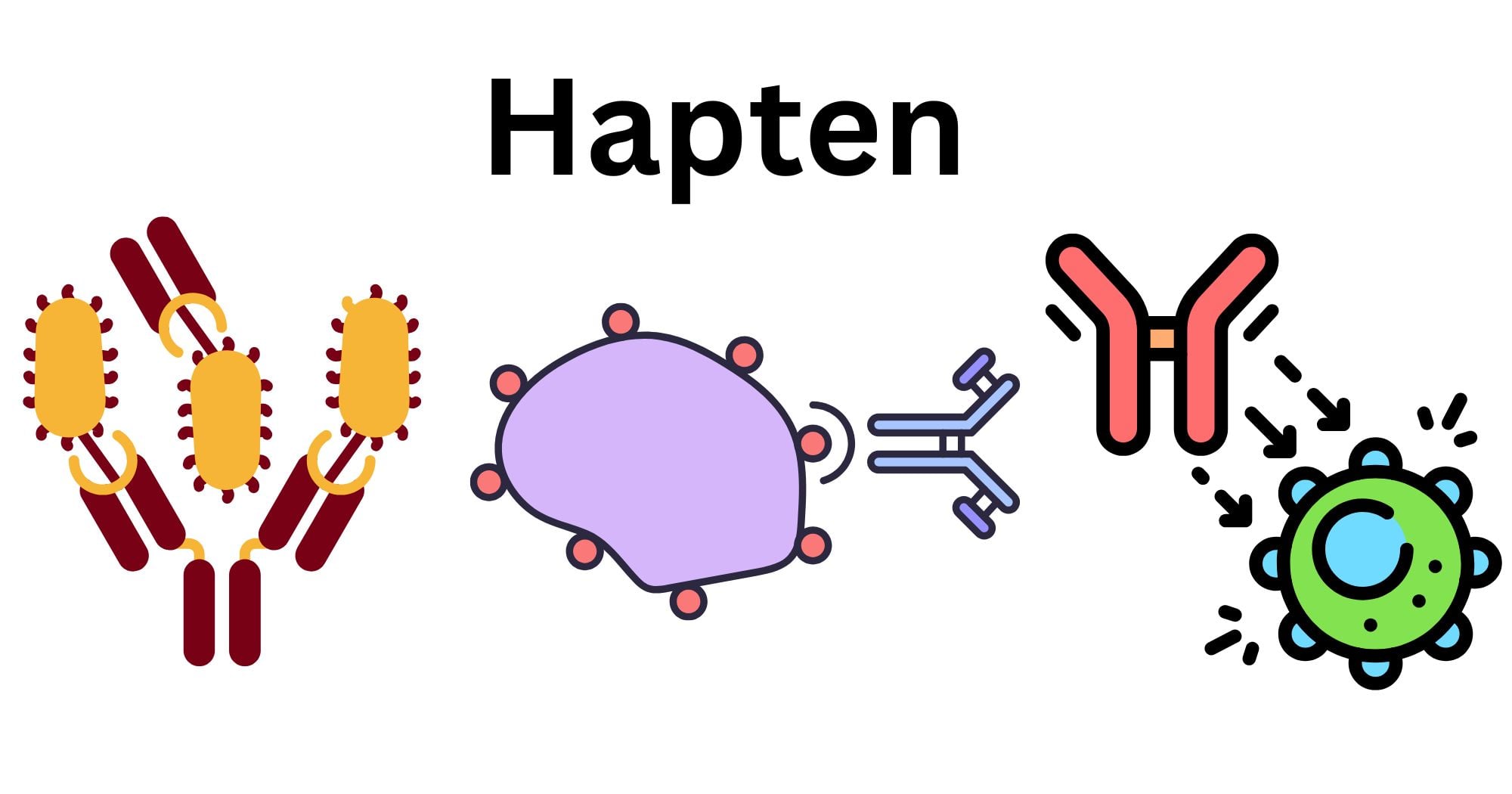
Immunogen
It is any antigen that produces a humoral or cell-mediated immune response
Note: All immunogens are antigens, but not all antigens are immunogenic
Complete vs. Incomplete Antigens
- Complete antigen/ Immunogen: Complete antigens are those that can independently initiate immune responses
- Incomplete antigen: Incomplete antigens are those that need a carrier to stimulate the immune system effectively. Haptens are incomplete antigens.
Hapten + Carrier –> complete antigen/ immunogen
Hapten
- A hapten is an antigen (it can bind to antibodies) but is not an immunogen on its own because it cannot stimulate an immune response (humoral or cell-mediated immune response) without a carrier molecule.
- Haptens can be peptides, carbohydrates, nucleic acids, lipids, or small organic compounds like toxins and drugs.
Similarities between antigens and haptens
| Character | Antigens | Haptens |
| Antigenicity | They are antigenic | They are also antigenic |
| Binding with antibody | They can bind with the antibody | They can bind with the antibody |
Differences between antigens and haptens
| Character | Antigens | Haptens |
| Immune response | Most of the antigens trigger immune response | It is an incomplete antigen that cannot trigger an immune response |
| Carrier molecule necessity | They do not need carrier molecule | They require carrier molecule |
| Antigenicity and immunogenicity | Most of the antigens are both antigenic and immunogenic | Haptens are only antigenic |
Discovery of Haptens
Origin of the Term
- The word hapten comes from the Greek word “haptein,” meaning to fasten.
- The concept of a hapten was introduced in 1965 to describe small molecules that bind antibodies but do not elicit an immune response on their own.
Karl Landsteiner’s Contributions
- Early 20th century: Immunologist Karl Landsteiner conducted pivotal experiments using synthetic haptens.
- His work on haptens led to the term haptenic response, exploring how antigens bind to antibodies
Structural and Molecular Properties of Haptens
Haptens are usually small, low molecular weight, chemically reactive molecules
(< 1 kDa/ 1000Da).
Antigenic but not Immunogenic
- Haptens can bind antibodies but cannot independently stimulate an immune response.
Carrier Requirement
- Haptens become immunogenic when attached to a larger carrier molecule with covalent bonding, forming a hapten-carrier complex.
- The carrier molecule helps convert the hapten into a complete antigen, which can then be recognized and provoke a proper immune response.
- This hapten-carrier complex induces an immune response, or hapten-induced contact hypersensitivity (CHS) response, followed by hapten-specific long-lived immune memory.
Examples of Haptens
Drugs and Pharmaceuticals
- Penicillin: A classic hapten, penicillin binds covalently to proteins (like lysine residues), forming benzylpenicilloyl derivatives. This can lead to immune responses such as autoimmune hemolytic anemia and, in severe cases, anaphylaxis. Penicillin is known for causing allergic reactions by modifying host proteins and eliciting a B- and T-cell response.
- Hydralazine: A blood pressure medication (to lower the blood pressure) that can induce drug-induced lupus erythematosus, a form of autoimmune disease in susceptible individuals.
- Cephalosporins: Another group of antibiotics, particularly third- and fourth-generation cephalosporins, that act as haptens. These drugs can cause adverse immune responses like rashes and anaphylaxis, though the exact mechanism by which they become haptens remains unclear.
Anesthetics
- Halothane: A widely used anesthetic in the mid-20th century, metabolized to trifluoroacetyl chloride in the liver. This metabolite forms neoantigens when it binds to liver proteins, triggering an immune response. Subsequent exposures to halothane can cause life-threatening hepatitis due to liver inflammation triggered by the immune system’s response to the neoantigen.
Molecular Biology Reagents
- Biotin: Biotin is commonly used in immunological assays for labeling molecules. Biotin is small and non-immunogenic on its own, but when conjugated to a protein (e.g., bovine serum albumin), it becomes immunogenic and can raise anti-biotin antibodies.
- Fluorescein: It is frequently used in research, particularly for labeling antibodies and other molecules in diagnostic tests. It elicits an immune response only when bound to a larger carrier protein.
- Digoxigenin: It is used in molecular biology, particularly in the labeling of nucleic acids, such as in situ hybridization assays.
Neurotransmitters (Cross-linked with Carrier Proteins)
- Small neurotransmitter molecules like serotonin, dopamine, GABA, glutamate, and glycine are normally too small to be immunogenic. However, when conjugated to carrier proteins using a crosslinker like glutaraldehyde, they become haptens, allowing the immune system to generate antibodies specific to these small molecules. These conjugates are particularly useful in research for detecting neurotransmitters in tissues.
Small Chemicals
- Aniline and its derivatives (e.g., aminobenzoic acid): Among the first compounds to be studied as haptens, these small molecules are not immunogenic on their own but become immunogenic when bound to a protein.
- 2,4-Dinitrophenol (DNP): A small molecule that is widely used in biochemical studies. Like other haptens, it can elicit an immune response only when conjugated to a protein carrier.
Other Haptens
- Urushiol: Found in poison ivy, urushiol acts as a hapten, causing an allergic reaction (contact dermatitis) when it binds to skin proteins. The immune system treats the modified skin protein as foreign, leading to inflammation.
- Pesticides, Hormones, and Food Toxins: Many pesticides, hormones, and small toxins act as haptens when they bind to proteins in the body. These small molecules, typically less than 1,000 Da, need a protein carrier to become immunogenic.
How Pharmaceutical Drugs Become Haptens
Pharmaceutical drugs are often small molecules, making them non-immunogenic on their own. However, when they bind to larger molecules, such as proteins in the blood (e.g., albumin), they form a hapten-protein complex, which can trigger an immune response. This immune reaction is responsible for various drug-related allergies and adverse reactions, such as:
- Skin eruptions
- Anaphylactic shock
- Urticaria, asthma, and angioedema
Why Haptens Do Not Elicit an Immune Response Independently
Inability to Activate Helper T Cells:
Haptens cannot activate helper T cells because they cannot bind to MHC proteins (Major Histocompatibility Complex), which is crucial for T cell activation.
Univalency:
Haptens are univalent, meaning they only have a single binding site and cannot cross-link B cell receptors (BCRs) by themselves, which is essential for B cell activation.
Structural differences
- For a substance to be immunogen, it has to be larger, have polymeric organization, and have a complex structure which is in contrast to the properties of haptens. Due to this reason, haptens alone cannot trigger an immune response
How Haptens Elicit an Immune Response
Haptens can elicit an immune response when they are conjugated to carrier proteins.
Hapten-Carrier Complex Formation:
- Haptens bind covalently (cross-linking through covalent bond) to larger carrier proteins (e.g., albumin), forming a hapten-carrier conjugate.
- Hapten-specific B cells and protein-specific T cells are required for the immune response.
- This complex makes the hapten immunogenic, allowing it to trigger an immune response.
Activation of B Cells:
- The hapten portion binds to the IgM receptor on B cells, internalizing the entire hapten-carrier complex.
- The carrier protein is processed by the B cell, and peptides derived from the carrier are presented via MHC class II molecules to helper T cells.
- The response involves MHC class II restriction, meaning T cells only interact with B cells that share the same MHC molecules involved in initial activation.
Activation of Helper T Cells:
- Helper T cells are activated by recognizing the carrier peptide presented by the B cells.
- These helper T cells then release interleukins that stimulate B cells to produce antibodies, specifically targeting the hapten.
Antibody Production:
- After B-cell activation, antibodies specific to the hapten are generated.
- Upon subsequent exposure to the hapten, these antibodies can recognize and bind to it, even in the absence of the carrier molecule.
Mechanism of Hapten-Carrier Immunogenicity
When haptens enter the body, they are taken up by antigen-presenting cells (APCs) like Kupffer cells in the liver, where they are processed. These APCs then present the hapten-carrier complex to naive T cells using major histocompatibility complex (MHC) molecules.
Upon recognition, T cells specific to the hapten multiply and spread throughout the body. If the hapten is encountered again (such as with repeated drug exposure), helper T cells reactivate the immune response, leading to the release of cytokines. This activates cytotoxic T cells, natural killer (NK) cells, and B cells, with B cells developing into plasma cells that produce antibodies targeting either the hapten, the carrier protein, or both.
This immune response can lead to autoimmunity, as new antigenic sites may form on the carrier protein, potentially triggering an attack on previously harmless self-proteins.
Hapten-Carrier Adducts and Immune Responses
When haptens bind to carrier proteins on the skin, they can provoke a contact hypersensitivity reaction, which is a type IV delayed-type hypersensitivity. This immune response involves two key stages:
-Sensitization Phase: The initial exposure to the hapten triggers innate immune responses, including the migration of dendritic cells to lymph nodes. In the lymph nodes, these cells present the hapten-carrier adduct to naive T cells, which primes them to become antigen-specific memory T cells and B cells, leading to the generation of antibody-secreting plasma cells.
-Elicitation Phase: Upon re-exposure to the hapten on another skin area, previously sensitized effector T cells are activated. This results in T cell-mediated tissue damage and a subsequent antibody-mediated immune response. Haptens activate these reactions through complex mechanisms, including the release of inflammatory cytokines and activation of danger-associated molecular patterns (DAMPs).
Hapten Inhibition
Hapten inhibition occurs when free haptens bind to antibodies without triggering a full immune response. In this scenario, the free hapten occupies the binding sites on the antibodies, preventing the larger hapten-carrier complex from interacting and initiating an immune reaction. This process can effectively reduce or suppress hypersensitivity reactions. A common example is dextran 1, a small fragment of the dextran molecule that binds to anti-dextran antibodies without causing an immune response, due to its small size.
Hapten-Induced Contact Hypersensitivity
Haptens are responsible for triggering contact hypersensitivity reactions, such as the well-known case of urushiol from poison ivy. When urushiol enters the skin, it undergoes chemical changes, forming a reactive compound that binds to skin proteins, creating hapten-protein complexes. Upon subsequent exposure, these complexes activate the immune system, resulting in the familiar blistering rash of poison ivy dermatitis.
Another similar reaction occurs with nickel allergy, where nickel ions bind to skin proteins and induce a delayed hypersensitivity response, manifesting as skin irritation and rashes.
Role of Carrier Proteins in Hapten Immunogenicity
Carrier proteins play a crucial role in making haptens immunogenic since haptens, on their own, are too small to elicit an immune response. Carriers are large molecules (typically proteins) that allow haptens to be recognized by the immune system. Common carrier proteins include:
- Bovine serum albumin (BSA)
- Keyhole limpet hemocyanin (KLH)
The role of carrier proteins includes:
- Facilitating MHC presentation by B cells: Carrier proteins aid in the presentation of hapten-carrier complexes to immune cells, which is necessary for eliciting a response.
- Providing T-cell epitopes: Carriers present T-cell epitopes that activate helper T cells, promoting a more robust immune reaction.
- Generating an immune response to both the hapten and the carrier: This dual response helps enhance the immunogenicity of haptens by recruiting various immune components.
Examples of Carrier Proteins and Reactions
Albumin
- It is a common carrier protein found in blood that haptens can bind to. When the hapten-albumin complex exceeds a molecular weight of about 3,000 Da, it becomes immunogenic and can trigger an immune response.
- Human serum albumin (HSA): This well-characterized protein often serves as a model for protein-binding assays. It detoxifies by binding to xenobiotics in the body, helping remove harmful chemicals from circulation.
Neoantigens
- Haptens can also form neoantigens by binding to proteins on cell membranes.
- For example, ibuprofen can bind to red blood cells (RBCs), and the immune system may react to this neoantigen, leading to conditions like hemolytic anemia.
Keyhole Limpet Hemocyanin (KLH)
- KLH is derived from the marine mollusk Megathura crenulata and has a molecular weight between 4.5 × 10⁵ and 1.3 × 10⁷ Da. It is commonly used as a carrier protein in mammals (e.g., rabbits, mice) due to its high immunogenicity.
- Despite its large size and limited solubility in water, KLH is effective for immunization purposes. Its flocculent appearance in solution does not hinder its ability to generate an immune response.
Bovine Serum Albumin (BSA)
- BSA is a plasma protein derived from cattle, with a molecular weight of approximately 67 × 10³ Da. It contains around 59 lysine residues, of which 30-35 are accessible for conjugation with haptens. BSA is highly stable and water-soluble, making it a popular choice for weakly antigenic compounds.
- However, BSA should not be used as a carrier if the assay system also employs BSA as a blocking agent, as it can lead to false positives in antibody-based assays.
Ovalbumin (OVA)
- A protein derived from hen egg whites, OVA has a molecular weight of 45 × 10³ Da. It is often used as a secondary carrier to verify that antibodies are specific to the hapten rather than the carrier protein. This ensures the immune response is directed at the hapten.
Alternative Carriers
- In addition to proteins, synthetic molecules such as Poly-L-glutamic acid, polysaccharides, and liposomes can also serve as carrier molecules for haptens. These carriers provide versatility in different applications, depending on the desired immune response or experimental conditions.
Characteristics of Carrier Proteins
- Immunogenicity: Carriers must be inherently immunogenic and antigenic, presenting epitopes that can activate helper T cells.
- Reactive Amino Acid Residues: Proteins should have reactive side chains (e.g., lysine, cysteine) to facilitate covalent conjugation with haptens.
- Toxicity and Availability: The carrier’s toxicity, availability, and cost should be considered when selecting the appropriate carrier protein for use in vivo or commercial applications.
Applications of Haptens in Research and Diagnostics
- Hapten-carrier conjugates are invaluable in immunological research, especially for generating specific immune responses in assays or producing antibodies. Well-designed conjugates play a crucial role in advancing research and improving diagnostics, especially in studying immune responses and developing vaccines (conjugate vaccines).
- Haptens are extensively used to study immune system behavior, especially in allergic contact dermatitis (ACD) and autoimmune diseases. These small molecules are useful for investigating drug-induced hypersensitivity, as many drugs must bind to carrier proteins to prompt an immune response.
- In the field of diagnostics and research, haptens help model various immune pathways, with some haptens inducing type I hypersensitivity reactions and others triggering type II responses. This understanding is essential for studying immune polarization and the body’s defense mechanisms.
- Haptens are also widely used in drug and cosmetic testing to identify potential allergens, helping to prevent adverse immune reactions.
- Moreover, hapten-specific antibodies are used in immunoassays, biosensors, and environmental diagnostics to detect small molecules, toxins, and pollutants, demonstrating their broad range of applications in both clinical and environmental settings.
Through these roles, haptens contribute to the development of more precise diagnostic tools and therapies, which are critical in immunology and allergy testing.
References
- Alving, C. R., Matyas, G. R., Torres, O., Jalah, R., & Beck, Z. (2014). Adjuvants for vaccines to drugs of abuse and addiction. Vaccine, 32(42), 5382-5389.
- Creative Diagnostics. Hapten. Retrieved on October 18, 2024. Retrieved from https://www.creative-diagnostics.com/Hapten.html
- Encyclopaedia Britannica. Allergy. In Britannica. Retrieved on October 14, 2024. Retrieved rom https://www.britannica.com/science/allergy
- Hamon, M. A., & Quintin, J. (2016, August). Innate immune memory in mammals. In Seminars in immunology (Vol. 28, No. 4, pp. 351-358). Academic Press.
- Liu, Z. X., & Kaplowitz, N. (2002). Immune-mediated drug-induced liver disease. Clinics in liver disease, 6(3), 755-774.
- News-Medical. (2023, June 26). What are haptens? Retrieved from https://www.news-medical.net/life-sciences/What-are-Haptens.aspx
- Parija, S. C. (2009). Textbook of Immunology (1st ed.). Elsevier.
- Pichler, W. J. (2004). Immune mechanism of drug hypersensitivity. Immunology and Allergy Clinics, 24(3), 373-397.
- Wikipedia. (2024, October 10). Hapten. Retrieved from https://en.wikipedia.org/wiki/Hapten
