Skip to content
Microbe Notes

Microbe Notes

  • Home
  • Biological Sciences
    • Biochemistry
    • Bioinformatics
    • Biology
    • Biotechnology
    • Botany
    • Cell Biology
    • Genetics
    • Molecular Biology
    • Zoology
  • Microbiology
    • Agricultural Microbiology
    • Bacteriology
    • Basic Microbiology
    • Environmental Microbiology
    • Food Microbiology
    • Immunology
    • Mycology
    • Parasitology
    • Virology
  • Laboratory Methods
    • Biochemical Test
    • Culture Media
    • Instrumentation
    • Microscopy
    • Staining
  • Health and Medical
    • Diseases
    • Epidemiology
    • Human Anatomy and Physiology
    • Medical Devices
    • Pharmacology
  • Resources
    • Difference Between
    • Microbiology Terms
    • Microorganisms Note
    • Protocols
    • Research Methodology
    • Syllabus

Genetics

Genetics is a branch of natural science that deals with heredity due to the transmission of genes, gene regulation, and gene manipulation.

  • Genetics is a connecting link between many disciplines like microbiology, biotechnology, medicine, and agriculture.
  • Studies involving genes and chromosomes of living beings began quite late as it requires significant advances in the microscopy area.
  • The influence of heredity and its application of cultivation and production improved organisms, however, had been recognized since ancient times.
  • The study of genes and genetics began as a major concept after studies made by Mendel on pea plants. It was further strengthened and flourished by the works of Morgan.
  • Eventually, genetics became a distinct area of study with the identification of genes and the study of genes at different levels, including their role in the cell, their regulation, and their expression.
  • Initially, genetics was limited to understanding the concept and process of heredity via techniques like the formation of Punnet’s square. With the development of techniques like X-ray diffraction, the structure of DNA, and the presence of genetic code were established. This paved the way for modern genetics.
  • Modern genetics focuses on the chemical composition of structures found in genes like the DNA that influences the chemical reactions taking place in the cell.
  • Gene expression is influenced by two major factors; the genetic composition and the influence of the environment.
  • The influence of the environment on gene expression can be distinctly observed in green plants where the gene responsible for the formation of chlorophyll is only expressed in the presence of sunlight.
  •  Genes, through the proteins they encode, determine how efficiently foods and chemicals are metabolized, how effectively toxins are detoxified, and even how vigorously infections are targeted.
  • Processes like mutations are now a significant cause of major genetic diseases. The mutations might arise due to a complex combination of genetic, behavioral, and environmental factors.

The HtrA Gene and Protein: A Dual Role in Mitochondrial Quality Control and Apoptosis

March 22, 2026February 17, 2026 by Khushi Sharma
HtRA gene and protein

Apoptosis, or programmed cell death, is a crucial biological process fundamentally distinct from necrosis, which is cell death resulting from acute injury or trauma. It is a highly controlled and … Read more
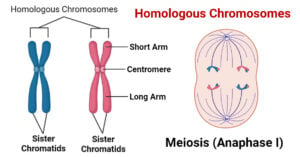
Homologous Chromosomes: Key Traits & Significance

March 25, 2026January 26, 2026 by Sanju Tamang
Homologous Chromosomes

Chromosomes are essential components of the genetic material located in the nucleus of cells. They are thread-like structures that consist of DNA and proteins.  Homologous chromosomes, also known as homologs, … Read more

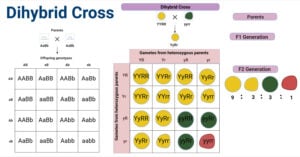
Dihybrid Cross: Steps and Process with Examples

November 14, 2025 by Anupama Sapkota
Dihybrid Cross

A dihybrid cross is a type of genetic cross between two individuals with either homozygous or heterozygous genotypes of two characters or traits. Steps/Process The following are the steps to … Read more

Telomeres and Telomerase: Structure and Functions

April 1, 2025March 30, 2025 by Kritisha Guragain
Telomeres and Telomerase

Telomeres are the structure of nucleoproteins that are present at the end of chromosomes in eukaryotes (Rhodes & Giraldo, 1995). These telomeres are similar to the cap that preserves the … Read more

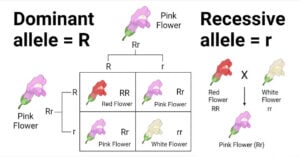
Dominant vs. Recessive Traits in Plants, Animals & Humans

April 9, 2025March 3, 2025 by Dibyak Kapali
Dominant and Recessive Traits

There are 23 pairs of chromosomes in each human cell and hundreds of thousands of distinct genes on each chromosome. An individual inherits two versions of each gene, known as … Read more

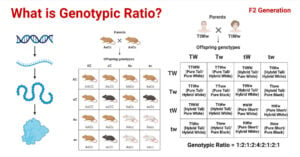
Genotypic Ratio: Definition, Calculation & Examples

April 9, 2025February 5, 2025 by Bikash Dwivedi
Genotypic Ratio

The genotypic ratio is the depiction of the ratio of the resulting patterns and frequencies of inherited genes after crossing in the offspring of organisms. In simple language, it is … Read more

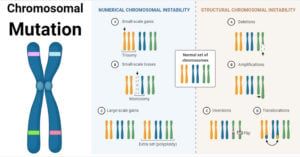
Chromosomal Mutations: Causes, Types & Examples Explained

April 9, 2025January 10, 2025 by Anupama Sapkota
Chromosomal Mutations

Chromosomes are long thread-like structures of DNA that contain part or all of the genetic material of an organism. Chromosomal Mutation Definition The chromosomal mutation is the process of change … Read more

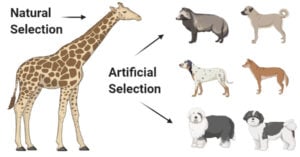
Natural vs. Artificial Selection: 17 Key Differences, Examples

April 9, 2025January 3, 2025 by Anupama Sapkota
Differences Between Natural and Artificial Selection

Natural selection definition Natural selection is a process of adaptation by an organism to the changing environment by bringing selective changes to its genotype or genetic composition. Artificial selection definition … Read more

Polygenic Inheritance: Definition, Characteristics, Examples

February 3, 2025December 4, 2024 by Babita Sharma
Polygenic Inheritance

Polygenic inheritance is defined as some phenotypic character determined by the additive effect of more than one gene on a single character. Two types of genes and alleles are involved … Read more

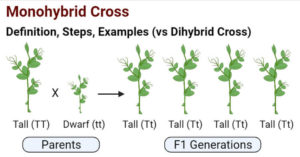
Monohybrid Cross: Definition, Steps & Examples Explained

December 28, 2024November 8, 2024 by Anupama Sapkota
Monohybrid Cross

A Monohybrid cross is a type of genetic cross between two individuals with homozygous genotypes of a single character or trait, often resulting in an opposite phenotype. Steps of Monohybrid … Read more

Older posts
Page1 Page2 … Page9 Next →

Topics / Categories

  • Agricultural Microbiology (30)
  • Bacteriology (134)
  • Basic Microbiology (63)
  • Biochemical Test (114)
  • Biochemistry (198)
  • Bioinformatics (26)
  • Biology (139)
  • Biotechnology (41)
  • Botany (112)
  • Cell Biology (108)
  • Culture Media (68)
  • Difference Between (89)
  • Diseases (53)
  • Environmental Microbiology (14)
  • Epidemiology (28)
  • Food Microbiology (52)
  • Genetics (81)
  • Human Anatomy and Physiology (75)
  • Immunology (117)
  • Instrumentation (69)
  • Medical Devices (5)
  • Microscopy (31)
  • Molecular Biology (109)
  • Mycology (36)
  • Parasitology (28)
  • Pharmacology (22)
  • Protocols (9)
  • Research Methodology (20)
  • Staining (30)
  • Syllabus (20)
  • Virology (62)
  • Zoology (39)
Microbe Notes Android Application
  • Severe Combined Immunodeficiency (SCID): An Overview
  • Streptomycin: Structure, Production, Harvest, Recovery
  • What are Viruses?- A Complete Study Note and Guide
  • Electron Transport Chain: Equation, Steps, Products, Diagram
  • Glycolysis: 10 Steps, Enzymes, Equation, Regulation, Diagram
  • Our Team
  • Advisory Board
  • About Us
  • Contact Us
  • Editorial Policy
  • Privacy Policy
  • Cookie Policy
  • Disclaimer (Terms and Conditions)
© 2026 Microbe Notes. Made with ♡ by Sagar Aryal.