
Cells are innately designed to suppress uncontrollable cell proliferation, i.e., cancer. They have intricate tumor suppression mechanisms known as tumor suppressor genes to prevent such abnormalities. When these mechanisms are disrupted, the probability of developing cancerous cells increases.
What are Tumor Suppressor Genes?
Tumor suppressor genes are those genes that encode proteins that regulate several cellular functions to inhibit cell proliferation or to promote cell death.
In simpler terms, these genes prevent cells from becoming cancerous. Because of this, their loss or inactivation can lead to cancer. This can occur when these genes do not function properly due to mutation, which can lead to uncontrolled cell division.
Discovery of Tumor Suppressor Genes
- In 1960, Georges Barski and his associates discovered that cells from different lineages grown in a single culture occasionally fuse to form hybrid cells. This could be done by artificially inducing cells with inactivated forms of the Sendai virus.
- When cancerous cells were fused with normal cells, the hybrid cell that formed did not have abnormal cell proliferation properties that led to a tumor. However, when these hybrid cells are grown for extended periods in culture, they often revert to the malignant, uncontrolled behavior of the original cancer cells. This reversion of malignant behavior is associated with certain chromosomes, suggesting the presence of genes that suppress tumor growth.
- The retinoblastoma (RB) gene was the first known suppressor gene discovered. Mutations in this gene can cause a 10,000-fold increased risk of developing retinoblastoma. Most of this information originates from the studies of the retinoblastoma (RB) gene.
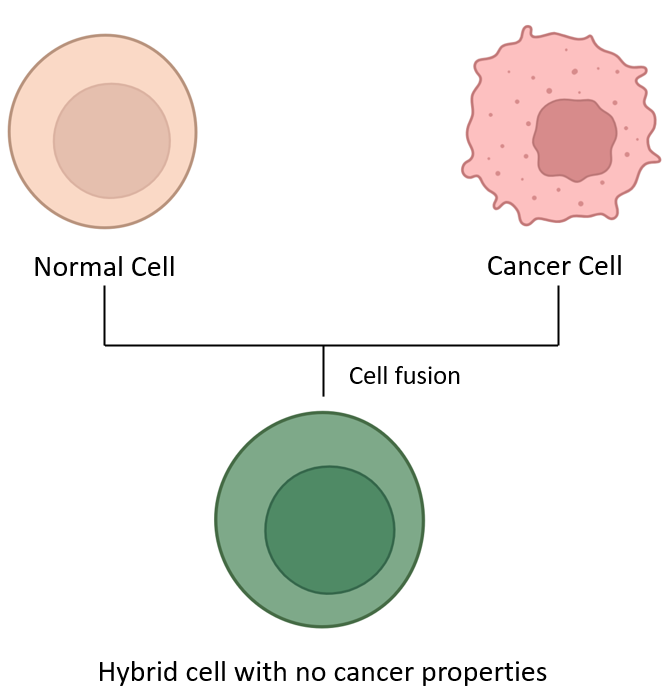
Cell fusion experiment fusing a normal cell and a cancer cell
Two-Hit Hypothesis of Tumor Suppressor Genes
- Tumor suppressor genes can acquire mutations that can be either during a person’s lifetime (somatic) or be inherited (germline). For cancer to develop, the genes must be mutated recessively, meaning both homologous copies of the gene must be affected to disrupt normal cell function. Individuals with a single mutation do not develop cancer, but are more susceptible to it. To elaborate, a person suffering from Li-Fraumeni syndrome has a mutated tumor suppressor gene (TP53 gene) from birth. This person has a higher risk of developing cancer if another mutation occurs during their lifetime. This phenomenon is known as the ‘two-hit hypothesis’, proposed by the geneticist Alfred Knudson in 1971.
- Knudson formulated this hypothesis while studying retinoblastoma, a rare retinal cancer that occurs in children. Retinoblastoma arises in the light-absorbing retinal cells (retinoblasts) located at the back of the eye, which fail to differentiate and instead continue to divide uncontrollably, forming a tumor.
- Under normal conditions, the retinal cells stop dividing during embryogenesis and differentiate into retinal photoreceptor cells. Later, it was discovered that about 40% of the retinal cancer was caused by a germ-line mutation in the tumor suppressor gene RB1. The RB1 gene is essential to halt cell proliferation, regulate cell division, and promote apoptosis.
- For retinoblastoma to develop, both alleles of the RB1 gene must be inactivated. Knudson hypothesized that while a single somatic mutation in the RB1 gene may occur in over a person’s lifetime, individuals who inherit both copies of the mutated gene are at risk of retinoblastoma.
Types of Tumor Suppressor Genes
Tumor suppressor genes are vital for maintaining normal cell functions and preventing uncontrolled growth. Based on their biological roles, they are divided into five major types:
- Genes that regulate cell cycle: These genes control the transition between different stages of the cell cycle, ensuring that cell division occurs appropriately. Example: pRB and p16
- Genes involved in signaling pathways that inhibit cell proliferation: These genes encode for proteins that are involved in signaling pathways to respond to external stimuli to contain cell growth. Example: transforming growth factor (TGF) and adenomatous polyposis coli (APC)
- Genes encoding checkpoint control proteins: These proteins monitor DNA during the cell cycle and can halt its progression if errors or damage are detected. Example: BRCA1 and BRCA2
- Genes encoding proteins involved in apoptosis: These proteins promote programmed cell death in response to irreparable cellular damage. Example: p53
- Genes encoding DNA repair proteins: These proteins are involved in fixing DNA damage/errors and maintaining its stability. Example: DNA mismatch repair protein 2 (MSH2)
When these genes become inactive due to mutations, the mechanisms that prevent abnormal cell growth are lost, resulting in an increased likelihood of cells becoming cancerous.
Mechanisms of Tumor Suppressor Genes
Over decades of cancer research, many tumor suppressor genes have been discovered, with many still remaining. The mechanisms of each of these genes differ in terms of the cellular function and complexity. A few of them are briefly described below:
TP53 gene: The TP53 gene, also known as the ‘guardian of the genome’, encodes the protein p53, which is responsible for controlling various external or internal stresses such as cell cycle arrest, hypoxia, DNA repair, activation of oncogenes, and apoptosis. This tumor suppressor gene is the most frequently mutated in human cancer, with more than 50% occurrence. The p53 protein directly or indirectly regulates the expression of proteins such as cyclin-dependent kinase inhibitor p21, pro-apoptotic regulator, the BAX gene, anti-apoptotic BCL-2 gene, and also stimulates the release of cytochrome c from the mitochondria. Therefore, TP53 malfunction can have detrimental consequences with continuous replication, despite DNA damage and failure to activate programmed cell death. Individuals suffering from inherited defective TP53 have Li-Fraumeni syndrome, which can lead to a very high risk of breast cancer, sarcomas, leukemias, and other cancers.
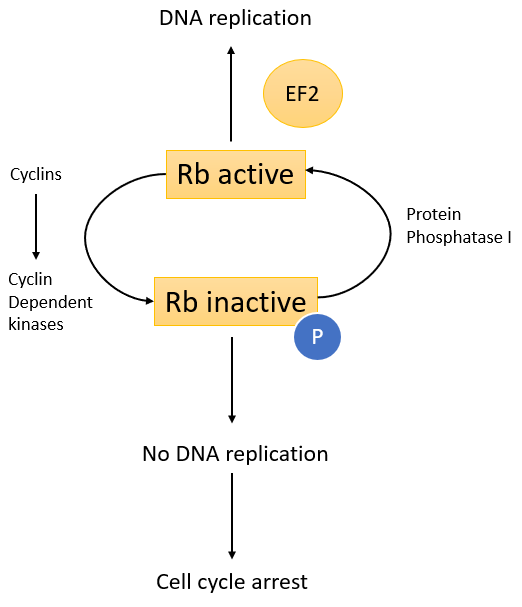
Retinoblastoma (RB) gene: The RB gene is a vital tumor suppressor gene that regulates the cell cycle. It encodes the retinoblastoma (RB) protein, often regarded as the ‘Governor of the Cell Cycle’. In normal conditions, the protein is hypophosphorylated. It binds to the E2F transcription factors, preventing the G1/S phase cell cycle transition. This suppresses the gene expression required for DNA replication and cell division. When the cell receives growth signals, the RB protein becomes phosphorylated, releasing it from E2F, and the cell cycle proceeds as normal. In cancer, however, mutations of the RB gene can lead to its inactivation, resulting in uncontrolled cell proliferation and contributing to cancers such as retinoblastoma.
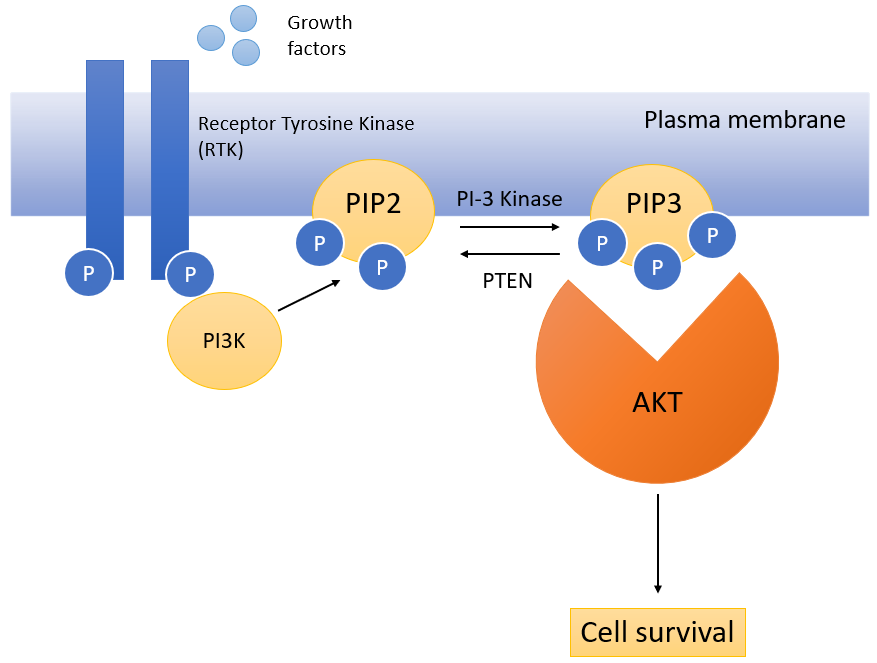
Phosphatase and Tensin Homolog (PTEN) gene: The PTEN gene encodes for a lipid phosphatase enzyme that removes the phosphate group from the phosphatidylinositol (3,4,5)-triphosphate (PIP3) to produce PIP2 at the cell membrane. Through this action, it negatively regulates the phosphoinositide-3-kinase (PI3K)-AKT-mTOR signaling pathway, involved in promoting cell growth, division, and survival. PTEN also helps to initiate cell death, regulate cell movement, attachment, and the formation of new blood vessels (angiogenesis). When both copies of the gene are inactivated or lost (recessive condition), its tumor suppression activity is disrupted. This is frequently associated with various types of cancer.
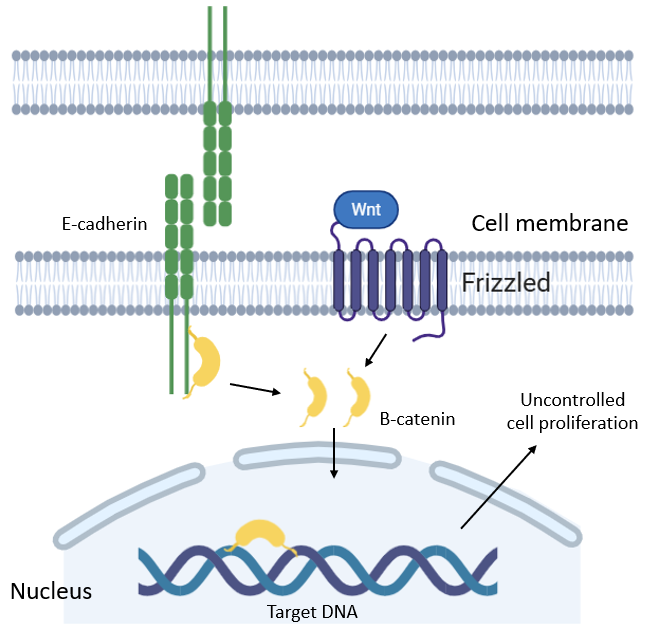
CDH1 (E-cadherin): E-cadherin (epithelial-cadherin) is an adhesion protein found within the cell membrane of epithelial cells that maintains the structure and architecture of cell-cell adhesion. When cells are crowded in an enclosed space, they stop proliferating. E-cadherins mediate this process, known as contact inhibition. The protein binds to β-catenin, a component of the WNT pathway, inhibiting its translocation to the nucleus and preventing activation of pro-growth target genes. E-cadherins are encoded by the tumor suppressor gene, CDH1. The mutations in this gene are often caused by hereditary diffuse gastric cancer (HDGC).
A few of the tumor suppressor genes, their functions, and the major cancers they cause are:
| Tumor Suppressor Genes | Gene function | Major Cancer caused |
| RB1 | Cell division, DNA replication, and cell death | Retinoblastoma |
| TP53 | Cell division, DNA repair, and apoptosis | Li-Fraumeni syndrome (leukemia, sarcoma, brain tumor) |
| APC | Cell division, migration, cell adhesion, DNA repair, and cell death | Colorectal cancer |
| BRCA1, BRCA2 | Repair of double-stranded DNA (dsDNA) breaks, cell cycle regulation | Breast cancer |
| WT1, WT2 | Transcriptional regulation, cell death | Wilms’ tumor |
| VHL | Cell division, differentiation, and cell death | Kidney cancer |
| NF1, NF2 | RAS-mediated signal transduction, cell differentiation, and cell division | Nerve tumors (can be brain) |
References
- Chen, X., Zhang, T., Su, W., Dou, Z., Zhao, D., Jin, X., Lei, H., Wang, J., Xie, X., Cheng, B., Li, Q., Zhang, H., & Di, C. (2022). Mutant p53 in cancer: From molecular mechanism to therapeutic modulation. Cell Death & Disease, 13(11), 1–14. https://doi.org/10.1038/s41419-022-05408-1
- Joyce, C., Rayi, A., & Kasi, A. (2025). Tumor-Suppressor Genes. In StatPearls. StatPearls Publishing. http://www.ncbi.nlm.nih.gov/books/NBK532243/
- PTEN gene: MedlinePlus Genetics. (n.d.). Retrieved June 8, 2025, from https://medlineplus.gov/genetics/gene/pten/
- Tumor Suppressor Gene. (n.d.). Retrieved June 7, 2025, from https://www.genome.gov/genetics-glossary/Tumor-Suppressor-Gene
- Tumor Suppressor Genes: Your protective cancer shield. (n.d.). Cleveland Clinic. Retrieved June 7, 2025, from https://my.clevelandclinic.org/health/body/24833-tumor-suppressor-genes
- Tumor Suppressor (TS) Genes and the Two-Hit Hypothesis | Learn Science at Scitable. (n.d.). Retrieved June 7, 2025, from http://www.nature.com/scitable/topicpage/tumor-suppressor-ts-genes-and-the-two-887
