
The prokaryotic genome refers to the entire genetic material in prokaryotes, like bacteria, archaea, and cyanobacteria. These primitive life forms have a single circular DNA molecule, dispersed in the cytoplasm.
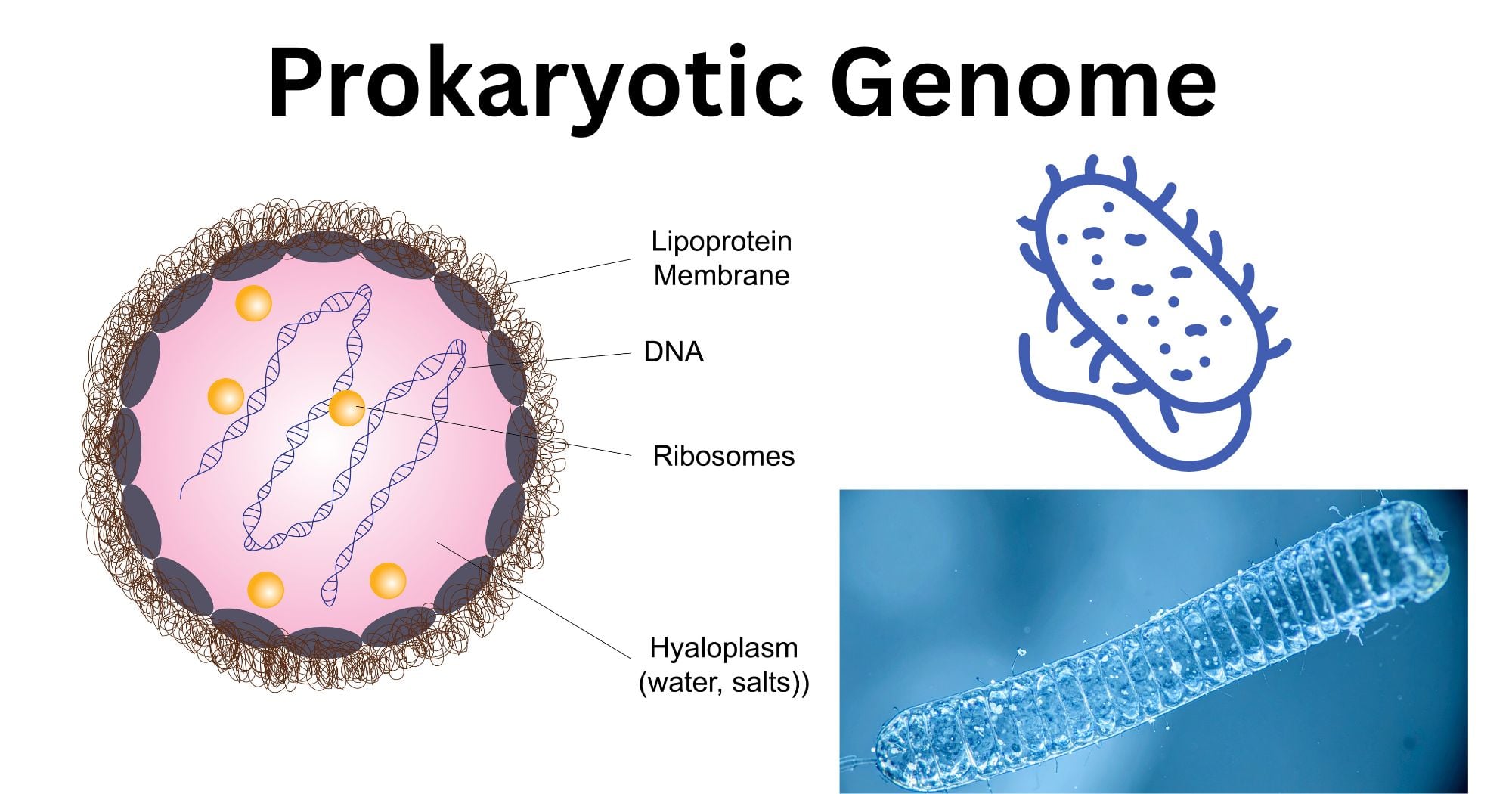
The genome is compact and efficient, containing plasmids and operons for survival and functioning in the environment.
General Features of Prokaryotic Genome
- Prokaryotic genomes are substantially smaller in size, in contrast to the eukaryotic genomes. They vary from 0.5 to 10 million base pairs. For example, Mycoplasma genitalium has a genome size of 5.8 Mb, while Escherichia coli has a genome size of about 4.6 Mb.
- They are haploid and only possess a single copy of the genome. This copy is scattered across the cytoplasm and is known as the nucleoid.
- The main chromosome is circular; however, linear forms can be found in a few species of bacteria. There is also the non-chromosomal DNA known as the plasmid.
- Most of the prokaryotic genomes do not have introns. But few may exist in archaea or tRNA/rRNA genes. As a result, they have high gene density.
- The genes are organized into related functions known as operons. These are transcribed together as a single mRNA.
Size of the Prokaryotic Genome
- Prokaryotes are single-celled organisms that have substantially smaller genomic size compared to multicelled eukaryotes.
- The genome size of prokaryotes ranges from 0.58 Mb to 10 Mb. This depends on the complexity of the microorganisms, i.e., the number of genes in the genome. This becomes clear when we analyze the relative gene densities of different genomes.
- In lower organisms, there is a rough inverse correlation between organism complexity and their gene density. The less complex the organism, the higher is their gene density. For example, the highest gene densities are found in a virus. They use both strands of DNA to encode genes. Their gene density is approximately 1000 genes/ Mb.
Organization of Prokaryotic DNA
DNA Packaging in Prokaryotes
- The relatively small genome of prokaryotes is packaged in about 1mm of chromosome into a cell that is only 1 μm in length.
- Prokaryotes do not have nucleosomes or histone proteins; however, they do have smaller proteins with similar functions. A complete copy of the chromosome is packaged into a structure known as the nucleoid. The nucleoid occupies about 60% of the cytoplasm in the cell.
- Some prokaryotes, such as Escherichia coli and Bacillus subtilis, have one circular chromosome, and organisms such as Agrobacterium tumefaciens have 4, depending on the size of their genomes.
- Chromosomes can be circular or linear, in contrast to eukaryotes, which only exist as linear.
| Organism | Number Of Chromosomes | Chromosome Copy Number | Form of Chromosome | Genome Size (Mb) | Number of Genes | Gene Density (genes/mb) |
| Mycoplasma genitalium | 1 | 1 | Circular | 0.58 | 500 | 860 |
| Escherichia coli K-12 | 1 | 1 | Circular | 4.6 | 4400 | 950 |
| Agrobacterium tumefaciens | 4 | 1 | 3 Circular, 1 linear | 5.67 | 5400 | 960 |
| Sinorhizobium meliloti | 3 | 1 | Circular | 6.7 | 6200 | 930 |
DNA Supercoiling in Prokaryotes
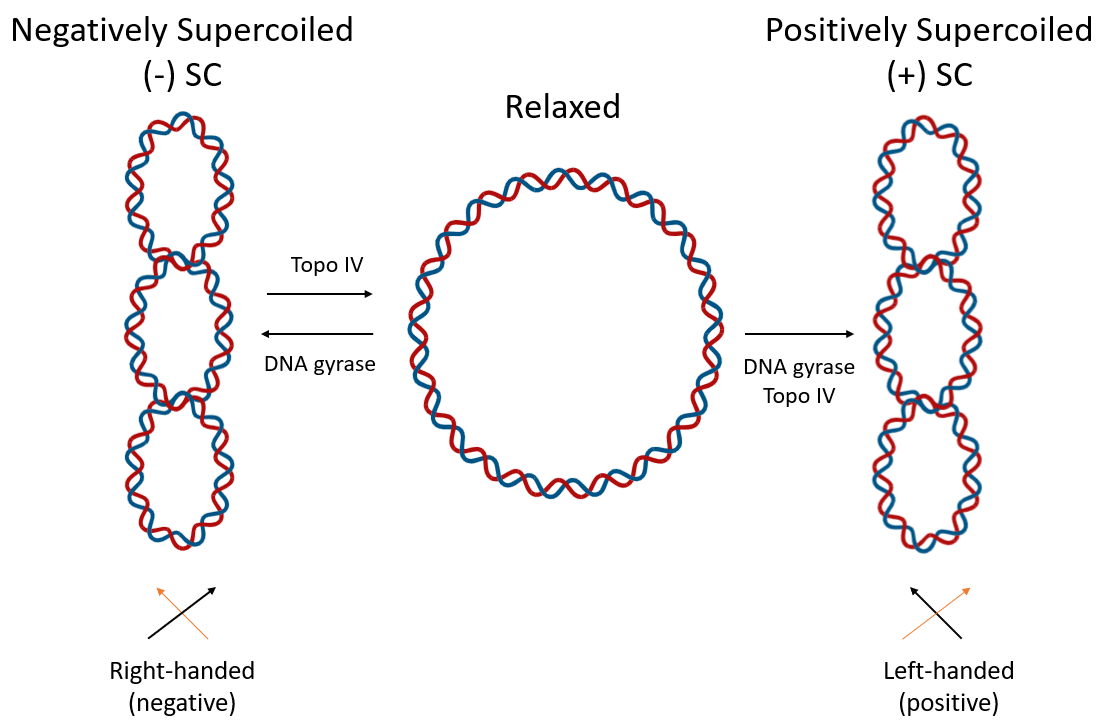
- Supercoiling is the coiling of a coil. Since the size of the genome is enormous, DNA is supercoiled by twisting around itself.
- The prokaryotes mostly have circular genomes; therefore, their overtwisting or under-twisting leads to the supercoiled state.
- Positive supercoiling is the tight twisting of DNA in a right-handed direction, thereby creating a knot. It is more condensed as it forms a supercoil along the direction of the DNA helix. Negative supercoiling forms a knot in the left-handed direction. This is more common in prokaryotes, as minimal energy is required to access the DNA for separation.
DNA Loops in Prokaryotes
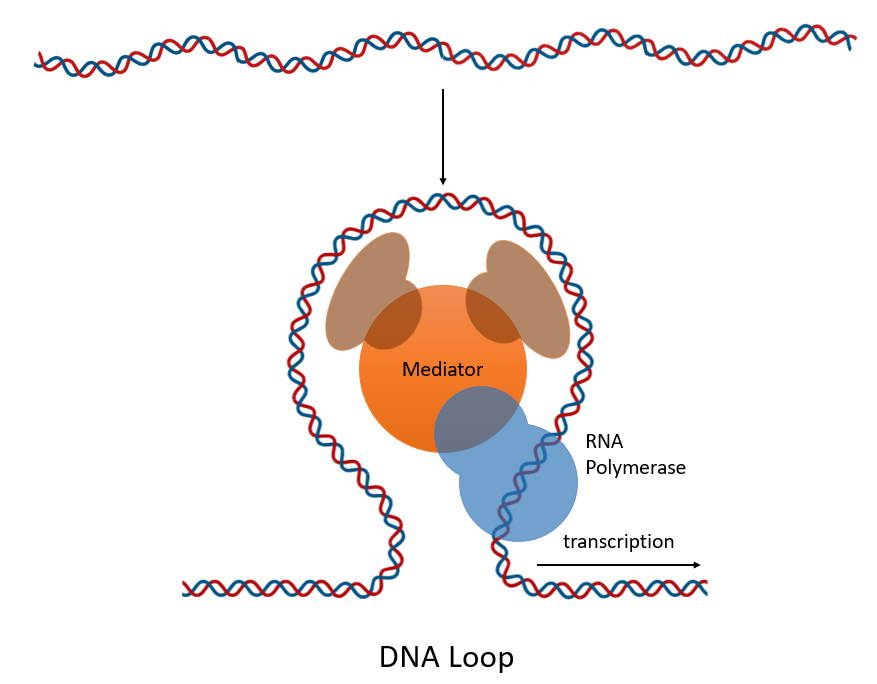
- DNA loops are mechanisms in which proteins and their complexes bring DNA to proximity within the prokaryotic genome, causing them to interwind and form loops.
- This phenomenon is involved in the regulation of transcription, bringing regulatory elements such as enhancers closer to the promoters.
Topoisomerases in Prokaryotes
- Topoisomerase is an enzyme that is responsible for the overwinding and underwinding of DNA, i.e., to relieve coiling stress.
- In prokaryotes, the two major topoisomerases act in the opposite direction. DNA gyrase winds the negatively supercoiled DNA at the expense of ATP (hydrolysis). In the absence of ATP, it relaxes the DNA.
Origin of Replication in the Prokaryotic Genome
- Prokaryotes contain a region of DNA known as the origin of replication (ORI) for assembly of the replication machinery.
- This region is extremely small, only about a few hundred base pairs of the 4.6 Mb E. coli genome.
Mobile Genetic Elements in Prokaryotes
Plasmids
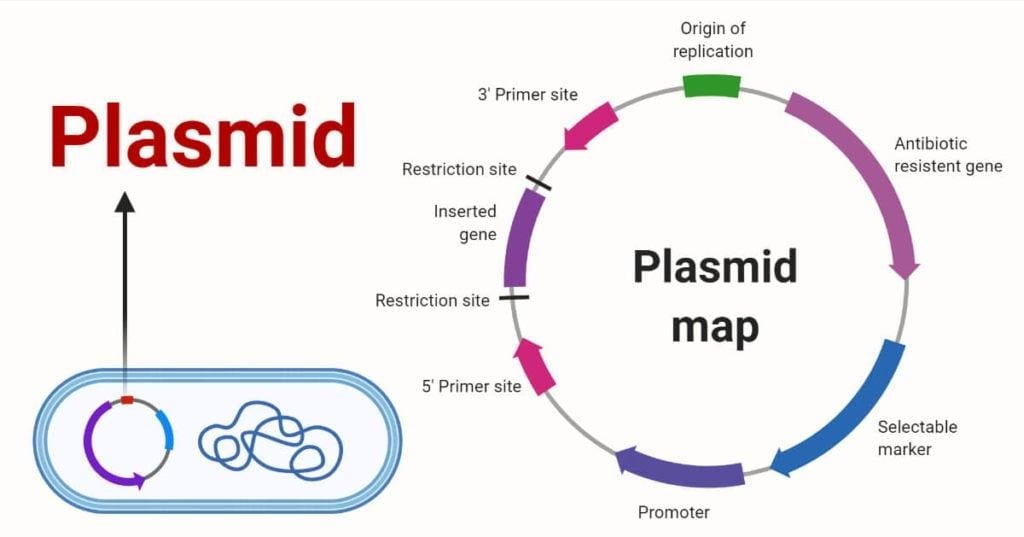
- Besides the nuclear DNA, prokaryotic cells carry one or more circular DNAs, known as plasmids. They are smaller in size and are not essential for bacterial growth, but they contain desirable traits such as antibiotic resistance for the host.
- Plasmids contain the origin of replication (ORI), an antibiotic resistance gene, a selectable marker, a promoter region, and the gene of interest flanked by restriction sites.
- They replicate autonomously, meaning that plasmids can replicate on their own with their own machinery.
- Bacteria exchange these plasmids with other bacteria via horizontal gene transfer. The exchange of genetic material infers novel beneficial genes for growth and survival under special conditions, which promotes variation. In a few cases, the plasmids can also provide virulence factors that can alter the microbe to cause infection.
- Plasmids can be F plasmids for fertility, R plasmids for resistance, col plasmids for bacteriocin production, and degradative plasmids involved in reagent degradation.
Transposons
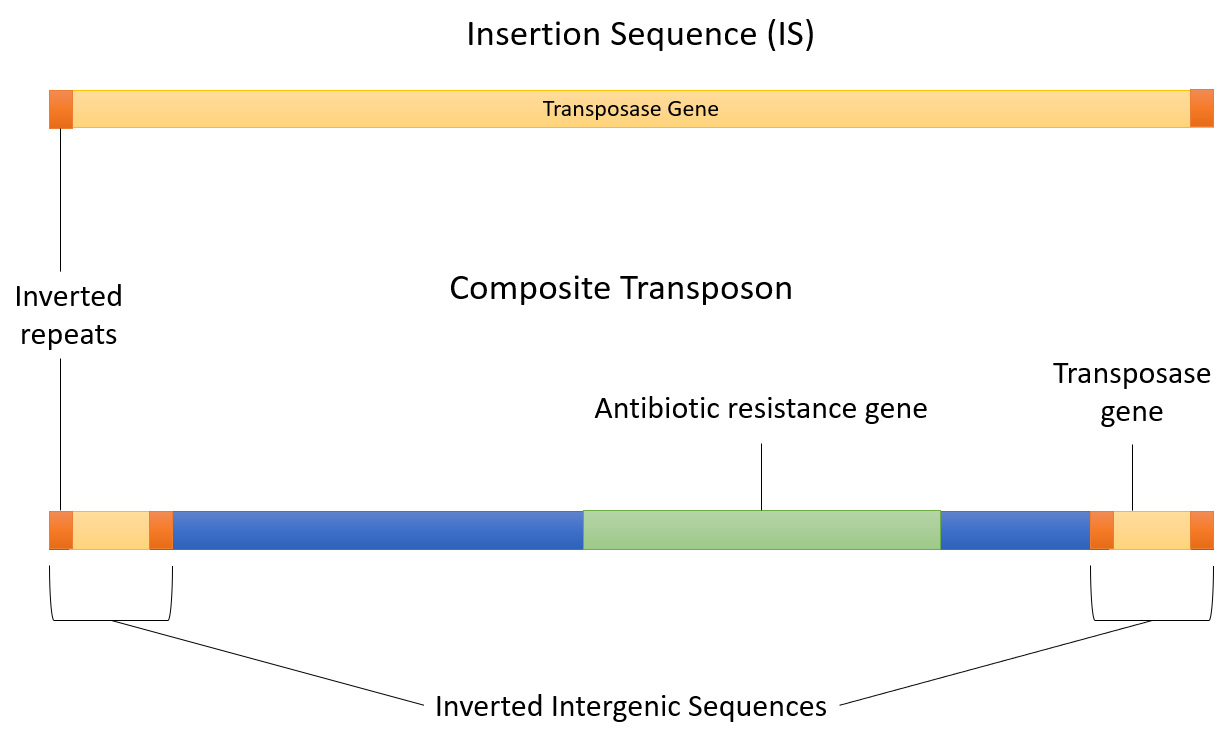
- The segments of DNA that “jump” or move from one location to another within the genome or plasmids are known as transposons.
- The transfer is mediated by the transposase enzyme, which contains inverted repeats at both ends.
- Transposons can disrupt normal gene functioning or introduce variation.
Transposons can be of two types:
- Insertion sequences (IS elements): They are short DNA sequences (700-2500 bp) flanked by transposons and alter gene or regulatory expression.
- Composite Transposons: Composite transposons contain a central region carrying antibiotic-resistant genes flanked at both ends by identical copies of an IS element. For example, the Tn5 element contains the kanamycin resistance gene, which can be transposed from phage to the chromosome of E. coli.
Genomic Islands
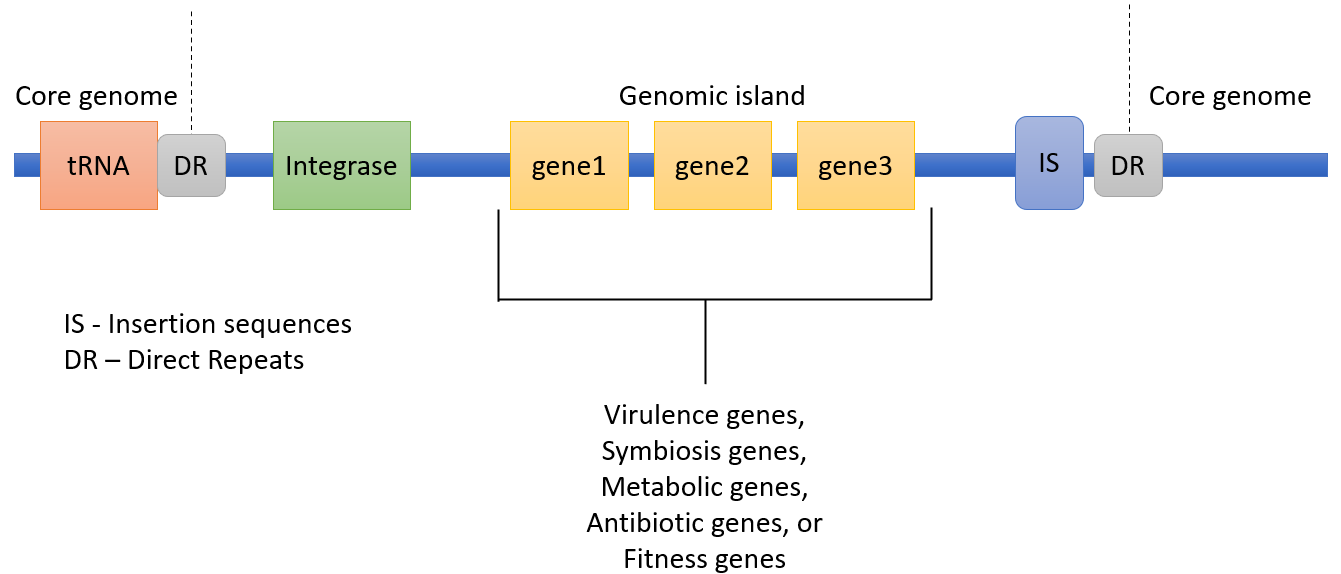
- Genomic islands (GEIs) are large segments of DNA (> 10 kb) that originated from horizontal gene transfer. These segments can have numerous functions, such as symbiosis or pathogenesis, which contribute to the organisms’ adaptation.
- The GEIs associated with pathogenesis are termed pathogenicity islands (PAIs), while those associated with antibiotic resistance are known as antibiotic resistance islands. There are also genes associated with metabolism, antibiotics, and fitness.
- The segments of genes are flanked by 16-20 bp direct repeats (DR), which usually arise by site-specific integration of the GEIs into the target site.
- Genomic islands can be identified by using comparative genomics, i.e., comparing one genome of the prokaryotes to another.
Prophages
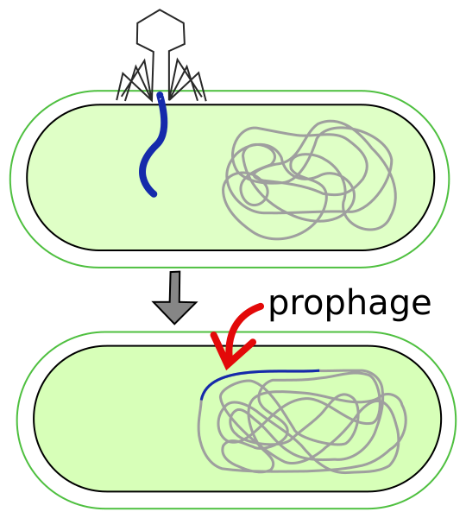
- When bacteriophages infect bacteria, a few of them can integrate into the bacterial genome as prophages in the lysogenic cycle.
- Bacteria also have innate immune mechanisms (CRISPR) that can integrate the phage into their genome for memory in the future.
- These genetic elements contribute to genomic plasticity, adaptability, and the rapid evolution of prokaryotes.
Gene Organization and Expression
Polycistronic Gene Expression
- In prokaryotes, the entirety of the genome encodes only proteins or structural RNAs. There are only a few non-coding sequences responsible for regulating gene transcription.
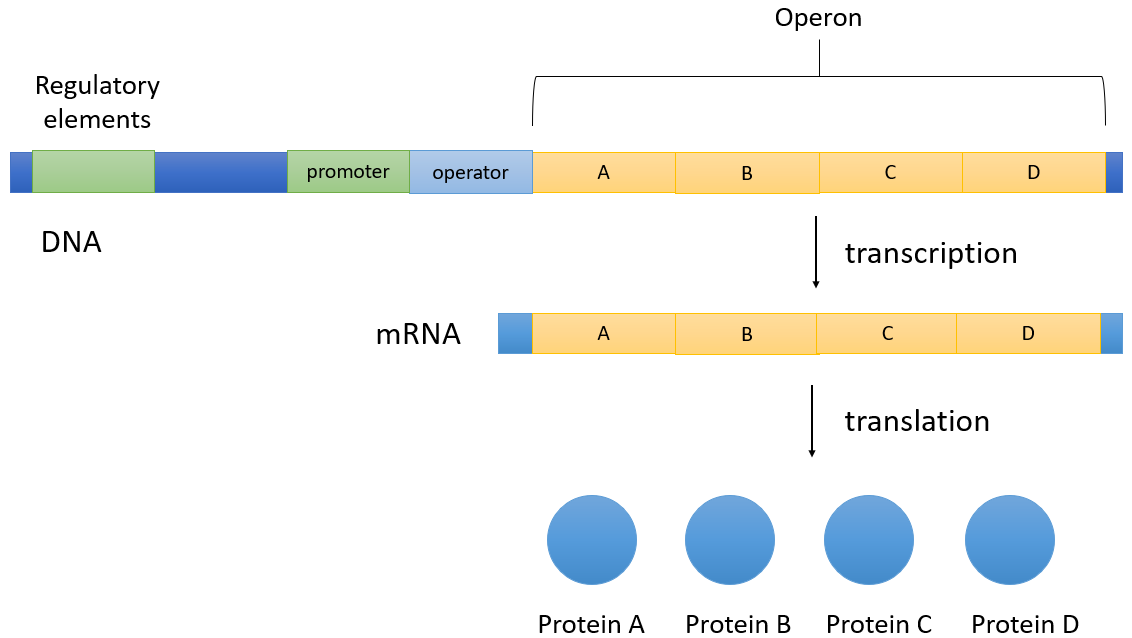
- The prokaryotic machinery contains a single site of transcription initiation to control the expression of several genes, a process known as polycistronic expression. Because of this region, the non-coding regions are minimal.
Operons in Prokaryotes
- Operons are the functional unit of genomic DNA in prokaryotes that comprise a group of genes under the control of a single promoter.
- An operon consists of a promoter (P), an operator (O), regulatory elements, and an operon. The operon may consist of numerous gene blocks, each with a varied function.
- These genes are regulated together and are essential for efficient gene expression of similar functional proteins. This mechanism allows protein synthesis to be coordinated in response to the cellular needs.
- One of the most popular operons is the lac operon, encoding a single mRNA transcript that encodes LacZ, LacY, and LacA proteins. These proteins are responsible for lactose metabolism when there is an absence of the metabolite.
A few of the important operons in bacteria and their function are:
| Operon | Bacteria | Genes | Function |
| Lac operon | E. coli | lacZ, lacY, lacA | Lactose uptake and metabolism |
| Ara operon | E. coli | araB, araA, araD | Arabinose catabolism |
| Trp operon | E. coli | trpE, trpD, trpC, trpB, trpA | Tryptophan synthesis |
| Nod operon | Rhizobium spp. | nodA, nodB, nodC, nodD, etc. | Nodulation in legume symbiosis |
References
- Aryal, S. (2022, September 2). Lac operon- Definition, structure, Inducers, diagram. https://microbenotes.com/lac-operon/
- Brown, T. A. (2002). Genome Anatomies. In Genomes. 2nd edition. Wiley-Liss. https://www.ncbi.nlm.nih.gov/books/NBK21120/
- Genome Packaging in Prokaryotes | Learn Science at Scitable. (n.d.). Retrieved July 9, 2025, from http://www.nature.com/scitable/topicpage/genome-packaging-in-prokaryotes-the-circular-chromosome-9113
- Juhas, M., van der Meer, J. R., Gaillard, M., Harding, R. M., Hood, D. W., & Crook, D. W. (2009). Genomic islands: Tools of bacterial horizontal gene transfer and evolution. Fems Microbiology Reviews, 33(2), 376–393. https://doi.org/10.1111/j.1574-6976.2008.00136.x
- Kulkarni, N. A. (2022, March 13). Plasmids- Definition, Properties, Structure, Types, Functions, Examples. https://microbenotes.com/plasmids/
- Matthews, K. S. (1992). DNA looping. Microbiological Reviews, 56(1), 123–136. https://doi.org/10.1128/mr.56.1.123-136.1992
- Monroe, M. R. (n.d.). Plasmids 101: What is a plasmid? Retrieved July 9, 2025, from https://blog.addgene.org/plasmids-101-what-is-a-plasmid
- Operon | DNA, RNA & Protein Regulation | Britannica. (2025, May 15). https://www.britannica.com/science/operon
- Simons, A. (2024). Prokaryotic genome structure. https://rotel.pressbooks.pub/genetics1/chapter/prokaryotic-genome-structure/
