
The chronological dating system used in Earth’s geological history is known as the Geological Time Scale. The system is based on major geological and biological events on Earth, including the appearance of life, extinctions, and climate shifts.
The Age of the Earth had no means for accurate measurement until the discovery of radioactivity in 1896. This reliable method made it possible to determine the age of rocks and fossils.
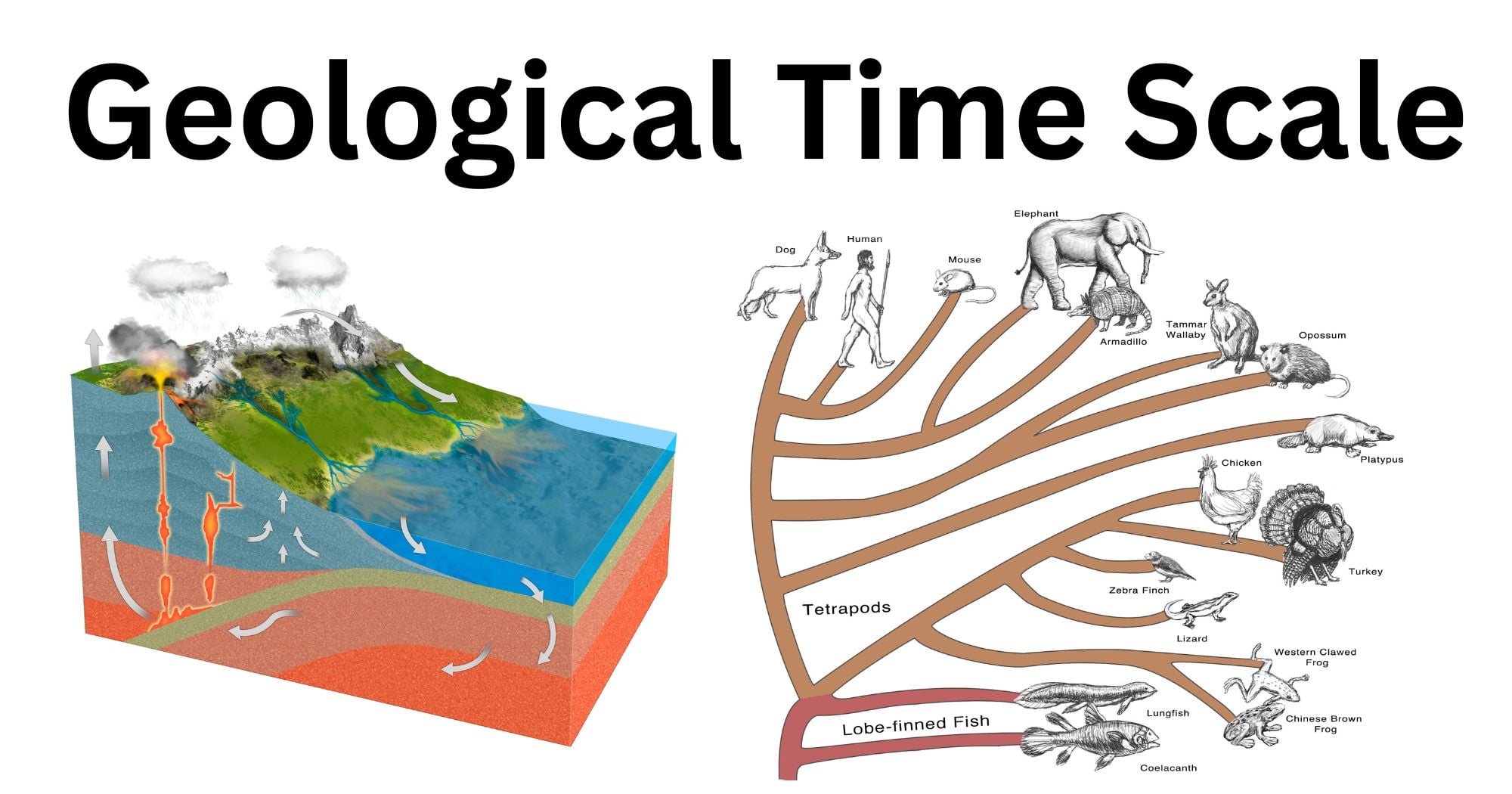
The determination of Earth’s age was possibly made using lead isotope analysis, a special type of radiometric dating of meteorite materials and the oldest known rocks, such as Allende refractory inclusions, phosphates in chondrites, and basaltic achondrites. It enabled scientists to assign precise numerical ages to important events in Earth’s past. Today, the Earth is estimated to be approximately 4.54 billion years old.
Before the discovery of numerical dating, geologists relied on relative dating techniques to determine the sequence of events in the past. Nicolaus Steno, a 17th-century Danish geologist, is credited with formulating the law of superposition. The Law of Superposition states, “In any sequence of undisturbed sedimentary rocks, the youngest layers are at the top, and the oldest layers are at the bottom.” Such principles helped determine the relative ages of rocks and fossils contained in them. Moreover, a British surveyor significantly contributed to the development of the geological time scale by demonstrating the principle of faunal succession: fossils appear in a specific order within rock layers, regardless of location, and he used this to correlate rock layers and establish a relative time scale.
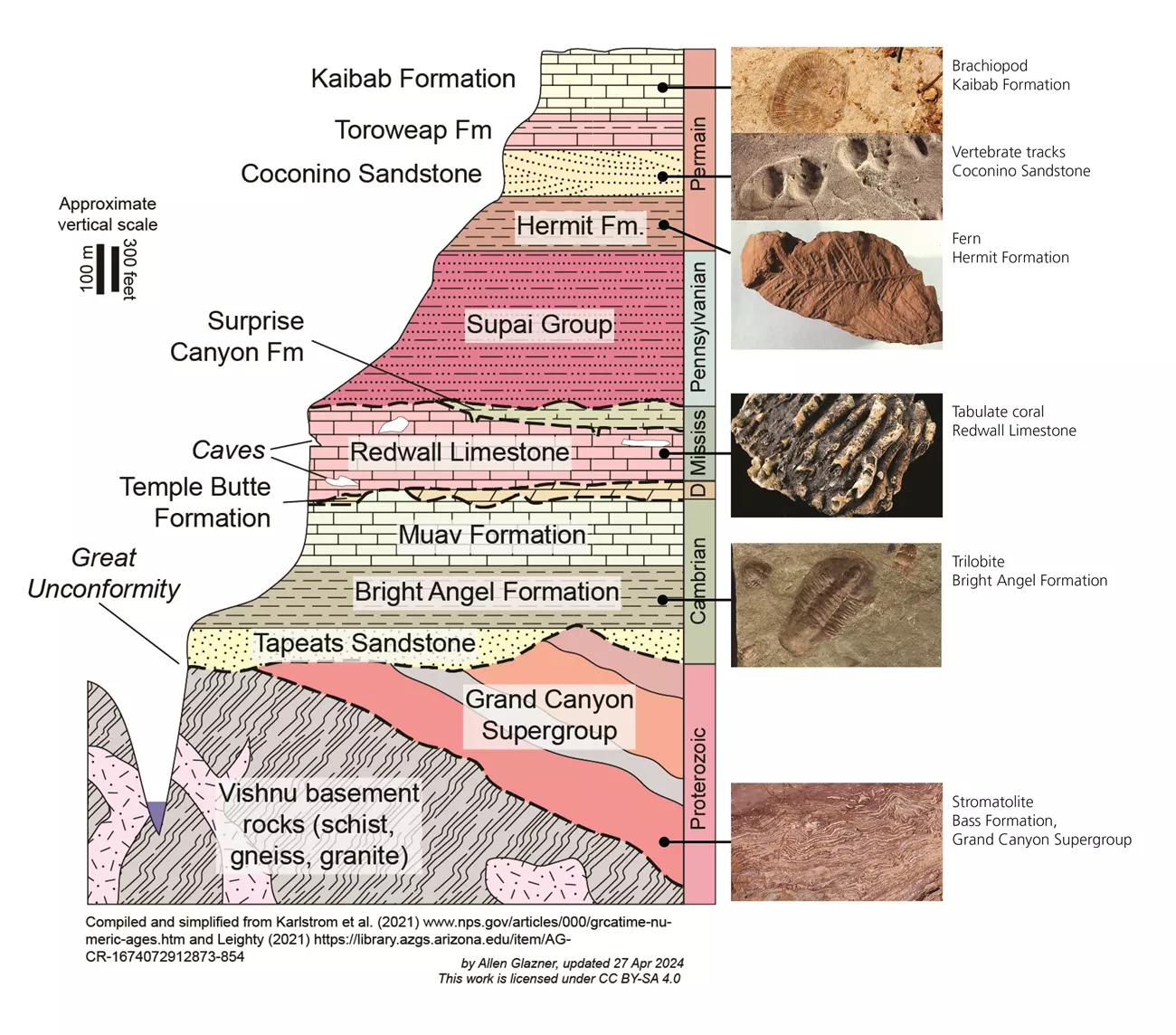
Divisions of the Geological Time Scale
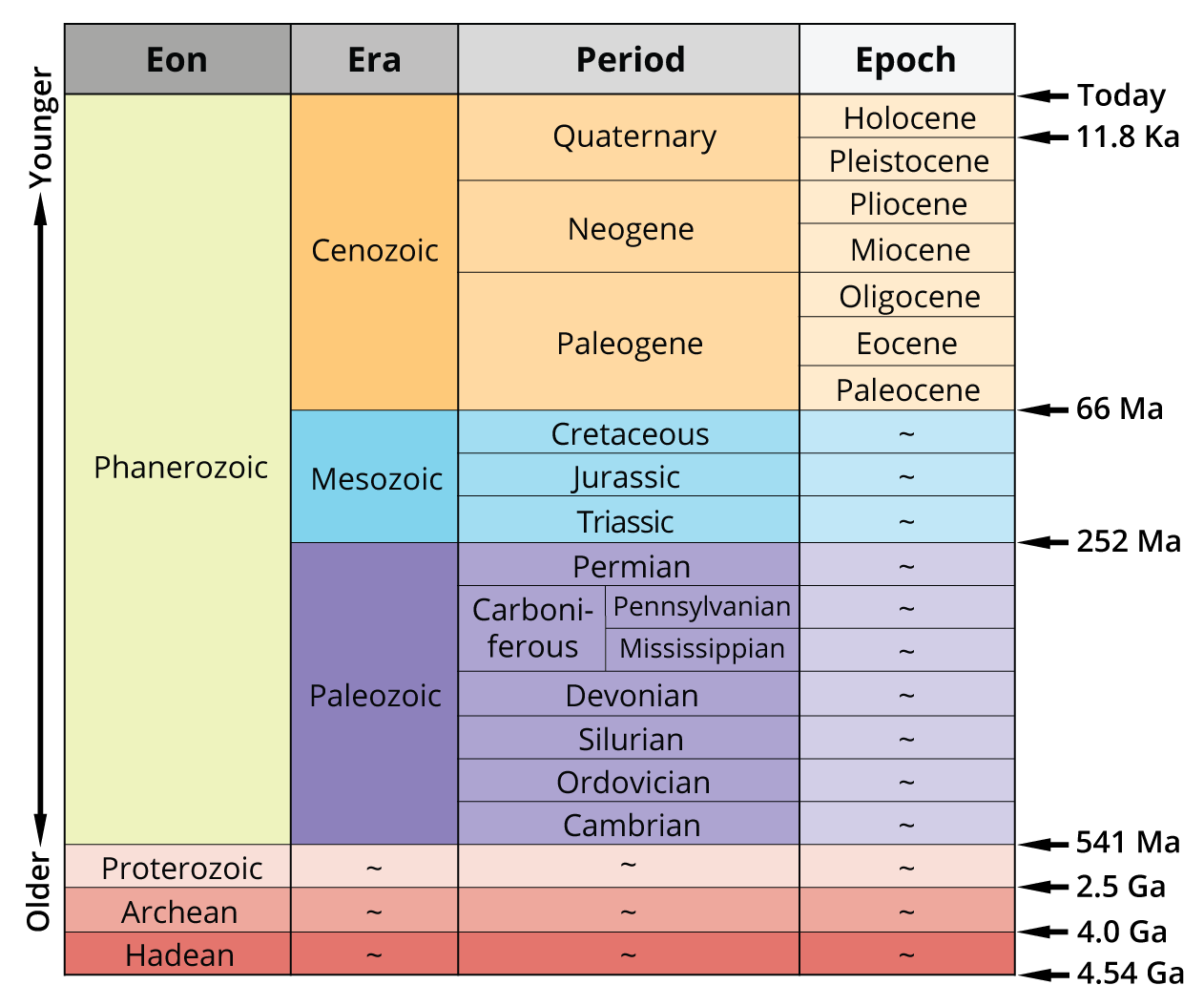
The Geological Time Scale divides Earth’s 4.6 billion years of history into hierarchical units based on significant events. These units, from largest to smallest, are listed below:
Eon – The largest division of geological time, spanning hundreds of millions to billions of years. Example: Hadeon Eon, Proterozoic Eon, Phanerozoic Eon.
Era – A major subdivision of an eon, lasting tens to hundreds of millions of years, marked by significant changes in Earth’s climate, life, or geology. Example: Paleozoic Era, Mesozoic Era.
Period – A division within an Era characterized by significant events in Earth’s history, such as mass extinctions or the appearance of new life forms. Example: Jurassic Period, Carboniferous Period.
Epoch – A subdivision representing a shorter period during which specific environmental or biological conditions prevailed. Example: Holocene Epoch, Pleistocene Epoch.
Age – The smallest formal unit of geological time, describing specific events or stages within an epoch, usually lasting a few million years or less. Example: Ice Age.
(https://www.digitalatlasofancientlife.org/learn/geological-time/geological-time-scale/)
The main divisions of the Geological Time Scale are as follows:
Breakdown of Earth’s History by Geological Time Scale
Eons are the largest division of geological time, representing the earliest span of Earth’s history.
The four major eons are explained below:
A. Hadean Eon (4.6 to 4 billion years ago)
- The formation of Earth 4.6 billion years ago was due to the collapsing cloud of gases and dust within the solar nebula. These particles collided and stuck together, and larger bodies called planetesimals grew, eventually forming the young Earth through accretion. Frequent collision, Gravitational compression, and radioactive decay made the planet extremely hot, which made the surface of Earth largely molten. In its earliest Eon, Earth appeared hellish in condition, which was why the name “Hadean” was considered.
- A Mars-sized body, Theia, is known to have struck Earth. This impact remelted much of Earth’s outer layer. These particles were ejected into orbit and coalesced into the Moon. The Moon helped stabilize Earth’s axial tilt, influencing climate in the long term.
- Magma Ocean: Earth’s surface was initially molten, covered by a thin solid surface. During this stage, the circulation of molten rocks to the interior and dissolved volatile substances to the exterior caused magma convection, playing a vital role in forming the core and solidifying the Earth’s surface.
- The early atmosphere was formed from volcanic outgassing and contained steam, carbon dioxide, nitrogen, and other gases.
- No Life is thought to have existed.
- The Traditional Splash Theory believes that the collision of Icy comets and Asteroids brought water to Earth.
B. Archaeon Eon (4.0 to 2.5 billion years ago)
The Archaean Eon is credited with the first formation of solid crust, oceans, atmosphere, and life in its proper shape. “Archaeon” comes from a Greek word, “arkheios,” meaning “ancient” or “beginning.” This Eon can be further divided into the following Eras:
-Eoarchean Era (4.0 – 3.6 billion years ago)
-Palaeoarchaean Era (3.6 – 3.2 billion years ago)
-Mesoarchaean Era (3.2 – 2.8 billion years ago)
-Neoarchaean Era (2.8 – 2.5 billion years ago)
- During this Eon, mantle convection slowed slightly, allowing the continental crust to begin forming and surviving. The first continental nuclei are called cratons, which are the stable parts of the continental lithosphere. The continental crust was mainly granitic compared to the heavier basaltic oceanic crust. These continental formations triggered extremely vigorous tectonic activity, with frequent subduction, volcanic arcs, island chains, and collisions.
- Shallower and smaller oceans formed during this Eon. The water was mostly rich in Iron (Fe2+), giving it a greenish color.
- The Archaean atmosphere was dense but lacked free oxygen. The main components of the atmosphere include Carbon dioxide, Methane, Water vapor, and Nitrogen. The early atmosphere was rich in greenhouse gases, which trapped more heat, creating a greenhouse effect that kept Earth’s surface warm enough for liquid water and life.
- Life most likely began in the early Archaean. The oldest possible fossil evidence includes:
Microfossils – resembling microscopic fossils of ancient bacteria and cyanobacteria.
Stromatolites – layered structures formed by microbial communities.
- Examples: The Apex chert microfossils of Western Australia were found bedded within basalt rock, 3.465 million years old. They have tiny filamentous structures of ancient microbes.
- The early life forms were Prokaryotic (cells without a nucleus), anaerobic (lived without oxygen), and chemosynthetic (organisms relying on chemical reactions for energy rather than sunlight). Chemosynthetic organisms utilize hydrogen gas, reacting with oxidants like carbon dioxide and sulfur dioxide for energy. Hydrothermal vents provide a suitable environment for abundant Hydrogen Sulfide for energy. Mineral-rich hydrothermal vents produce a cloud of dark sulfur-rich particles, due to which they are often called “Black smokers.”
- Photosynthetic organisms developed around 3.5 to 2.7 billion years ago. Early photosynthetic organisms did not release oxygen (anoxygenic photosynthesis), but later cyanobacteria began oxygenic photosynthesis (producing oxygen as a byproduct).
- The oxygen produced started reacting with dissolved Iron in oceans, forming banded iron formations—alternating layers of iron oxides and silica in ancient rocks.
- The question of how life began on Earth remains one of science’s greatest mysteries. Several competing hypotheses attempt to explain how simple organic molecules formed and eventually gave rise to living cells.
- Stanley Miller and Harold Urey (1953) proposed the Primordial Soup Hypothesis (also Miller-Urey Experiment). The hypothesis states that organic molecules (amino acids) spontaneously formed in Earth’s early atmospheric conditions through energy sources like lightning and UV radiation. Miller and Urey recreated early Earth’s conditions and applied electrical sparks (simulating lightning), forming amino acids and other organic compounds.
Note: The earliest evidence of life on Earth comes from hydrocarbon residues of prokaryotic bacteria found in metamorphosed sedimentary rocks in Greenland, dating back approximately 3.8 billion years.
C. Proterozoic Eon (2.5 billion to 541 million years ago)
The Proterozoic Eon spans from 2.5 billion to 541 million years ago.
It marks a crucial phase in Earth’s history, during which it transitioned from a hostile environment to one capable of supporting complex life. The Eon is divided into the following Eras.
-Paleoproterozoic Era
-Mesoproterozoic Era
-Neoproterozoic Era
Each Era is further subdivided into Periods based on significant geological and biological events.
1. Paleoproterozoic Era (2.5 billion to 1.6 billion years ago)
The Periods in this Era are as follows:
- Siderian Period (2.5 – 2.3 billion years ago):
In this period, Oxygenic photosynthetic organisms like cyanobacteria accumulated more oxygen in the atmosphere, leading to the Great Oxidation Event, although oxygen levels were lower than today.
Free oxygen reacted with unique sediments like Iron in the ocean to form banded rock formations.
- Rhyacian Period (2.3 – 2.05 billion years ago):
The period is characterized by Huronian glaciation, one of the earliest known Ice Age events. Glaciers expanded across continents, reaching low latitudes and even the sea level.
- Orosirian Period (2.05 – 1.8 billion years ago):
This Period is known for stabilization, with the assembly of the supercontinent Columbia and increased continental crust formation.
- Statherian Period 1.8 – 1.6 billion years ago)
In this period, most of the stable continental landmasses had already been formed. `Continued cooling of Earth’s mantle supported the formation of basaltic volcanic rocks.
2. Mesoproterozoic Era (1.6 billion to 1 billion years ago)
The Periods in this Era are as follows
-Calymmian Period (1.6 – 1.4 billion years ago): Expansion of continental platforms and widespread deposition of sedimentary rocks.
-Ectasian Period (1.4 – 1.2 billion years ago): During this Period, significant biological advancements included the appearance of the first multicellular organism and the evolution of early eukaryotes, which are cells with a well-defined nucleus.
-Stenian Period (1.2 – 1.0 billion years ago):
This Period marked the assembly of continental blocks to form the supercontinent Rodinia and increased biological complexity.
3. Neoproterozoic Era (1 billion to 541 million years ago)
The Periods in this Era are as follows
- Tonian Period (1.0 billion – 720 million years ago)
The breakup of Rodinia led to the formation of new ocean basins.
- Cryogenian Period (720 – 635 million years ago):
The major event during this Era is the “Snowball Earth” glaciation, during which the entire Earth’s surface became completely frozen. This cooling was mainly triggered by the depletion of greenhouse gases like carbon dioxide due to the rise in photosynthetic organisms.
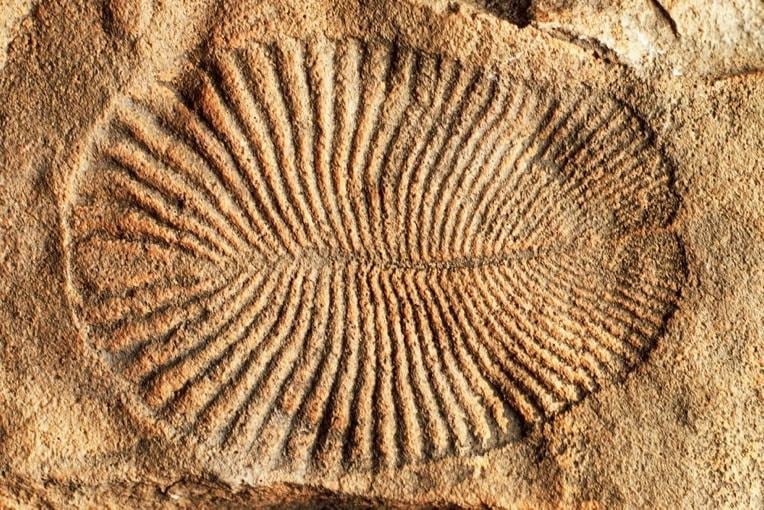
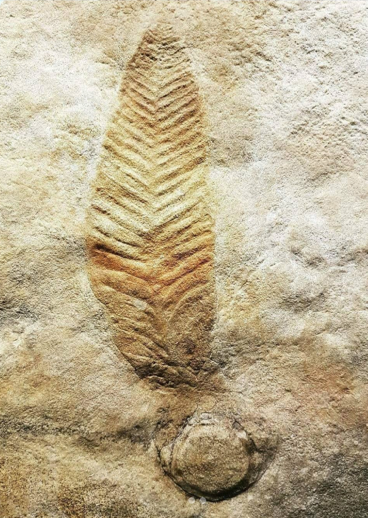
- Ediacaran Period (635 – 541 million years ago): The Ediacaran Biota evolved after the Cryogenian glaciation event. These are the earliest known assemblages of complex multicellular organisms; the first Eukaryotic organisms evolved through endosymbiosis, where one cell engulfed another, leading to a more complex cellular structure. Some eukaryotes began forming colonies. By the end of this Period, large, soft-bodied organisms like Dickinsonia and Charniodiscus. It appeared, setting the stage for the later explosion of life during the Cambrian.
Note: The first three eras can be called Precambrian, spanning 4 billion years and covering 90% of Earth’s History. Much of this time remains unclear due to the scarcity of fossils and the alteration of rocks by tectonics, erosion, and younger layers.
(https://www.scientificamerican.com/article/say-hello-to-dickinsonia-the-animal-kingdoms-newest-and-oldest-member/)
(https://www.scientificamerican.com/article/say-hello-to-dickinsonia-the-animal-kingdoms-newest-and-oldest-member/)
D. Phanerozoic Eon
The Phanerozoic Eon is the most recent and best-known division of Earth’s history, spanning about 541 million years ago to the present. It is defined by abundant and diverse fossil evidence and includes most of the existing complex life forms. The name “Phanerozoic” originates from the Greek word meaning “visible life,” and the rapid diversification of complex life forms characterizes it.
The Phanerozoic Eon is divided into three major eras, each marked by dramatic biological and geological changes:
-Paleozoic Era (541 – 252 million years ago)
-Mesozoic Era (252 – 66 million years ago)
-Cenozoic Era (Since 66 million years ago)
1. Paleozoic Era
The Paleozoic Era marks a transformative period in Earth’s history. It means “ancient life,” and it can be divided into six distinct periods:
i. Cambrian Period (541 – 485.4 million years ago)
- The oxygenation of the environment and the presence of shallow oceans led to a dramatic increase in biodiversity, often referred to as the “Cambrian Explosion.” There was a rapid diversification of multicellular life inhabiting the ocean, where organisms evolved to develop complex body parts like shells and exoskeletons, leading to a much richer fossil record. All life was aquatic, primarily in shallow seas. Major animal groups of this Period include the following:
Trilobites: Dominant, segmented arthropods with a three-lobed body plan.
Archaeocyathids: First significant coral reef builder
Brachiopods: Shell-bearing filter feeders with two symmetrical valves.
Cnidarians: Soft-bodied stinging animals known for polymorphism.
Anomalocaridids: One of the biggest and top predators of trilobites then.
Wiwaxia & Hallucigenia (Spinal worm): Soft-bodied creature with an armored body.
- During this Period, the breakup of the supercontinent Rodinia led to new continental shelves and shallow seas.
- The Cambrian Period can be further divided into the following epochs:
-Terreneuvian (541 – 521 million years ago)
-Series 2 (521 – 509 million years ago)
-Series 3 (509 – 485 million years ago)
-Furongian (497 – 521 million years ago)
ii. Ordovician Period (485.4 – 443.8 million years ago)
- As life continued to diversify, this Period observed the first evidence of life present on land. Moreover, this Period was dominated by marine invertebrates.
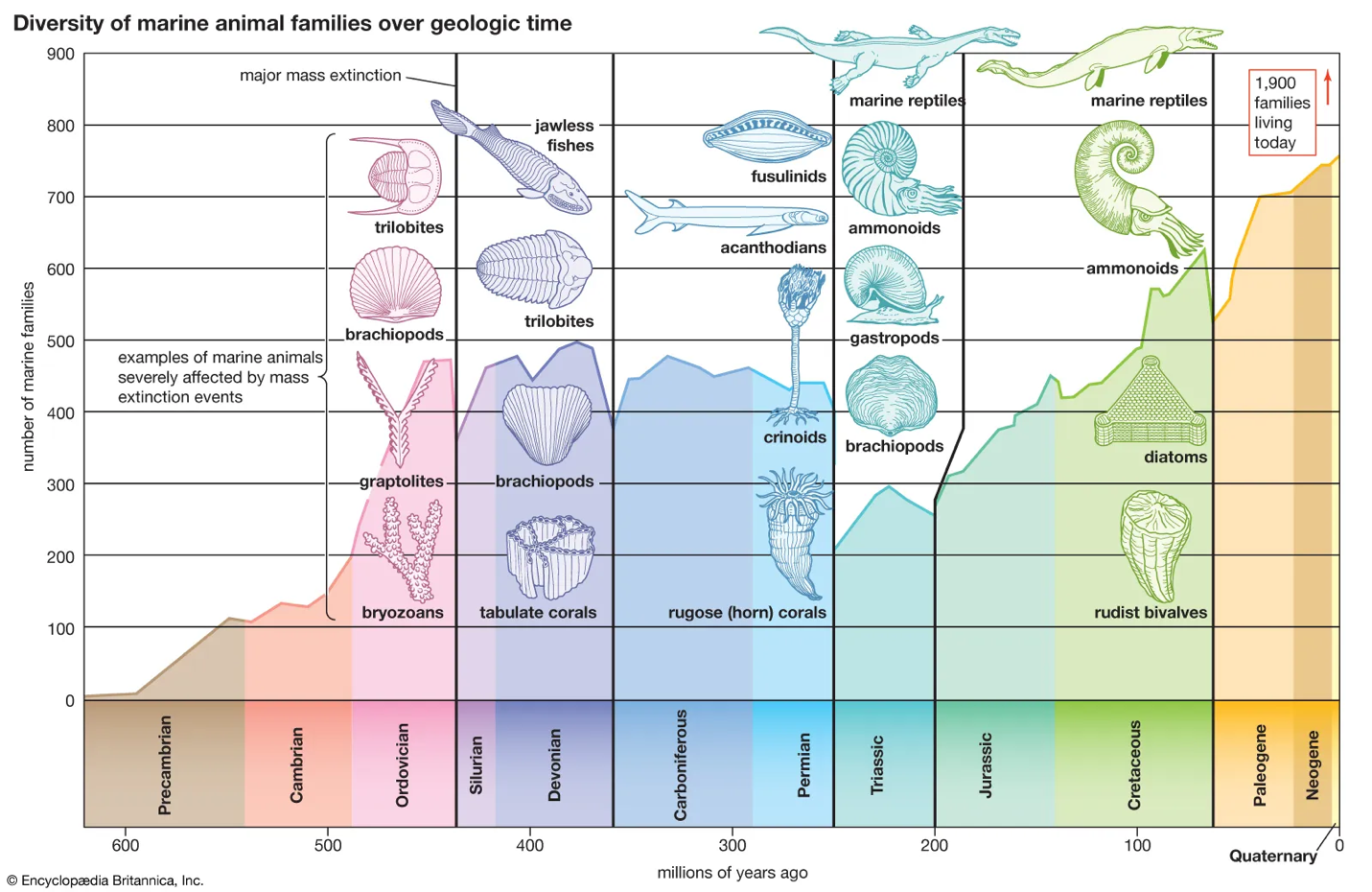
- Dominant marine invertebrates include Trilobites, Brachiopods, Bryozoans, Echinoderms, Cephalopods, and Graptolites. Jawless fishes were the earliest vertebrates to develop during this Period. Moreover, this Period marked the rise of planktonic organisms and reef ecosystems.
- The colonization of lands began with the evolution of early plants (simple, non-vascular types like Liverworts and Mosses)
- This Period led to an increase in volcanic activity and glaciation. This impacted Sea level change, causing Ordovician extinction and the disappearance of roughly 85% of marine species, primarily those living in shallow oceans near continents.
- The Ordovician Period can be further divided into the following epochs:
–Early Ordovician (485 – 470 million years ago)
–Middle Ordovician (470 – 458 million years ago)
–Late Ordovician (458 – 443 million years ago)
(https://www.britannica.com/science/Permian-extinction)
iii. Silurian Period (443 – 419 million years ago)
- The Silurian Period witnessed the re-establishment of marine ecosystems, the diversification of marine life, and the emergence of terrestrial organisms. Fish, including jawless and jawed species, experienced remarkable evolution and spread. Reef-building organisms (Bryozoans) like corals and sponges flourished in shallow, tropical seas. This Period also saw the first appearance of land-dwelling arthropods, such as centipedes and early spiders. The term “Silurian” is named after the tribe, Silures, who inhabited the area where the rocks of this Period were first described.
- Marine animals: Eurypterids and Megamastax were the primary apex predators of the Silurian Period. Jaekelopterus was an Eurypterid (Sea scorpion), the dominant marine arthropod, known for its size and grasping claws. Megamastax, a lobe-finned fish, was potentially the largest vertebrate of the time. The evolution of predation and competition led to a decrease in the population of Trilobites. The Cephalopods, Ostracoderms (Jawless, armored fish), and Gnathostomes (Early jawed fish) were other animals that began inhabiting Marine life. Guiyu oneiros, also known as ghost fish, is the earliest known bony fish (Osteichthyes) that lived during the Late Silurian period.
- Terrestrial Life: Terrestrial life evolved and flourished rapidly during the Silurian Period.
A significant development in plants was the evolution of vascular tissue (xylem and phloem) with simple stems and sporangia. Cooksonia is the earliest known vascular plant with simple stems and sporangia. These plants had simple branching patterns and lacked true leaves, but evolved later.
- In Animals, fossil evidence of early myriapods such as Pneumodesmus newmani from the late Silurian of Scotland shows they had segmented bodies and multiple pairs of legs. They were the first animals to possess a respiratory system adapted for air breathing.
- The Silurian Period can be divided into the following four epochs:
–Llandovery (443 – 433 million years ago)
–Wenlock (433 – 427 million years ago)
–Ludlow (427 – 423 million years ago)
–Pridoli (423 – 419 million years ago)
iv. Devonian Period (419 – 359 million years ago)
- The Devonian Period was a time of evolutionary innovation, particularly in the marine ecosystem and the colonization of lands by plants, arthropods, and early tetrapods. Devonian is named after Devonshire, England, where rocks from this period were first studied. The Period is nicknamed the “Age of Fish” as it gave rise to several major fish groups, including Placoderms (Dunkleosteus), Cartilaginous fish (Sharks and Rays), and Bony fish like Lobe-finned fish (Coelocanth and Lungfish) and Ray-finned fish.
- The Devonian Period saw the development of jaws and teeth, improved fins, and internal skeletons in fish, allowing them to become top predators. Early stages of transitioning from aquatic to terrestrial mode of living included breathing by lungs in lobe-finned fish.
- Several plants also dominated land during this Period, forming the first forests with progymnosperms like Archaeopteris and giant lycophytes (Lepidodendron ancestors), becoming the first successful trees by the end of the Period. Other plants include lycophytes, horsetails, ferns, and Elkinsia seed plants. The spread of vast forests increased photosynthesis, drawing down CO2. These may have led to global cooling, possibly glaciation, a lack of oxygen in the oceans due to algal blooms, and the release of gases from volcanic activity. Due to this, reefs collapsed, and 70-80% of marine species were wiped out. This Period ended with a Mass extinction called the Late Devonian extinction.
- Vertebrates began to move to land by the end of the Devonian Period as Lobe-finned fish (Tiktaalik), like animals, developed limb-like fins capable of moving on land. These early Amphibians included Ichthyostega and Acanthostega.
- The Epochs of this period are as follows
–Early Devonian ( 419 – 393 million years ago)
–Middle Devonian (393 – 383 million years ago)
–Late Devonian (383 – 359 million years ago)
v. Carboniferous Period (359 – 299 million years ago)
- The Carboniferous Period is known for its swampy forests, massive coal deposits, the rise of early reptiles, and giant insects. The name Carboniferous comes from a Latin word for “coal-bearing.” Vast, swampy forests dominated many tropical regions, and the accumulation of their plant matter over millions of years formed the extensive coal deposits found today.
- The Subperiods and Epochs of this period are as follows
-Mississippian Subperiod
–Tournaisian (359 – 346 million years ago)
–Visean (346 – 330 million years ago)
–Serpukhovian (330 – 323 million years ago)
- Pennsylvanian Subperiod
–Bashkirian (323 – 315 million years ago)
–Moscovian (315 – 307 million years ago)
–Kasimovian (303 – 303 million years ago)
–Gzhelian (303 – 299 million years ago)
- This Period saw warm human conditions and high atmospheric oxygen levels, marking the highest in Earth’s history. Vast forests and swampy areas dominated the terrestrial environments—forests composed of Lycopods, Sphenopsids, and Cordaites. Amphibians were common and diverse; crucially, the first reptiles (like Hylonomus) evolved during the Carboniferous. The amniotic egg, a key innovation of reptiles, allowed them to reproduce fully on land, freeing them from the need to return to water.
- Most importantly, the Carboniferous period gave rise to major radiative evolution in Insects, which possess wings (dragonfly-like Meganeura) and enormous structures (millipede-like Arthropleura and a large land scorpion, Pulmonoscorpius).
- The supercontinent Gondwana moved northwards and collided with other land masses towards the end of the Period, contributing to the formation of Pangaea.
vi. Permian Period (299 – 252 million years ago)
- The Permian Period was the last Period of the Paleozoic Era, ending with the largest mass extinction in Earth’s history (the Permian-Triassic extinction event). It is called “Permian” because it was named after the Perm province in Russia, where rocks of this Period were well-developed and studied. This Period saw significant changes in both plant and animal life, largely driven by the formation of Pangaea and the shift towards a drier climate in many regions.
- Due to rising dry conditions, Seed-bearing plants became more prominent, and the giant swamp forests of the Carboniferous gradually declined. Conifers started to dominate, and plants developed thick, waxy leaves to prevent water loss.
- Reptiles began to diversify and resemble modern reptiles, such as crocodile-like creatures. Some Vertebrates evolved to adapt to land (terrestrial) fully, taking advantage of drier climates. The Permian Period saw the rise of synapsids (mammal-like reptiles), such as Dimetrodon, Lystrosaurus, and Inostrancevia.
- The mass extinction event made around 70% of land species and ~90% of marine species extinct. This event, also called the Great Dying, was likely caused by massive volcanic eruptions in the Siberian Traps.
- Epochs of the Permian Period:
–Cisuralian Epoch (299 – 272 million years ago)
–Guadalupion Epoch (272 – 259 million years ago)
–Lopingian Epoch (259-252 million years ago)
2. Mesozoic Era
The Middle Era of the Phanerozoic Eon experienced recovery from the Permian extinction, the dominance of dinosaurs, the origin of birds and mammals, and the breakup of Pangaea. The Mesozoic Era is divided into the following three periods:
-Triassic Period (252 – 201 million years ago)
-Jurassic Period (201 – 145 million years ago)
-Cretaceous Period (145 – 66 million years ago)
i. Triassic Period
- The Triassic Period marks the beginning of the Mesozoic Era, following the Permian-Triassic extinction. It was a time of recovery, diversification, and the rise of dinosaurs, mammals, and modern ecosystems. It can be divided into three epochs:
–Early Triassic (253 – 247 Ma)
–Middle Triassic (247 – 237 Ma)
–Late Triassic (237 – 201 Ma)
- During the Triassic Period, all landmasses were joined into a supercontinent, Pangaea, where this vast landmass experienced a hot and dry climate with seasonal monsoons near coasts. Later, during the Late Triassic, the continent eventually started to split apart, with two major landmasses forming: Laurasia (North America and Eurasia) and Gondwana (South America, Africa, India, Antarctica, and Australia). The Tethys Ocean formed between these two landmasses, and the ocean that surrounded Pangaea was called Panthalassa.
- After the Permian extinction, Seed-forming Gymnosperms dominated over ferns. Moreover, terrestrial vertebrates also diversified. Archosaurs began to rule. The first actual dinosaurs evolved from Archosaurs during the Late Triassic period. However, these early dinosaurs were often small and not yet dominant. Cynodonts, a mammal-like reptile, continued to evolve into the first mammal during the Late Triassic period, such as Morganucodon. Besides Dinosaurs and Mammal ancestors, other reptile groups like Thecodonts, Phytosaurs (crocodile-like reptiles), and Rhynchosaurs (Herbivorous reptiles) thrived.
- Marine life gradually recovered with the diversification of ammonoids and the re-establishment of reefs (Scleractinian corals), i.e., the appearance of modern corals. Marine reptiles like Ichthyosaurs (fish-lizards) and Nothosaurs became important predators.
- The Triassic Period ended with another extinction event, the Triassic-Jurassic extinction. This resulted in a 50% disappearance of all marine genera and significantly altered terrestrial ecosystems, allowing dinosaurs to become dominant terrestrial vertebrates in the Jurassic Period.
ii. Jurassic Period
- The Jurassic Period is often called the “Age of Dinosaurs, ” which began 201 to 145 million years ago. “Jurassic” originates from the Jura Mountains in France and Switzerland. Alexandre Brongniart, a French scientist, coined the term based on this mountain’s distinctive limestone formations and folded structures. During this Period, the world saw flourishing marine life and the continued evolution of early mammals and birds. The Jurassic Period can be divided into three epochs:
-Early Jurassic Epoch: 201 – 174 million years ago
-Middle Jurassic Epoch: 174 – 163 million years ago
-Late Jurassic Epoch: 163 – 145 million years ago
- As the supercontinent Pangaea continued to rift apart, forming larger oceans and further isolating landmasses, this fragmentation influenced regional climates and the distribution of life. High tectonic activity caused mountain-building and increased volcanic activity. During this Period, dinosaurs rapidly diversified and became the dominant group of terrestrial vertebrates, occupying a wide range of ecological niches.
- Marine life showed rapid recovery from the Triassic extinction, where new groups of Coccolithophores, Foraminifera, Ammonites, and Belemnites were seen. Ammonites reached their peak diversity, evolving into various shell shapes and sizes. These Ammonites include Bifericeras, Nannocardioceras, and Parapuzoasia. Belemnites were also common, and coral reefs were built from scleractinian corals. Marine reptiles also reached their diversity peak during this Period. Dolphin-like reptiles such as Ichthyosaurus and Ophthalmosaurus were fast, torpedo-shaped hunters. Plesiosaurus is known for broad bodies and flipper-powered locomotion. Liopleurodon and Pliosaurus were other marine reptiles known as apex predators of marine life during this Period.
- Dinosaurs dominated terrestrial life. The term “Dinosaurs” comes from the Greek word monstrous lizard that could reach enormous sizes. Dinosaurs of the Jurassic Period include Theropods (Allosaurus, Ceratosaurus, Dilophosaurus), Sauropods (Brachiosaurus, Diplodocus, Apatosaurus), and Ornithischians (Stegosaurus, Camptosaurus). The first animals to evolve the ability to fly were the Insects during the Carboniferous Period. During the Jurassic Period, vertebrates evolved into two major groups: Pterosaurs (Flying reptiles) and Paravian Dinosaurs (Leading to Birds). Pterosaurs include Rhamphorhynchus, Pterodactylus, Paravian Dinosaurs, Anchiornis (with Proto wings), and Archaeopteryx (Feather-covered wings).
- Early Mammals continued to evolve from synapsid ancestors into different lineages. These mammals remain small and mostly insectivorous. Example: Morganucodon, Megazostrodon.
iii. Cretaceous Period (145 – 66 million years)
- The Cretaceous Period is the final Period of the Mesozoic Era, which famously ended with an extinction event that wiped out the non-avian dinosaurs. This was a time of incredible biological diversity, significant geological changes, and the continued rise of flowering plants. The Cretaceous Period can be divided into two epochs:
-Early Cretaceous (145 – 100 million years ago)
-Late Cretaceous (100 – 66 million years ago)
- During the Cretaceous Period, the supercontinents Laurasia and Gondwana were in the process of breaking apart. Laurasia eventually split into North America and Eurasia, and Gondwana into South America, Africa, Antarctica, and India. These continents were still in very different positions compared to today, and the Tethys Ocean separated them.
- The Cretaceous Period played a major role in the evolutionary event of Angiosperms. Flowering plants diversified rapidly and became the dominant plant group in many terrestrial ecosystems, outcompeting gymnosperms in many niches. Angiosperms positively impacted insect evolution as they provided new food sources and habitats and a rise in co-evolution. Examples of Angiosperms during this Period include Hauterivian, Barremian, and Montsechia.
- The Cretaceous Period is also known for the peak diversity of Dinosaur evolution. Some of the most well-documented dinosaurs come from North America’s final 10 million years of the Cretaceous Period. Some of them include the following:
- Locomotor-necked giants (Alamosaurus, Argentinosaurus), Duck-billed Dinosaurs (Edmontosaurus, Corythosaurus, Parasaurolophus), Ceratopsian Horned Dinosaurs (Triceratops, Styracosaurus), Armored Dinosaurs (Ankylosaurus, Euoplocephalus), and Thick-skulled Dinosaurs (Pachycephalosaurus). This time, powerful predators such as Tyrannosaurus, Velociraptor, and Spinosaurus were present.
- Paravian Animals (Birds) continued to evolve and diversify with the appearance of many groups ancestral to modern birds. Some of these birds include Ichthyornis, Hesperornis, Apsaravis, and Confuciusornis.
- The marine life of the Cretaceous Period was diverse and included various reptiles, invertebrates, and fish. Notable marine reptiles included Mosasaurs, Plesiosaurs, and Ichthyosaurs. Invertebrates like Brachiopods and Plankton were also abundant. Ammonites exhibited various shell morphologies, from typically coiled forms to unusual straight-shelled Baculites.
- The Cretaceous Period ended abruptly with a catastrophic mass extinction event. The cause of this is highly attributed to a large asteroid impact (Chicxulub Impactor) in the Yucatan Peninsula, along with potential contributions from massive volcanic activity (Deccan Traps). This event wiped out the non-avian dinosaurs, marine reptiles like Mosasaurs and Ichthyosaurs, Ammonites, Belemnites, and many other plant and animal groups, paving the way for the rise of Mammals in the Cenozoic Era.
3. Cenozoic Era
The Cenozoic Era (meaning “recent life”) is the Earth’s current geological Era, spanning from 66 million years ago to the present day. Due to mammals’ dominance and diversification, it is often called the “Age of Mammals.” Significant climatic shifts, tectonic activity, and the evolution of modern flora and fauna mark the Cenozoic.
The Cenozoic Era is divided into three periods that can be further split into the following epochs:
Paleogene Period (66 – 23 million years ago)
- Paleocene Epoch (66 – 56 million years ago)
- Eocene Epoch (56 – 34 million years ago)
- Oligocene Epoch (34 – 23 million years ago)
Neogene Period ( 23 – 2 million years ago)
- Miocene Epoch (23 – 5 million years ago)
- Pliocene Epoch (5 – 2 million years ago)
Quaternary Period ( 2 million years ago – present)
- Pleistocene (2.5 million years ago – 11,700 years ago)
- Holocene (11,700 years ago – present)
i. Paleogene Period
The Paleogene Period marks the first Period of the Cenozoic Era, and it was the recovery from the Cretaceous–Paleogene (K-Pg) extinction event.
a. Paleocene Epoch
- After the extinction of non-avian dinosaurs, the surviving plant and animal groups began to diversify and fill the vacant ecological niches. Mammals and Birds underwent adaptive radiation to evolve into a wide array of forms, sizes, and ecological roles, eventually leading to the ancestors of most modern mammalian orders. Moreover, Predatory Flightless Birds like Gastornis are believed to have expanded to niches left by dinosaurs. It is thought to have been the largest land animal during the Paleocene Epoch.
- Sharks thrived as top predators after the extinction event in the absence of marine reptiles. The earliest whales (Archaeoceti) appeared during this Epoch, marking a significant development in marine mammals. Moreover, modern forms of gastropods, bivalves, foraminiferans, and echinoids appeared in the oceans. Squids dominated over ammonites as dominant cephalopods, while sharks and bony fishes became more prevalent.
b. Eocene Epoch
- In the Eocene Epoch, Mammals flourished into many forms, such as early perissodactyls (Hyracotherium, an early horse ancestor), artiodactyls (even-toed ungulates), early whales (Pakicetus), primates (Lemur, Monkeys, and Apes). Giant snakes like Titanoboa existed in this Epoch’s warm, humid environments. Many modern bird orders, such as waterfowl, raptors, and perching birds, began diversifying. Penguins began to diversify in the Southern Hemisphere.
- Flowering plants began to diversify into early forests and shrubs. Dense, tropical forests covered much of the land. The Eocene is the hottest Period of the Cenozoic Era, as “Greenhouse Earth.” However, an event termed the “Azolla Event,” which followed the blooming of carbon-fixing freshwater fern Azolla, occurring around 49 million, is believed to have dropped Carbon dioxide.
c. Oligocene Epoch
- The Oligocene Epoch experienced a cooler climate, and drier forests began to shrink. The cooling and drying trend led to the expansion of grasslands, favoring the evolution of grazing mammals. However, Angiosperms continued to dominate. Many archaic mammal groups began to decline, and more modern-looking forms became prevalent. This included diversifying early horses (Mesohippus), Rhinos, Early Elephants (Phiomia), Cats, Dogs, Camels, Deer, and Apes. Giant flightless birds also became less common. Whales and Dolphins became more fully aquatic, diversifying into baleen, toothed, and other forms. Early Seals and Sea lions were also speared.
ii. Neogene Period
- The Neogene Period is characterized by continued cooling and drying of the global climate, further evolution and diversification of mammals and birds, and significant changes in plant life, including the expansion of grasslands. The continents continued to drift towards their current positions. The collision of Africa with Eurasia closed the Tethys Sea, forming the Mediterranean Sea and influencing global ocean currents.
- The Isthmus of Panama formed, connecting North and South America and significantly impacting ocean currents and the distribution of marine and terrestrial life. Continued tectonic activity led to the uplift of mountains like the Himalayas (collision of the Indian and Eurasian plates) and the Alps (collision of the Italian peninsula with the European continent).
a. Miocene Epoch
- The Miocene Epoch experienced significant diversification of mammals.
- Grazing mammals like early horses (Merychippus) evolved high-crowned teeth for grazing. Deers and Giraffoids (Procervulus, Climacoceras) diversified. Continued evolution and dispersal of apes (Hominoids: Proconsul, Dryopithecus) spread across Africa and Eurasia. Modern families of carnivores, such as dogs, cats, bears, and weasels, have diversified. Some large predators were bear dogs (Amphicyon) and sabertooth cats (Machairodus and Epicyon). Elephants with varying tusk arrangements evolved, like the Gomphotherium and Deinotherium.
- Large, flightless birds, often termed Terror birds, lived during this time. Phorusrhacos, an extinct genus of terror birds, inhabited South America during this Period. Moreover, Insects continued to co-evolve with flowering plants.
b. Pliocene Epoch
The Pliocene Epoch is known for the appearance of the first hominins, early human ancestors like Australopithecus, which evolved in Africa. Early Paranthropus and Homo habilis appeared towards the end of the Pliocene Epoch. The cooling of global temperature and glacial expansion during the Pliocene Epoch led to the beginning of the Ice Age.
- Grasslands and savannas expanded further. The Period saw the establishment and spread of vegetation zones largely recognizable today. Various species of grasses (Poaceae) became dominant, like the ancestral forms of Andropogon, Bouteloua, Stipa, and Panicum. Continental Ice sheets covered much of North America, Europe, and Asia during the Ice Age. This led to the gradual expansion of boreal and temperate forests as well.
- The Fauna of this Epoch is termed “Megafauna” as it consists of large animals like mammoths (Mammuthus primigenius), saber-toothed cats, woolly rhinoceros (Coelodonta antiquitatis), Irish elk (Megaloceros), Giant ground sloths (Smilodon), and Short-faced bears (Arctodus). Those animals that could adjust to glacial climates began establishing themselves, such as seals, walruses, plankton, and benthic communities. The Pliocene Epoch also marks the emergence of the Homo genus, which includes early hominins like Australopithecus evolving and diversifying in eastern Africa.
- Sharks were dominant predators of marine life. Megalodon (Carcharocles megalodon) of the Pliocene Era is considered the largest and most powerful predator ever to live on Earth. It is known for its enormous teeth, which measure 18 centimeters, and its size of 20 meters.
iii. Quaternary Period
The Quaternary Period began approximately 2.58 million years ago and is the most recent Period of the Cenozoic Era. Dramatic and cyclical climate changes, from the ice age to significant geological events and the evolution of our species, Homo sapiens, characterize this Period.
a. Pleistocene Epoch (2.58 million years ago – 11,700 years ago)
- The Pleistocene Epoch experienced a series of repeated glacial and interglacial cycles known as the Milankovitch cycle. Large ice sheets and colder temperatures characterized the distinct glacial periods, while interglacial periods are warmer and have less ice. Moreover, these ice sheets dramatically altered landscapes, sea levels, and climates, influencing Earth’s climate and geography in a long-term perspective.
- The presence of large mammals characterized by the Pleistocene Epoch adapted to cold and temperate environments, such as mammoths, dire wolves, cave lions, woolly rhinos, giant ground sloths, saber-toothed cats, and giant deer. This Epoch saw the development of the hominid line, leading to the appearance of anatomically modern humans. These hominins include Homo erectus, Homo heidelbergensis, Neanderthals, Denisovans, Homo florensis, Homo luzonensis, and ultimately Homo sapiens. Each of the species is known to inhabit particular regions within the subcontinent. Homo sapiens co-existed with other species; however, it was able to survive due to better adaptability to diverse environments, advanced cognitive skills, and a high survival rate in infants.
b. Holocene Epoch
- The Holocene is the most recent geological Epoch. It is characterized by a relatively stable and warmer global climate than the preceding ice ages, which has allowed for the development of human civilization and its profound impact on the planet. Ice sheets are confined to Greenland and Antarctica. This led to the extinction of various megafauna species like Mammoths, Mastodons, Giant armadillos, and Saber-toothed cats, which survived due to the glacial environment.
- As humans began to rule, Agriculture provided surplus resources necessary for the rise of cities, states, empires, and modern civilizations. The Holocene epoch has led to the present level of civilization, which includes agriculture, urbanization, and technological advancements. This Epoch has witnessed significant environmental transformations, such as the reoccupation of landscapes by vegetation and animals and the formation of new ecosystems.
- Humans selectively bred wild plants and animals for desired traits, leading to the domestication of crops like wheat, rice, and maize and animals like dogs, cattle, sheep, and goats. As human populations grew and technology advanced, the impact of human activities on the environment became increasingly significant. This includes deforestation, habitat destruction, pollution, overexploitation of resources, and, most recently, significant climate change. Moreover, human populations are attributed to hunting and habitat destruction that led to the extinction of animals like the Dodo, the Moa, and the Tasmanian tiger.
- Due to human activities’ overwhelming and lasting impact on Earth’s systems, many scientists argue that we have entered a new geological epoch, the Anthropocene (“The age of humans”).
Importance of the Geological Time Scale
- The Geological Time Scale is a framework that geologists, paleontologists, and other Earth scientists use to classify and date Earth’s history into distinct intervals based on major geological and biological events.
- It allows scientists to track the evolutionary history of different groups of organisms over millions of years, showing how life forms have changed and diversified in response to environmental shifts.
- GTS allows scientists to compare rock layers from different parts of the world. If similar fossils are found in distant places, it indicates that those rocks are from the same Period.
- GTS allows for the exploration of natural resources such as fossil fuels (coal, oil, natural gas), metallic ores, and groundwater. These resources are often associated with specific geological periods and rock formations. Moreover, past geological events (earthquakes, volcanic eruptions, and landslides) can help assess potential future hazards and plan for land use and infrastructure development.
References
- Benton, M. J. (2014). Early origins of modern birds and mammals: Molecules vs. morphology. Proceedings of the Royal Society B: Biological Sciences, *281*(1788), 20140245. https://doi.org/10.1098/rspb.2014.2245
- Goldschmidt Abstracts. (2018). Abstract 3033: Geochemical signatures of early life. https://goldschmidtabstracts.info/2018/3033.pdf
- NASA Science. (n.d.). The Great Dying. https://science.nasa.gov/science-research/earth-science/the-great-dying/
- Scientific Reports. (2015). Hydrogen isotopic evidence for early origin of water in the Earth. Scientific Reports, *5*(1), 1-7. https://doi.org/10.1038/srep13493
- Books & Book Chapters
- Lutgens, F. K., Tarbuck, E. J., & Tasa, D. (2018). Essentials of geology (11th ed.). Pearson.
- Rothery, D. A. (2015). Geology: A complete introduction. Teach Yourself.
- Websites & Online Sources
- Bewtr. (n.d.). How did water arrive on Earth? A new theory brings fresh perspective. https://www.bewtr.com/water-stories/how-did-water-arrive-on-earth-a-new-theory-brings-fresh-perspective/
- Britannica. (n.d.). Ammonites. https://www.britannica.com/animal/trilobite
- Britannica. (n.d.). Devonian Period. https://www.nationalgeographic.com/science/article/devonian
- Britannica. (n.d.). Jurassic Period. https://www.britannica.com/science/Jurassic-Period
- Britannica. (n.d.). Permian Period. https://www.britannica.com/science/Permian-Period
- Britannica. (n.d.). Proterozoic Eon. https://www.britannica.com/science/Proterozoic-Eon
- Britannica. (n.d.). Quaternary life. https://www.britannica.com/science/Quaternary/Quaternary-life
- Britannica. (n.d.). Selective breeding. https://www.britannica.com/science/selective-breeding
- Natural History Museum (NHM). (2023). Cambrian apex predator probably preferred soft-bodied prey. https://www.nhm.ac.uk/discover/news/2023/july/cambrian-apex-predator-probably-preferred-soft-bodied-prey.html
- Natural History Museum (NHM). (n.d.). Earliest known mammal identified using fossil tooth records. https://www.nhm.ac.uk/press-office/press-releases/earliest-known-mammal-is-identified-using-fossil-tooth-records.html
- National Park Service (NPS). (n.d.). Geologic principles: Superposition and original horizontality. https://www.nps.gov/articles/geologic-principles-superposition-and-original-horizontality.htm
- National Park Service (NPS). (n.d.). Silurian Period. https://www.nps.gov/articles/000/silurian-period.htm
- Noble Museum. (n.d.). Pleistocene extinctions. https://samnoblemuseum.ou.edu/understanding-extinction/extinctions-in-the-recent-past-and-the-present-day/pleistocene-extinctions/
- Scientific American. (2018). Say hello to Dickinsonia, the animal kingdom’s newest (and oldest) member. https://www.scientificamerican.com/article/say-hello-to-dickinsonia-the-animal-kingdoms-newest-and-oldest-member/
- Shape of Life. (2018). Anomalocaris. https://www.shapeoflife.org/news/featured-creature/2018/02/26/anomalocaris
- University College Cork. (n.d.). Cooksonia. https://www.ucc.ie/en/fossil-heritage/irishfossils/cooksonia/
- Wikipedia. (n.d.). Archaeocyatha. https://en.wikipedia.org/wiki/Archaeocyatha
- Wikipedia. (n.d.). Wiwaxia. https://en.wikipedia.org/wiki/Wiwaxia
- Zhang, X. (2014). Megamastax amblyodus: A giant predatory fish from the Silurian of China. Science News. https://www.sci.news/paleontology/science-megamastax-amblyodus-silurian-china-01987.html
- Zimorski, V. (2015). Hydrogen isotopic evidence for early origin of water in the Earth. Scientific Reports, *5*(1), 1-7. https://doi.org/10.1038/srep13493
- Theses & Dissertations
- Smith, J. (2015). Late Pleistocene megafaunal extinctions: A reassessment of climate and human impacts [Master’s thesis, University of Nebraska]. DigitalCommons@University of Nebraska. https://digitalcommons.unl.edu/cgi/viewcontent.cgi?article=1296&context=envstudtheses
- Discover Wildlife (n.d.). Prehistoric animals. Retrieved from https://www.discoverwildlife.com/dinosaurs/prehistoric-animals
- Kentucky Geological Survey (n.d.). Geologic time scale. University of Kentucky. Retrieved from https://www.uky.edu/KGS/education/timeline2.htm
- Quora. (n.d.). Why is Geologic Time Scale important? Retrieved from https://www.quora.com/Why-is-Geologic-Time-Scale-important
- (Note: Since Quora is a Q&A platform with no clear authorship, the site name is used as the author.)
- Teacher Friendly Guide to Geology. (n.d.). Geologic history of the Midwest. Retrieved from https://geology.teacherfriendlyguide.org/index.php/geohist-mw
- (Note: If an organization or author is not clearly listed, the website title is used.)
- Study.com. (n.d.). Geologic time scale: Major eons, eras, periods, and epochs. Retrieved from https://study.com/academy/lesson/geologic-time-scale-major-eons-eras-periods-and-epochs.html
- PBS Eons. (2017, June 26). A brief history of geologic time [Video]. YouTube. https://www.youtube.com/watch?v=rWp5ZpJAIAE
- Geology In. (2014, December). Geologic time scale: Major eons, eras, periods and epochs. Retrieved from https://www.geologyin.com/2014/12/geologic-time-scale-major-eons-eras.html
- Hadean Eon. (n.d.). In Encyclopedia Britannica. Retrieved from https://www.britannica.com/science/Hadean-Eon
- Archean Eon. (n.d.). In Encyclopedia Britannica. Retrieved from https://www.britannica.com/science/Archean-Eon
- Proterozoic Eon. (n.d.). In Encyclopedia Britannica. Retrieved from https://www.britannica.com/science/Proterozoic-Eon
- Precambrian. (n.d.). In Encyclopedia Britannica. Retrieved from https://www.britannica.com/science/Precambrian
- Cryptozoic Eon. (n.d.). In Encyclopedia Britannica. Retrieved from https://www.britannica.com/science/Cryptozoic-Eon

This timeline summary helped me line up the major periods for class.