
The water cycle, or the hydrological cycle, is the continuous circulation of water between the hydrosphere, atmosphere, and lithosphere.
In the hydrological cycle, the water from sources like oceans, lakes, and rivers, evaporates to become vapor in the atmosphere. Transpiration done by plants also releases water vapor and is released into the air. This vapor rises, cools, and condenses to form clouds, which then fall to earth as precipitation in different forms such as rain, snow, sleet, or hail. Precipitate can be stored in pools of water or soaked into the soil to recharge aquifers. Excess water runs off and supplies streams and rivers which ultimately fall into the oceans and hence the cycle continues.

The water cycle has chief ecological, climatic, and social effects. It regulates temperature, affects weather, sustains vegetation, and preserves freshwater stores vital to life. Through these processes, the water cycle provides a stable supply of water, influencing ecosystems and shaping the global climatic system.
Steps and Process of Water Cycle
It consists of several processes, such as evaporation, condensation, transpiration, infiltration, and runoff, which circulate water in all states, i.e., liquid, vapor, and solid. The water cycle is an essential natural process that helps balance the environment and support life on earth.
Evaporation
Evaporation is a vital process of the water cycle, where liquid water turns into water vapor. This happens when water molecules on the surface have gained enough kinetic energy from sunlight to overcome intermolecular forces holding them together in a liquid state. Water thus converts into a vapor state and rises into the atmosphere.
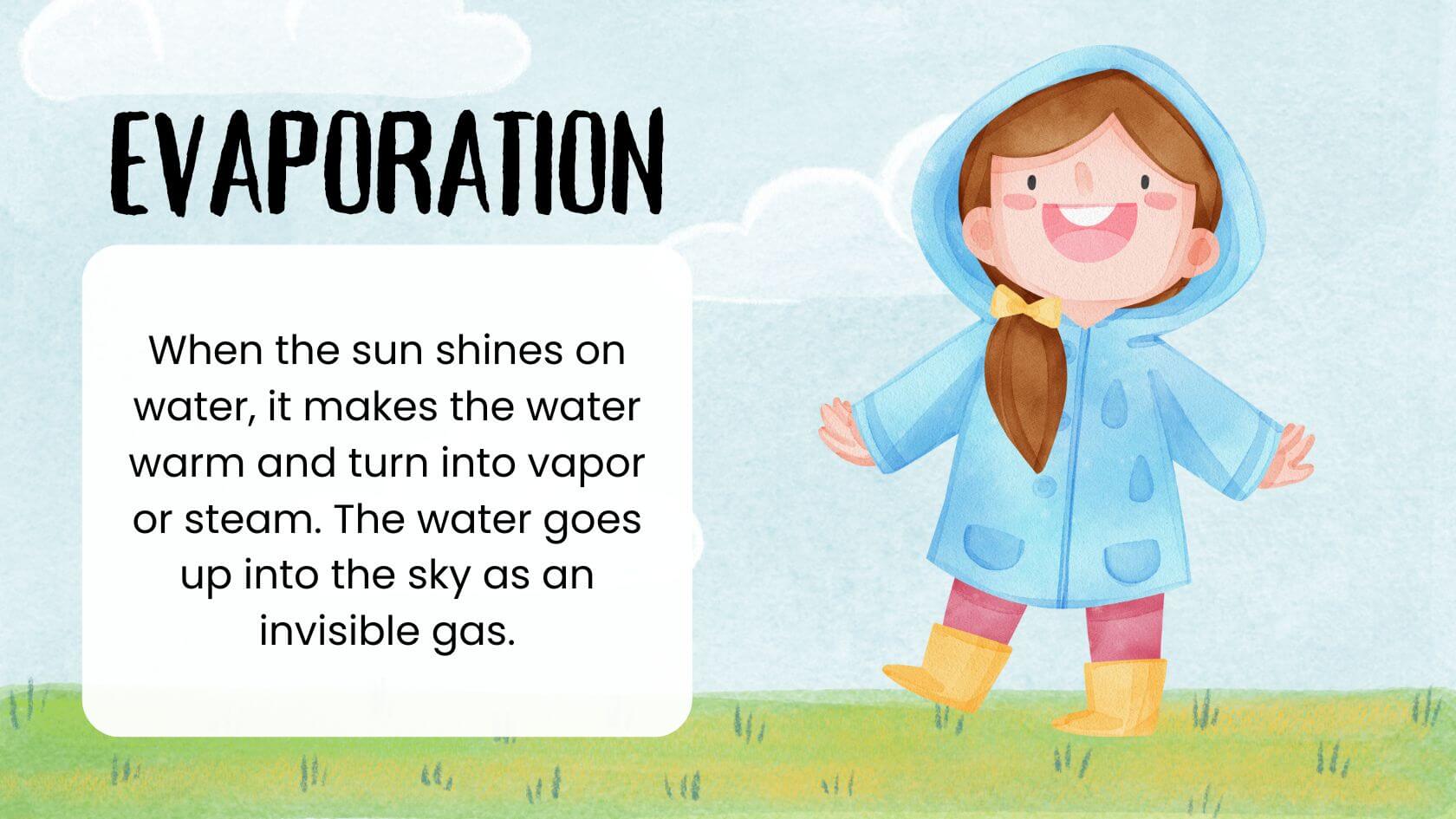
Evaporation occurs mainly from oceans, lakes, rivers, and soil surfaces and is one of the major means of moving water from the Earth’s surface to the atmosphere. It also has a cooling influence on the environment as it picks up latent heat in the phase change process. Evaporation not only controls climate by redistributing energy but also helps in the humidity level and cloud formation and generates weather patterns all over the world.
Transpiration
Transpiration is the loss of water vapor by plants, mainly from tiny openings known as stomata on their leaves. Transpiration is a significant biological process in the water cycle, adding significant amounts of water vapor to the air, usually equal to or greater than evaporation directly from the land and water surfaces.
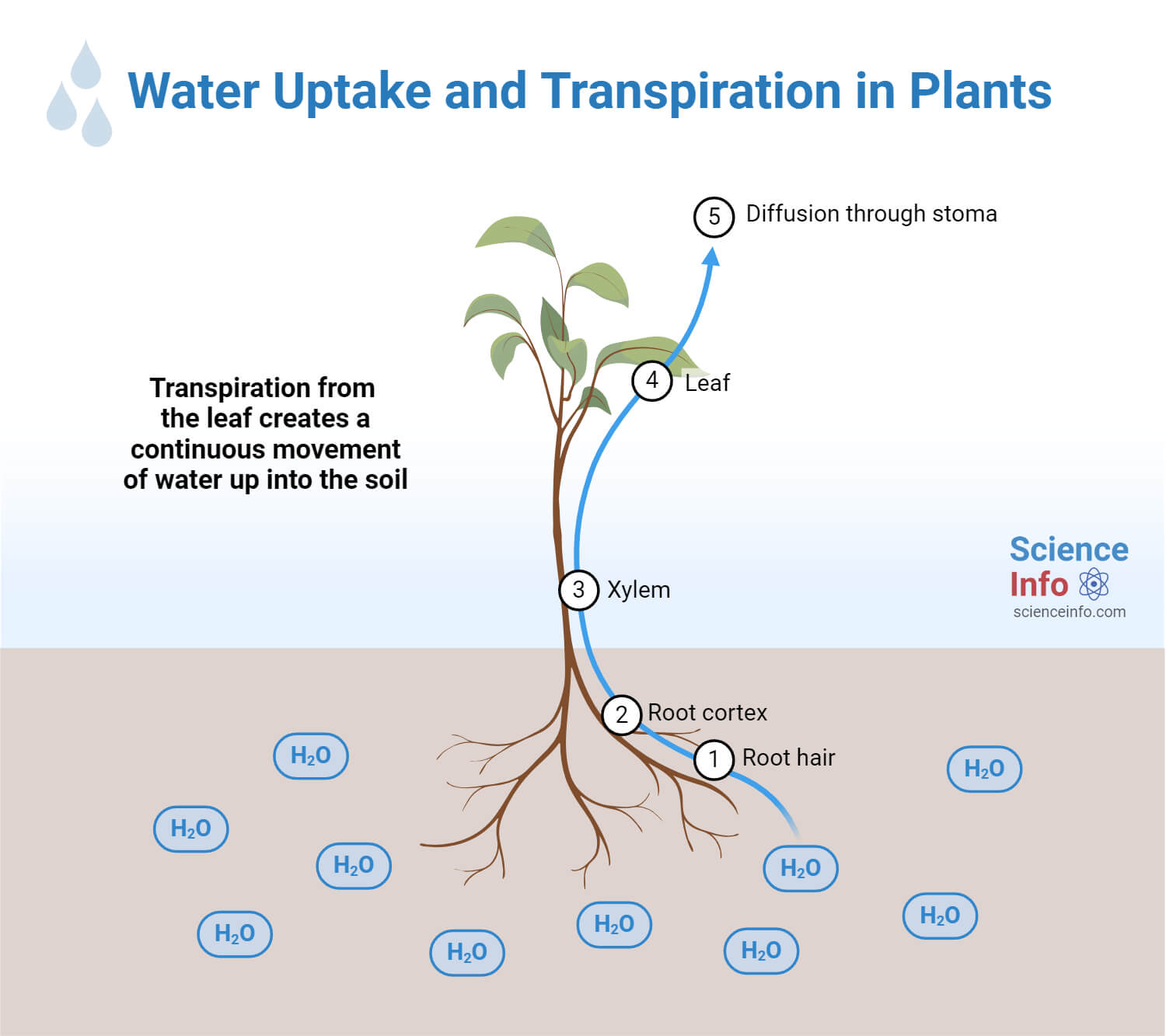
Transpiration is determined by the absorbance of water and nutrients by plant roots from the ground, which moves upwards through the plant’s vascular system. When plants open their stomata to exchange gas in photosynthesis, water vapor leaves the plant for the air, cooling plant tissue and bringing necessary nutrients into the plant. Transpiration therefore sustains both plant physiology and the general hydrological cycle as an integral link between terrestrial and atmospheric moisture.
Condensation
Condensation is a process in which water in the form of vapor in the atmosphere reverts to liquid, usually around tiny particles like dust, pollen, or sea salt referred to as condensation nuclei. It is during this phase change that warm moist air condenses to its dew point the temperature at which air is saturated with water when water molecules lose energy, sticking together in the form of microscopic droplets.As the droplets come together and accumulate, they are seen as clouds, fog, or dew.
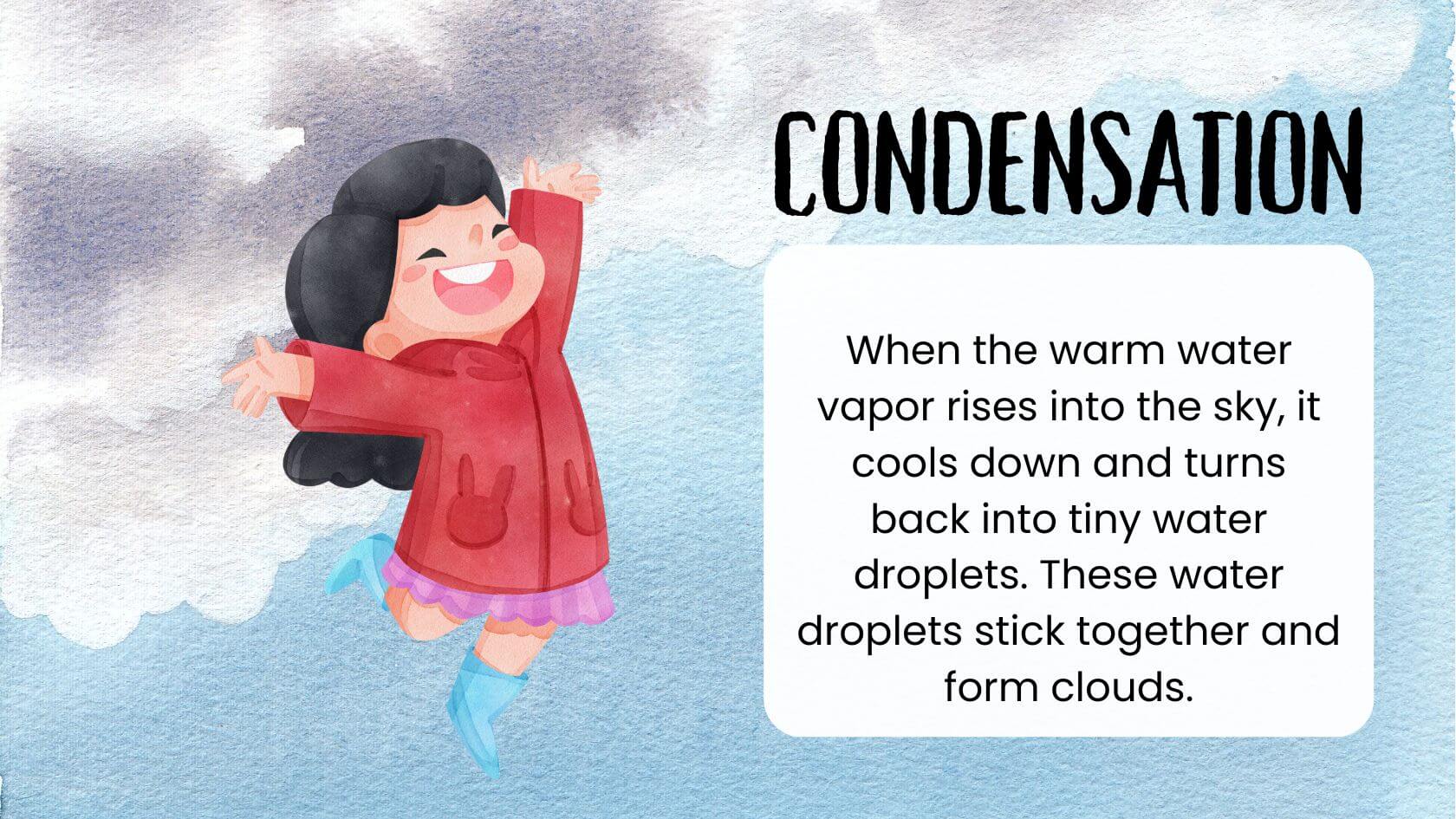
Condensation plays a vital role in the water cycle, as it is the condition for precipitation. By re-condensing water vapor into liquid water, it allows the redistribution of water from one ecosystem to another, supporting life on our planet and shaping weather and climate patterns around the globe.
Precipitation
Precipitation is the phenomenon by which condensed atmospheric water vapor falls back to the ground in forms like rain, snow, etc. It takes place when cloud droplets or ice crystals become large enough to resist atmospheric buoyant forces and gravity. Based on temperature and atmospheric conditions, precipitation manifests as rain, snow, sleet, hail, or drizzle. Rain is the most predominant kind, supporting terrestrial ecosystems with vital moisture.

Snow and hail are important in water storage, particularly in mountain and polar areas, where snowmelt fills freshwater reservoirs. Precipitation is a significant process in the water cycle that refills groundwater and surface water resources, promotes vegetation growth, and ensures climatic stability.
Collection
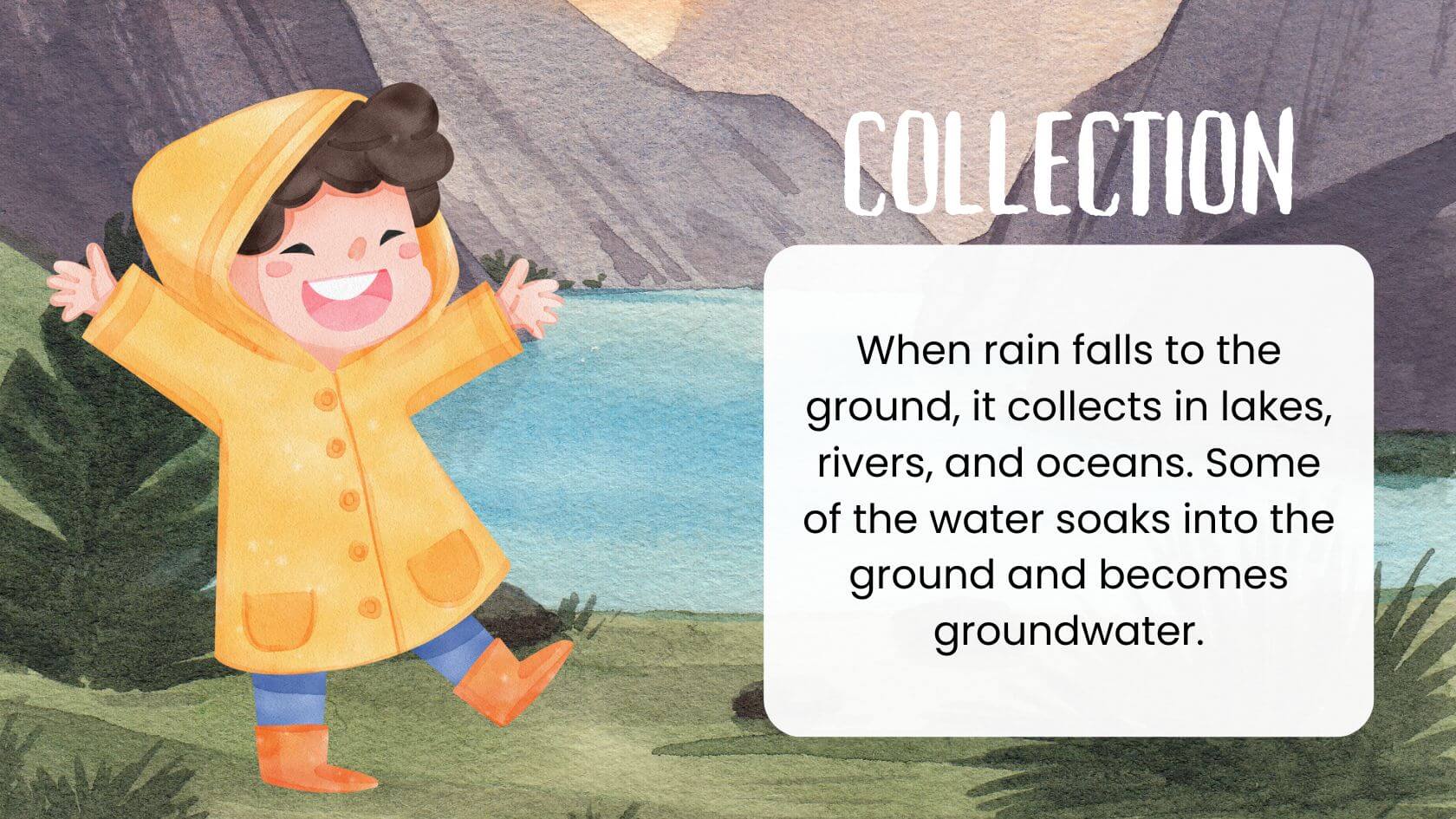
After precipitation, water accumulates in different natural reservoirs such as oceans, rivers, lakes, wetlands, and glaciers. The accumulation stage is crucial for controlling the hydrosphere of the Earth. Oceans, which dominate over 70% of the Earth’s surface, are the largest reservoirs of water, with an estimated 97% of all water. Freshwater lakes, rivers, and aquifers of groundwater are the main sources of drinking water and are home to various species. Collection sites also protect against erosion and flooding, holding water for slow release into neighboring ecosystems. Not only do these reservoirs provide water for people but also maintain intricate ecological webs, supporting biogeochemical processes and habitats for a variety of organisms.
Infiltration
Infiltration is the process through which water filters through the ground surface and sinks into the underlying layers. It starts when rain or surface water comes into contact with permeable soil, with capillary forces and gravity pulling it downwards. Infiltration rates vary based on soil texture, vegetation, slope of land, and soil moisture. Groundwater aquifers are renewed by water through infiltration, creating an important reservoir of freshwater for the environment and human use. It also alleviates surface runoff, preventing soil erosion and soil structure maintenance. In ecosystems, infiltration sustains wetland and riparian plant life, while in agricultural areas; it becomes an important factor in the management of soil moisture as well as crop yield.
Runoff
Runoff results from water from precipitation, snowmelt, or irrigation over the land surface rather than the infiltration into the soil. It often results when the ground is saturated or precipitation intensity is above infiltration capacity. Runoff carries water from streams, rivers, and lakes, linking upland and lowland regions and contributing significantly to landscape formation through erosion and sediment transport. While runoff can replenish surface water reservoirs, excessive runoff, frequently exacerbated by human actions such as deforestation and urbanization, can cause soil erosion, flooding, and water pollution. Knowledge of runoff dynamics is critical for water resource management, flood control design, and aquatic ecosystem health.
Sublimation and Deposition in the Water Cycle
Sublimation and deposition are less common but significant processes in the water cycle. Sublimation is the immediate transition of ice or snow directly into water vapor, without going through the liquid state. This happens usually in polar or high-altitude areas, where temperatures range low and the air is dry, facilitating the phase change. Sublimation helps increase atmospheric water vapor content and is an important process in glacial areas. Sublimation, meanwhile, is the conversion of water vapor to ice directly without turning into liquid. This is usually the process responsible for frost formation on frozen surfaces. Both sublimation and deposition demonstrate the intricacy of the water cycle and emphasize the active exchange processes between the solid, liquid, and gaseous states.
Human Influence on the Water Cycle
The natural water cycle has been greatly changed by human activities. Urbanization and forest removal decrease infiltration and enhance runoff, resulting in increased erosion and flooding rates. Industrial water extraction and irrigation operations disturb natural flow regimes, reducing groundwater storage and altering river paths. Dam and reservoir construction alters evaporation and sediment transport, affecting downstream communities. Agricultural runoff, industrial effluent, and wastewater pollution contaminate freshwaters, reducing water quality and imperiling biodiversity. Also, the burning of fossil fuels and deforestation contribute to global warming, further interfering with the pattern of precipitation and evaporation rates, thus accelerating the human influence on the water cycle.
Significance of the Water Cycle
The water cycle is essential to maintaining life on Earth. It provides for the constant movement and renewal of water between the atmosphere, lithosphere, and biosphere, facilitating the existence of organisms in varied habitats. Through the supply of moisture to plants and soil via precipitation and infiltration, the water cycle supports agricultural productivity and natural ecosystems. It also moderates climate by spreading heat via processes like evaporation and condensation, insulating temperature extremes, and stabilizing weather. In addition, the water cycle links various biogeochemical cycles by enabling the flow of nutrients and energy. Fundamentally, the water cycle is not just a physical process but also an ecological and biogeochemical force sustaining the health of the earth.
Climate Change and Its Impact on the Water Cycle
Climate change is transforming the water cycle in fundamental ways. Global warming elevates the rates of evaporation, raising the atmospheric water content and impacting precipitation patterns. This can give rise to more intense weather conditions, like intense rain and flooding in certain regions, but worsening the situation of drought in others. Glaciers and ice caps melting bring forward runoff and increase sea levels, posing the threat of inundating coastal communities and fresh water.

Temperature and precipitation alterations also interfere with seasonal snowmelt, which affects water supply for agriculture and ecosystems. On the whole, climate change adds uncertainty and variability to the water cycle, which has broader implications for water security, food production, and biodiversity.
Conclusion

The water cycle is an intricate and dynamic system that supports life on our planet. It involves a variety of physical processes evaporation, transpiration, condensation, precipitation, infiltration, runoff, sublimation, and deposition that collectively provide for the constant motion and renewal of water. Human actions and climate change are transforming the water cycle, changing natural patterns of flow, and posing new threats to water management and ecosystem health. Greater insight into these processes and their interplay is needed to create effective conservation and adaptation measures, making water resources sustainable for future generations.
References
- Trimble, S. (2022, March 16). Transpiration in Plants: Its importance and applications. CID Bio-Science. https://cid-inc.com/blog/transpiration-in-plants-its-importance-and-applications/
- Water cycle Definition, phases & Importance – lesson | Study.com. (n.d.). study.com. https://study.com/academy/lesson/the-water-cycle-precipitation-condensation-and-evaporation.html
- The Editors of Encyclopaedia Britannica. (2025, April 19). Water cycle | Definition, Steps, Diagram, & Facts. Encyclopedia Britannica. https://www.britannica.com/science/water-cycle
- Evapotranspiration and the water cycle. (2019, September 8). USGS. https://www.usgs.gov/special-topics/water-science-school/science/evapotranspiration-and-water-cycle
- Water cycle. (n.d.). National Oceanic and Atmospheric Administration. https://www.noaa.gov/education/resource-collections/freshwater/water-cycle
- Allen. (2025, February 24). Water cycle. https://allen.in/science/water-cycle
- Education, U. C. F. S. (n.d.). The Water Cycle and Climate Change | Center for Science Education. UCAR. https://scied.ucar.edu/learning-zone/climate-change-impacts/water-cycle-climate-change
- The water cycle. (n.d.). USGS. https://www.usgs.gov/special-topics/water-science-school/science/water-cycle
- Buggy, Q. (2025, March 10). How do humans impact the water cycle? Quench Buggy. https://quenchbuggy.com/how-do-humans-impact-the-water-cycle/
- Yang, D., Yang, Y., & Xia, J. (2021). Hydrological cycle and water resources in a changing world: A review. Geography and Sustainability, 2(2), 115–122. https://doi.org/10.1016/j.geosus.2021.05.003
