
Pulse oximeters are simple devices that estimate blood oxygen saturation and pulse rate simultaneously.
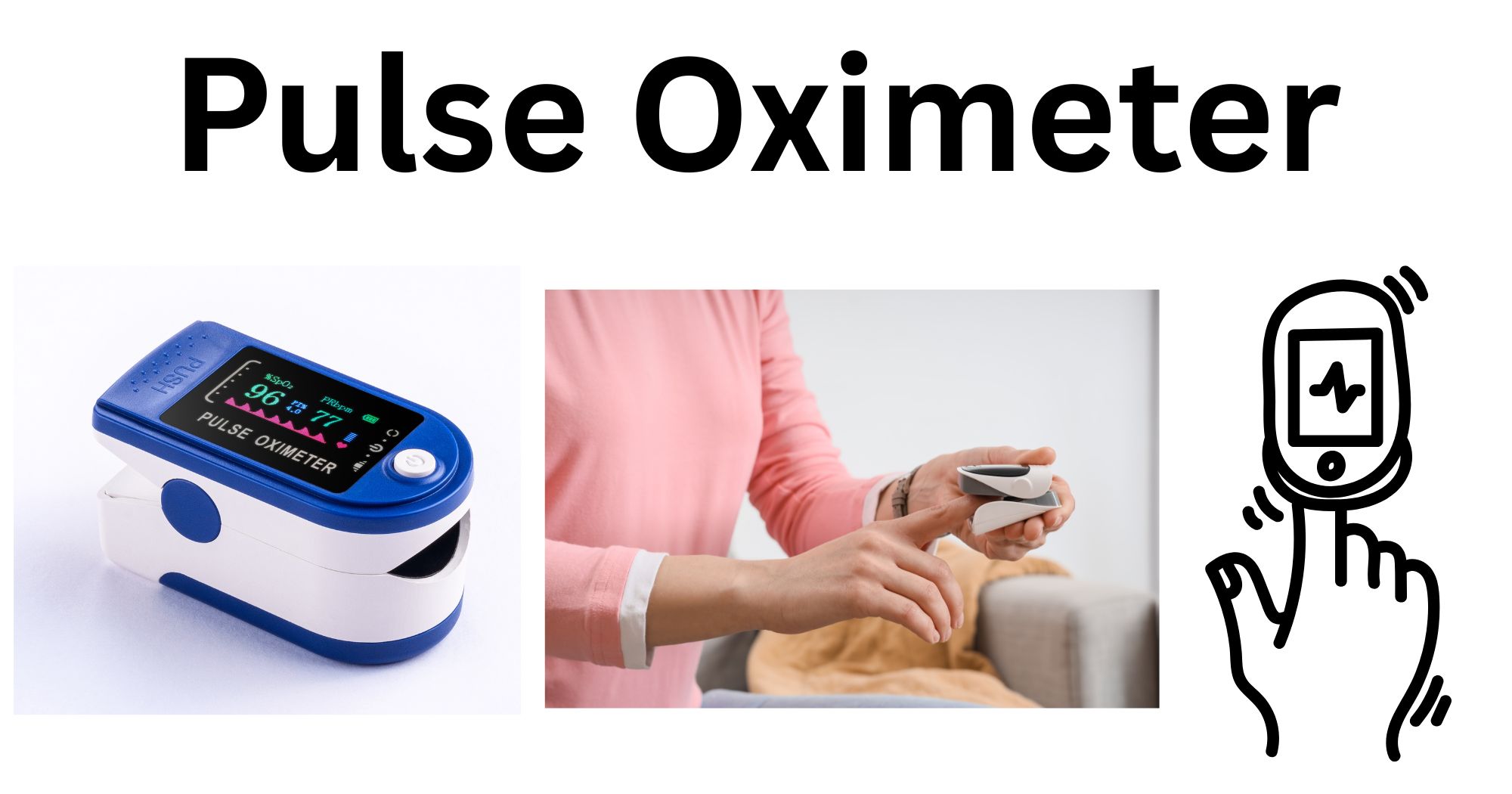
The term “oximeter” is derived from “oxygen” and the Greek word “metron,” meaning to measure. Hence, pulse oximeters are simple and non-invasive devices used to measure the oxygen saturation level of hemoglobin in blood and the pulse rate by emitting and detecting light. It uses light to estimate the percentage of hemoglobin in blood that is carrying oxygen (SpO2). SpO2 stands for peripheral capillary oxygen saturation and is displayed as a percentage. They are widely used in hospitals, clinics, and at home, from newborn care to COVID- 19 monitoring. It is clipped or strapped to a body part, such as a finger, ear, or foot, and provides continuous, real-time readings.
Importance of Pulse Oximetry in Patient Monitoring
Oxygen is important for the normal functioning of each cell of our body. It is essential for every organ, especially the brain, heart, and other vital organs. A small period of deprivation of oxygen might result in serious organ damage. Therefore, pulse oximetry plays an important role in patient monitoring as it gives continuous and real-time results of oxygenation status in patients.
- It is important for early detection of hypoxemia (low blood oxygen), as this condition might not show symptoms even though SpO2 is decreasing rapidly.
- Results of oximetry guide clinicians on when to supplement oxygen to patients and at what flow rate.
- It is essential for patient monitoring during procedures such as surgery, anesthesia, bronchoscopy, etc., to ensure patient safety.
- Home monitoring of patients with respiratory conditions like COPD, asthma, cardiac conditions, viral infections, and blood clots.
- It was widely used in the COVID-19 pandemic to detect oxygen drops occurring without breathlessness, which was a feature of severe SARS-CoV-2 infection.
Principle and Working of a Pulse Oximeter
The operating principle of a pulse oximeter is based on the physical law known as the Beer-Lambert Law and photoplethysmography (PPG).
A pulse oximeter emits red (660 nm) and infrared light (940nm) through or into the tissue. Light passes through the skin, bone, blood, etc., and a photodetector measures how much light is absorbed over time. Oxygenated and deoxygenated hemoglobin absorb light differently. Oxyhemoglobin absorbs more near-infrared, and deoxyhemoglobin absorbs more red light. By analyzing the pulsatile changes from arterial blood only, the device estimates SpO2. Arterial blood changes with each heartbeat, so it is pulsatile, but venous blood, tissue, and bone are non-pulsatile. The entire process happens in seconds, displaying a real-time, continuous reading.
Parts and Components of a Pulse Oximeter
A pulse meter is a well-integrated assembly of optical, electronic, and computational components. The key components and their roles are:
- Light source (LED): It emits red or infrared light.
- Photodetector: It detects transmitted or reflected light.
- Sensor housing/ clip: It positions the LEDs and detector on the skin.
- Analog/ digital circuit: It filters and conditions the PPG signal.
- Microprocessor: It calculates SpO2 and pulse from PPG.
- Display: It shows SpO₂, pulse rate, signal quality, etc.
- Power source: It provides energy using AAA batteries or rechargeable lithium-ion batteries.
Types of Pulse Oximeters
Fingertip Pulse Oximeters
These are small, low-cost units that clip on a fingertip. They are also called “pocket” devices due to their lightweight, small, and compact design, which is convenient to use. However, it is not useful for children under five as it tends to underreport SpO₂ in them.
Handheld oximeters
They are larger than fingertip models and have a separate detachable probe that can be placed on the finger, earlobe, or forehead. They offer more advanced display features, including waveform visualization, data logging, and extended battery life. It is recommended to use an age-specific pediatric probe when available.
Wearable devices
Oximeters are integrated into watches, patches, or flexible sensors for continuous monitoring and remote patient care. They are better suited for wellness tracking than clinical diagnosis, as their accuracy is lower than that of medical-grade devices.
Pediatric/ Neonatal oximeters
These are specifically designed for infants and children and use small, age-specific sensors fitting for small fingers, feet, or palms. They are used in neonatal and pediatric intensive care units.
How to Use a Pulse Oximeter Correctly (Steps to Use)
The best way to use a pulse oximeter is:
- Prepare the patient by ensuring the patient is calm and resting, as physical activity, shivering, or anxiety might affect readings.
- Choose an appropriate device: Use medically approved devices and prefer finger or handheld oximeters over smartphones for clinical decisions.
- Prepare the site: The skin should be warm and clean. Remove nail polish or artificial nails if using fingers, as it may affect readings by interfering with light.
- Position the sensor: Place on a well-perfused site (finger, toe, ear, foot, or forehead) using the right-sized probe, especially in children. Ensure it is snug but not too tight to avoid restricting blood flow.
- Minimize motion and interference: Make sure the person stays still, shielded from bright ambient light and sources of electromagnetic interference.
- Wait for a stable reading: Allow 30-60 seconds for the reading to stabilize.
- Document readings with date, time, symptoms, and other clinical findings.
Interpretation of Pulse Oximeter Readings (SpO₂ and Pulse Rate)
SpO₂ is the estimated arterial oxygen saturation. The SpO₂ range between 95% and 100% is normal; 91% to 94% is mild hypoxemia, 86% to 90% is moderate hypoxemia, and less than or equal to 85% is severe hypoxemia, which requires urgent medical intervention. We should note that SpO₂ represents the saturation of hemoglobin with oxygen and not the total oxygen actually in the blood. For example, for an anemic individual, the SpO₂ may be normal, but they may still have insufficient oxygen delivered to the tissues because they have less hemoglobin.
For pulse rates, a rate of 60- 100 beats per minute (bpm) is considered normal, less than 60 bpm as bradycardia, and more than 100 as tachycardia. SpO₂ and pulse rates are interpreted together, along with the symptoms and the overall clinical picture, while interpreting the results.
Factors Affecting the Accuracy of Pulse Oximeter Measurements
The factors that can affect the accuracy of pulse oximeters and provide misleading results are:
- Motion artifacts: Movement near the probe area causes distorted PPG signals, which give false pulsatile signals that lead to inaccurate results.
- Poor peripheral perfusion: Shock, vasoconstriction, low cardiac output, or hypothermia reduces pulsatile signals and accuracy.
- Ambient light and interference: Bright light or electromagnetic interference can affect readings by flooding the photodetector if not shielded.
- Dyshemoglobin and dyes: Carboxyhemoglobin or methemoglobin and some IV dyes can cause falsely high or low readings, as pulse oximeters cannot distinguish between oxyhemoglobin and abnormal hemoglobin species.
- Probe size and placement errors: Incorrect or loose placement, venous pulsation, or an inappropriate probe for age or site leads to false values.
- Skin pigmentation: In people with darker skin, decreased accuracy and small overestimation of SpO₂ can be seen.
Clinical Applications of Pulse Oximeters in Healthcare
A pulse oximeter is used in clinical settings for:
- Perioperative and anesthesia monitoring to detect hypoxemia early.
- ICU, emergency, and pediatric care for continuous monitoring in respiratory diseases like asthma, bronchiolitis, pneumonia, and ventilation or perfusion disorders.
- Neonatal and pediatric intensive care, including preterm infants at risk from both hypoxia and hyperoxia.
- Guiding oxygen therapy in adults and children.
- Home and remote monitoring during diseases such as COVID-19 and chronic respiratory disease management.
- Sleep-related breathing disorders, like obstructive sleep apnea, and other applications, like detecting tissue perfusion problems.
Advantages of Pulse Oximeters
The major benefits of a pulse oximeter are:
- It is noninvasive and painless as it does not require needles or blood draws.
- It provides continuous real-time monitoring of oxygenation and pulse.
- It is portable and relatively inexpensive, so it can be used in primary care, ambulances, and at home.
- Rapid detection of hypoxemia.
- Useful in all age groups with appropriate probes.
Limitations of Pulse Oximeters
The important limitations to understand are:
- Pulse oximeters do not measure ventilation or carbon dioxide. Normal SpO₂ can coexist with serious ventilatory problems.
- They are less accurate at very high or low oxygen levels, especially in critically ill patients and in preterm infants.
- A pulse oximeter is vulnerable to motion, low perfusion, pigmentation, abnormal hemoglobin, and external interference.
- They measure SpO₂, which reflects saturation and not the absolute quantity of oxygen in blood.
Guidelines and Safety Considerations for Pulse Oximetry
Guidelines and review recommendations for the pulse oximeter are as follows:
- Medical-grade, regulatory-approved devices and age-appropriate probes must be used.
- The device should be regularly maintained, cleaned, and its accuracy should be checked.
- Proper sensor placement on well-perfused areas must be ensured. While checking, motion and environmental interference must be minimized.
- Patient-specific baselines should be established, and age, comorbidities, and altitude should be considered when setting thresholds.
- Clinicians, caregivers, and patients should be well educated on correct use.
- SpO₂ must be interpreted within the full clinical context.
- The readings should be accurately documented to track trends and responses to treatments.
The WHO includes pulse oximetry as a required component of safe surgery standards globally. The FDA distinguishes oximeters as Prescription pulse oximeters and Over-the-counter wellness oximeters. Prescription pulse oximeters are Class II medical devices that are clinically validated and used in hospitals; however, over-the-counter wellness oximeters are not FDA-cleared for medical diagnosis.
Conclusion
Pulse oximeters are simple yet powerful tools for monitoring blood oxygen levels and pulse rate across hospital and home settings. They provide continuous and noninvasive information that helps in the early detection of hypoxemia and safer oxygen therapy. However, it is important to understand that their readings are estimated and are influenced by patient factors, device design, and operating conditions. So safe use depends on recognizing the factors that affect accuracy and following protocols recommended by guidelines, and interpreting results in the context of the whole patient. There is research being conducted to further refine this oximetry technology to reduce the limitations and improve performance.
References
- Nitzan, M., Romem, A., & Koppel, R. (2014). Pulse oximetry: Fundamentals and technology update. Medical Devices: Evidence and Research, 231. https://doi.org/10.2147/MDER.S47319
- Leppänen, T., Kainulainen, S., Korkalainen, H., Sillanmäki, S., Kulkas, A., Töyräs, J., & Nikkonen, S. (2022). Pulse Oximetry: The Working Principle, Signal Formation, and Applications. In T. Penzel & R. Hornero (Eds.), Advances in the Diagnosis and Treatment of Sleep Apnea: Filling the Gap Between Physicians and Engineers (pp. 205–218). Springer International Publishing. https://doi.org/10.1007/978-3-031-06413-5_12
