
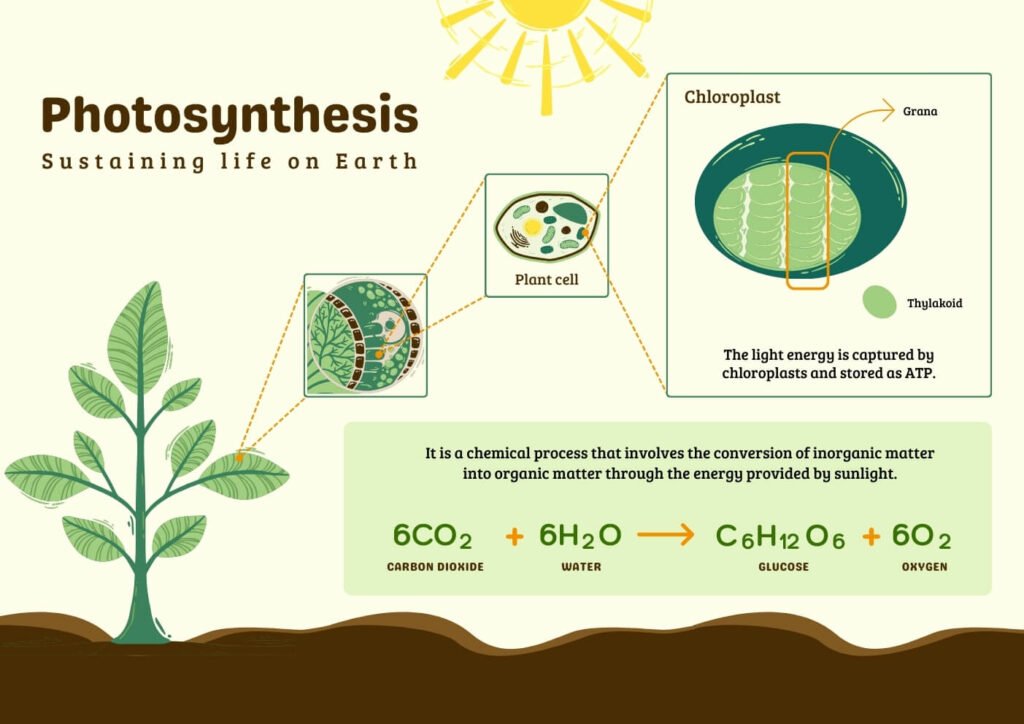
Photosynthetic pigments are specific organic compounds that are necessary in the process of capturing light energy during photosynthesis. Located in the thylakoid membranes of chloroplasts, the pigments have two functions: they trap the sunlight energy and transfer the excitation energy to reaction centres, where the photochemical reactions get started.
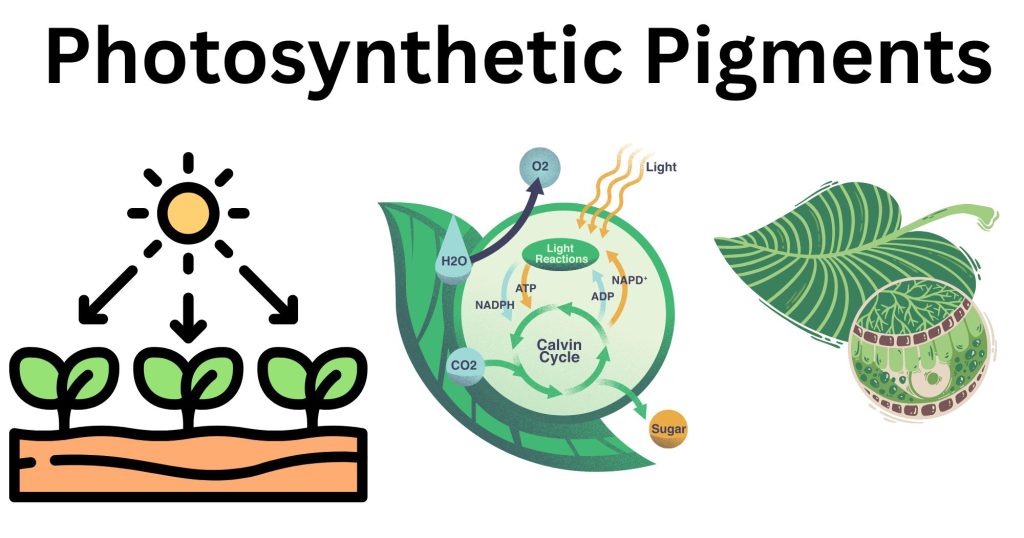
The different pigments have different absorption spectra, allowing photosynthetic organisms to have access to a wide wavelength range. These pigments contribute not only to light harvesting but also to protection against photodamage by dissipating excess energy.
Photosynthetic Pigments Types
Primary Light-Harvesting Pigment – Chlorophyll a
Chlorophyll a plays a pivotal role in oxygenic photosynthesis. It is surrounded by the reaction centers of Photosystem I and II (PSI and PSII), where it takes part in the process of photochemical conversion of light energy into chemical energy. The structural characterization of chlorophyll a is a porphyrin ring with a Magnesium ion in the center and a hydrophobic phytol tail that is embedded into the thylakoid membrane. It reflects green colour, and filters out blue-violet (approximately 430 nm) and red light (approximately 662 nm). Energy that reaches accessory pigments is directed to chlorophyll a, which triggers charge separation, giving rise to electron transport.
Accessory Chlorophylls b, c, d, and f
Accessory pigments are associated pigments to chlorophyll a, with slightly different absorption properties, and allow the organism to absorb more light wavelengths. These pigments do not have direct involvement in the photochemical reactions but absorb energy that is later passed to the chlorophyll a in the reaction center.
Chlorophyll b
In green algae and higher plants, chlorophyll b is present. It takes up more blue light and the red-orange range of wavelengths (455-470 nm) than chlorophyll a, and extends the light-absorbing range further. It plays a crucial role in the adaptation of land plants to low-light conditions, e.g., in the forest floor.
Chlorophyll c
In several algae, including diatoms, dinoflagellates, and brown algae, chlorophyll b is replaced with chlorophyll c. In contrast to chlorophyll b, it does not have a phytol tail and has a higher light absorbance in the blue-green region (447-452 nm).
Chlorophyll d
Chlorophyll d occurs mainly in some red algae (e.g., Acaryochloris marina) and can absorb far-red light (~710 nm), in contrast to chlorophyll a. This enables the organism to sustain photosynthesis in deeper or shaded regions of aquatic environments, where red light penetrates more effectively.
Chlorophyll f– Chlorophyll f was identified in 2010 and can be found in some cyanobacteria, where it uses infrared light up to 750 nm. It is used in oxygenic photosynthesis processes, which take place in the absence of full sunlight, and could be enhanced to improve photosynthesis in crop engineering. Such pigments enable photosynthetic organisms to grow under a wide range of suboptimal lighting conditions by efficiently harvesting and transferring energy to the reaction centers.
Carotenoids
Most photosynthetic organisms, such as higher plants, algae, and cyanobacteria, possess carotenoids as accessory pigments. They are tetraterpenoids, which are tuberculiphycocyanin and lipid-soluble molecules, accumulated in the thylakoid membranes.
Carotene is the most common carotenoid in the plant kingdom and algae. It is known to absorb light in blue and blue-green parts (400-500 nm) and to give up this to chlorophyll a. The conjugated double-bond system of the molecule is the cause of its light absorption and antioxidant activity.
Other carotenoids include alpha-carotene, lycopene, and phytoene, all of which serve similar roles.
The functions of carotenoids are:
Photoprotection: They prevent photo-oxidative damage by reducing the chlorophyll molecule.
Structural stability: Carotenoids also stabilize general protein complexes such as LHCII.
Antioxidant activity: They act as a shield against oxidative attack, in a manner that they scavenge the reactive oxygen species (ROS).
Carotenoids have essential roles in plant survival under extreme light conditions and in response to oxidative stress, and they are under investigation in terms of crop resilience.
Xanthophyll cycle-The xanthophyll cycle is a process that includes reversible, enzyme-triggered conversions among carotenoids (xanthophylls) used in non-photochemical quenching (NPQ) of excessive light energy as heat.
Lutein is the most common high-plant xanthophyll, and it serves a structural and photoprotective purpose.
The backbone of the xanthophyll cycle is the conversion of violaxanthin to antheraxanthin to zeaxanthin.
The violaxanthin de-epoxidase enzyme transforms violaxanthin to zeaxanthin under high-light conditions.
Zeaxanthin also facilitates the safe dissipation of excess energy through the non-photochemical quenching (NPQ) pathway.
In the presence of low light, zeaxanthin epoxidase transforms it into violaxanthin again.
This dynamic cycle helps shield the photosystems (especially PSII) against too much light and photo-inhibition and light-induced damage of photosynthesis in low-light conditions, e.g., forest canopies, aquatic systems.
Phycobilins: Phycoerythrin, Phycocyanin, and Light-Harvesting System of Cyanobacteria
Phycobilins – The phycobilins are phycobiliprotein linear tetrapyrroles, specific to cyanobacteria, red algae ( Rhodophyta ), and glaucophytes. In contrast to other pigments, phycobilins are water-soluble and are covalently attached to proteins to form large pigment complexes.
Phycocyanin- Phycocyanin preferentially absorbs orange to red light (~620640 nm) and imparts upon cyanobacteria their blue-green color.
Phycoreythrin- Phycoerythrin has a green light absorption (~ 540570 nm ), which enables red algae to inhabit deeper waters where green light is more abundant.
Allophycocyanin– Allophycocyanin involves the relay of energy from the outside of the phycobilisome to the reaction center chlorophyll.
Functions:
The pigments expand the range of operability in the spectrum: Phycobilins provide photosynthesis in conditions where there is little red and blue light.
Energy funneling: The absorption and channeling of phycobilisomes brings very high efficiency to the PSII reaction centers.
Phycobilins are key adaptations in aquatic organisms and have found widespread applications in biotechnology and diagnostics, particularly in fluorescent labeling techniques.
Photosynthetic Bacteria Bacteriochlorophylls
Bacteriochlorophylls (BChls) are specialized photosynthetic pigments of anoxygenic photosynthetic bacteria, namely the purple bacteria, green sulfur bacteria, and heliobacteria. Such pigments facilitate photosynthesis that do not produce oxygen, and in conditions of minimal light.
The bacteriochlorophylls are structurally different from the plant chlorophylls, i.e., have a different side chain, and certain double bonds are reduced.
Types: BChl a, b, c, d, e, f, and g are separated according to their absorption spectra and molecular structure.
Spectral Properties: BChls can absorb in the infrared and near IR (800 1020 nm), which is much more expanded than that of chlorophyll a. Such an adaptation allows the bacteria to survive in the lower water column, sediments, or microbial mats with little penetrating light.
Function: BChls are primary light routing chlorophylls in anoxygenic photosynthesis at reaction centers and in antenna system complexes.
Unlike chlorophyll-based plants, no O2 is produced, and the electron donors are H 2 S, Fe 2 +, or organic acids instead of water.
Other Photoprotective Pigments
Anthocyanins- Anthocyanins are water-soluble pigments that have a flavonoid nature and are involved in giving red color to plant tissues, particularly leaves, flowers, and fruits. They do not have direct roles in light harvesting, but play indirect but necessary roles in photoprotection.
Functions:
UV shielding: Anthocyanins filter UV-A and UV-B radiation, which would have caused chloroplast and DNA photodamage.
Antioxidant activity: They eliminate reactive oxygen species (ROS), and reduce oxidative stress when plants are subjected to high light, drought, or cold stress.
In the plant, they aid in regulating both heat loading and water loss in leaves due to high sunlight.
Developmental Signals: There is an accumulation of anthocyanins in young or senescent tissues, which may act as defense or maturation signaling.
Pigment Protein Complexes LHCII and Phycobilisomes
Photosynthetic pigments do not work singly, but are arranged into biochemical complexes of pigments and proteins, in a way that maximizes absorption of light and transfer of energy.
LHCII Light-Harvesting Complex II
LHCII is the most abundant protein in the thylakoid and is found in higher plants and the green algae.
It comprises chlorophyll a, chlorophyll b, and carotenoids (such as lutein) surrounded by apoproteins. LHCII encloses PSII and brings photons that have been captured to its reaction centre. The complex is dynamically regulated (through phosphorylation) to equalize the excitation energy between PSI and PSII (state transitions) and avoid photodamage in it in case of excess light.
Phycobilisomes
They are huge antenna complexes found in cyanobacteria and red algae and composed of phycobiliproteins (phycoerythrin, phycocyanin, allophycocyanin) interconnected with phycobilin chromophores.
Phycobilisomes are located on the stromal side of thylakoid membranes; they pass the energy with high effectiveness to PSII. They are extremely modular and adapted to most changes of light quality by the complementary chromatic adaptation mechanism, which brings a change in the composition of the pigments. Such complexes can maximize the efficiency of using light sources and control the flow of energy to provide strong photosynthesis even in different environmental conditions.
Evolutionary diversity of photosynthetic pigments
Photosynthetic pigments have a wide variation. Due to evolution, they have adapted to various habitats, including the bottom of the sea or the barren deserts.
Algae have adapted different pigment compositions, such as chlorophyll c, fucoxanthin, and phycobilins, which allow them to survive in highly turbid aquatic systems with low light.
Cyanobacteria are spectrally flexible and believed to have been precursors of the modern chloroplasts through endosymbiosis.
BChl-possessing anoxygenic bacteria survive in the anaerobic low-light conditions and indicate a deep-rooted origin of photosynthesis.
Future engineering of photosynthetic pigments
Synthetic Pigments: Plant pigments do not become fully effective until they reach the far-red/infrared spectrum to extend the available light range.
Pigment Optimization using CRISPR: Tuning pigment loadings to achieve desired energy distribution or tolerating stress more easily.
Artificial Light-Harvesting Systems: Utilise natural pigment-protein complexes as a model of how to design biohybrid solar panels or synthetic photosynthetic units.
The innovations will focus on improving agricultural productivity, sustaining space-based forms of life, and producing clean energy options.
Conclusion
The primary basis of light capture in the plant, algal, and bacterial world is the synthesis of photosynthetic pigments. Each pigment, whether the central chlorophyll a or accessory pigments like chlorophyll b, carotenoids, phycobilins, or even bacteriochlorophylls, is crucial for expanding spectral absorption, protecting the photosystems, and optimizing energy transfer.
LHCII and phycobilisomes are pigment proteins that are organized to facilitate the maximal efficiency of light harvesting. Evolutionary novelties have, in turn, enabled organisms to inhabit a range of light conditions, such as in the shady forests or down in the ocean depths.
The next frontier of pigment research involves genetic modification, nanotechnology, and synthetic biology, which are potentially used to enhance the efficiency of photosynthesis and food security, energy production, and sustainability.
References
- Alberts, B., Johnson, A., Lewis, J., Raff, M., Roberts, K., & Walter, P. (2015). Molecular Biology of the Cell (6th ed.). Garland Science.
- Ángeles, R., Carvalho, J., Hernández-Martínez, I., Morales-Ibarría, M., Fradinho, J. C., Reis, M. a. M., & Lebrero, R. (2025). Harnessing Nature’s palette: Exploring photosynthetic pigments for sustainable biotechnology. New Biotechnology, 85, 84–102. https://doi.org/10.1016/j.nbt.2025.01.001
- Hiraishi, A., & Shimada, K. (2001). Aerobic anoxygenic photosynthetic bacteria with zinc-bacteriochlorophyll. The Journal of General and Applied Microbiology, 47(4), 161–180. https://doi.org/10.2323/jgam.47.161
- Koziol, A. G., Borza, T., Ishida, K., Keeling, P., Lee, R. W., & Durnford, D. G. (2007). Tracing the evolution of the Light-Harvesting antennae in chlorophyll A/B-Containing organisms. PLANT PHYSIOLOGY, 143(4), 1802–1816. https://doi.org/10.1104/pp.106.092536
- Larkum, A. W. D. (2007). The evolution of chlorophylls and photosynthesis. In Springer eBooks (pp. 261–282). https://doi.org/10.1007/1-4020-4516-6_18
- Lokstein, H., Renger, G., & Götze, J. (2021). Photosynthetic Light-Harvesting (Antenna) Complexes—Structures and Functions. Molecules, 26(11), 3378. https://doi.org/10.3390/molecules26113378
- Maoka, T. (2019). Carotenoids as natural functional pigments. Journal of Natural Medicines, 74(1), 1–16. https://doi.org/10.1007/s11418-019-01364-x
- Nelson, D. L., & Cox, M. M. (2017). Lehninger Principles of Biochemistry (7th ed.). W. H. Freeman and Company.
- P, A. (2016, November 28). Pigments in photosynthetic bacteria | Microbiology. Biology Discussion. https://www.biologydiscussion.com/bacteria/photosynthetic-bacteria/pigments-in-photosynthetic-bacteria-microbiology/65522
- Taiz, L., Zeiger, E., Møller, I. M., & Murphy, A. (2015). Plant Physiology and Development (6th ed.). Sinauer Associates.
- Wavelengths of light and photosynthetic pigments (article) | Khan Academy. (n.d.). Khan Academy. https://www.khanacademy.org/science/biology/photosynthesis-in-plants/the-light-dependent-reactions-of-photosynthesis/a/light-and-photosynthetic-pigments
