
Medical devices range from simple bandages to complex AI-driven diagnostic systems that are designed to support health without acting like drugs.
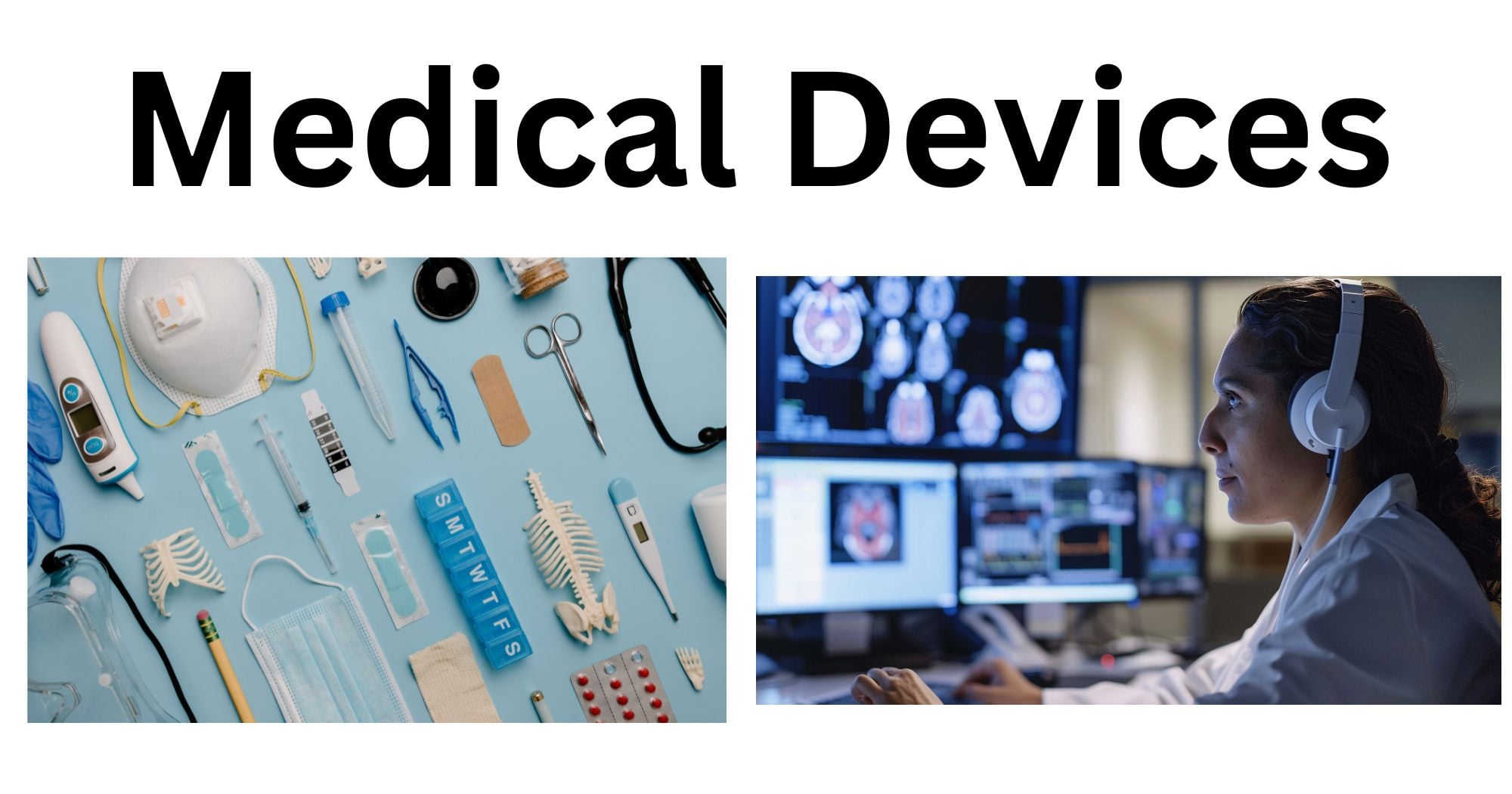
These devices are key elements in how modern healthcare diagnoses, treats, and monitors disease and are tightly regulated to balance innovation with safety.
Medical devices are defined as any instruments, machines, implants, in vitro reagents, and software intended for diagnosis, prevention, monitoring, treatment, or alleviation of disease or injury, or for supporting or sustaining life.
Their primary mode of action is not achieved through chemical action (pharmacological, immunological, or metabolic action) in or on the body, which distinguishes them from drugs and biologics. The medical devices range from thermometers to robotic surgery systems and pacemakers. The medical device industry is experiencing significant expansion due to aging populations, the rise of chronic diseases, and the application of engineering to address life science challenges.
Importance and Role of Medical Devices in Healthcare
The roles of medical devices span various dimensions:
- Diagnosis: Devices such as CT scanners, ultrasound machines, and others help clinicians to diagnose diseases and their states, which would be invisible to observation without these devices.
- Treating (therapeutic) and supporting life: Devices that treat patients who cannot be treated with drugs. E.g., pacemakers, defibrillators, and mechanical ventilators.
- Monitoring conditions: Monitoring continuous conditions by generating real-time physiological data and enabling a proactive rather than a reactive approach to treatment. These include infusion pumps, blood pressure monitors, wearable ECG patches, etc.
- Rehabilitation and support: Prosthetic limbs, cochlear implants, and mobility aids that restore certain functions to patients, assisting them.
They improve the quality of life and can be life-saving, but need to be designed properly and tested sufficiently to ensure safety and efficacy.
Types of Medical Devices with Examples
By function
- Diagnostic devices: CT scanners, X-ray machines, blood sugar meters, in vitro reagents
- Therapeutic devices: Pacemakers, defibrillators, heart valves, dialysis machines, surgical tools
- Monitoring/ supporting devices: Infusion pumps, BP monitors, ventilators, ICU equipment
- Assistive and general care: Wheelchairs, tongue depressors, contact lenses, thermometers
By technology and Form
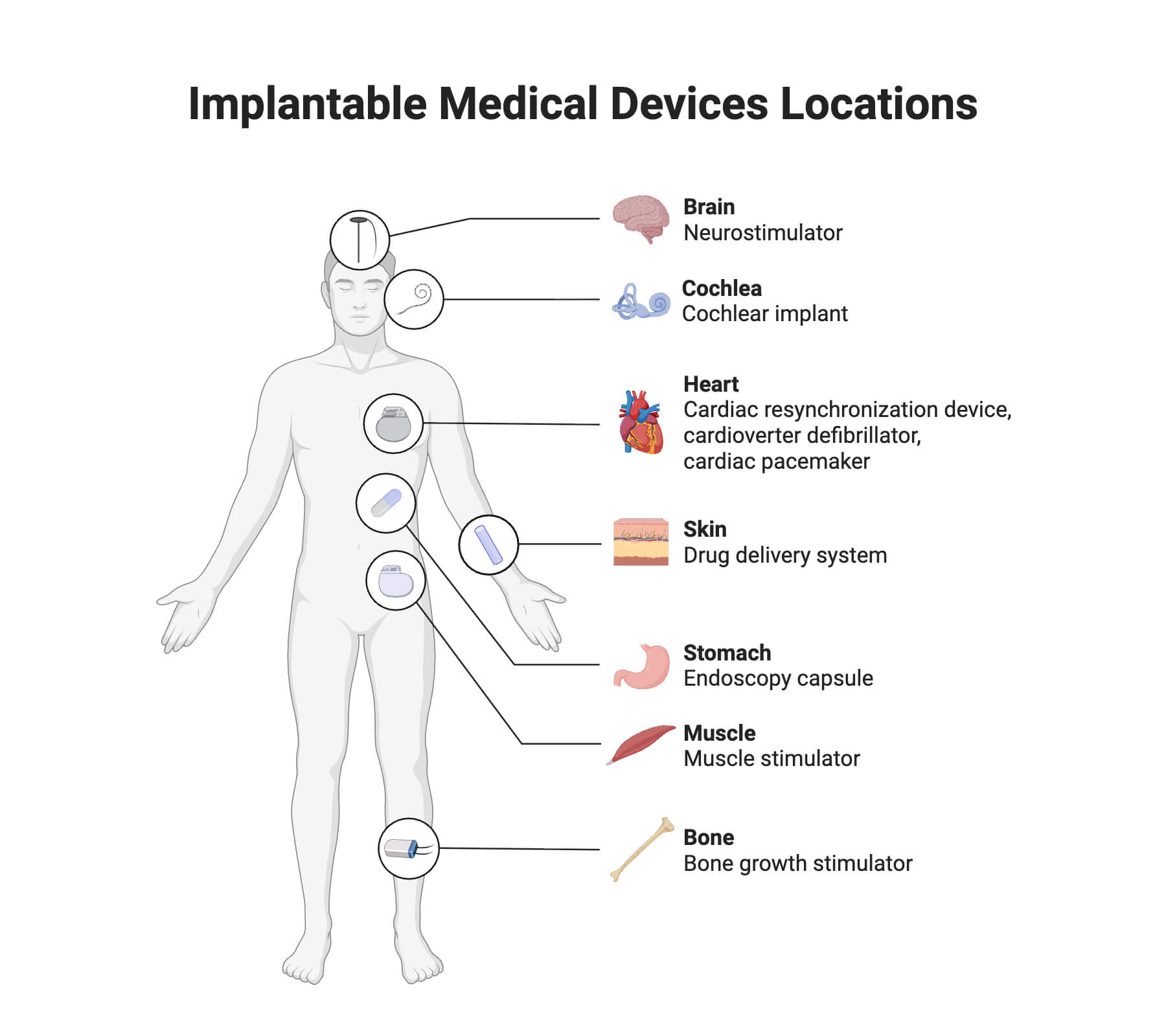
- Implantable devices: Artificial hips, pacemakers, stents, intraocular lenses
- Non-implantable active devices: Imaging systems, powered diagnostic and therapeutic devices
- Software as a Medical Device: Software and AI/ML tools for diagnosis
- IoT (Internet of Things) and mobile medical devices: Networked or wearable devices enabling remote monitoring and control. E.g.: continuous glucose monitors, connected inhalers, Remote Patient Monitoring (RPM) kits
Classification of Medical Devices (Class I, II, and III)
Medical devices are classified based on the level of risk by most regulatory authorities worldwide. The three main risk-based classes are:
- Class I (Low risk): These are simple devices with minimal potential for harm and are subject to general controls. These are: bandages, handheld surgical instruments, tongue depressors, etc.
- Class II (Moderate risk): These devices require additional controls such as performance standards, special labelling over general control. E.g.: CT scanners, infusion pumps
- Class III (High risk): These include life-supporting or life-sustaining devices of substantial importance to health or those possessing the highest risk. E.g.: pacemakers, deep brain stimulators, advanced implants.
European and some national systems further subdivide risks, but the principle is the same, i.e., more risk = more regulatory scrutiny. Risk depends on intended use, invasiveness, duration of contact, energy supply, and contact with critical body structures.
Regulatory Guidelines for Medical Devices (FDA, CE, and ISO Standards)
The FDA defines medical devices in law and regulates more than 1700 device types, grouping them by specialty and risk class. The major US regulations include the Federal Food, Drug, and Cosmetic Act and Medical Device Amendments of 1976, with later acts refining oversight and funding.
In Europe, the devices must meet the EU Medical Device Regulation (MDR 2017/745) and detailed rules based on duration, invasiveness, and contact with vital structures for IVDs, IVDR, with risk classes I, IIa, IIb, III. CE (Conformité Européenne) marking indicates conformity with essential safety and performance requirements.
For medical devices, ISO 13485 covers quality systems, ISO 14971 covers risk management, and ISO 10993 addresses biocompatibility testing.
Other global and regional standards support regulation by defining quality management and risk management requirements.
How Medical Devices Are Approved and Regulated
New medical devices first progress from concept and prototype through preclinical testing (often including animal studies) to refine their safety and performance before being used in humans.
Premarket pathways (FDA focus)
- Class I and some Class II devices are often exempt from premarket review if they are low risk and similar to existing devices. However, they must comply with manufacturing and quality standards to be allowed for sale.
- 510(k) clearance is required for many Class II devices that are shown to be “substantially equivalent” to a legally marketed predicate device.
- Premarket Approval (PMA) is required for most Class III devices, which require robust evidence of safety and effectiveness, often from clinical trials.
High-risk devices typically undergo clinical trials under Investigational Device Exemptions with FDA and ethics oversight. Even “simple” devices should show usability in real practice by patient trials or realistic simulations.
Post-market surveillance
After approval, regulators and manufacturers monitor performance through adverse event reporting systems, registries, and databases (e.g., MAUDE in the US). Registries are especially valuable for tracking long-term outcomes of high-risk implants.
Applications of Medical Devices in Diagnosis, Treatment, and Monitoring
- Diagnosis: Imaging (X-ray, CT scan, MRI), in vitro diagnostics, and point-of-care tests help detect diseases early and accurately.
- Treatment and intervention: Surgical instruments, implants (hips, stents, valves), pacemakers, defibrillators, and therapeutic devices directly treat or modify disease processes.
- Monitoring: ICU monitors, infusion pumps, ventilators, wearable sensors, and remote monitoring systems track vital signs and therapy delivery in hospitals and at home.
- Rehabilitation and support: Orthopedic devices, prostheses, and assistive technologies restore function and independence to people with disabilities and disease.
Advantages of Medical Devices
- Improved outcomes and quality of life: Medical devices have transformed diagnosis and therapy and enabled minimally invasive procedures.
- Early detection and prevention: Diagnostic and monitoring tools enable earlier intervention and disease prevention.
- Support for aging and chronic disease: Long-term implants and home monitoring systems help manage chronic conditions in older populations.
- Innovation and flexibility: Rapid advances in materials, electronics, software, and IoT support tailored and sophisticated care.
Limitations of Medical Devices
- Safety risks and adverse events: Device failures or design flaws can cause significant harm.
- Regulatory complexity and delays: Differing national systems and evolving rules slow down market access and create “device lag” between regions.
- User error and human factors: Poor usability and inadequate operator training might contribute to adverse events.
- Cybersecurity and data privacy: The use of connected and software-driven devices may introduce vulnerabilities that require new policies and protections.
- Cost and access: Advanced surgical and diagnostic systems remain unavailable to low and middle-income countries and inaccessible to poor populations.
Conclusion
Medical devices are a wide spectrum of technologies that diagnose, treat, and monitor disease without acting like drugs. It is an intersection of engineering, biology, and medicine. Risk-based classification guides the depth of regulatory control, with authorities such as the FDA and EU relying on global standards to ensure safety and performance. These devices have transformed healthcare and evolved rapidly; however, this demands rigorous and transparent regulatory frameworks that protect patients while also enabling innovation.
References
- Chandigarh College of Pharmacy, Chandigarh Group of Colleges, Landran, Punjab – 160019, India, Dhawan, H., Gupta, P., Chandigarh College of Pharmacy, Chandigarh Group of Colleges, Landran, Punjab – 160019, India, Kamboj, A., & Chandigarh College of Pharmacy, Chandigarh Group of Colleges, Landran, Punjab – 160019, India. (2022). Comprehensive Regulatory Framework in Current Advancements of Medical Devices. Journal of Pharmaceutical Technology, Research and Management, 10(2), 151–157. https://doi.org/10.15415/jptrm.2022.102005
- Deep, A. (2022). Regulations for medical devices in India. Elsevier EBooks. https://doi.org/10.1016/b978-0-323-91126-9.00007-9
- Ravichandran, R., Balakrishnan, R. P., Batcha, J. S. D., Ravi, A. L., & Sam, N. C. (2020). Medical device: A complete overview. International Journal of Clinical Trials, 7(4), 285. https://doi.org/10.18203/2349-3259.ijct20204487
- Ajay Vs & Kamaraj R. (2025). USFDA BIOLOGICAL EVALUATION AND SAFETY ASSESSMENT OF MEDICAL DEVICES. The Bioscan, 20(Special Issue-3), 228–234. https://doi.org/10.63001/tbs.2025.v20.i03.S.I(3).pp228-234
- Questions About the Wright Medical Hip Implant Recall?. https://keefe-lawfirm.com/defective-joints-2/products/hip-implants-revision-hip-replacement/wright-medical-hip-implant-recall/
- Software and Artificial Intelligence as a Medical Device – MedTech Intelligence. https://medtechintelligence.com/news_article/software-and-artificial-intelligence-as-a-medical-device/
- Regulations – Cyber4Health. https://cyber4health.uniroma2.it/category/regulations/
