
Skip to content
Microbe Notes

Microbe Notes

  • Home
  • Biological Sciences
    • Biochemistry
    • Bioinformatics
    • Biology
    • Biotechnology
    • Botany
    • Cell Biology
    • Genetics
    • Molecular Biology
    • Zoology
  • Microbiology
    • Agricultural Microbiology
    • Bacteriology
    • Basic Microbiology
    • Environmental Microbiology
    • Food Microbiology
    • Immunology
    • Mycology
    • Parasitology
    • Virology
  • Laboratory Methods
    • Biochemical Test
    • Culture Media
    • Instrumentation
    • Microscopy
    • Staining
  • Health and Medical
    • Diseases
    • Epidemiology
    • Human Anatomy and Physiology
    • Medical Devices
    • Pharmacology
  • Resources
    • Difference Between
    • Microbiology Terms
    • Microorganisms Note
    • Protocols
    • Research Methodology
    • Syllabus

Biology

Biology is a vast discipline that deals with the study of living beings and their vital processes, that deal with the physicochemical aspects of life.

Biology is a natural science that utilizes different structural and functional concepts for the differentiation of living beings from non-living beings.
At present times, as a result of cross-disciplinary research, other disciplines like chemistry, physics, computer science, and medicine have been integrated with biology, resulting in areas like biochemistry, biophysics, biomedicine, and bioinformatics.
Biology is further divided into separate branches for the convenience of study, even though all of these branches are interrelated to one another.
Biology is separated into botany (the study of plants) and zoology (the study of animals), morphology (structure), and physiology (function).
Living beings have been divided into different kingdoms, phylum, classes, orders, and genus to make the identification and studies related to different organisms more feasible.
Traditionally, biology was only associated with the structure and function of living beings.
With time, however, biology deals with the fundamental levels of life, resulting in a separate discipline termed, molecular biology.
Biology has now been developed into modern biology which is based on certain foundations like cell theory, evolution, genetics, homeostasis, and chemical energy.
Biology defines cell as the fundamental unit of life, which is common in all living beings, microscopic, and macroscopic.
Besides, other concepts like evolution and genomics further help in understanding the origin, evolution, and relationship among living beings.
Genetics is another component of biology that helps in the differentiation of living beings based on their genomic composition.
Homeostasis is another crucial unit of biology which suggests that all living organisms maintain a constant internal environment.
Non-living parts of the world like the air, water, and soil have been closely related to the living world, which creates a close relationship between biology and the environment.

Developmental biology is a branch of natural science that studies various interactions involved in the formation of the heterogeneous shape, structure, and size of different organisms that occur during the development of an embryo into an adult.

  • In short, developmental biology is a discipline that deals with the processes involved in the development of a multicellular organism as controlled by genetic information.
  • Developmental biology studies the mechanisms of development, differentiation, and growth in plants and animals at the cellular, molecular, genetic, and evolutionary levels.
  • Different forms of reproduction like sexual reproduction, asexual reproduction, metamorphosis, and germination of seeds and embryos are essential aspects of developmental biology.
  • Developmental biology is a fast-growing discipline that is interrelated with a vast array of disciplines like molecular biology, anatomy, cancer biology, immunology, ecology, evolutionary biology, cell biology, and physiology.
  • Studies done in developmental biology have provided information on the molecular genetics of development, growth factors, oncogenes, the evolution of developmental control, mechanisms of differentiation, gametogenesis, fertilization, and control of gene expression.
  • Other areas of emphasis in developmental biology include transcriptional control, cell-cell interactions, regulatory hierarchies, signal transduction, etc.
  • The development of developmental biology as an important discipline is due to its applications in different areas.
  • The results of the research are used in fertility clinics where the information is used for artificial insemination, test-tube culture, and to treat other infertility issues.
  • Tissue engineering is another essential technique that utilizes concepts of developmental biology to grow replacement tissues in plastic dishes and to control the formation of cancer cells.
  • Reactivation of stem cells to grow replacement tissues is also by virtue of accomplishments made in developmental biology.
  • In agriculture, techniques developed for selective breeding by optimizing root systems, plant size, and flowering time has allowed for a better and increased harvest.

Cancer biology is a branch of biology that studies the complex expression of genes, proteins, and biological processes that initiated the development and growth of cancers.

  • Understanding the many different biological systems underlying cancer’s development is essential for understanding cancer and identifying new targets for treatment.
  • Most of the researches in cancer biology are concerned with genomic conservation; in particular, how the genetic composition of cell ensure that no errors occur during processes like copying the genome or repairing it after damage.
  • The genetic conservation also ensures that a complete copy of the genome is inherited by each daughter cell.
  • Cancer results when one or all of these processes go wrong, which leads to inconsistency in cancer cells that can successfully be exploited for treatment.
  • Another critical aspect of cancer biology is studies related to protein function and interactions on a systems-wide scale to identify how signaling pathways are restructured in cancer cells, and how this affects cell behavior, cell shape, and cell metabolism.
  • Cancer cells are transformed cells after acquiring a series of changes that permit them to form tumors, which behave differently depending on the genetic changes that result in this transformation.
  • The hallmarks of cancer cells include signs like self-sufficiency in growth signals, evasion of programmed cell death, insensitivity to growth-inhibitory signals, limitless replicative potential, sustained angiogenesis, and tissue invasion.
  • Cancer biology is a vast branch that studies the process of carcinogenesis, mutations, carcinogens, and cellular changes.
  • The role of cancer biology in the perioperative period is of increasing interest as it provides evidence regarding fundamental principles of cancer biology, especially tumor microenvironment, and discusses new therapeutic opportunities.
  • Different researches in cancer biology help in the identification of cancer symptoms and the formation of malignant tumors of different cells found in living beings.
  • These researches also enable the differentiation between normal cells and cancer cells which assists in the early diagnosis of cancer.

Enzymes vs. Hormones: 33 Differences, Examples
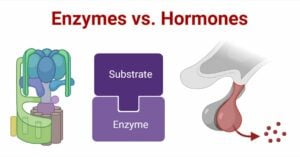
August 3, 2023 by Sagar Aryal, PhD
Enzymes vs. Hormones

Enzymes and hormones are bio-genic substances present in all living organisms whose function, formation, secretion and purpose varies in both plants and animals. An enzyme is a highly selective catalyst that … Read more
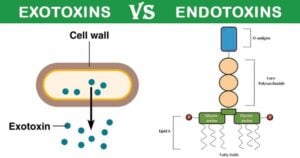
Exotoxins vs. Endotoxins: 29 Major Differences

August 3, 2023 by Sagar Aryal, PhD
Differences between Exotoxins and Endotoxins

Differences between Exotoxins and Endotoxins Toxins are small molecules, peptides, or proteins produced by living cells that are capable of causing diseases or structural damage when they come in contact or … Read more

Newer posts
← Previous Page1 … Page14 Page15

Topics / Categories

  • Agricultural Microbiology (30)
  • Bacteriology (134)
  • Basic Microbiology (63)
  • Biochemical Test (114)
  • Biochemistry (206)
  • Bioinformatics (26)
  • Biology (142)
  • Biotechnology (41)
  • Botany (112)
  • Cell Biology (108)
  • Culture Media (68)
  • Difference Between (89)
  • Diseases (53)
  • Environmental Microbiology (14)
  • Epidemiology (28)
  • Food Microbiology (52)
  • Genetics (81)
  • Human Anatomy and Physiology (75)
  • Immunology (117)
  • Instrumentation (69)
  • Medical Devices (5)
  • Microscopy (31)
  • Molecular Biology (109)
  • Mycology (36)
  • Parasitology (28)
  • Pharmacology (22)
  • Protocols (9)
  • Research Methodology (20)
  • Staining (30)
  • Syllabus (20)
  • Virology (62)
  • Zoology (39)
Microbe Notes Android Application
  • Digestion and Absorption of Dietary Fats with Steps
  • Disorders of Carbohydrate Metabolism with Examples
  • Lipoprotein Metabolism: Structure, Classification, Steps
  • Ketone Body Synthesis: Ketogenesis, Enzymes, Steps, ATP Yield
  • Triglyceride Synthesis: Site, Pathway, Steps, Regulation, Functions
  • Our Team
  • Advisory Board
  • About Us
  • Contact Us
  • Editorial Policy
  • Privacy Policy
  • Cookie Policy
  • Disclaimer (Terms and Conditions)
© 2026 Microbe Notes. Made with ♡ by Sagar Aryal.