
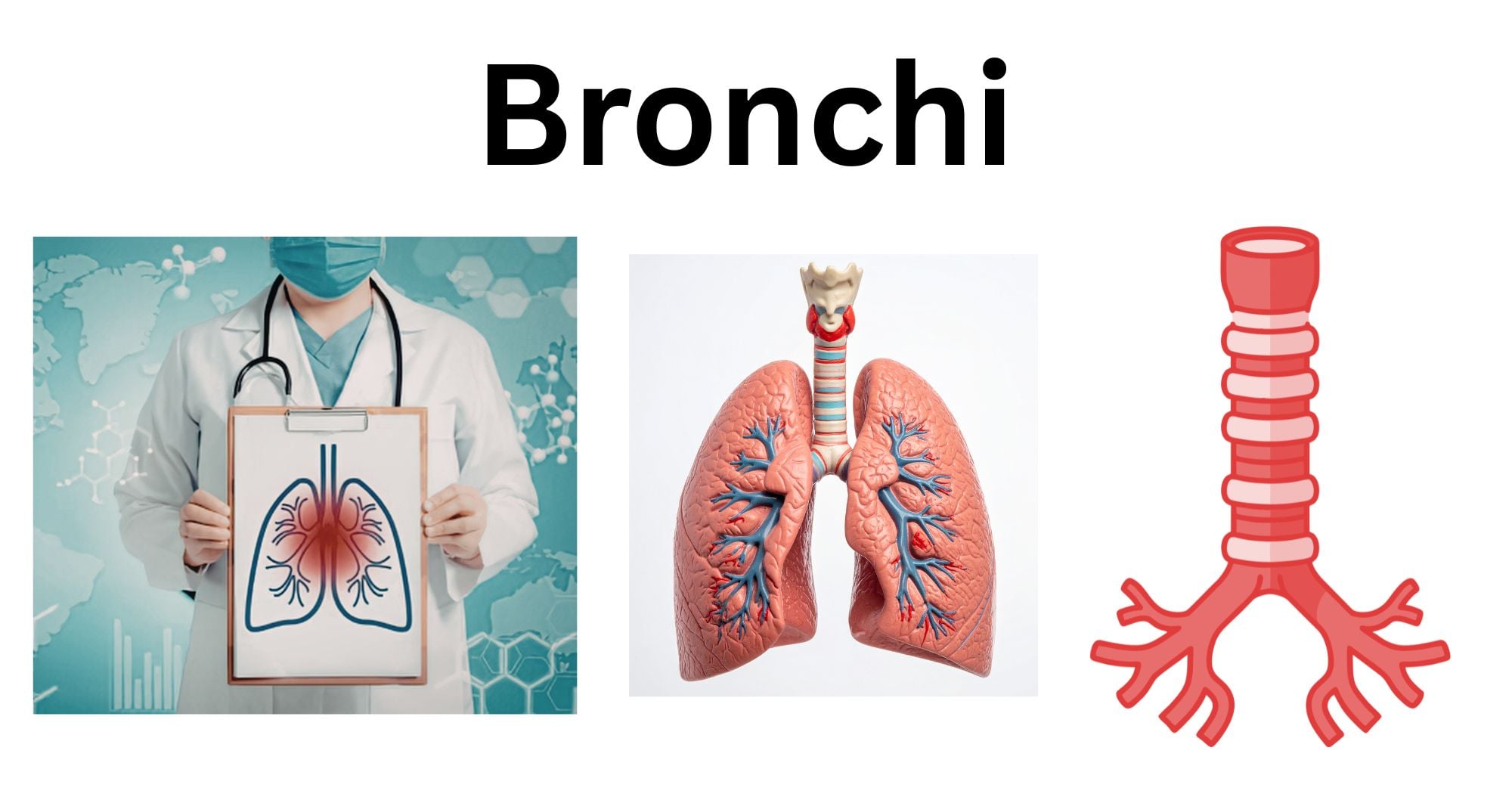
Bronchi (sing. Bronchus) are among the major structures of the lower respiratory tract. They are the air pathways that transport the air from the trachea to the alveoli in the lungs. They progressively divide and form several smaller bronchi and bronchioles.
Anatomy and Structure of Bronchi
- Bronchi are located within the thoracic cavity inside the ribcage. They are present below the thoracic trachea and begin with the carina. The point at which the tracheal tube ends and further bifurcates to form right and left primary bronchi is called the carina.
- Secondary bronchi originate from the primary right and left bronchi, while the tertiary bronchi are formed from the secondary bronchi.
- Moreover, the tertiary bronchi divide further into the bronchioles. These bronchioles lead air into the alveolar sacs, where gas exchange occurs.
- Anatomically, the bronchi are made up of smooth muscles surrounded by the hyaline cartilages. The bronchial walls are lined with mucous membranes and cilia. As the diameter of the tubes/pathway narrows down the bronchial tree, the amount of cartilage decreases, while that of the smooth muscles increases.
Functions of the Bronchi in the Respiratory System
- The primary function of the bronchi is to allow air to pass from the trachea to the lungs.
- The mucus lining of the bronchi moistens and conditions the air. They trap the unwanted foreign debris along with the microorganisms present in the air and prevent them from reaching the lungs.
- The bronchi divide and subdivide to form the bronchioles, which lead into the alveoli. They conduct the air to the alveolar sacs.
Types (Branches) of Bronchi
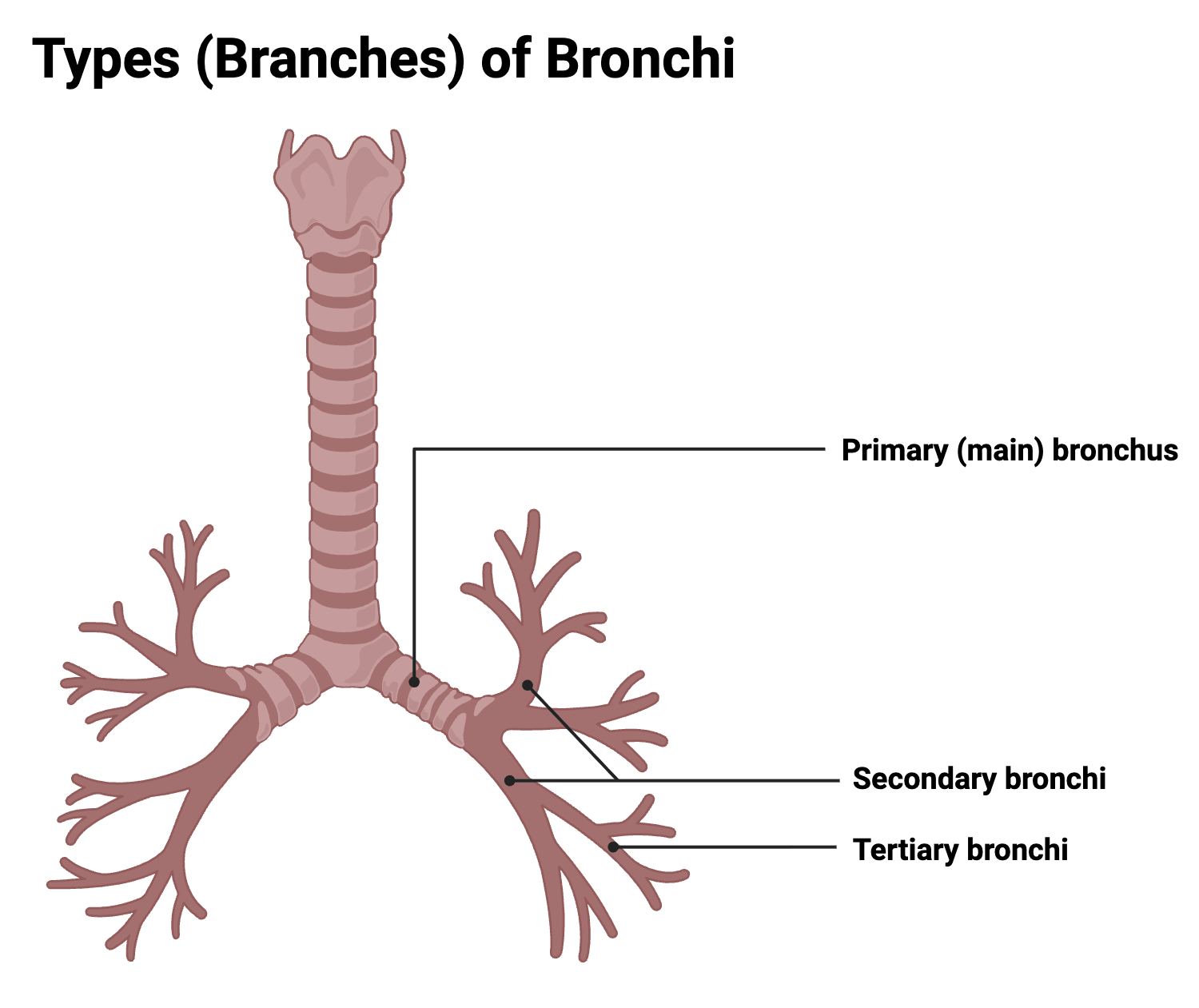
There are mainly 3 types of bronchi: primary (main) bronchi, secondary bronchi, and tertiary bronchi.
Primary (main) bronchi
- They are the first branch of the tracheal cartilaginous rings, divided at the carina. They are also known as the main bronchi.
- There are 2 main bronchi: the right bronchus and the left bronchus, which are located in the thoracic cavity, at the T5 vertebra.
- The main bronchi are composed of irregular cartilage plates, which maintain the structural integrity of the bronchial airways.
Secondary bronchi
- They are the branches formed by the division of the right and left main bronchi.
- In other words, they are the second-generation bronchi in the respiratory system.
- Since they are responsible for distributing the air into specific lung lobes, these bronchi are also called the lobar bronchi.
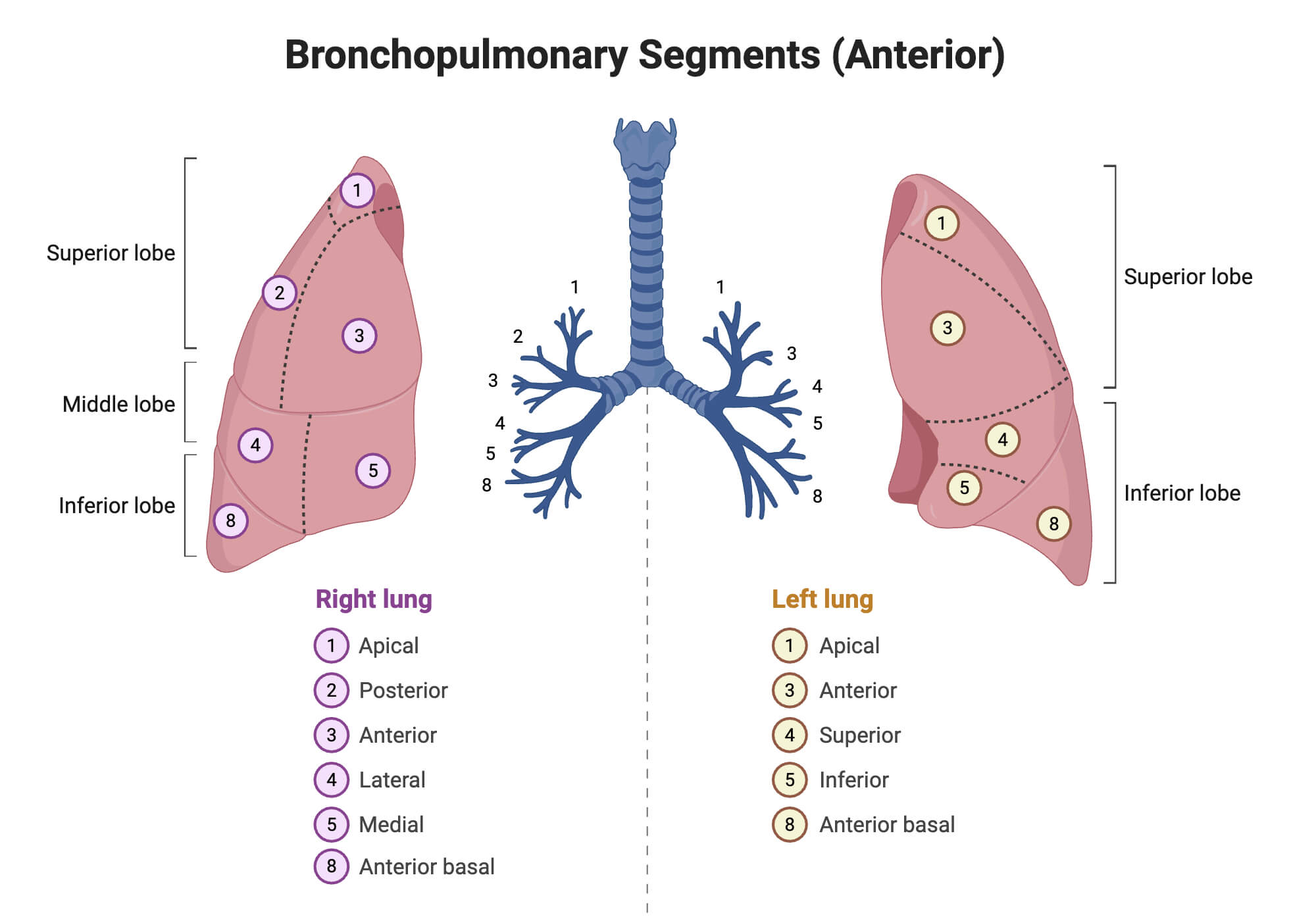
- There are 5 lobar bronchi: 3 lobar bronchi in the right lung (superior, middle, and inferior bronchi) and 2 lobar bronchi in the left lung (superior and inferior bronchi).
- The lobar bronchi consist of the irregular plates of cartilage. The cartilaginous rings are not present completely.
Tertiary bronchi
- They are also known as the segmental bronchi, stemming as branches from the secondary bronchi.
- They distribute the air to the bronchopulmonary segments.
- Similar to the secondary bronchi, the tertiary bronchi also contain the irregular cartilaginous plates.
- They further divide multiple times to form the smaller tubes known as terminal and respiratory bronchioles.
Right vs. Left Main Bronchus
| Characteristics | Primary Right Bronchus | Primary Left Bronchus |
| Length | It is comparatively shorter. The length of the right bronchus is 2.5 cm. | It is comparatively longer. The length of the left bronchus is approximately 5 cm. |
| Diameter of Lumen | It is wider. | It is narrower. |
| Divisions into the lobar bronchi | It divides into three lobar bronchi. | It divides into two lobar bronchi. |
| Orientation | It is vertically oriented. | It is oblique and comparatively oriented in a horizontal position due to the presence of the heart. |
| Entry of the foreign particles into the bronchial region | The entry is more common in the right bronchus. | The entry is less common in the left bronchus. |
Bronchi vs. Bronchioles
| Characteristics | Bronchi | Bronchioles |
| Definition | They are the primary airway passage for the air to transport to and from the lungs. | They are the final branches of the bronchi that enter into the alveoli. |
| Formations | They divide a few times to form bronchioles. | They lead to the alveolar air pockets in the lungs. |
| Composed of | They are composed of the fibrocartilaginous layer. | They are composed of smooth muscles, epithelium and connective tissues. |
| Types | They are divided into 3 types: primary, secondary, and tertiary bronchi. | They are divided into 2 types: Terminal bronchioles and respiratory bronchioles |
| C-shaped cartilaginous rings | Present | Absent |
| Smooth muscle layer | Thin | Thick |
| Types of epithelial tissues | Pseudostratified columnar epithelium tissues with goblet cells | Simple ciliated cuboidal epithelium tissues without goblet cells |
| Diameter | High | Low |
| Function | Air conditioning | Air conditioning and gaseous exchange |
Bronchial Tree and Branching Pattern
- The bronchi begin at the carina, the point where the tracheal cartilaginous rings bifurcate. Afterward, they divide and subdivide multiple times in order to distribute the air to all the bronchopulmonary segments within the lungs.
- This provides them the appearance of an inverted tree, where the trachea appears as the trunk, the bronchi as the limbs, and the bronchioles are arranged as tree branches. Thus, the branching pattern of the bronchi resembles that of a tree.
- The mucosal lining of the bronchial tree also transitions from ciliated pseudostratified columnar epithelium to simple cuboidal epithelium as it divides and narrows down.
- Each time the bronchi divide and subdivide, the width of the bronchial tube decreases and becomes narrower down the bronchial tree.
Histology of the Bronchi
- Histologically, the primary bronchi are lined with a layer of the respiratory epithelium. They consist of 4 layers: mucosa, smooth muscles, submucosa, and the cartilaginous layer.
- Their inner mucosa lining resembles that of the tracheal tissues. Both are made up of the ciliated pseudostratified columnar epithelium.
- The mucosa lining in the bronchioles down the bronchial tree consists of columnar epithelial tissues. The goblet cells, which are present in the mucus membranes, are also replaced by the club cells. These club cells secrete the components that function to protect the structural property and prevent the collapse of the bronchial airway.
- The submucosa layer consists of the seromucous glands, nerves, blood vessels, and lymphatic vessels.
- The third layer consists of hyaline cartilage plates. The amount of these cartilage tissues gradually vanishes with the branching of the bronchi. Lastly, they are completely absent in the bronchioles.
- Bronchi are also composed of smooth muscles that aid in regulating the airflow and keeping the airway open during breathing. As the number of cartilage plates decreases down the bronchial tree, the amount of smooth muscle significantly increases.
Mechanism of Air Conduction and Filtration in the Bronchi
Mechanism of air conduction in the bronchi
- During respiration, the external air is inhaled through the nasal cavity. It flows down the airway and is lastly distributed to the alveoli in the lungs. The air pathway consists of a few sections that are responsible for the conduction and filtration of air, such as the larynx, trachea, bronchi, and bronchioles.
- Once the air reaches the carina below the trachea, it passes through the 2 main bronchi, secondary and tertiary bronchi, terminal bronchioles, and lastly, the respiratory bronchioles and the alveolar sacs.
- The cartilaginous rings in the bronchi and the irregular plates of the hyaline cartilage (present in the secondary and tertiary bronchi) keep the airway open and prevent it from collapsing during the breathing process.
- The smooth muscle layer regulates (dilates/constricts) the airway diameter. Bronchodilation and bronchoconstriction are controlled through the autonomic nervous system.
Mechanism of filtration in the bronchi
- The ciliated pseudostratified columnar epithelium tissues play a significant role in filtering the air within the bronchi.
- The goblet cells present in the mucosa produce the mucus, which traps the unwanted foreign particles, dust, and pathogens from the inhaled air.
- Cilia, along with the mucus layer, perform the mucociliary clearance to remove the trapped debris from the bronchi. For this combined action, the cilia beat in an upward direction to propel the trapped debris toward the throat and excrete it from the bronchi via swallowing or coughing.
Common Diseases and Disorders of the Bronchi
Several disorders or diseases cause inflammation in the bronchial tissues. Some of them are described below:
- Bronchitis: It refers to the inflammation of the bronchial tubes. In this condition, the airways get filled with mucus, and the coughing reflex continues until it is expelled from the airways. It can be short-term (acute) or long-term (chronic). Acute bronchitis is often caused by respiratory infections or a cold, whereas chronic bronchitis is usually caused by smoking.
- Asthma: It is one of the chronic respiratory diseases in which the airway swells and narrows. It is commonly caused by allergens, emotional stress, environmental irritants, etc.
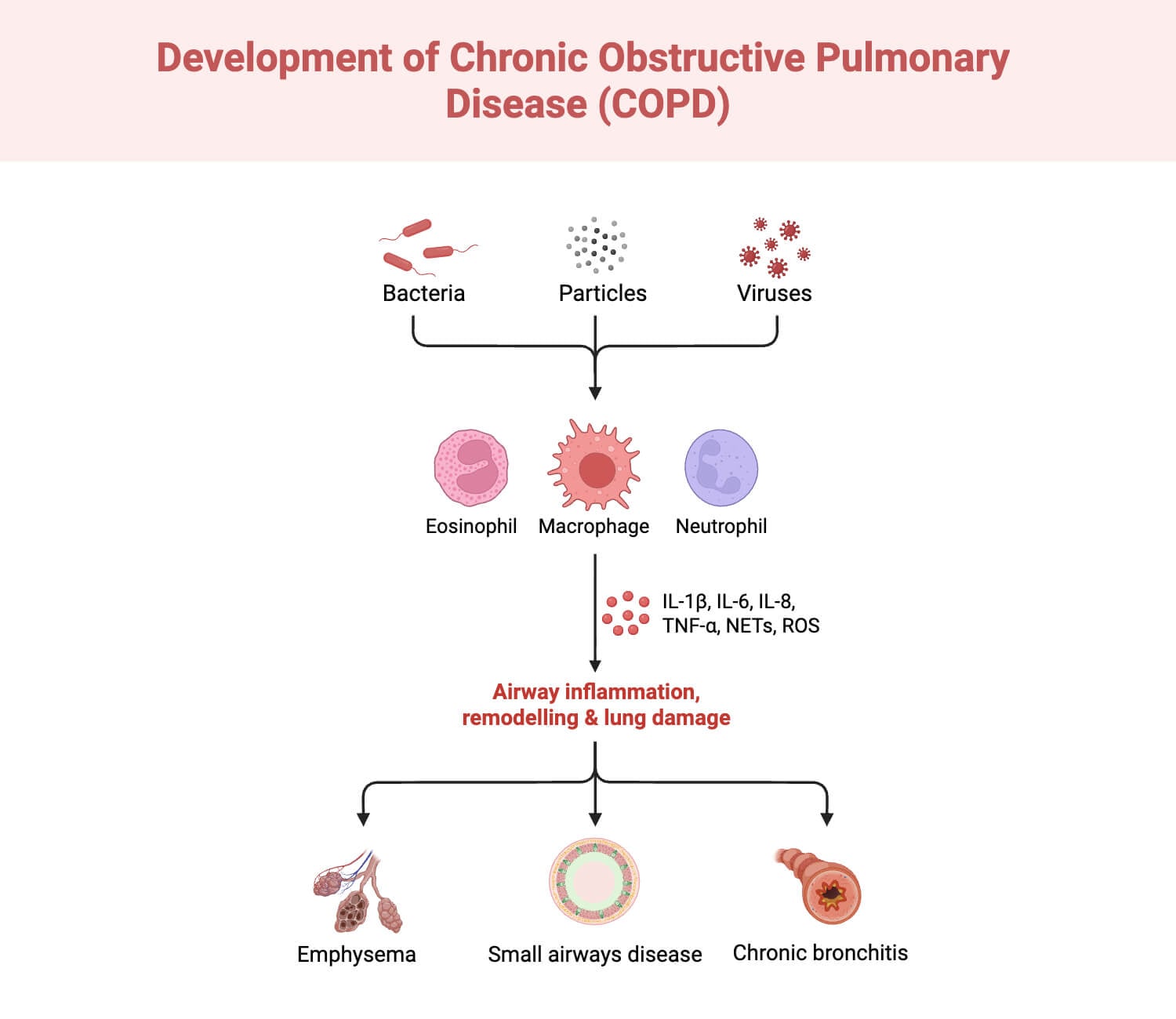
- Chronic Obstructive Pulmonary Disease (COPD): It is a long-term respiratory disease in which the airway and the lungs are damaged. Chronic bronchitis and emphysema (enlargement of the alveoli) are the two forms of COPD.
- Bronchiolitis: It refers to the acute infection of the bronchioles, esp. in young children and infants. It is caused by the Respiratory Syncytial Virus (RSV).
- Bronchiectasis: It is a chronic respiratory condition in which the airways are damaged such that the diameter of the bronchial airway increases, widening the pathway and enlarging it permanently.
The common symptoms of these respiratory diseases include dyspnea (difficulty in breathing), persistent cough with mucus, wheezing, fever and fatigue, mild headaches, body aches, sore throat, runny nose, and chest discomfort.
Diagnostic tools: Bronchoscopy, spirometry, and chest imaging
There are different methods to diagnose the medical conditions associated with the bronchi and bronchioles. Some of the diagnostic ways to examine the bronchial diseases include bronchoscopy, spirometry, and chest imaging.
Chest Imaging
- It is one of the diagnostic tools used to visualize the conditions of the lungs, thoracic walls, and heart.
- Chest X-rays, CT-scans, CT-angiograms, ultrasounds, and MRIs are common ways to collect detailed images of the chest and assess tumors, pneumonia, bronchitis, etc. These images will help in further investigations of the respiratory diseases.
- A CT scan is evaluated for any kind of lung disease or tumor cells before the pulmonologist suggests bronchoscopy.
Bronchoscopy
- It is the method in which a long, thin tube, known as the bronchoscope, is inserted into the bronchial airway through the mouth or nasal cavity.
- It is significant to diagnose pulmonary diseases, collect the biopsy samples, and remove blockages or any foreign particles from the bronchial airway.
- It usually takes approximately 30-90 minutes. First, the patient is sedated through an IV, and the area around the nose or mouth is numbed.
- Afterward, a bronchoscope is inserted via the mouth or nose and is passed down the windpipe in the respiratory tract till it reaches the segmentary bronchioles.
- During this procedure, the saliva in the mouth is suctioned out.
Spirometry
- It is the diagnostic pulmonary function test performed to determine the amount of air inhaled and exhaled from the lungs within a particular time during breathing. It is mediated via the spirometer.
- A spirometer is an instrument that measures the lung volumes and the airflow. It records the breathing pattern in a pneumotachograph.
- It is essential to examine bronchial diseases such as asthma, bronchitis, COPD, etc., by measuring the airflow and air volume.
How to Keep the Bronchi Healthy?
Some of the ways to keep our bronchial airways healthy are:
- Avoid smoking and drinking alcohol
- Reduce the exposure to the aerobic irritants, allergens, and pollutants by wearing masks while traveling
- Use air purifiers and humidifiers
- Maintain a regular, balanced diet and consume healthy foods and drinks.
- Get vaccinated against respiratory diseases
- Perform breathing exercise
Conclusion
In conclusion, bronchi are a significant component of the respiratory system, extending from the carina below the trachea to the bronchioles, which finally conduct air to the alveoli. As they divide and subdivide into different branches (main bronchi, secondary bronchi, tertiary bronchi, and the terminal and respiratory bronchioles), their branching pattern resembles that of an inverted tree. Their mucus membrane helps to humidify and filter the air that flows through the respiratory tract.
References
- Admin, & Admin. (2022, September 16). Bronchi. The Respiratory System. https://www.therespiratorysystem.com/bronchi/
- Amador, C., Weber, C., & Varacallo, M. A. (2023, August 8). Anatomy, thorax, bronchial. StatPearls – NCBI Bookshelf. https://www.ncbi.nlm.nih.gov/books/NBK537353/
- American Lung Association. (n.d.). Bronchiectasis symptoms, causes & risk factors. https://www.lung.org/lung-health-diseases/lung-disease-lookup/bronchiectasis/symptoms-diagnosis
- Bronchi. (2023, October 30). Kenhub. https://www.kenhub.com/en/library/anatomy/bronchi
- Bronchitis. (2026, February 12). Cleveland Clinic. https://my.clevelandclinic.org/health/diseases/3993-bronchitis
- Chronic Obstructive pulmonary Disease (COPD). (2025, November 14). Cleveland Clinic. https://my.clevelandclinic.org/health/diseases/8709-chronic-obstructive-pulmonary-disease-copd
- Dezube, R. (2025, November 10). Bronchoscopy. MSD Manual Professional Edition. https://www.msdmanuals.com/professional/pulmonary-disorders/diagnostic-and-therapeutic-pulmonary-procedures/bronchoscopy
- Eddi, T. (n.d.). How bronchi and bronchioles function in the respiratory system. www.alliedacademies.org. https://doi.org/10.35841/aajcrm-8.2.208
- Goldin, J., & Cataletto, M. E. (2024, May 3). Asthma. StatPearls – NCBI Bookshelf. https://www.ncbi.nlm.nih.gov/books/NBK430901/
- Khan, Y. S., & Carey, F. J. (2025, April 6). Histology, lung. StatPearls – NCBI Bookshelf. https://www.ncbi.nlm.nih.gov/books/NBK534789/
- Machines and types of machines used in chest tests | Ganesh Diagnostics. (n.d.). https://www.ganeshdiagnostic.com/blog/machines-and-types-of-machines-used-in-chest-tests
- MEFANET, Czech and Slovak medical faculties network. (n.d.). Bronchi (histology) – WikiLectures. https://www.wikilectures.eu/w/Bronchi_(histology)#:~:text=We%20distinguish%20three%20layers:,and%20into%20the%20interstitial%20ligament.
- Pin on SCHOOL/ NURSING/ WORK. (2018, February 27). Pinterest. https://www.pinterest.com/pin/difference-between-bronchi-and-bronchioles-infographic–46443439897662957/
- Premanandan, R. J. a. C. (2017, August 22). Air conduction: Larynx, Trachea, Bronchi and Bronchioles. Veterinary Histology. https://ohiostate.pressbooks.pub/vethisto/chapter/10-larynx-trachea-bronchi-and-bronchioles/
- Professional, C. C. M. (2026a, January 8). Bronchi. Cleveland Clinic. https://my.clevelandclinic.org/health/body/21607-bronchi
- Professional, C. C. M. (2026b, February 6). Bronchoscopy. Cleveland Clinic. https://my.clevelandclinic.org/health/diagnostics/21471-bronchoscopy
- Team, A. (2018, January 1). Histology. GPnotebook. https://gpnotebook.com/pages/general-information/lobar-bronchi/histology
- Website, N. (2026, February 24). Bronchiolitis. nhs.uk. https://www.nhs.uk/conditions/bronchiolitis/
- Wikipedia contributors. (2026a, February 26). Bronchus. Wikipedia. https://en.wikipedia.org/wiki/Bronchus#Function
- Wikipedia contributors. (2026b, April 18). Bronchiectasis. Wikipedia. https://en.wikipedia.org/wiki/Bronchiectasis
