
Bifidobacterium bifidum is one of the earliest and most abundant beneficial microorganisms that colonize the human gastrointestinal tract, especially in breastfed infants, where it plays a significant role in establishing a healthy gut microbiota.
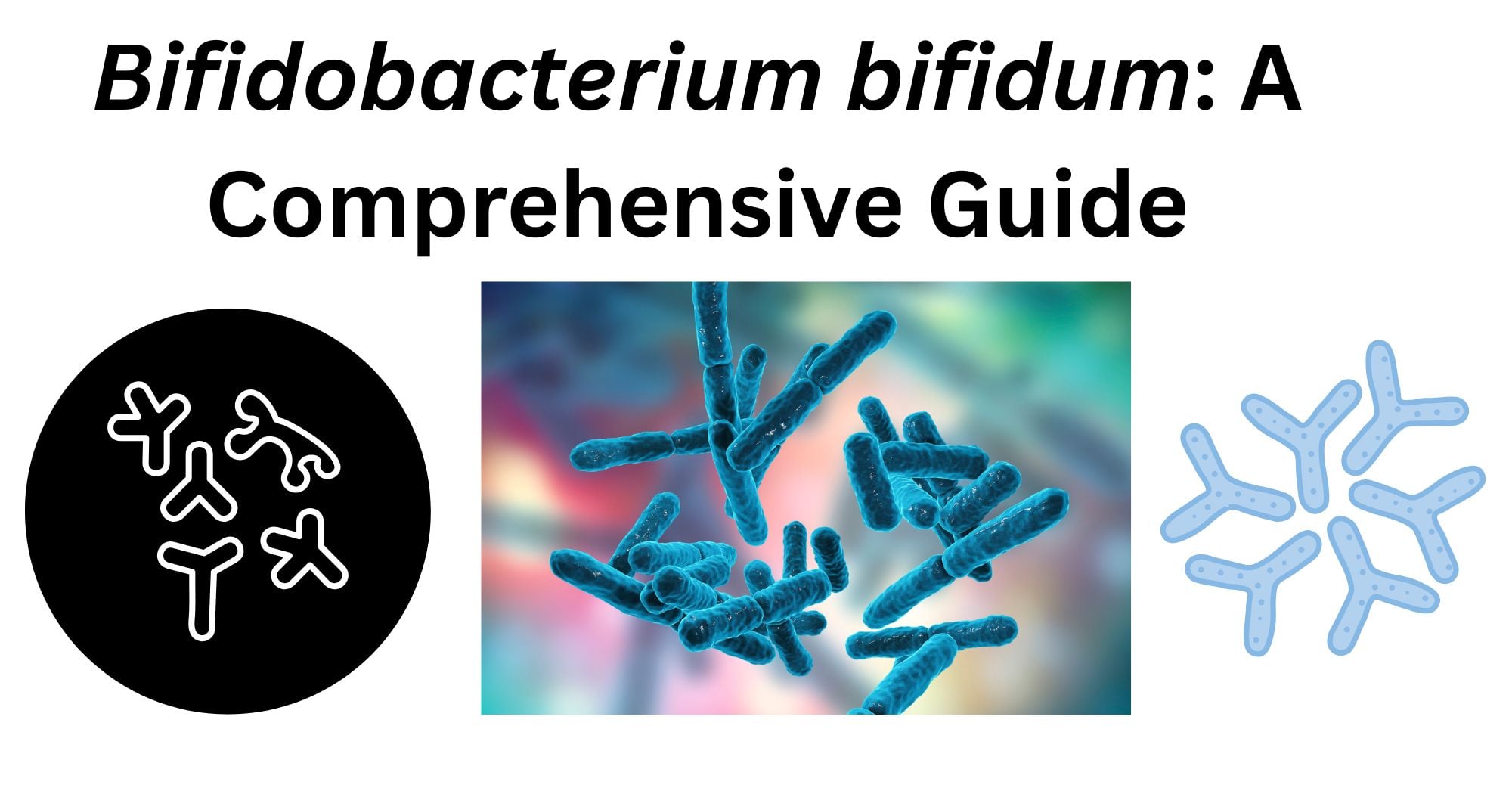
It is naturally present in the intestines, oral cavity, and vagina of healthy individuals and is widely recognized for its probiotic properties. The bacterium contributes to host health by aiding digestion, fermenting complex carbohydrates to produce short-chain fatty acids, inhibiting the growth of pathogenic microorganisms, enhancing intestinal barrier function, and modulating the immune system. Due to these beneficial effects, B. bifidum is commonly incorporated into probiotic foods and dietary supplements to improve gastrointestinal health and overall well-being. Its long history of safe use and health-promoting characteristics has made B. bifidum one of the most extensively studied probiotic bacteria in medical and nutritional research.
Taxonomy and Classification of Bifidobacterium bifidum
Domain: Bacteria
Kingdom: Bacilli
Phylum: Actinomycetota
Class: Actinomycetes
Order: Bifidobacteriales
Family: Bifidobacteriaceae
Genus: Bifidobacterium
Species: B. bifidum
Morphology and Microscopy of Bifidobacterium bifidum
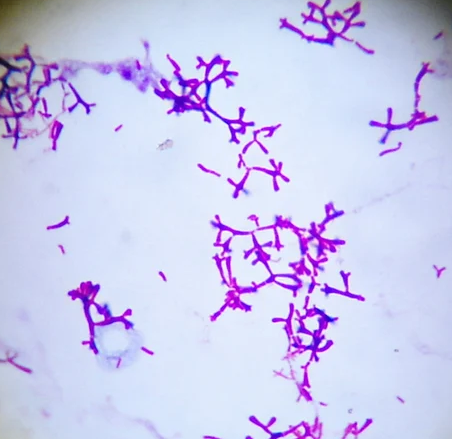
- Gram-positive rod-shaped bacterium that occurs singly, in pairs, short chains, or clusters.
- Approximately 0.5-1.3 µm in width and 1.5- 8 µm in length
- Non-motile
- Non-spore-former
- Pleomorphic, having a branched, bifurcated, Y-shaped, V-shaped, club-shaped, or irregular shape
They appear as purple-colored Y-shaped, V-shaped, branched, curved, or club-shaped rods under the microscope.
Cultural and Growth Characteristics of Bifidobacterium bifidum
- Obligate anaerobe
- Optimum temperature: 37°C
- Optimum pH: 6.5 to 7
- It grows well on selective media such as MRS, TPY agar, and Bifidobacterium Selective Medium.
- On Nutrient Agar: Poor growth or no growth. Colonies can be sparse and very small if growth occurs.
- On MacConkey Agar: No growth
- On Chocolate Agar: Colonies are small, smooth, convex, and cream-colored.
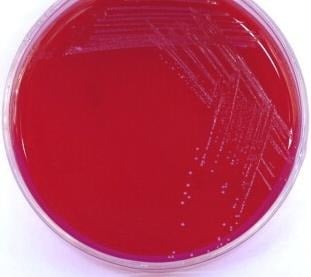
- On Blood Agar: Small, smooth, grayish-white to cream-colored, circular, convex, and non-hemolytic colonies are formed.
- On Columbia Blood Agar: Colonies are smooth, convex, grayish-white to cream-colored, and non-hemolytic.
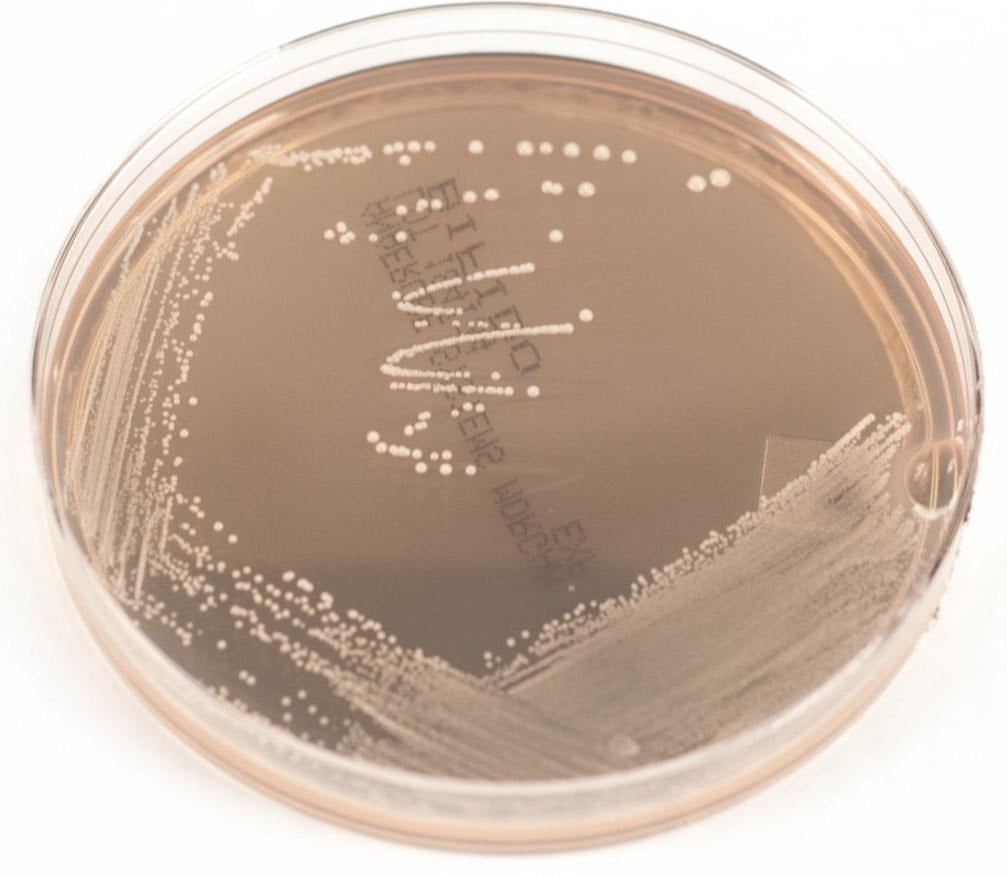
- On MRS Agar supplemented with L-cysteine: Colonies are 1- 3 mm, small, circular, convex, smooth, creamy-white, opaque, and glistening.
- On TPY (Trypticase-Phytone-Yeast Extract) Agar: Round, smooth, convex, creamy-white colonies are formed.
- BSM (Bifidobacterium Selective Medium): Colonies are cream-colored, smooth, convex, and opaque.
Biochemical and Identification Tests of Bifidobacterium bifidum
| Tests | Results |
| Catalase | Negative |
| Oxidase | Negative |
| Indole | Negative |
| OF (Oxidative-Fermentative) | Fermentative |
| 2% Bile Salt | Positive |
| Gelatin Hydrolysis | Negative |
| Nitrate Reduction | Negative |
| Gas | Negative |
| Fermentation of | |
| Amylose | Variable |
| Cellobiose | Negative |
| Fructose-6-Phosphate | Positive |
| Galactose | Positive |
| Glucose | Positive |
| Inulin | Negative |
| Lactose | Positive |
| Maltase | Positive |
| Maltose | Variable |
| Mannitol | Negative |
| Mannose | Negative |
| Melibiose | Variable |
| Pectin | Negative |
| Raffinose | Negative |
| Ribose | Negative |
| Salicin | Negative |
| Sorbitol | Negative |
| Starch | Negative |
| Sucrose | Variable |
| Trehalose | Negative |
| Xylan | Negative |
| Xylose | Negative |
| Enzymatic Reactions | |
| Arabinosidases | Positive |
| Fructose 6-phosphoketolase | Positive |
| Glucosidases | Positive |
| Glutamate dehydrogenase | Positive |
| Glutamine synthetase | Positive |
| Hexosaminidases | Positive |
| ONPG (β-galactosidase) | Positive |
Beneficial Colonization and Protective Role of Bifidobacterium bifidum
- B. bifidum is generally considered a beneficial commensal and probiotic bacterium rather than a pathogen. Therefore, it lacks a classical pathogenic mechanism.
- Instead, it contributes to host health through several beneficial interactions within the gastrointestinal tract.
- It colonizes the intestinal mucosa, particularly in infants, by adhering to epithelial cells using surface structures such as adhesins.
- After colonization, it ferments dietary carbohydrates and human milk oligosaccharides to produce short-chain fatty acids such as lactic acid and acetic acid.
- These acids lower intestinal pH, which inhibits the growth and colonization of pathogenic bacteria.
- The bacterium also competes with harmful microbes for nutrients and attachment sites, produces antimicrobial substances, strengthens the intestinal epithelial barrier, enhances mucus production, and modulates both innate and adaptive immune responses by stimulating protective cytokines and regulatory immune cells.
- These activities help maintain intestinal homeostasis, reduce inflammation, and protect against gastrointestinal infections.
- Although B. bifidum is considered safe for healthy individuals, it rarely causes opportunistic infections such as bacteremia or sepsis in severely immunocompromised patients, premature infants, or individuals with significant underlying diseases.
Virulence Factors (Beneficial Factors) of Bifidobacterium bifidum
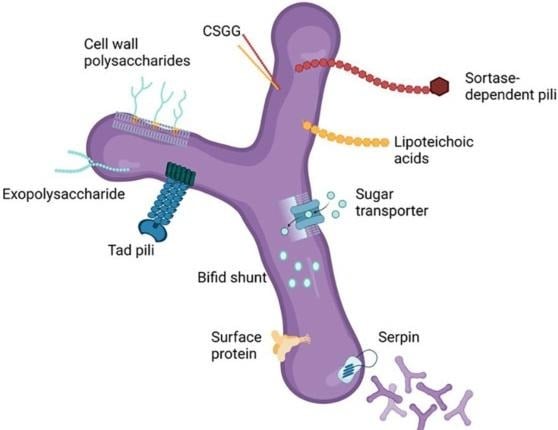
B. bifidum is generally considered a beneficial probiotic bacterium of the human gastrointestinal tract and is not regarded as a major pathogen. Therefore, it lacks the classical virulence factors found in pathogenic bacteria; instead, it has beneficial factors:
Adhesion Factors
- It possesses surface proteins and lipoproteins that facilitate attachment to intestinal epithelial cells and mucus.
- It promotes colonization and persistence within the gastrointestinal tract.
Pili
- It is a hair-like structure that enhances attachment to the intestinal mucosa.
- It helps in biofilm formation and interaction with host tissues.
Exopolysaccharides (EPS)
- It is a polysaccharide layer that surrounds bacterial cells.
- It protects against environmental stress, gastric acidity, and host immune responses.
- It supports biofilm formation and intestinal colonization.
Mucin-Degrading Enzymes
- It produces glycosidases and other enzymes capable of utilizing mucin-derived carbohydrates.
- It aids in survival and growth in the mucus layer of the intestine.
Stress Resistance Mechanisms
- The acid and bile tolerance proteins present in the bacterium help the bacterium survive passage through the stomach and small intestine.
- It contributes to the successful colonization of the gut.
Iron Acquisition Systems
- It possesses mechanisms for obtaining essential nutrients, including iron, from the intestinal environment.
- It supports bacterial growth and persistence.
Biofilm Formation
- It can form biofilms on mucosal surfaces.
- It enhances resistance to environmental stress and promotes long-term colonization.
Epidemiology of Bifidobacterium bifidum
Unlike pathogenic bacteria, B. bifidum is a commensal and probiotic bacterium, so its epidemiology mainly focuses on its presence, distribution, and abundance in humans and other hosts rather than disease incidence. It is the major inhabitant of the intestine of healthy infants, children, and adults. Colonization of B. bifidum varies according to age, diet, health status, and geography. This bacterium is primarily present in fermented foods, probiotics, and some dairy products and can survive in the gut when ingested, contributing to microbiota diversity. The prevalence of B. bifidum is influenced by geography and antibiotic usage, which lowers the presence of B. bifidum, and health conditions such as inflammatory bowel disease, which lower the abundance of bacteria.
Transmission of Bifidobacterium bifidum
Since B. bifidum is a beneficial bacterium, it is not typically transmitted as a pathogen; instead, it is acquired through natural colonization processes:
Vertical Transmission (Mother-to-Infant)
- Infants acquire B. bifidum from mothers during vaginal delivery through exposure to maternal vaginal and fecal microbiota.
- B. bifidum is transmitted to infants through breast milk.
Horizontal Transmission
- It occurs through close contact with family members, caregivers, and other individuals.
- It can be transmitted via contaminated hands, skin contact, and shared environments.
Environmental and Dietary Transmission
- Infants and adults may acquire bacteria from surrounding environments, like household surfaces and objects containing bacteria.
- Can be transmitted from food products such as fermented foods like yogurt, kefir, and fermented vegetables.
Clinical Benefits of Bifidobacterium bifidum
Digestive Health
- It helps in the digestion of complex carbohydrates and dietary fibers.
- It produces short-chain fatty acids, such as acetate, that support intestinal health.
- It also enhances nutrient absorption.
Intestinal Microbial Balance
- It enhances the growth of beneficial bacteria in the gut.
- It inhibits colonization by pathogenic microorganisms through competitive exclusion.
- It assist to maintain a healthy intestinal microorganisms.
Prevents and Reduces Diarrhea
- It may decrease the incidence and duration of antibiotic-associated diarrhea, infectious diarrhea, or traveler’s diarrhea.
- It helps to restore normal gut flora after antibiotic treatment.
Supports Irritable Bowel Syndrome Management
- May relieve symptoms such as abdominal pain, bloating, flatulence, and irregular bowel habits.
- It contributes to improved gastrointestinal comfort.
Enhances Immune Function
- It activates mucosal and systemic immune responses.
- It enhances the production of protective immunoglobulins, especially IgA.
- It increases the activity of immune cells and strengthens host defenses.
Strengthens Intestinal Barrier Function
- It improves the integrity of intestinal epithelial cells.
- It decreases the intestinal permeability or leaky gut.
- It protects against invasion by harmful microorganisms and toxins.
Reduces Inflammation
- It modulates inflammatory cytokine production.
- It can help decrease intestinal inflammation associated with gastrointestinal disorders.
- It contributes to immune homeostasis.
Supports Infant Health
- It helps in the digestion of human milk oligosaccharides.
- It supports the development of the infant’s immune system.
- It helps protect against gastrointestinal infections.
Reduce Risk of Allergic Diseases
- It assists in the regulation of the immune response involved in the development of allergy.
- It may decrease the incidence or severity of atopic dermatitis, food allergies, and other allergic conditions.
Potential Role in Metabolic Health
- It may contribute to improved glucose metabolism, better lipid metabolism, and regulation of body weight.
Management of Inflammatory Bowel Disease (IBD)
- It supports the management of ulcerative colitis and Crohn’s disease.
However, in immunocompromised individuals, it may cause:
- Bacteremia: fever, chills, malaise, and hypotension
- Sepsis: high or low body temperature, tachycardia, tachypnea, hypotension, and organ dysfunction.
- Infective Endocarditis: persistent fever, heart murmur, fatigue, weakness, weight loss, and embolic complications.
- Intra-abdominal Infections: abdominal pain, abdominal tenderness, fever, peritonitis, and intra-abdominal abscess formation.
- Neonatal Infections: feeding intolerance, lethargy, respiratory distress, temperature instability, and signs of neonatal sepsis.
- Wound and Soft Tissue Infections: localized pain, redness, swelling, purulent discharge, and delayed wound healing.
- Urinary Tract Infections: dysuria, increased urinary frequency, urgency, and suprapubic discomfort.
Laboratory Diagnosis of Bifidobacterium bifidum
Sample Collection
- A fecal sample is most suitable for gut colonization studies.
- Food samples are useful for probiotics in dairy and supplements.
Microscopy
- They appear as purple-colored Y-shaped, V-shaped, branched, curved, or club-shaped rods under the microscope.
Culture
- On Nutrient Agar: Poor growth or no growth. Colonies can be sparse and very small if growth occurs.
- On MacConkey Agar: No growth
- On Chocolate Agar: Colonies are small, smooth, convex, and cream-colored.
- On Blood Agar: Small, smooth, grayish-white to cream-colored, circular, convex, and non-hemolytic colonies are formed.
- On Columbia Blood Agar: Colonies are smooth, convex, grayish-white to cream-colored, and non-hemolytic.
- On MRS Agar supplemented with L-cysteine: Colonies are 1-3mm, small, circular, convex, smooth, creamy-white, opaque, and glistening.
- On TPY (Trypticase-Phytone-Yeast Extract) Agar: Round, smooth, convex, creamy-white colonies are formed.
- BSM (Bifidobacterium Selective Medium): Colonies are cream-colored, smooth, convex, and opaque.
Biochemical Identification of Bifidobacterium bifidum
After culture, colonies from the incubated plates are tested for biochemical tests and confirmed as B. bifidum based on the following results:
| Tests | Results |
| Catalase | Negative |
| Oxidase | Negative |
| Indole | Negative |
| OF (Oxidative-Fermentative) | Fermentative |
| 2% Bile Salt | Positive |
| Gelatin Hydrolysis | Negative |
| Nitrate Reduction | Negative |
| Gas | Negative |
Molecular Methods
PCR (Polymerase Chain Reaction)
- It uses species-specific primers for B. bifidum.
- It targets the 16S rRNA gene.
- It is used for quantitative detection.
- It is used for the accurate identification and differentiation from other Bifidobacteria.
Treatment of Bifidobacterium bifidum
B. bifidum is not a primary pathogenic bacterium. It is a normal gut commensal and probiotic bacterium. Therefore, in most situations, it does not require treatment. In fact, it is used therapeutically as a probiotic. However, in rare cases where it causes opportunistic infection, treatment is relevant. B. bifidum is administered as a probiotic for:
- Used in the prevention and treatment of diarrhea associated with antibiotics.
- Used in the relief of symptoms of irritable bowel syndrome.
- Can be used after antibiotic therapy in gut microbiota restoration.
- Used in allergy reduction and modulation of the immune system.
- It is used in the support of infant gut health.
In opportunistic infections, treatment is done through the following ways:
- Supportive care, such as IV fluids, hemodynamic support, and oxygen therapy, is used.
- In severe cases, hospitalization is required.
- Antibiotics such as Penicillin, Ampicillin, Amoxicillin, Carbapenems, or Clindamycin are prescribed.
Prevention and Control of Bifidobacterium bifidum
Since B. bifidum is a beneficial organism, the prevention and control mainly refer to preventing rare opportunistic infections in immunocompromised individuals and maintaining a healthy gut microbiota rather than eliminating the organisms.
Maintenance of Normal Gut Flora
- Always consume a balanced diet rich in fiber.
- Regular breastfeeding in infants promotes healthy colonization.
- Use of probiotics when necessary.
- Avoid unnecessary disruption of gut microbiota.
Proper Use of Antibiotics
- Always avoid improper or overuse of antibiotics.
- It prevents the disturbance of normal gut microflora.
- It helps in the reduction of opportunistic infections in immunocompromised patients.
Prevention in High-Risk Groups
- Always monitor for the signs of infection early.
- Minimize the use of invasive devices such as catheters and ventilators.
- Prompt removal of unnecessary devices.
Safe Probiotic Use
- Always use only quality-controlled probiotics.
- Avoid unnecessary use of probiotics in immunocompromised patients.
- Ensure proper storage and handling of probiotics.
Neonatal and Maternal Care
- Always promote breastfeeding in infants.
- Always maintain proper hygiene during delivery and neonatal care.
- Careful use of antibiotics in neonates and mothers.
Conclusion
B. bifidum is a gram-positive bacterium that forms an important part of the normal human gut microbiota, especially in infants. It is widely recognized as a beneficial probiotic bacterium that plays a crucial role in maintaining intestinal microbial balance, enhancing digestion, strengthening gut barrier function, and modulating immune responses. Its presence is prominent, particularly in breastfed infants, where it contributes to healthy gut development and protection against pathogens.
Although it is generally non-pathogenic, it can cause rare opportunistic infections in immunocompromised individuals. Overall, B. bifidum is a clinically important probiotic organism with significant health-promoting and therapeutic potential in human gastrointestinal health.
References
- Dosan, R., Mudana, S. O., Julyanto, C. M. P., Purnama, E. T., Sugata, M., Jo, J., & Tan, T. J. (2024). Isolation and identification of Bifidobacterium species from human breast milk and infant feces in Indonesia. Biodiversitas, 25(1), 337–343. https://doi.org/10.13057/biodiv/d250139
- Mishra, M., Paliwal, J. S., Singh, S. K., & Abraham, J. (2012). Isolation and characterization of Bifidobacterium from fermented milk products and their antimicrobial studies. https://doi.org/10.13140/RG.2.2.20812.67208
- Aryal, S. (2022, March 8). Biochemical test of Bifidobacterium bifidum. Microbe Notes. Microbe Notes
- McIntyre, C., & Johnston, B. (2026, March 25). Bifidobacterium bifidum: Uses, side effects, interactions, pictures, warnings & dosing. WebMD. WebMD
- Turroni, F., Duranti, S., Milani, C., Lugli, G. A., van Sinderen, D., & Ventura, M. (2019). Bifidobacterium bifidum: A key member of the early human gut microbiota. Microorganisms, 7(11), 544. https://doi.org/10.3390/microorganisms7110544
- Hilliard, M. A., & Sela, D. A. (2024). Transmission and persistence of infant gut-associated bifidobacteria. Microorganisms, 12(5), 879. https://doi.org/10.3390/microorganisms12050879
- Trevor Kouritzin. (n.d.). Bifidobacterium bifidum: Benefits, side effects and more. AllMax Nutrition. AllMax Nutrition article
- Rupa Health. (n.d.). Bifidobacterium bifidum. Rupa Health. https://www.rupahealth.com/biomarkers/bifidobacterium-bifidum
- Tannock, G. W. (1999). Identification of Lactobacilli and Bifidobacteria. Current Issues in Molecular Biology, 1(1), 53–64. https://doi.org/10.21775/cimb.001.053
