BLAST in Bioinformatics: Types, Steps & Applications
With the increase in DNA and protein sequence databases, there is a growing need for more faster and efficient methods to analyze this large amount of data. One of the … Read more
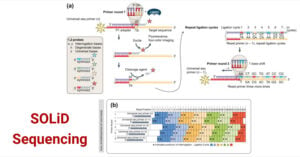
SOLiD (Sequencing by Oligonucleotide Ligation and Detection) is a second-generation sequencing platform that uses sequencing by ligation method to determine the sequence of nucleotides in target DNA. It was developed … Read more
Ion Torrent Sequencing is a next-generation sequencing method that uses a semiconductor chip to directly detect the hydrogen ions (H+) released during DNA synthesis. Ion Torrent technology introduced the first … Read more
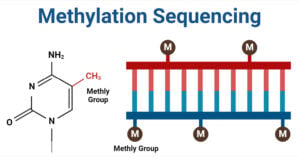
Methylation sequencing is a method of sequencing used to study DNA methylation patterns across the genome which is an important biological process that adds methyl group (CH3) to the cytosine … Read more
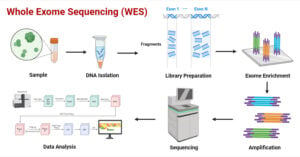
Whole Exome Sequencing (WES) is a method of sequencing used to study the regions of the genome that code for proteins. These protein-coding regions within the genome are known as … Read more
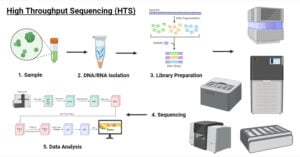
High Throughput Sequencing (HTS) is a technology that allows the sequencing of multiple samples in a single run which increases the sequencing speed and efficiency compared to traditional sequencing methods. … Read more
ChIP Sequencing (ChIP-seq) is a method of sequencing that combines chromatin immunoprecipitation (ChIP) with sequencing to study DNA-protein interactions and the roles of DNA-binding proteins like transcription factors and other … Read more
Whole transcriptome sequencing (WTS), also known as total RNA sequencing (RNA-Seq) is a method of RNA sequencing that identifies all types of RNA molecules present in an organism or a … Read more
Oxford Nanopore Sequencing is a nanopore sequencing method developed by Oxford Nanopore Technologies (ONT) that identifies the sequence of nucleotides by passing individual molecules through nanoscale pores and measuring changes … Read more
Pyrosequencing is a sequencing method that determines the sequence of nucleotides by detecting the release of pyrophosphate (PPi) during nucleotide incorporation and monitors DNA synthesis in real-time. Pyrosequencing relies on … Read more